Roman Imperial Coins
Results from 27301 to 27350 of 32902
Lot # 473
-
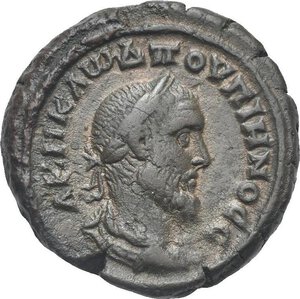
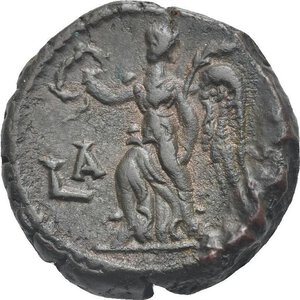
Egypt. Alexandria. Pupienus, 238. Tetradrachm (Billon, 23.1 mm, 12.22 g). Dated RY 1 (= 238). A K M KΛW ΠOVΠIHNOC ЄV C Laureate, draped, and cuirassed bust right. Rev. Nike advancing left, holding wreath and palm frond; L A (date) to left. Geissen 2607. Dattari-Savio 10162. RPC VII.2, 3651. Emmett 3365. BMC 1837. Cf. SAVIO A., Tetradrammi alessandrini, pp. 133-135. Dark gray-brown patina. Good Very Fine. Very Rare.
Ex Naville Numismatics Ltd. 45, 09.12.2018, lot 233.
The joint reign of Pupienus and Balbinus lasted three months in 238 AD. Of the former, a valiant general, consul and prefect of Rome, we have here a tetradrachm of great rarity with an extraordinary physiognomic portrait of the emperor on the obverse, while on the reverse, an imposing Nike flows, crowning the imperial hopes.
Lot # 472
-
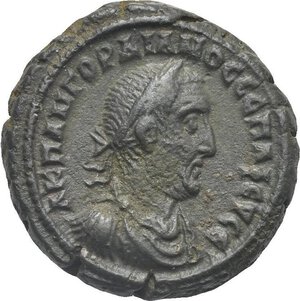
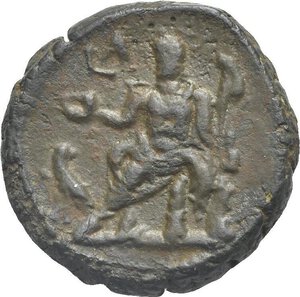
Egypt. Alexandria. Gordian I Africanus, March-April 238. Tetradrachm (Billon, 22.5 mm, 13.38 g). Dated RY 1 (= 238). Α Κ Μ ΑΝ ΓΟΡΔΙΑΝΟϹ ϹΕΜ ΑΦΡ ΕΥϹΕ[Β] Laureate, draped, and cuirassed bust right. Rev. Zeus enthroned left, holding phiale and scepter; to left at feet, eagle standing left, head right; L A (date) to upper left. Geissen 2605 var. (obv. legend). Dattari-Savio 4664 var. (same). RPC VII.2, 3640. Emmett 3351. Cf. SAVIO A. , Tetradrammmi alessandrini, pp. 130-132. Lovely dark patina with minor roughness, very well struck. Good Very Fine. Very Rare.
Ex Giovanni Dattari Collection 4664. Ex Naville Numismatics Ltd. 40, 27.05.2018, lot 418.
From the Dattari collection, too, it comes this splendid and very rare tetradrachm of the ephemeral old man Gordian I the African, who reigned together with his son Gordian II, during the months of February-March of 238 A.D., to end by suicide at the news of the death in battle of Gordian II. On the reverse appears the auspicious Roman Zeus, at least in the hope of the senate, which immediately confirmed the election of the new sovereign
Lot # 471
-
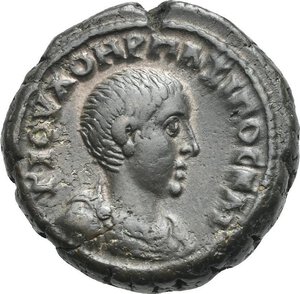
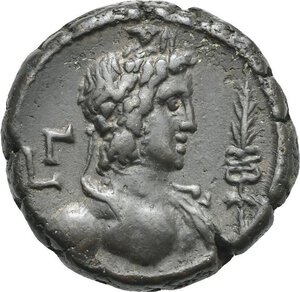
Egypt. Alexandria. Maximus, as Caesar, 236-238. Tetradrachm (Billon, 23.60 mm, 13.43 g). Dated RY 3 (= 236/7). Γ ΙΟΥΛ ΟΥΗΡ ΜΑΞΙΜΟϹ ΚΑΙ Bare-headed, draped and cuirassed bust right. Rev. Hermanubis bust right, wearing kalathos and lotus petal, palm over shoulder; in front, winged caduceus combined with palm branch; L Γ (date) in left field. Ex Dattari 4625. RPC VI online, 10720 (this coin). Geissen 2590. Emmett 3318. Attractive portrait, lovely dark patina. Nearly Extremely Fine. Very Rare.
Ex Giovanni Dattari Collection 4664. Ex Jean-Pierre Righetti collection. Ex Münzen & Medaillen Deutschland/Nomos AG 12, 11.04.2003, lot 639.
Maximus, son of Maximinus I and Cecilia Paulina, was elevated by his father to the rank of Caesar (heir to the throne) in the early days of 235 or 236 A.D., since the coins dedicated to him appears only in the year 2 of his reign (235-236 A.D.). Maximus was immediately militarized by his warlike father and shared his tragic death in May 238 AD in Aquileia at the hands of his own troops who rebelled following the failure to conquer the city. However, this is a very rare coin from the Dattari collection.
Lot # 470
-
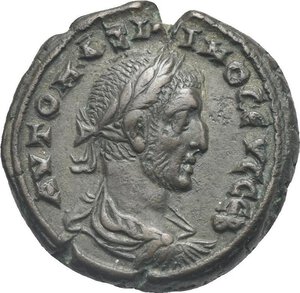
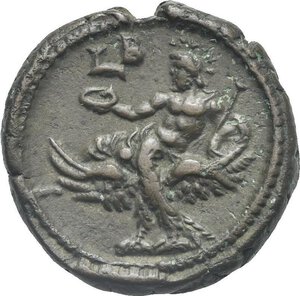
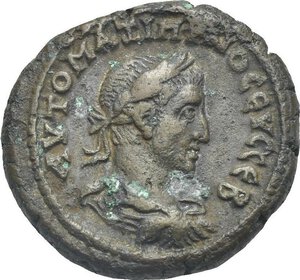
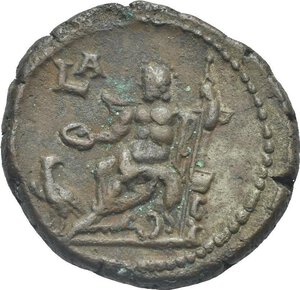
Egypt. Alexandria. Maximinus I, 235-238. Tetradrachm (Billon, 23.9 mm, 11.52 g). Dated RY 2 (= 235/6). AVTO MAΞIMINOC EVC CEB Laureate, draped and cuirassed bust right. Rev. Zeus reclining left, holding sceptre and patera; in front, eagle standing facing with wings spread, head right; LB above. Dattari-Savio 4610. RPC VI Online, 10682. Emmett 3307. Geissen 2565. Attractive dark patina. Nearly Extremely Fine.
Ex Frank Sternberg, Zürich, October 1993.
On the obverse, the bust of Maximin I is always "cuirassed" and laureate, here with particular plastic relief in a tetradrachm of superb preservation that allows you to distinguish all the details of the engraving, especially on the reverse, where you can admire the apotheosis of the Roman Zeus lying on the back of the imperial eagle in flight.
Lot # 469
-
Egypt. Alexandria. Maximinus I, 235-238. Tetradrachm (Billon, 25.2 mm, 12.13 g). Dated RY 1 (= 235). ΑΥΤΟ ΜΑΞΙΜΙΝΟϹ ΕΥϹ ϹΕΒ Laureate, draped, and cuirassed bust right. Rev. Zeus seated left on throne, holding phiale and scepter; at his feet to left, eagle standing left, head right; L A (date) to upper left. Dattari-Savio 4608. RPC VI online, 10667. Emmett 3306. Geissen -. Cf. SAVIO A. Tetradrammi alessandrini, pp. 127-129. Very Fine.
Ex Naville Numismatics Ltd. 28, 22.01.2017, lot 375.
The grimy Maximin I entered the scene after eliminating the last Severans. Of semi-Barbarian origins, he was a gigantic and valiant military leader, continuously engaged on various war fronts, so much so that he never came to Rome nor went to Alexandria. The portrait on the obverse of the tetradrachm well expresses the military character of the person already from his first months of reign in 235 AD.
Lot # 468
-
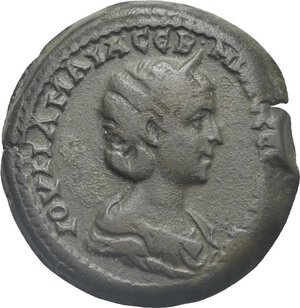
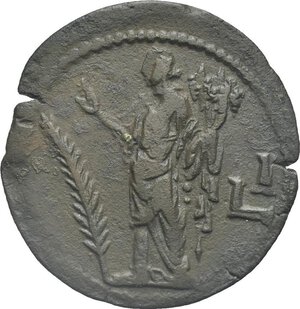
Egypt. Alexandria. Julia Mamaea, mother of Severus Alexander, 222-235. Drachm (Bronze, 32.0 mm, 16.17 g). Dated RY 12 of Severus Alexander (= 232/3). ΙΟΥ ΜΑΜΑΙΑ ϹΕΒ ΜΗ[ΤΕ ϹΕΒ Κ ϹΤPΑ] Draped bust right, wearing stephane. Rev. Omonoia standing facing, head left, holding double cornucopia and raising right hand, in front palm branch; L ΙB in right field. Dattari-Savio 4548. RPC VI Online, 10587. Emmett 3250. Nice dark patina. Very Fine. Rare.
Ex Numismatica Aretusa SA, Lugano (Franco Chiesa), November 1979.
Another drachm of Julia Mamaea for the ‘decennalia’ of Alexander Severus. Vivid portrait of the Augusta on the obverse while on the reverse the Omonoia with double cornucopia wishes harmony and hails a peaceful future for the Roman Empire.
Lot # 467
-
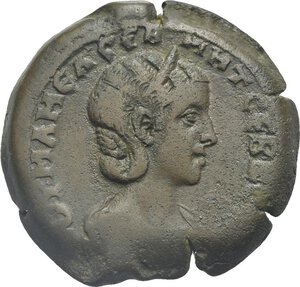
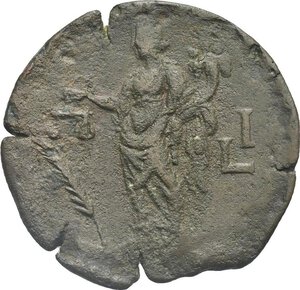
Egypt. Alexandria. Julia Mamaea, mother of Severus Alexander, 222-235. Drachm (Bronze, 34.4 mm, 21.95 g). Dated RY 10 of Severus Alexander (= 230/1). ΙΟΥ ΜΑΜΑΙΑ ϹΕΒ ΜΗΤΕ ϹΕΒ Κ ϹΤP[Α] Draped bust right, wearing stephane. Rev. Dikaiosyne standing facing, head left, holding scales and cornucopia, to left palm branch; L Ι in right field. RPC VI Online, 10478. Geissen 2515. Emmett 3242. Edge nicks, pleasant patina. Nearly Very Fine.
Ex Kerry K. Wetterstrom Collection. Ex CNA Ltd. XIII, 12.04.1990, lot 149.
We are still in the celebratory year of the imperial 'decennalia' of 230-231 AD with the calm portrait of Julia Mamaea on the obverse. The reverse shows the well-known Dikaiosyne - Justice – goddess Moneta, a serious and admonitory deity recurring in Alexandrian coinage. A drachm of great rarity (Emmett 5).
Lot # 466
-
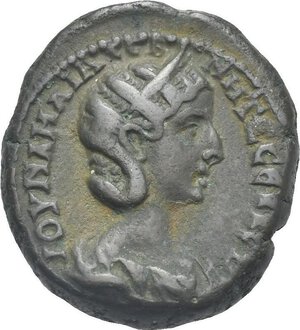
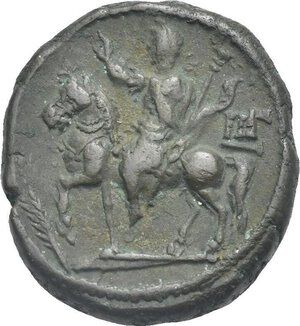
Egypt. Alexandria. Julia Mamaea, mother of Severus Alexander, 222-235. Tetradrachm (Billon, 21.8 mm, 12.20 g). Dated RY 13 of Severus Alexander (= 233/4). ΙΟΥ ΜΑΜΑΙΑ ϹΕΒ ΜΗΤΕ ϹΕΒ Κ ϹΤP[Α] Draped bust right, wearing stephane. Rev. Emperor on horseback advancing left, raising hand and holding transverse sceptre surmounted by eagle, in front palm branch; L ΙΓ (date) in upper right field. Dattari-Savio pl. 240, 4454 (this coin). Emmett 3204. RPC VI Online, 10629.9 (this coin). Geissen 2539 (this coin cited). Dark brown patina. Very Fine. Rare.
Ex Giovanni Dattari Collection 4454. Ex Naville Numismatics Ltd. 42, 22.07.2018, lot 367.
On the reverse of this tetradrachm of Julia Mamaea appears Alexander Severus riding triumphant on horseback to the left, raising his hand in an act of greeting. This is probably a commemoration of the proclaimed victorious end to the conflict in the east, although historically it was of uncertain outcome. Another coin of prestigious Dattarian provenance.
Lot # 465
-
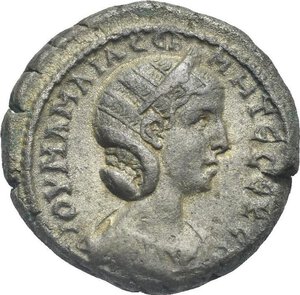
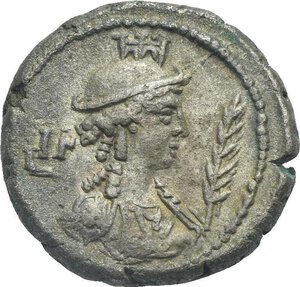
Egypt. Alexandria. Julia Mamaea, mother of Severus Alexander, 222-235. Tetradrachm (Billon, 23.7 mm, 11.88 g). Dated RY 13 of Severus Alexander (= 233/4). ΙΟΥ ΜΑΜΑΙΑ ϹΕΒ ΜΗΤΕ ϹΕΒ Κ ϹΤ[ΡΑ] Draped bust right, wearing stephane. Rev. Turreted bust of Alexandria right; palm branch in left field; L IΓ (date) in left field. Dattari -Savio pl. 240, 10022 (this coin). RPC Online, 10621.9 (this coin). Emmett 3189. Attractive old cabinet tone. Nearly Extremely Fine.
Ex Giovanni Dattari Collection DS 10022. Ex Naville Numismatics Ltd. 44, 04.11.2018, lot 338.
This tetradrachm too, of Julia Mamaea and of celebrated provenance, great rarity and excellent preservation, shows, on the obverse, a noble portrait of the empress mother, while on the reverse, appears the bust of the personification of Alexandria with the turreted headdress and the augural palm branch in front.
Lot # 464
-
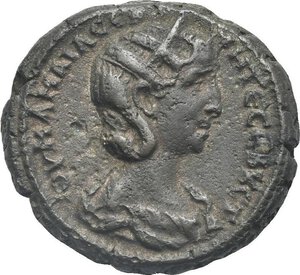
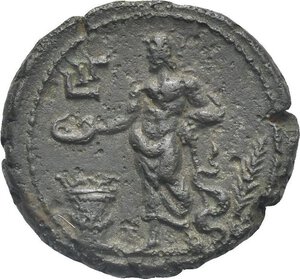
Egypt. Alexandria. Julia Mamaea, mother of Severus Alexander, 222-235. Tetradrachm (Billon, 23.9 mm, 11.26 g). Dated RY 13 of Severus Alexander (= 233/4). IOV MAMAIA CЄB MHTЄ CЄB K CTPA Draped bust right, wearing stephane. Rev. Asklepios standing facing, head left, sacrificing from patera over altar and leaning on serpent-entwined staff; L IΓ in left field. Dattari-Savio 4466. RPC VI online, 10623. Emmett 3194. Dark patina, minor roughness. Very Fine.
Ex Numismatica Aretusa SA, Lugano, (Franco Chiesa), March 1986.
On the reverse of this tetradrachm of Julia Mamaea is the divine healer Asclepius, son of Apollo, worshipped in Greece as the god of medicine, healings and snakes, here armed with his serpentine staff, sacrificing with his patera on an altar.
Lot # 463
-
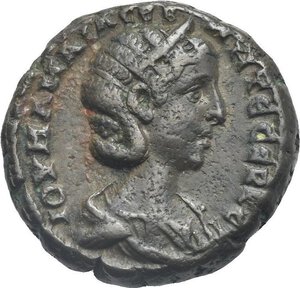
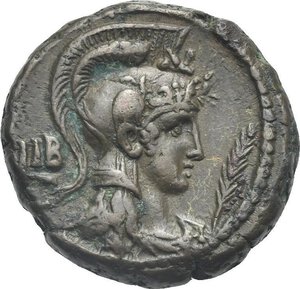
Egypt. Alexandria. Julia Mamaea, mother of Severus Alexander, 222-235. Tetradrachm (Billon, 23 mm, 11.88 g). Dated RY 11 of Severus Alexander (= 231/2). ΙΟΥ ΜΑΜΑΙΑ ϹΕΒ ΜΗΤΕ ϹΕΒ Κ ϹΤ[ΡΑ] Draped bust right, wearing stephane. Rev. Helmeted head of Athena Parthenos right; L IA (date) behind, palm frond before. Dattari-Savio 4470. RPC VI online, 10538. Emmett 3195. Geissen 2524. Pleasant dark brown patina, minor porosity. Very Fine.
Ex Busso Peus Nachf, Auction 369, 31.10.2001, lot 1276.
Another tetradrachm of Julia Mamaea minted in the year 11 of Alexander Severus (231-232 AD) with the classic and solemn bust of Athena Parthenos on reverse, image repeated also on her dracms (Cf. STAFFIERI G. M., Alexandria in nummmis, n. 210-211, pp. 419-423) and on her son's tetradrachms (Cf. ibidem, n. 206, pp. 411-412).
Lot # 462
-
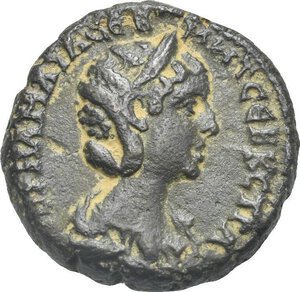
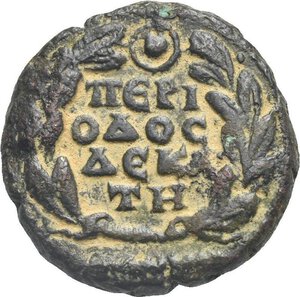
Egypt. Alexandria. Julia Mamea, mother of Severus Alexander, 222-235. Tetradrachm (Billon, 23.1 mm, 12.33 g). Dated RY 7 of Severus Alexander (= 227/8). ΙΟΥ ΜΑΜΑΙΑ ϹΕΒ ΜΗΤ ϹΕΒ Κ ϹΤΡΑ Draped bust right, wearing stephane. Rev. ΠЄPI OΔOC ΔЄKA TH in four lines within wreath. Dattari-Savio 4534. Emmett 3233. RPC VI online, 10435. Geissen 2512. BMC 1762. Minor deposits. Very Fine.
Ex Roma Numismtics Ltd. IV, 30 September 2012, lot 729.
Tetradrachm minted in the name of Julia Mamea, inseparable mother of the sovereign Alexander Severus, glorifying the Emperor's next "decennalia" as confirmed by the reverse legend surrounded by a laurel-wreath. The soft portrait of the "Augusta" is charming on the obverse.
Lot # 461
-
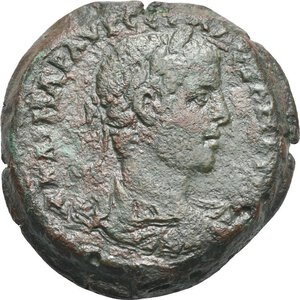
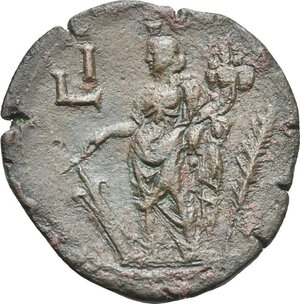
Egypt. Alexandria. Severus Alexander, 222-235. Drachm (Bronze, 33.5 mm, 22.62 g). Dated RY 10 (= 230/1). Α ΚΑΙ ΜΑΡ ΑVΡ СEΥ ΑΛΕΞΑΝ[...] Laureate, draped and cuirassed bust right. Rev. Tyche standing facing, head to left, wearing kalathos, holding rudder and cornucopia, behind palm branch; L I (date) in upper left field. Dattari-Savio 4441. Milne 3042. RPC VI online, 10467. Geissen 2463, Emmett 3178. Attractive green-brown patina. Minor roughness. Very Fine.
Ex Hanscotte Collection. Ex C. Seaby 1960. Ex Savoca 32, 14.04.2019.
Bronze drachm belonging to the sole issue of Alexander Severus and his mother Julia Mamaea in this metal on occasion of "decennalia" of the empero's reign (230-231 AD). It is the last important issuing of Alexandrian bronze coins, which however went on occasionally till the reign of Aurelianus with Vaballatus (271-272 AD), Cf. N. 249 of this collection. They are all coins of notable artistic quality: ours has on the reverse the Tyche of Alexandria, patroness of the city. Well-centred coin and very rare in any case, with dazzling original dark patina with emerald glints.
Lot # 460
-
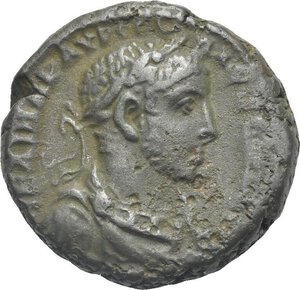
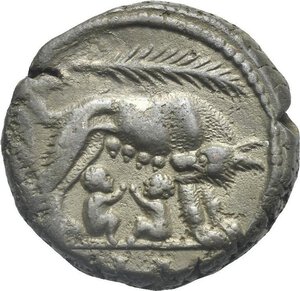
Egypt. Alexandria. Severus Alexander, 222-235. Tetradrachm (Billon, 23.02 mm, 13.13 g). Dated RY 14 (= 234/5). A KAI MAP AVP CEV AΛE[ΞANΔPOC] Laureate, draped, and cuirassed bust right. Rev. She-wolf standing right, suckling the twins Romulus and Remus; palm frond above, [L IΔ] (date) in exergue. Geissen –. Dattari-Savio 4418. RPC VI online, 10648. Emmett 3142. Minor roughness, otherwise, Good Very Fine. Rare
Ex Agora Auctions 74, 05.06.2018, lot 192.
Tetradrachm issued during the last period of the reign of Alexander Severus with on the reverse the mythical Capitoline she-wolf suckling twins, Romolo and Remo, the traditional founders of Rome, whose origins are in this coin enhanced.
Lot # 459
-
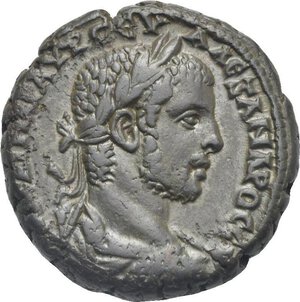
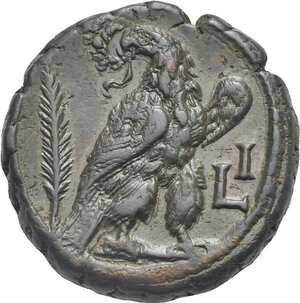
Egypt. Alexandria. Severus Alexander, 222-235. Tetradrachm (Billon, 23.6 mm, 13.48 g). Dated RY 10 (= 230/1). Α ΚΑΙ ΜΑΡ ΑΥΡ CЄΥ ΑΛΕΞΑΝΔΡΟC ЄΥ Laureate, draped and cuirassed bust of Severus Alexander to right, seen from behind. Rev. Eagle with closed wings standing right, head to left and holding wreath in beak; to left, palm frond; L I (date) in right field. Dattari-Savio 4411. RPC VI online, 10412. Geissen 2449. Emmett 3100. Attractive portrait of excellent style. Dark grey patina, minor flan faults, otherwise, nearly Extremely fine. Extremely rare and very likely the finest known example.
Ex Spink & Son, London, IX/72.
Coin in superb condition, practically uncirculated. It was issued on the tenth anniversary of the principality of Alexander Severus (230-231 AD) and shows on obverse features of a remarkably realistic image, while the usual grim imperial eagle dominates the reverse. Tetradrachm of extreme rarity and among the best known specimens of this type. Shining original black patina that greatly emphasises the images on the coins.
Lot # 458
-
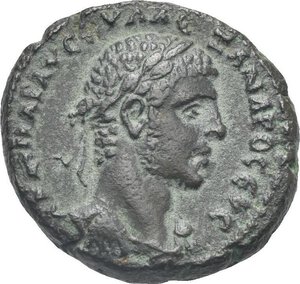
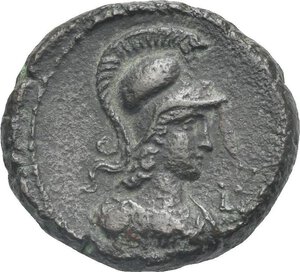
Egypt. Alexandria. Severus Alexander, 222-235. Tetradrachm (Billon, 23.70 mm, 12.26 g). Dated RY 8 (= 228/9). Α ΚΑΙ ΜΑ ΑΥΡ ϹΕΥ ΑΛΕΞΑΝΔΡΟϹ ΕΥ Laureate, cuirassed bust of Severus Alexander, right, seen from front. Rev. Athena bust right, wearing aegis and Corinthian helmet, griffin under the crest; L Η (date) in right field. Geissen –. Dattari-Savio 4273. RPC VI online, 10388. Emmett 3093. Dark patina, minor roughness. Very Fine. Very Rare.
Ex Carlo Crippa, Milan, price list, lot 374. Ex Athos Moretti Collection, Bellinzona, May 1987.
Tetradrachm of absolute rarity for the year of issue, the eighth of the reign of Alexander Severus (Emmett 5). Brilliant homogeneous original dark patina on the coin and physiognomic and stylised portrait of the sovereign on the obverse. Heroic bust of Athena with imposing Attic helmet on her head.
Lot # 457
-
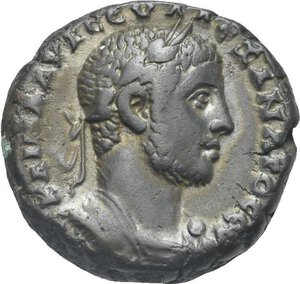
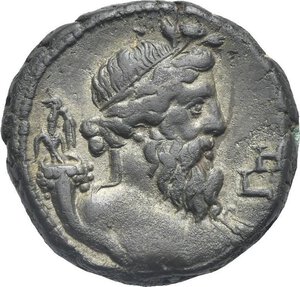
Egypt. Alexandria. Severus Alexander, 222-235. Tetradrachm (Billon, 23.3 mm, 12.45 g). Dated RY 8 (= 228/9). A KAI MAP AVP CEVHP AΛΕΞΑΔPOC EY[CEB] Laureate and cuirassed bust right. Rev. Bust of Nilus right, crowned with lotus and wearing taenia, slight drapery; cornucopia behind his right shoulder; L H (date) to right. Geissen –. Dattari 4329 (this coin) & 9927. RPC VI online, 10392. Emmett 3122. Dark gray patina with silvered highlights. Good Very Fine. Very Rare.
Ex Giovanni Dattari Collection 4329. Ex Kunst u. Münzen, Lugano, price list VII/86, lot 243.
Gorgeous tetradrachm of the eighth year of Alexander Severus from the Dattari Collection. Great care was taken in the style and engraving on both sides of the coin, with a plastic effect regarding Severus and the majestic bust of the Nile on the reverse. Dazzling original grey 'London smoke' patina.
Lot # 456
-
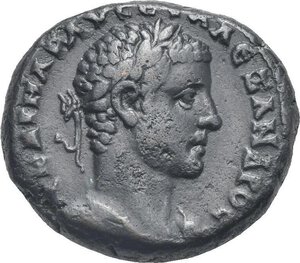
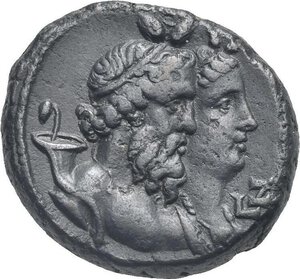
Egypt. Alexandria. Severus Alexander, 222-235. Tetradrachm (Billon, 23.0 mm, 11.71 g). Dated RY 7 (= 227/8). [A] KAI M AYP [CEY] AΛEΞANΔPOC [EY] Laureate and cuirassed bust of Severus Alexander right, short bearded, wearing paludamentum with fibula on left shoulder. Rev. Conjoined busts of Nilus, wearing grain ear wreath and with cornucopia, and Euthenia, draped and wearing grain ear wreath; L Z (date) to right. Dattari-Savio 9937. RPC VI, online 10369 (temporary). Emmett 3128. Geissen 2445. Attratcive dark patina with minor porosity. Good Very Fine.
Ex CNG 79, September 2008, lot 736 and CNG Auction 477, 23 September 2020, lot 360.
Not common tetradrachm of the year 7 of Alexander Severus (227-228 AD) with the combination of the bust of Nilus with that of his wife Euthenia, the divine protector and promoter of Egypt's agricultural fertility, on the reverse.
Lot # 455
-
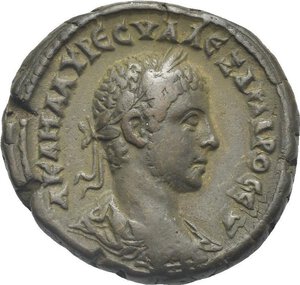
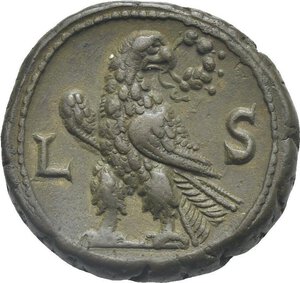
Egypt. Alexandria. Severus Alexander, 222-235. Tetradrachm (Billon, 25.1 mm, 12.35 g). Dated RY 6 (= 226/7). A KAI MA AYΡ CЄΥ ΑΛЄΞΑΝΔΡΟC ЄΥ Laureate, draped and cuirassed bust right, seen from behind. Rev. Eagle standing left, head turned right, holding wreath in beak; L-S (date) across field. Geissen 2438. Dattari-Savio 4410. RPC VI online, 10336 (temporary). Milne 3000. Emmett 3099. Attractive brown dark patina. Nearly Extremely Fine.
Ex Spink & Son, London, VII/73.
Third and notable Roman-Alexandrian tetradrachm of Alexander Severus in his sixth year of reign (226-227 AD), penultimate in which these extraordinary and unrepeatable issues appeared. The eagle is the primary symbol of imperial authority on reverse.
Lot # 454
-
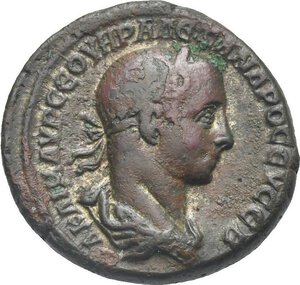
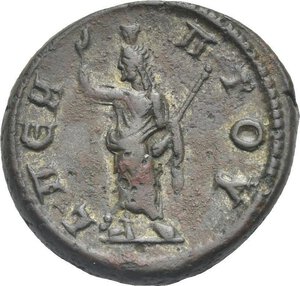
Egypt. Alexandria. Severus Alexander, 222-235 AD. Tetradrachm. (Billon, 24.89 mm, 11.30 g). Year 5 = circa 225-226 AD. A KA M AYPЄ CEYAΛЄΞANΔ POC Є Laureate, draped, and cuirassed bust right. Rev. L ΠΕΜΠΤΟΥ Sarapis standing facing, head left, holding long transverse sceptre, raising his right hand in salute. Dattari-Savio 4357, plate 22. Geissen 2434. Emmett 3134. Very Fine.
Ex Naville Numismatics Ltd., 28, 22.01.2017, lot 282.
Second excellent specimen of tetradrachm belonging to the special Roman-Alexandrian series referring to n. 195 of the collection. Here on the reverse is Zeus Serapis, with sceptre and kalathos, saluting the sovereign with his right hand, victorious in war, of whom a statuary bust can be admired on the obverse.
Lot # 453
-
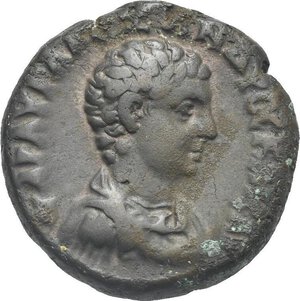
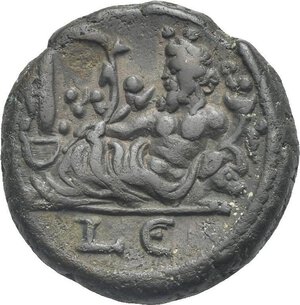
Egypt. Alexandria. Severus Alexander as Caesar, 222. Tetradrachm (Bronze, 22.90 mm, 12.83 g) dated RY 5 of Elagabalus (= 221-222) ΜΑΡ ΑΥΡ ΑΛЄΞΑΝΔΡΟϹ ΚΑΙϹΑΡ Draped and cuirassed bare bust of Severus Alexander right. Rev. Personified Nilus bare chest reclining left, wearing lotus wreath, holding reed leaning to left in the right hand and cornucopia on the left arm, from which emerges genius crowning Nilus with wreath, three little genii on his body, nilometer and genius to left, L Є (date) in exergue, under the ground line. RPC VI, 10223 (temporary). Dattari-Savio 4245. Geissen 2397. BMC 1587. Milne 2865. Emmett 3080. Vogt II, 125. Nice tone. Extremely Fine. Rare reverse type.
Ex CNG XXXI, 9-10 September, 1994, lot 1401.
The model of this reverse is probably inspired to the allegorical types of the Hellenistic sculpture.
Oncee again a tetradrachm of Alexander Severus as Caesar of Elagabalus. On the reverse is the uncommon canonical personification of Nilus with a Genius emerging from the cornucopia and three or four other small Genii left who are busy with the Nilometre work.
Lot # 452
-
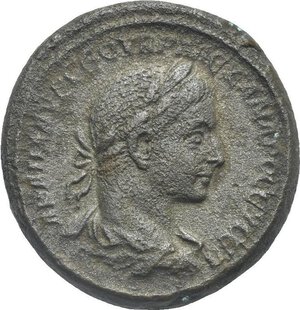
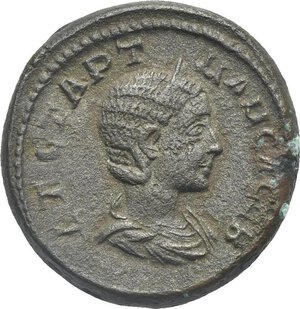
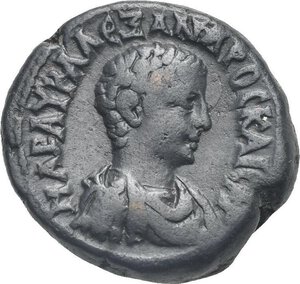
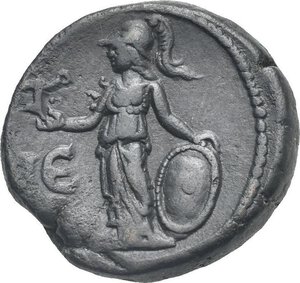
Egypt. Alexandria. Severus Alexander and Iulia Mamaea, 222-235. Tetradrachm (Billon, 24.5 mm, 14.60 g) dated RY 4 (= 224-225) Α ΚΑΙ Μ ΑΥΡ ϹЄΟΥΗΡ ΑΛЄΞΑΝΔΡΟϹ ЄΥϹЄΒ Laureate, draped and cuirassed bust of Severus Alexander right. Rev. L ΤЄΤΑΡΤ (date) in semicircle to left, ΜΑΜЄΑ ϹЄΒ in semicircle to right. Draped bust of Iulia Mamaea right, wearing stephane. RPC VI, 10293 (temporary). Dattari-Savio 4251. Milne 2943a. Geissen 2424. Emmett 3113. BMC 1715f. Vogt II, 127. Cf. SAVIO A., Tetradrammi alessandrini, pp. 121-126. Slightly rough/porous surface. Nice tone. Good Very Fine.
Ex Carlo Fontana Collection. Ex Finarte 1996, lot 1137. Ex Lanz Numismatik 154, 11-12.06.2012, lot 414.
Tetradrachm of large size belonging to the famous Roman-Alexandrian series minted exclusively in its 4th (224-225 AD) and 7th years ( 226-227 AD), in Alexandria by roman engravers or in Rome always by roman engravers: the matter is still open but it were issued coins of exceptional style and easily recognisable since they are very different from those tipically Egyptian -Alexandrian. In this excellent specimen we admire on the obverse the laureate bust of Alexander Severus and on the reverse, the draped one of his mother Julia Mamaea. See STAFFIERI, G. M., Alexandria in Nummis, Nr. 201-203, pp 401-406.
Lot # 451
-
Egypt. Alexandria. Severus Alexander as Caesar, 222. Tetradrachm (Billon, 23.10 mm, 11.89 g) dated RY 5 of Elagabalus (= 221-222) ΜΑΡ ΑΥΡ ΑΛЄΞΑΝΔΡΟϹ ΚΑΙϹΑΡ Draped and cuirassed bare head bust of Severus Alexander right. Rev. Athena Nikephoros draped standing facing, wearing long crested Attic helmet, head turned to left, holding Nike crowning her on the right hand and oval shield to right set on ground with the left hand, L Є (date) to left. RPC VI, 10214 (temporary). Dattari-Savio 4241 and 4241 bis. Geissen 2396. Milne 2839. Emmett 3073.5. BMC 1583. Vogt II, 125. Nice tone. Obverse slightly off center. About Extremely Fine.
Ex CNG 81, 20 May 2009, lot 885.
Another Severan tetradrachm of great rarity issued by Elagabalus in his fifth year of ruling (221-222 AD) in the name of his cousin Alexander Severus, adopted by him and elevated to the dignity of Caesar, i.e. heir to the throne, who reached it, acclaimed by the army, after Elagabalus' tragic end. On reverse Athena, crowned by Nike, greets the advent of the new Caesar.
Lot # 450
-
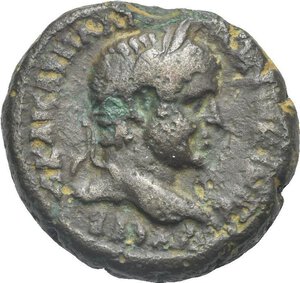
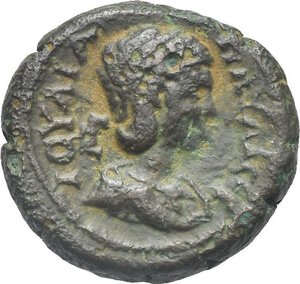
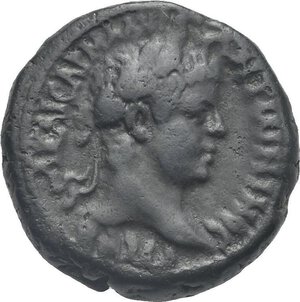
Egypt. Alexandria. Elagabalus, 218-222. Tetradrachm (Bronze, 23.40 mm, 12.67 g) dated RY 3 (= 219-220) Α ΚΑΙϹΑΡ ΜΑ ΑΥΡ ΑΝΤωΝΙΝΟϹ ЄΥϹЄΒ Laureate head of Elagabalus right. Rev. ΙΟΥΛΙΑ ΠΑΥΛΑ ϹЄΒ Draped bust of Julia Paula right, L Γ (date) to left. RPC VI, 10050 (temporary). Dattari-Savio 4092. Dattari-Savio 9307. BMC - . Emmett 2938. Very Fine/About Very Fine. Extremely rare.
Ex Roma Numismatics IV, 30. September 2012, lot 711.
Very rare tetradrachm of the third year of reign of Elagabalus (219-220 AD) showing on obverse his laureate bust and on reverse the draped bust of his first ephemeral wife, Julia Cornelia Paula.
Lot # 449
-
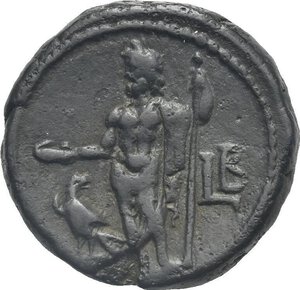
Egypt. Alexandria. Elagabalus, 218-222. Tetradrachm (Bronze, 23.20 mm, 12.03 g) dated RY 2 (= 218-219) Α ΚΑΙϹΑΡ ΜΑ ΑΥΡ ΑΝΤωΝΙΝΟϹ ЄΥϹЄΒ Laureate head of Elagabalus right. Rev. Zeus standing facing bare chest, head turned to left, holding patera in the right hand, long scepter in the left hand and drapery on the same arm, eagle standing at his feet to left with closed wings, head turned right to him, LB (date) to right. RPC VI, 10036 (temporary). Dattari-Savio pl. 225, 4146. BMC 1486. Geissen 2316. Milne 2738. Emmett 2959. Vogt II, 120. Cf. SAVIO A., Tetradrammi alessandrini, pp. 117-120. Nice light-brown patina. Good Very Fine.
Ex Gilles Blancon, price list 31, august 1998, lot 312.
The second part of the Severan dynasty comprising the family of Elagabalus 218-222 AD) and Alexander Severus (222-235 AD) is very abundant in Alexandrian coinages. On the reverse of this tetradrachm of the second year of reign of Marcus Aurelius Antoninus III Elagabalus (218-219 AD) is portrayed a standing Capitoline Roman Zeus with sceptre, patera and eagle, possibly referring to the arrival in Rome from the East of the young emperor.
Lot # 448
-
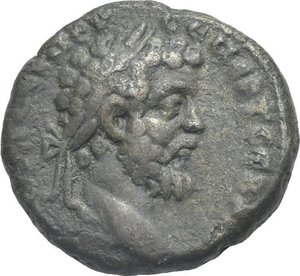
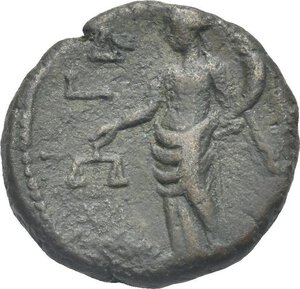
Egypt. Alexandria. Septimius Severus, 193-211. Tetradrachm (23.80 mm, 10.93 g) dated RY 4 (= 195-196) Laureate head of Septimius Severus right. Rev. Dikaiosyne draped standing facing, head turned to left, holding scales in the right hand, cornucopia and drapery on the left bent arm, L Δ (date) above to left. Dattari-Savio 9697. Geissen 2271. Emmett 2664.4. Cf. SAVIO A. Tetradrammi alessandrini, pp.103-110. Nice light-brown patina. Good Very Fine.
Ex Naville Numismatics Ltd. 51, 21.07.2019, lot 367.
Let us turn to the Severan dynasty, which in its first phase ( 191-217) is very scarce in Alexandrian coinage. This tetradrachm of notable rarity for the type of the reverse with Dikayosine holding scales and cornucopia, shows on the obverse an excellent realistic portrait of Septimius Severus in his fourth year of reign (195-196 AD).
Lot # 447
-
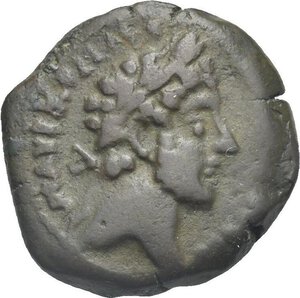
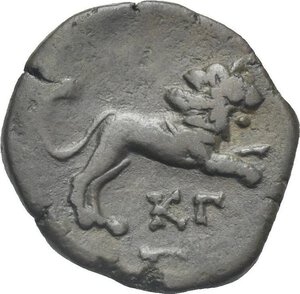
Egypt. Alexandria. Commodus, 177-192. Diobol (Bronze, 22.20 mm, 8.51 g) dated RY 23 of Marcus Aurelius (posthumous dating = 182-183) Μ ΑΥΡ ΚΟΜΜΟ [ΑΝΤΩΝΙΝΟϹ ϹЄ] Laureate head of Commodus right. Rev. Lion running right, L KΓ (date) below. RPC IV.4, 3420. Emmett 3605. Dattari 3963 + DS 9675. Milne - . About Very Fine.
Ex Giovanni Dattari Collection D S 9675. Ex Heidelberger Münzhandlung 20, 22-24. 05.1997, lot 416.
Another rare bronze diobol, but of Commodus Augustus in the posthumous year 23 of the late Marcus Aurelius (182-183 AD) and third of his reign.
Lot # 446
-
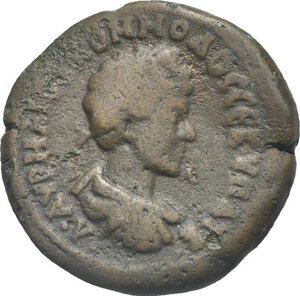
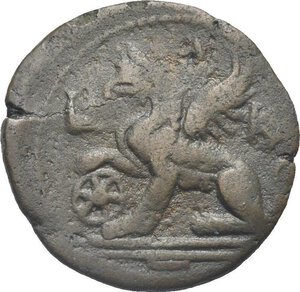
Egypt. Alexandria. Commodus as Caesar, 166-177. Diobol (Bronze, 23.60 mm, 6.68 g) dated RY 17 of Marcus Aurelius (= 176-177) AYTOK KAIC Λ ΑΥΡЄΛΙΟC KOMMOΔΟC Draped and cuirassed bare head bust of Commodus right. Rev. Griffin, as Nemesis, seated left, holding the right paw on wheel, L I[Z] (date) across fields. RPC IV.4, 3338. Dattari-Savio pl. 206, 3833. Geissen - . Emmett 2503.17. Minor flan crack on reverse. Light-brown toning. About Very Fine. Very rare.
Ex Heidelberger Münzhandlung 20, 22-24. 05.1997, lot 403.
Commodus began to mint coins in the year 16 of reign of his father Marcus Aurelius (175-176 AD) in strange coincidence with the unclear death of his mother Faustina II. This very rare bronze diobol, shows on obverse the juvenile portrait of Commodu as Caesar and on the reverse the winged griffith sitting, turned left, with right paw on a wheel, the symbol of Nemesis, goddess of destiny, perhaps the strange one of his mother's death.
Lot # 445
-
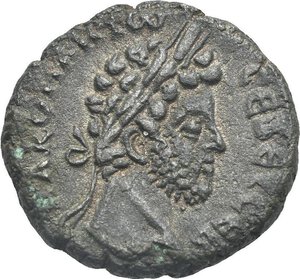
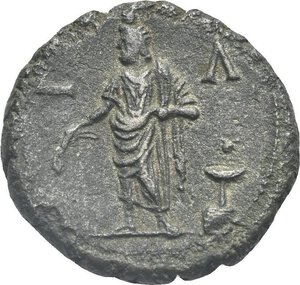
Egypt. Alexandria. Commodus, 177-192. Tetradrachm (Billon, 25.20 mm, 12.14 g) dated RY 30 of Marcus Aurelius (posthumous dating = 189-190) Μ Α ΚΟΜ ΑΝΤω ϹЄΒ ЄΥϹЄΒ Laureate head of Commodus right. Rev. Serapis draped as fountain-god standing facing, head turned to left, wearing kalathos on his head and holding simpulum in the right extended hand and drapery on his left bent arm, round basin set on a lion’s head shape fountain to his right, L Λ (date) across fields. RPC IV.4, 3552 (coin no. 31). Dattari-Savio pl. 209, 3884 (this coin). Dattari 3884 and pl. XXIII (this reverse illustrated). Geissen 2250. BMC 1422. Emmett 2556.30. Milne 2694. Nice old cabined tone. About Extremely Fine.
Ex Giovanni Dattari Collection 3884. Ex Naville Numismatics Ltd. 44, 04.11.2018, lot 330.
Tetradrachm of excellent quality from the Giovanni Dattari Collection. The style is pleasing, especially on the reverse, with the calm and solemn image of Zeus Serapis next to a fountain, in ritual robes with the sacrificial simpulum in his right hand.
Lot # 444
-
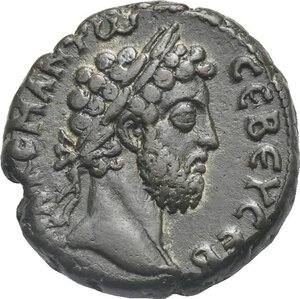
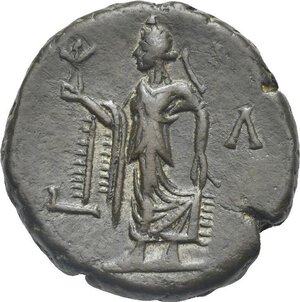
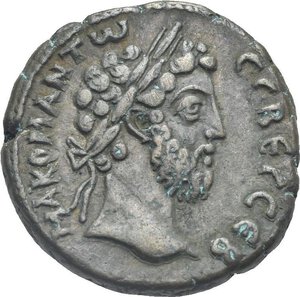
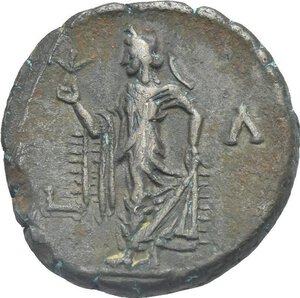
Egypt. Alexandria. Commodus, 177-192. Tetradrachm (Bronze, 23.80 mm, 13.30 g) dated RY 30 of Marcus Aurelius (posthumous dating = 189-190) Μ Α ΚΟΜ ΑΝΤω ϹЄΒ ЄΥϹЄΒ Laureate head of Commodus right. Rev. Elpis draped advancing left with the left leg forward, raising her skirt with the left hand in apotropaic gesture and holding flower in the right hand, L Λ (date) across fields. RPC IV.4, 3549. 36 (this coin cited and illustrated). Dattari-Savio pl. 208, 3864. Geissen 2246. Milne 2690. Emmett 2525. Nice uniform light-brown patina. Extremely Fine.
Ex Numismatic Fine Art Fall Mail bid Sale, 18. 10. 1990, lot 2425.
Let's go back to the description of the previous coin, which here is of special preservation and style, despite the smaller size of the flan, so much so that it deserves to be cited and illustrated by RPC IV.4.3549.36 probably as the best preserved specimen of the many listed. The Elpis on the reverse, goddess of Peace, refers to the end of the victorious conflict against the Germans in the year 189 A.D. in which the emperor did not personally participate but celebrated its triumph in Rome together with the senate.
Lot # 443
-
Egypt. Alexandria. Commodus, 177-192. Tetradrachm (Billon, 24.4 mm, 11.40 g). Dated RY 30 of Marcus Aurelius (= 189/90) Μ Α ΚΟΜ ΑΝΤω ϹЄΒ ЄΥϹЄΒ Laureate head of Commodus right. Rev. Elpis draped advancing left with the left leg forward, raising her skirt with the left hand in apotropaic gesture and holding flower in the right hand, L Λ (date) across field. Dattari-Savio 3864. RPC IV.4, 3549. Geissen 2246. Milne 2690. Emmett 2525. Nicely toned, with a splendid portrait. Nearly Extremely fine.
Ex Leu Numismatik AG 11, 22-23 february 2020, lot 1553.
Here we have the first of two tetradrachms by Commodus (189-190 AD) of the same type but of different coinage and style. This is of wide size, well centred and with a pleasant portrait of the emperor. On the meaning of Elpis = Peace on the reverse, see the commentary on the next coin no. 187 in the collection.
Lot # 442
-
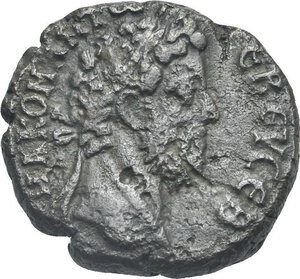
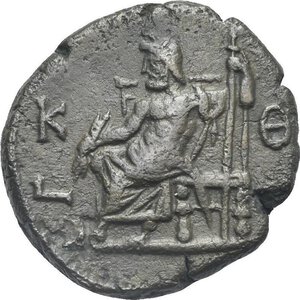
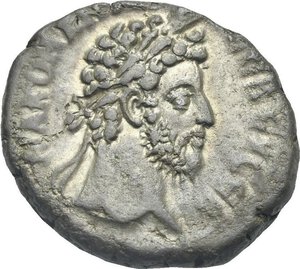
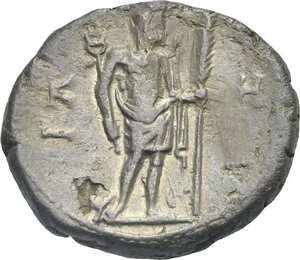
Egypt. Alexandria. Commodus, 177-192. Tetradrachm (Billon, 24.1 mm, 11.24 g). Dated RY 29 (= 188/9 AD). Μ Α ΚΟΜ ΑΝΤω ϹΕΒ ΕΥϹΕΒ Laureate head right. Rev. Zeus seated left, holding thunderbolt and sceptre; L / K-Θ (date) across field. Geissen 2244. Dattari 3896. RPC IV.4.3541.Milne 2677. Emmett 2567. BMC 1399. Roughness and minor porosity. Very Fine.
Ex Münzzentrum , Köln, 52, November 1984, lot 881. Ex Hirsch 157, 1988, lot 476. Ex Hirsch 317, 18.02.2016, lot 2221.
On the reverse of the tetradrachm, Commodus represents the Capitoline Zeus, an indication of his predominantly Roman-centric policy of the sovereign.
Lot # 441
-
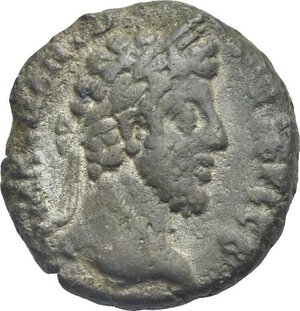
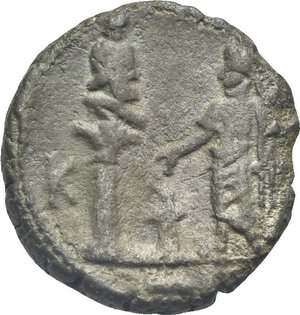
Egypt. Alexandria. Commodus, 177-192. Tetradrachm (Billon, 25.7 mm, 12.16 g). Dated RY 28 of Marcus Aurelius (= 187/188). Μ Α ΚΟΜ ΑΝ[Τω] ϹΕΒ ΕΥϹΕΒ Laureate head right. Rev. Hermanubis standing right, holding palm frond and caduceus; at his feet to left, jackal standing left, head right; K/L H (date) across field. Geissen 2229. Dattari-Savio 3866. RPC IV.4. 3516.44 (this coin cited). Emmett 2545.28. Toned, metal flaw on reverse, some smoothing on reverse, otherwise, Good Very Fine.
Ex Roma Numismatics E A 56, 18.04.2019, lot 555. Ex CNG 451, 04.09.2019, lot 264.
A well-preserved tetradrachm with skilful ancient silvering that highlights the images on both sides of the coin, in particular the excellent laureate head of Commodus, whose hair curls and beard hair can be counted.
Lot # 440
-
Egypt. Alexandria. Commodus, 177-192. Tetradrachm (Billon, 22.70 mm, 11.12 g) dated RY 24 (= 183-184) [Μ Α ΚΟΜ ΑΝΤω ϹЄΒ ЄΥ]ϹЄΒ Laureate head of Commodus right. Rev. The emperor in priestly dress standing left, dropping incense on lighted altar or thymiaterion, face to face with bust of Serapis to left, facing right to him, wearing kalathos and set on column, date: L (in exergue) K (to left) Δ to right. RPC IV.4, 3432. Dattari-Savio pl. 207, 3846 and 3847, rev. (= Dattari-Savio 3848). Dattari-Savio 9552 and pl. 210, 9604-5. Geissen 2212-3. Milne 2655. Emmett 2529.24. Vogt II, 108. An irregular edge, otherwise, About Very Fine.
Ex London Coin Galleries, auction 4, 01.06.2017, lot 726. Ex Naville Numismatics Ltd. 42, 22.07.2018, lot 275.
On the reverse of this tetradrachm of Commodus from the year 24 (183-184 AD) we see the emperor on the right sacrificing, facing left, on a lit altar in front of a column surmounted by a bust of Zeus Serapis with kalathos.
Lot # 439
-
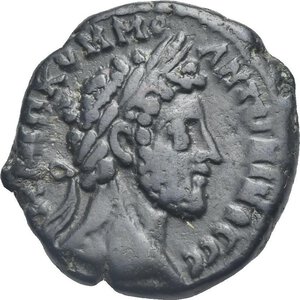
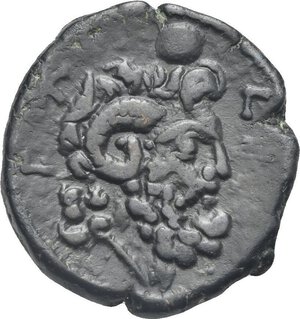
Egypt. Alexandria. Commodus, 177-192. Tetradrachm (Bronze, 25.70 mm, 12.07 g) dated RY 23 (=182-183) Μ ΑΥΡΗ ΚΟΜΜΟ ΑΝΤΩΝΙΝΟϹ ϹЄ Laureate head of Commodus right. Rev. Head of Zeus Ammon right, wearing horn and solar disk crown above his head, L K Γ (date) around. RPC IV.4, 3403 (this coin, no. 41). Dattari-Savio 3899. Dattari-Savio pl. 210, 9596-9. Geissen - . Emmett 2568.23. Milne 2644. Nice brown tone. Good Very Fine. Rare.
Ex CNG 79, 17.09.2008, lot 721. Ex Künker 182, 14.03.2011, lot 755.
Rare tetradrachm of Commodus with an unusually monumental head of Zeus Ammon on the reverse with the solar disk on his head. The expression of the name extended to KOMMO on the obverse legend, normally reduced to KOM, is curious. RPC IV.4.3403 cites this specimen at no. 41.
Lot # 438
-
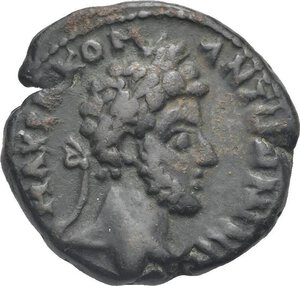
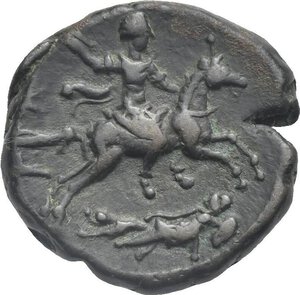
Egypt. Alexandria. Commodus, 177-192. Tetradrachm (Billon, 23.8 mm, 11.79 g). Dated RY 21 of Marcus Aurelius (= 180/1). Μ ΑΥΡΗ ΚΟΜ ΑΝΤωΝΙΝΟC [CЄ] Laureate head of Commodus to right. Rev. Commodus on horseback to right, preparing to spear fallen foe; L Κ [Α] (date) around. Dattari-Savio 3851 & 9556-7. RPC IV.4, 3377. Geissen 2203. Emmett 2534. Cf. SAVIO A., Tetradrammi alessandrini, pp. 93-97. Dark brown patina. Flan crack, otherwise, Very fine. Rare.
Ex Leu Numismatik AG 11, 22-23 Febuary 2020, lot 1550.
Let us turn to Commodus, the last and unlamented member of the Antonine dynasty, who counts his reigning years from the beginning of those of his father Marcus Aurelius. Commodus minted tetradrachms almost in bronze, since silver had practically disappeared. On the reverse we see the emperor in military dress brandishing a spear on a galloping horse: his identification is uncertain. We are in his first year of reign (180 -181 AD) and Commodus presents himself in victorious and triumphant form.
Lot # 437
-
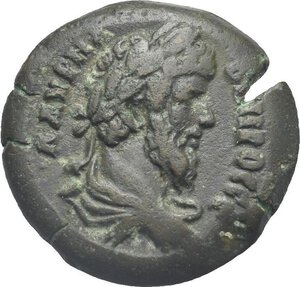
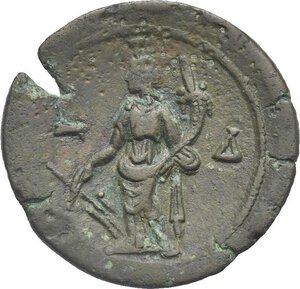
Egypt. Alexandria. Lucius Verus, 161-169. Diobol (Bronze, 23.80 mm, 7.45 g) dated RY 4 (= 163-164) Λ ΑΥΡΗΛ ΟΥΗΡΟϹ ϹЄ Laureate, draped and cuirassed bust of Lucius Verus right. Rev. Tyche draped standing facing, head wearing kalathos turned to left, holding rudder in the right hand and cornucopia in the left hand, L Δ (date) across fields. RPC IV.4, 2696 (this coin). Emmett 2466. Flan die split. Nice tone. Slightly unclear head on reverse, otherwise Good Very Fine. Unique. Only this specimen recorded in RPC.
Ex Kerry K. Wetterstrom Collection. Ex CNA Ltd. XIII, 12.04.1990, lot 135.
Here we have the only known specimen of this diobol from the well-known Wetterstrom collection, regularly surveyed by RPC IV.4.2696, which mentions and illustrates it. The image on the reverse is the canonical Tyche of Alexandria, while on the obverse is a tiny but realistic and stylish portrait of Lucius Verus.
Lot # 436
-
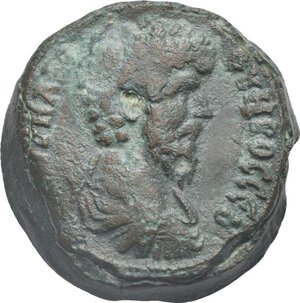
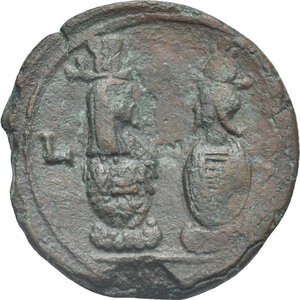
Egypt. Alexandria. Lucius Verus, 161-169. Drachm (Bronze, 33.30 mm, 28.67 g). Dated RY 6 (= 165/6). [Λ ΑV]ΡΗΛΙ ΟVΗΡΟС СEΒ Laureate, draped and cuirassed bust right. Rev. Two Canopi standing on cushions and bases, facing each other, one on the left crowned with horns, disk, plumes, and uraei, one on the right wearing atef crown; L ς (date) across field. Geissen 2167. Dattari-Savio 3702 & 9451 (this coin). RPC IV.4, 2921. Emmett 2371. Rough surface. Near Very Fine.
Ex Giovanni Dattari Collection 9451. Ex Naville Numismatics Ltd. 40, 27.05.2018, lot 414.
On this magnificent drachm of Lucius Verus, formerly in the Dattari Collection, is repeated, on the reverse, the image of the two canopic jars of Osiris (left) and Isis (right) facing each other, which we have already encountered on drachm No. 166 in the collection, of co-ruler Marcus Aurelius, issued in year 6 of their joint reign (165-166 AD). It is therefore a parallel and contemporary mintage as evidence of allegiance to a cult of pharaonic origin still deeply rooted in Egypt, in the Roman imperial period. The physiognomic portrait of Lucius Verus is majestic. The original dark brown patina is limpid. This very rare drachm is known to RPC IV.4.2921 in only 3 examples (this one No. 3).
Lot # 435
-
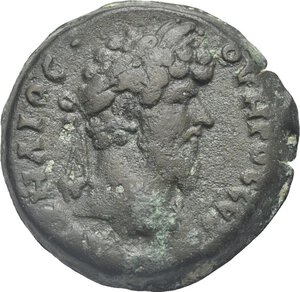
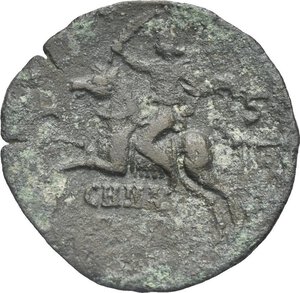
Egypt. Alexandria. Lucius Verus, 161-169. Drachm (Bronze, 33.00 mm, 20.35 g). Dated RY 6 (= 165/6). [Λ ΑYΡ]ΗΛΙΟ C-ΟYΗΡΟC CEΒ Laureate head of Lucius Verus to right, slight drapery on far shoulder. Rev. Semasia wearing elephant's skin headdress, a hunting tunic, a long, billowing cloak, holding a palm branch in her upraised right hand, riding a horse galloping to left; L - Ϛ (date) across field; CHMΑCIA in exergue. Dattari-Savio 3780 & 9506, Suppl pl 25, 26. RPC IV.4, 2947. Geissen 2182. Emmett 2433. Rare. Attractive patina, minor roughness. Very Fine.
Ex Kerry K. Wetterstrom Collection. Ex CNA Ltd. XII, 26.09.1990, lot 282.
The female figure appearing on the reverse of the drachm, indicated by the appellation Semasia (meaning 'signal' or 'command') wears an elephant-skin headdress and holds a palm branch while riding a steed galloping to the left. She is probably the personification of Alexandria itself and her presence in this scene may allude to the triumphant victory of Lucius Verus against the Parthians in 166 A.D. Semasia appears only in Alexandrian coinage during the joint reign of Marcus Aurelius and Lucius Verus.
Lot # 434
-
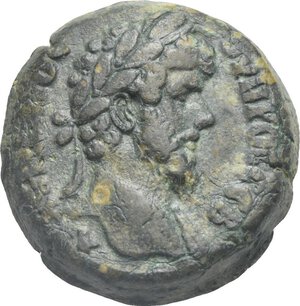
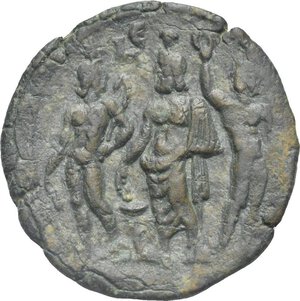
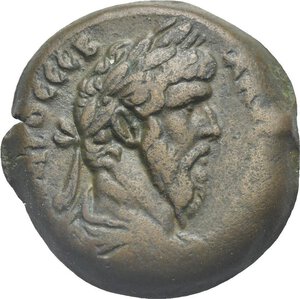
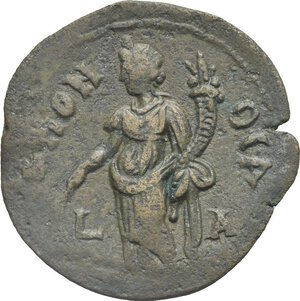
Egypt. Alexandria. Lucius Verus, 161-169. Drachm (Bronze, 31.60 mm, 25.81 g) dated RY 5 (= 164-165) Λ ΑΥΡΗΛΙΟϹ ΟΥΗΡΟϹ ϹЄΒ Laureate bust of Lucius Verus right, slightly draped on the left shoulder. Rev. Serapis as fountain god, bare chest, standing facing, head wearing kalathos turned to left, holding taenia over round basin set on base and double drapery on the left shoulder, flanked by Dioscuri standing facing nude, each crowned with star, the one to left with head turned to right, holding whip under the left bent arm and bridle (?) in the right resting hand; the one to right crowning Serapis raising wreath in the right hand and holding whip in the left resting hand, L Є (date) above. RPC IV.4, 2789 (this coin, no. 5). Dattari-Savio pl. 203, 3779 (this coin). Dattari 3779 and pl. XXIV (this reverse illustrated). Milne 2526. Emmett 2430. A complex scene of great effect. Lovely green patina. Extremely Fine. Extremely rare, the only specimen in private hands.
Ex Giovanni Dattari Collection 3779. Ex Naville Numismatics Ltd. 42, 22.07.2018, lot 362.
A very rare and curious drachm of Lucius Verus with on the reverse the unusual scene with Zeus Serapis facing, sacrificing, and on either side the Dioscuri, Castor and Pollux, his and Leda's twin sons, honouring him. They are considered the protectors of men from all dangers and here in particular they protect the reigning ruler. It could also be the reproduction of a statuary group found in an Alexandrian monument. It should be noted the exceptional dark green original patina and the splendid preservation of the coin, already belonging to the Giovanni Dattari collection 3779, who showed its reverse on plate XXIV of his catalogue of 1901 and the same made RPC IV.4.2789.5 reproducing it in full.
Lot # 433
-
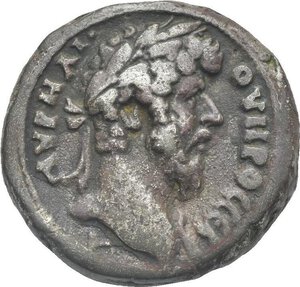
Egypt. Alexandria. Lucius Verus, 161-169. Drachm (Bronze, 30.80 mm, 18.24 g) dated RY 1 (= 161) Λ ΑΥΡΗΛΙΟϹ ΟΥΗΡΟϹ ϹЄΒ Laureate, draped and cuirassed bust of Lucius Verus right. Rev. OMON to left, OIA to right. Omonoia draped standing facing, head turned to left, holding olive branch in the right hand, drapery and cornucopia on the left arm, L A (date) across fields. RPC IV.4, 2305 (this coin, no. 5 cited and illustrated). Dattari-Savio, pl. 200, 9474. Emmett 2394. Geissen 2130. BMC 1377. Vogt II, 92. Nice brown tone. Extremely Fine.
From a private German collection. Ex Münz Zentrum sale 123, 2004, lot 247. Ex Künker sale 89, 2004, lot 1804. Ex Naville Numismatics Ltd. 57, 25.04.2020, lot 322.
We are at the beginning of the peaceful and cooperative alliance of Marcus Aurelius and Lucius Verus at the head of the Roman Empire as solemnly affirmed on the reverse with the presence of the divine OMONOIA, corresponding to the Roman CONCORDIA AUGUSTORUM which was a constant of that period that ended in 169 AD with the premature death of Lucius Verus whom we recognize in the magnificent laureate bust on the obverse of this dracm of great charm.
Lot # 432
-
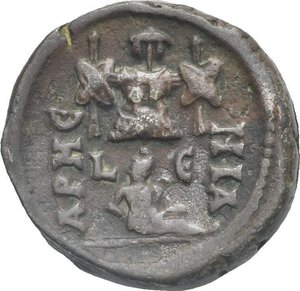
Egypt. Alexandria. Lucius Verus, 161-169. Tetradrachm (Billon, 23 mm, 10.43 g) dated RY 5 (= 164-165) Λ ΑΥΡΗΛ[ΙΟϹ] ΟΥΗΡΟϹ ϹЄ[Β] Laureate bust of Lucius Verus right, slightly draped on the left shoulder. Rev. ΑΡΜЄ to left, ΝΙΑ to right. Throphy composed by helmet and cuirass and two crossed oval shields with spear for each side, Armenian captive with bound hands behind his back, lying below at ground, head wearing Phrygian cap turned to left, L Є (date) across fields. RPC IV.4, 2739 (this coin, no. 14). Dattari-Savio pl. 197, 3692 var. Milne - . Geissen 2163 var. Emmett 2362. Oxford 2519 var. Vogt II, 96. Cf. Savio A. Tetradrammi alessandrini, pp. 89-90. Nice dark tone with highlights. About Extremely Fine.
Ex Naville Numismatics Ltd. 42, 22. 07.2018, lot 274.
Of the two 'Augusti' co-rulers from 161 to 169 AD, Lucius Verus, portrayed on the obverse, was the commander in charge of the security and defence of the imperial territory, and in 164 AD the first phase of the conflict in Armenia was victoriously concluded, celebrated on the reverse of the tetradrachm by means of a military trophy with an Armenian prisoner at his feet and the historical indication APMENIA.
Lot # 431
-
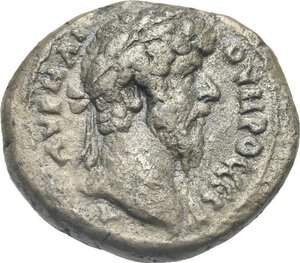
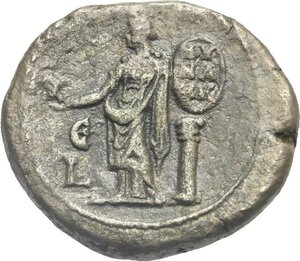
Egypt. Alexandria. Lucius Verus, 161-169. Tetradrachm (Billon, 25.20 mm, 10.31 g) dated RY 5 (= 164-165) Λ ΑΥΡΗΛΙ[ΟϹ] ΟΥΗΡΟϹ ϹЄ[Β] Laureate bust of Lucius Verus right, slightly draped on the left shoulder. Rev. Aphrodite draped standing facing, head turned to left wearing stephane, holding helmet in the right extended hand, drapery on the left arm and holding oval shield inscribed with ΔΥ ΝΑ ΜΙC in three lines, on a short column with Corinthian capital, Є L (date) to left. RPC IV.4, 2721 (this coin, no. 7). Dattari-Savio pl. IX (rev.), 3646. Dattari-Savio pl. 197, 12311. Geissen 2159. BMC 3088. Emmett 2327. Cf. Savio A., Tetradrammi alessandrini, pp. 89-90. Nice tone. Good Very Fine.
Ex Gordon Dickie Collection, Empire Auction 7, lot 180. Ex CNA XVIII, 12.03.1991, lot 417.
Rare tetradrachm issued by Lucius Verus, co-regent of Marcus Aurelius, in their common fifth year of reign (164-165 AD). The reverse officially commemorates the end of the conflict in Armenia by Lucius Verus and the pacification of this vassal kingdom of the Roman Empire. Aphrodite, here as the goddess guarantor of Peace, writes on the shield the Victory proclamation: ΔYNAMIC.
Lot # 430
-
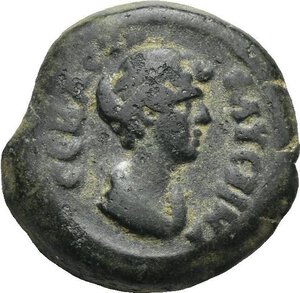
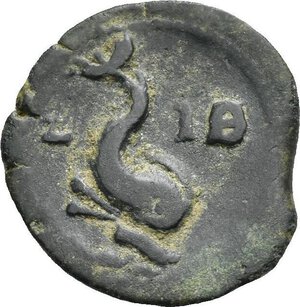
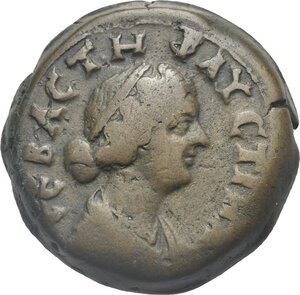
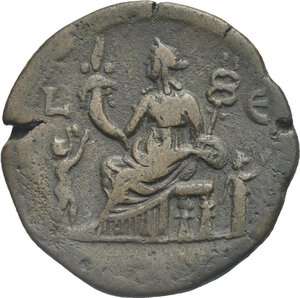
Egypt. Alexandria. Faustina Augusta, daughter of Antoninus Pius, 147-175. Obol (Bronze, 18.60 mm, 4.46 g) dated RY 19 (= 155-156) ΦΑΥϹΤΙΝΑ ϹЄΒΑϹΤΗ Draped bust of Faustina right. Rev. Dolphin swimming right, L IΘ (date) across fields. RPC IV.4, 1810 (this coin, no. 2). Dattari-Savio - . Geissen - . Milne - . Emmett 2028. BMC 3079. Nice tone. Very Fine. Extremely rare, only three specimens known and noticed in RPC.
Ex Jacquier 38, 09.2013, lot 249.
Small and pleasant obol of Faustina II, with her very recognisable portrait of "Augusta". It is very rare because is known by RPC IV.4.1810 in only three specimens, one of them is ours at no. 2, with the honour of being illustrated. The original bright black patina that covers the entire coin and highlights the reproduced images is remarkable.
Lot # 429
-
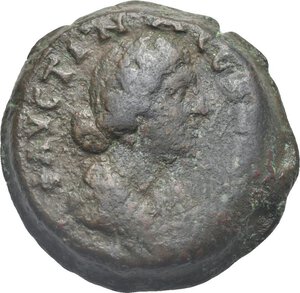
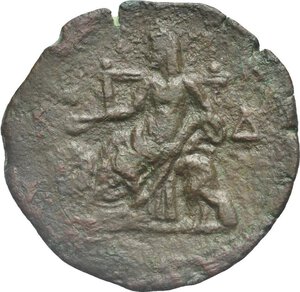
Egypt. Alexandria. Faustina Augusta, wife of Marcus Aurelius, 147-175. Drachm (Bronze, 33.50 mm, 28.92 g) dated RY 5 (= 164-165) ΦΑΥϹΤΙΝΑ ϹЄΒΑϹΤΗ Diademed and draped bust of Faustina right. Rev. Eirene draped seated left on backless throne, wearing stephane, holding cornucopia in the right hand, drapery and caduceus on the left arm, infant Plutos standing right before her to left with raised arms, to right girl standing facing, head turned to left, the left arm raised, holding wreath (?), L Є (date) across fields. RPC IV.4, 2775 (this coin, no. 9). Dattari 3624 (this coin, plate XII). Geissen 2114. Milne 2520. Emmett 2293. Vogt II, 97. Nice light-brown tone. Minor flan die splits. Good Very Fine.
Ex Giovanni Dattari Collection 3624 (plate XII). Ex Dr Busso Peus Nachf. auction 369, 31.10.2001, lot 1181.
Interesting drachm of Faustina II issued in the fifth year of Marcus Aurelius (164-165 AD). The reverse depicts a complex scene with the figure of Eirene, goddess of Peace, in the centre, holding a cornucopia in her right hand and a caduceus with her left, while she is acclamated on the front by the very young Pluto: all symbols of that richness and abundance, only peace can bring.
Lot # 428
-
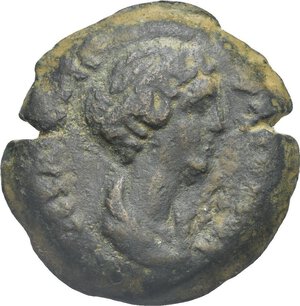
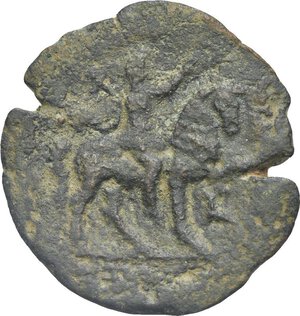
Egypt. Alexandria. Faustina Augusta, wife of Marcus Aurelius, 147-175. Drachm (Bronze, 33.00 mm, 27.22 g) dated RY 4 of Marcus Aurelius (= 163-164) ΦΑΥϹΤΙΝΑ ϹЄΒΑϹΤΗ Draped bust of Faustina right. Rev. Cybele draped and veiled, seated left on backed throne decorated with globes, between two seated lions, holding patera in the right extended hand and resting the left arm on armrest, L Δ (date) across fields. RPC IV.4, 2652 (this coin, no. 14). Dattari-Savio 3629. Dattari-Savio pl. 195, 9383. K& G 38.9. Geissen 2112. Milne 2501. Emmett 2297. BMC 1350. Vogt II, 95. Brown tone. Slightly rough reverse, otherwise, About Very Fine.
Ex Greenpoint Collection. Ex CNG 55, 13 September 2000, lot 987. Ex CNG 91, 19 September 2012, lot 791.
After Antoninus Pius's death in 161 AD, the Alexandrian coins minted for Faustina II show the reign years of her consort Marcus Aurelius and in this specimen is the fourth (163-164 AD). On the reverse we find one of the few coin representations of Cybele, an ancient Anatolian deity worshipped as the 'great mother' of Mount Ida near Troy: goddess of nature, animals and wild places. in Greek mythology she was identified with Rhea, the mother of the gods.
Lot # 427
-
Egypt. Alexandria. Faustina Augusta, daughter of Antoninus Pius, 147-175. Drachm (Bronze, 32.00 mm, 18.63 g) dated RY 20 (= 156-157) [ΦΑΥϹΤΙΝΑ ϹЄΒΑCΤΗ] Draped bust of Faustina right. Rev. The emperor Antoninus Pius in military dress on horseback, raising the left leg, to right, cloak flowing left, holding scepter in the left hand on shoulder and raising the right arm, L K (date) to right. RPC IV.4, 1906 (this coin, no. 11). Dattari-Savio pl. 172, 3277. Geissen 1994. Milne 2340. Vogt II, 85. Emmett 1941. BMC - . Flan die splits and slightly rough/porous reverse, otherwise, About Very Fine.
EX Naville Numismatics Ltd. 41, 24.06.2018, lot 267.
We find Faustina II again on this drachm of the year 20 of her father Antoninus Pius (156-157 AD) with on reverse the emperor on horseback holding sceptre with an attitude of joyful greeting on occasion of his vicennalia, when he celebrates himself and at the same time his dynasty.
Lot # 426
-
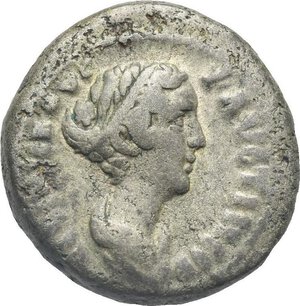
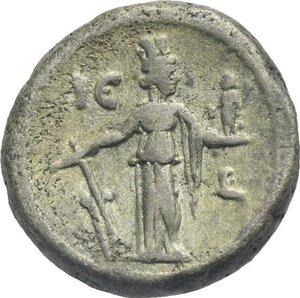
Egypt. Alexandria. Faustina Augusta, daughter of Antoninus Pius, 147-175. Tetradrachm (Billon, 23.10 mm, 13.44 g) dated RY 15 (= 151-152) ΦΑΥϹΤΙΝ ϹЄΒ ϹЄΒ ЄΥϹЄΒ ΘΥΓ Draped bust of Faustina right. Rev. Tyche of Alexandria draped (?), standing facing, turreted head turned to right, holding rudder in the right extended hand, drapery and statuette of Hermes (?) standing left on her left extended hand, wearing hem-hem crown, holding purse and caduceus in the right hand, L IЄ (date) across fields. RPC IV.4, 1342 (coin no. 9). Dattari-Savio pl. 171, 3270 (this coin). Dattari 3270 and pl. XXIV, 3270 (this rev. illustrated). Geissen 1960. Emmett 1951. Milne 2143. Vogt II, 79. Very Fine/Good Very Fine.
Ex Giovanni Dattari Collection 3270, Il Cairo. Ex Naville Numismatics Ltd. 33, 16.07.2017, lot 253. Ex Künker 53, 22.02.2019, lot 8157.
Prestigious tetradrachm of the young Faustina II elevated to imperial rank by her father Antoninus Pius in 147 AD at the birth of his first-born daughter while her spouse Marcus Aurelius remained Caesar until the death of his father-in-law in 161 AD. A coin of good wishes of the city of Alexandria towards the "Augusta" Faustina II and her dynasty.
Lot # 425
-
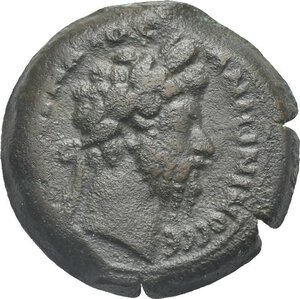
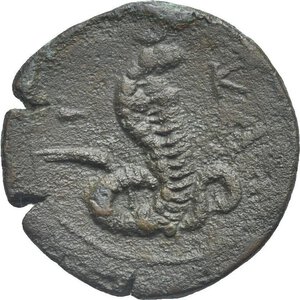
Egypt. Alexandria. Marcus Aurelius, 161-180. Diobolos (Bronze, 24.52 mm, 10.83 g) dated RY 20 (= 179-180) [Μ ΑΥΡΗΛΙΟϹ] ΑΝΤωΝΙΝΟϹ ϹЄ Laureate head of Marcus Aurelius right. Rev. Serpent Uraeus erect right, crowned with disk and horns, to ears of grain to left and right within the coils of the serpent, L K (date) across fields. RPC IV.4, 3365 (this coin). Dattari-Savio 3602. Emmett 2261. Light-brown tone, minor flan die splits, otherwise, About Very Fine.
Ex Giovanni Dattari Collection, 3602. Ex Frank Sternberg, Zürich, October 1982.
Precious bronze diobol issued by Marcus Aurelius in his twentieth and last year of reign (179-180 AD), probably on the occasion of his vicennalia, as wished by the benign and beneficent Agathodaemon appearing on the reverse. In addition to coming from the celebrated Dattari collection, it is a unique specimen as attested by RPC IV.4.3365.
Lot # 424
-
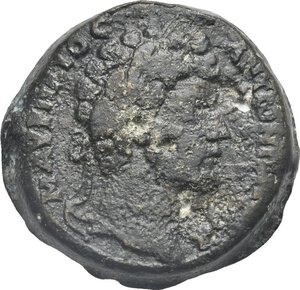
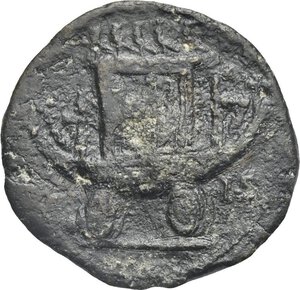
Egypt. Alexandria. Marcus Aurelius, 161-180. Drachm (Bronze, 32.80 mm, 31.06 g) dated RY 16 (= 175-176) Μ ΑΥΡΗΛΙΟϹ ΑΝΤωΝΙ[ΝΟϹ ϹЄ] Laureate bust of Marcus Aurelius right, slightly draped on the left shoulder. Rev. Boat of Osiris on wheels, surmounted by five hawks to left crowned with skhents, containing statue of Osiris (?) facing inside cell, hawks on columns to either sides of cell, hawks on torches inside each outer side of boat, L Iζ (date) across fields. RPC IV.4, 3259.4 (this coin cited). Dattari-Savio 3557 corr., pl. XXVII (rev.), 3557. Emmett 2161 (5). Milne - . Dark-brown tone and rough/porous surfaces. Good Fine.
Ex Kölner Münzkabinett 66, 21-22.04.1997, lot 583.
Drachm of special charm and absolute rarity, particularly sought after for the image of the reverse, where we admire the "sacred boat of Osiris", a typical processional element of the most ancient pharaonic cult, taken up in the Greco-Roman era. To this special representation on Alexandrian coins, Staffieri G. M. and Tosi M. have dedicated an essay published in the volume "Aegyptiaca serta in Soheir Bakhorum Memoriam", Parigi-Milano, 2008, pp. 229-233 to which reference should be made for a detailed examination of the religious and numismatic context of this subject. RPC IV.4, 3259 considers three specimens, included this one to the no. 3.
Results from 27301 to 27350 of 32902