Byzantine Coins
Results from 651 to 700 of 3053
Lot # 229
-
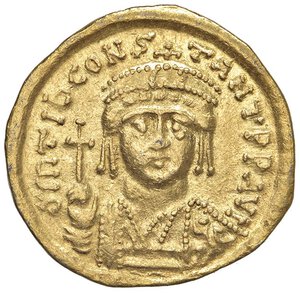
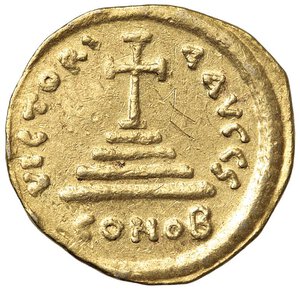
Tiberio II Constantino (578 - 582) Solido - Busto coronato di fronte - R/ Croce potenziata - Sear 422 AU (g 4,42) Graffiti nel campo del R/ BB+
Lot # 228
-
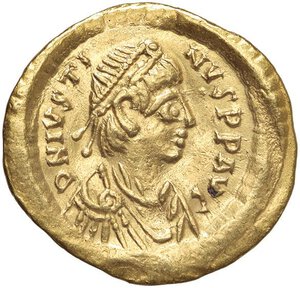
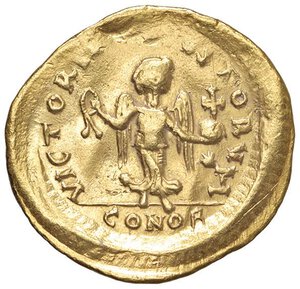
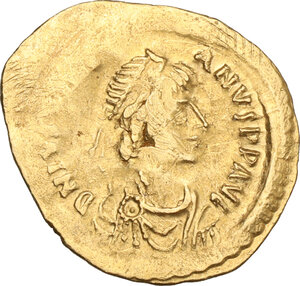
Giustino II (565-578) Tremisse - Busto diademato a d. - R/ La Vittoria andante a d. - Sear 353 AU (g 1,52) Schiacciature marginali del tondello BB+
Lot # 227
-
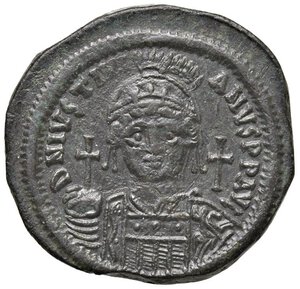
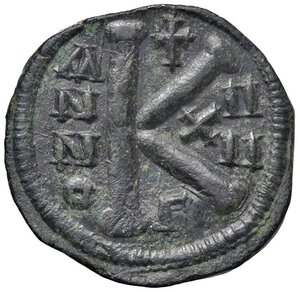
Giustiniano (527-565) Mezzo follis - Busto coronato di fronte - R/ Lettera K - Sear 165 AE (g 12,32) Bellissimo esemplare SPL
Lot # 226
-
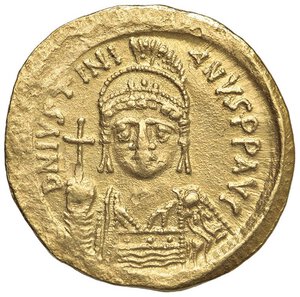
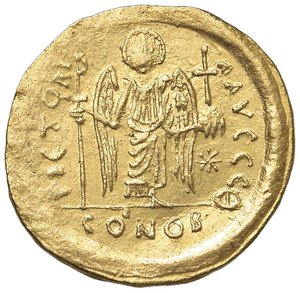
Giustiniano I (527-565) Solido - Busto coronato di fronte - R/ La Vittoria stante di fronte - Sear 139 AU (g 4,42) BB
Lot # 224
-
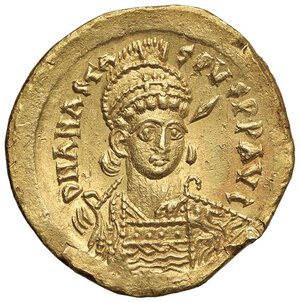
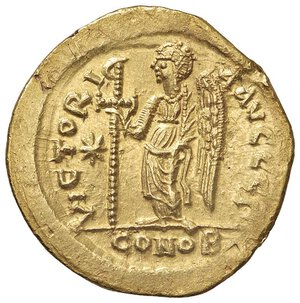
MONETE BIZANTINE Anastasio (491-518) Solido - Busto elmato di fronte - R/ La Vittoria stante a s. con lunga croce - Sear 5 AU (g 4,41) Tacca al D/ ed al R/ ad h 4 del D/ SPL
Lot # 6025
-
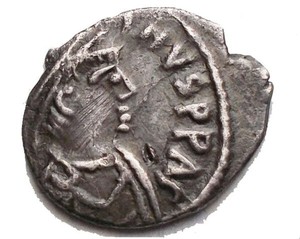
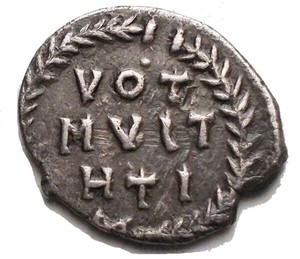
Justinian I, 527-565 AD. Siliqua; Carthage, 1.26g. MIB-51, DO-280, Sear-253. Obv: (D N IVSTINI)ANVS P P Aς Diademed bust r. Rx: VOT MVIT HTI in three lines within wreath, (CONOς) in exergue. Good VF
Lot # 632
-
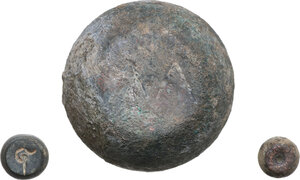
Lot of 3 Byzantine-Medieval Commercial Weights, the larger one with engraved denominational mark. Circa 4th-12th century. AE.
Lot # 631
-
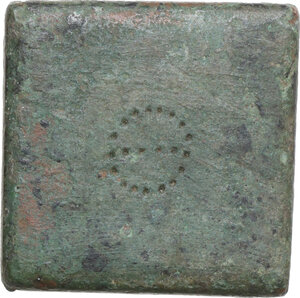
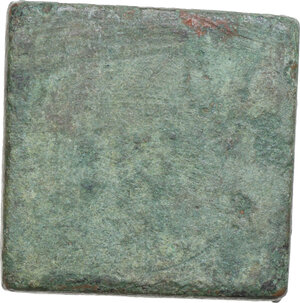
Byzantine Square Commercial Weight for 7 Nomismata(?), 4th-6th century. D/ Engraved pelleted Θ. R/ Blank. Bendall -; Pera coll. -. AE. 32.11 g. 23 mm. Good VF.
Lot # 630
-
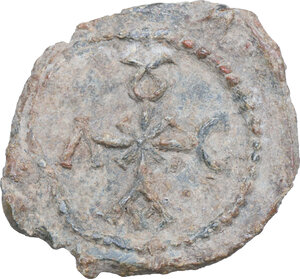
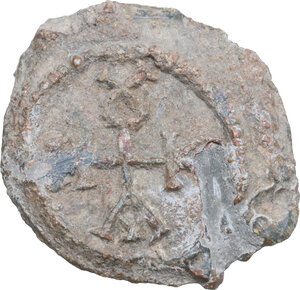
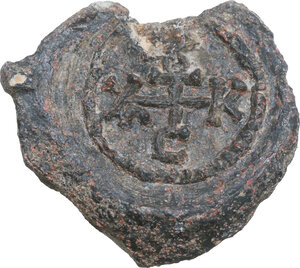
Lead seal, c. 7-8th century. D/ Cruciform monogram consisting of Λ, X, OV, C and AV. R/ Cruciform monogram consisting of H, OV, K and AV. PB. 10.05 g. 26 mm. Gash on reverse. VF.
Lot # 629
-
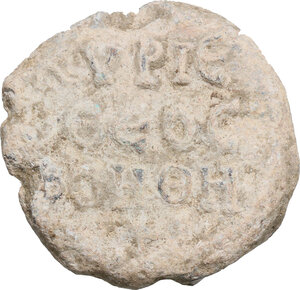
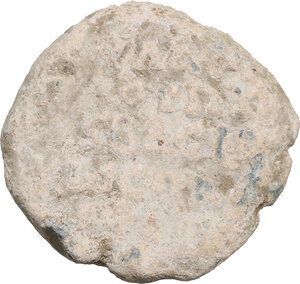
Lead seal, c. 6-7th century. D/ ΚΥΡΙЄ / ΘЄΟC / ΒΟΗΘΗ in three lines. R/ Legend in four or five lines. PB. 20.29 g. 28 mm. About VF/Good F.
Lot # 628
-
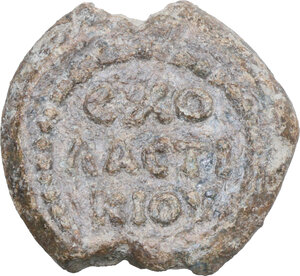
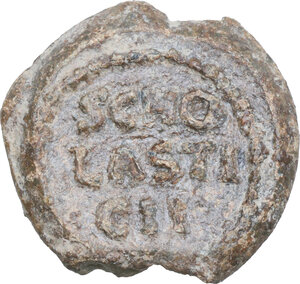
Bilingual lead seal, 6-7th century. D/ CXΟ / ΛΑCΤΙ / ΚΙΟΥ in three lines. R/ SCHO / LASTI / CII in three lines. PB. 9.78 g. 21 mm. VF.
Lot # 627
-
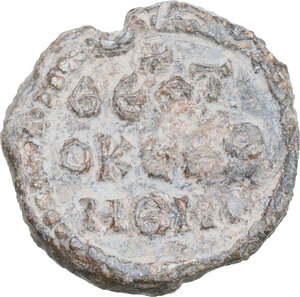
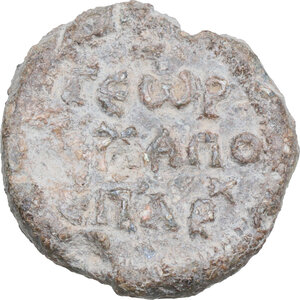
George apo eparchon. Lead seal, c. 6-7th century. D/ + ΘЄΟΤ/ ΟΚЄΒΟ / ΗΘΗ in three lines. R/ + ΓЄⲰΡ / ΓΙⲰΑΠΟ / ЄΠΑΡx in three lines. PB. 8.44 g. 21.5 mm. VF.
Lot # 626
-
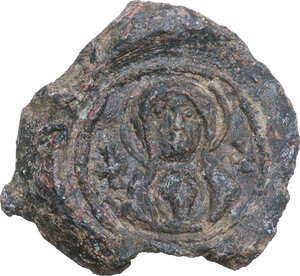
Lead seal, c. 6-7th century. D/ Facing bust of the Mother of God holding infant Christ, both nimbate; cross to her left and right. R/ Cruciform monogram consisting of XA, TOV, K and C. PB. 8.83 g. 24 mm. VF.
Lot # 625
-
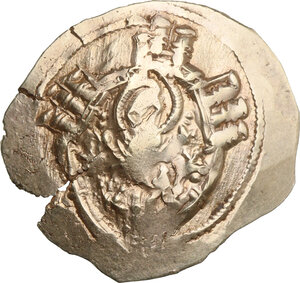
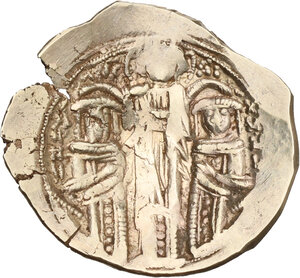
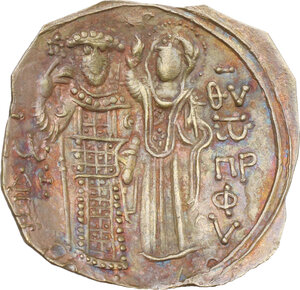
Andronicus II and Michael IX (1295-1320). AV Hyperpyron, Constantinople mint, 1295-1303. D/ Half-length facing figure of the Theotokos, orans, within city walls. R/ Christ standing facing, crowning Andronicus and Michael, kneeling to left and right respectively. Cf. Lianta, LBC, 702ff. (uncertain mint); Sear 2396. AV. 3.93 g. 25.5 mm. Flan cracks and metal flaws. VF.
Lot # 624
-
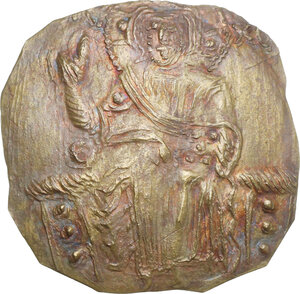
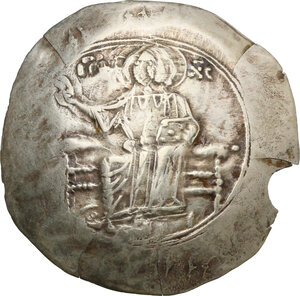
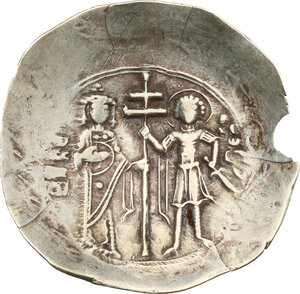
John III, Ducas-Vatatzes (1222-1254). Debased AV Hyperpyron, Empire of Nicaea, Magnesia mint, c. 1232-1254. D/ Christ Pantokrator seated facing, right hand raised in benediction and holding Gospels in left. R/ Emperor and the Virgin Mary standing facing; emperor holding labarum and akakia and Mary crowning him. D.O. 6; Sear 2073. Debased AV. 2.56 g. 26 mm. Good VF.
Lot # 623
-
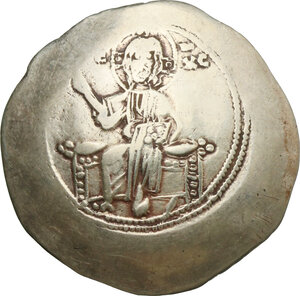
John II, Comnenus (1118-1143). EL Aspron Trachy, Constantinople mint. D/ Christ seated facing on throne, raising right hand in benediction and holding in left book of Gospels. R/ John and St. George both standing facing, holding between them patriarchal cross. Sear 1941. EL. 3.97 g. 31 mm. Chipped edge. Minor flan cracks. About VF.
Lot # 622
-
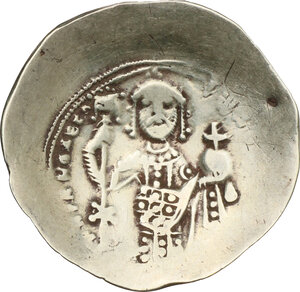
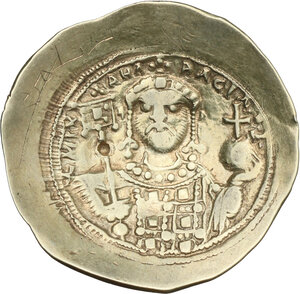
Nicephorus III Botaniates (1078-1081). EL Histamenon Nomisma, Constantinople mint. D/ Christ enthroned facing, wearing pallium and colobium, raising right hand in benediction and holding book of Gospels in left. R/ Nicephorus standing facing [on footstool], wearing crown and loros and holding labarum with X on shaft and globus cruciger. D.O. 3; Sear 1881. EL. 4.19 g. 28 mm. Graffiti. About VF.
Lot # 621
-
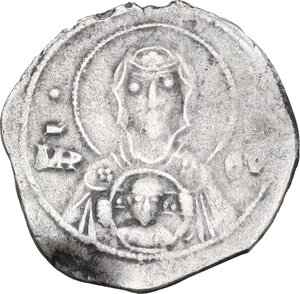
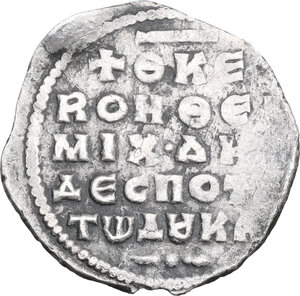
Michael VII Ducas (1071-1078). AR 2/3 Miliaresion. Constantinople mint. D/ Facing bust of the Virgin Mary, holding medallion with the face of the Holy Infant; pellet to left and right. R/ + ΘKЄ/ROHΘЄI/MIXAHΛ/ΔЄCΠOTH/Tω ΔUKA in five lines. D.O. 8; Sear 1876. AR. 1.38 g. 19.5 mm. RR. Very rare. Lightly toned. VF.
Lot # 620
-
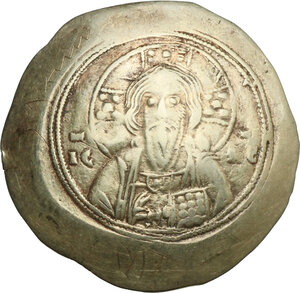
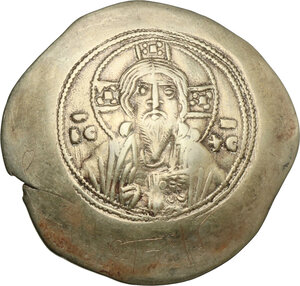
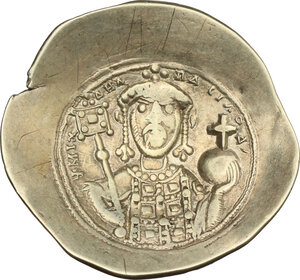
Michael VII Ducas (1071-1078). EL Histamenon Nomisma, Constantinople mint. D/ Nimbate bust of Christ facing, wearing pallium and colobium, raising right hand in benediction and holding in left book of Gospels. R/ Crowned and bearded bust facing, wearing loros and holding labarum and globus cruciger. D.O. 2; Sear 1868. EL. 4.21 g. 27 mm. Graffiti and mark on reverse. VF/Good VF.
Lot # 619
-
Michael VII Ducas (1071-1078). EL Histamenon Nomisma, Constantinople mint. D/ Nimbate bust of Christ facing, wearing pallium and colobium, raising right hand in benediction and holding in left book of Gospels. R/ Crowned and bearded bust facing, wearing loros and holding labarum and globus cruciger. D.O. 2; Sear 1868. EL. 4.24 g. 29 mm. Graffiti on both sides. Minor flan nick. VF.
Lot # 618
-
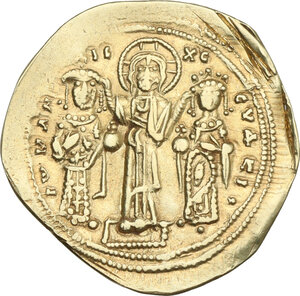
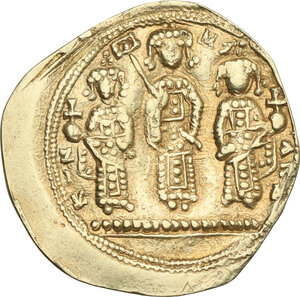
Romanus IV, Diogenes (1068-1071). AV Histamenon Nomisma, Constantinople mint. D/ Christ standing facing on footstool, crowning Romanus and the empress Eudocia, each holding globus cruciger. R/ The three sons of Constantine X and Eudocia, standing facing: Michael holding labarum and akakia, between Constantius and Andronicus, each holding globus cruciger and akakia; dotted exergual band. D.O. 2; Sear 1861. AV. 3.09 g. 23 mm. Scarce. Traces of mounting. VF.
Lot # 617
-
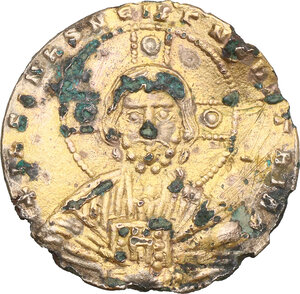
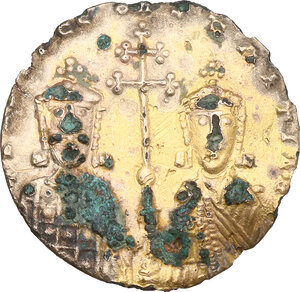
Basil II and Constantine VIII (976-1025). AV/AE Fourrée Histamenon nomisma, Constantinople mint. D/ Facing cross-nimbate bust of Christ, holding book. R/ Busts of Basil, crowned and wearing loros, and Constantine, crowned and wearing chlamys, holding patriarchal cross crosslet between them. D.O. 3; Sear 1797. AV/AE. 2.31 g. 20 mm. Copper core is exposed at multiple spots, otherwise. VF.
Lot # 616
-
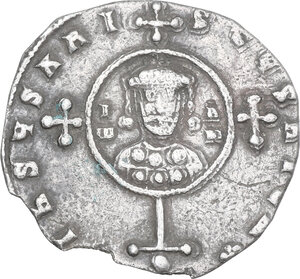
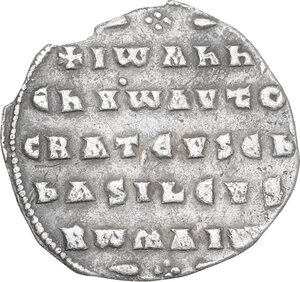
John I Tzimisces (969-976). AR Miliaresion, Constantinople mint, 969-976. D/ + IҺSЧS XRISTЧS ҺICA ✷. Cross-crosslet set on globus above two steps; in central medallion, crowned bust facing. R/ + IWAҺҺ / ЄҺ Xω AVTO / CRAT ЄVSЄЬ / ЬASILЄVS / RωMAIω, in five lines. D.O. 7; Sear 1792. AR. 1.95 g. 20 mm. Toned. Light die shift on obverse. Chipped edge, otherwise. VF.
Lot # 615
-
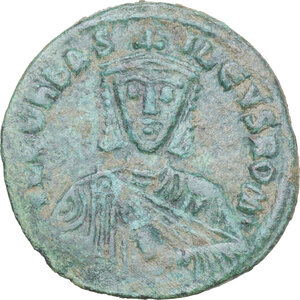
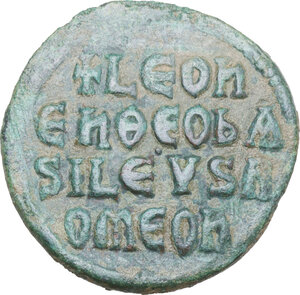
Leo VI, the Wise (886-912). AE Follis, Constantinople mint. D/ Crowned and draped bust facing, holding akakia. R/ +LEOn/En ΘEO bA/SILEVS R/OmEOn. D.O. 8; Sear 1729. AE. 6.6 g. 26 mm. Lovely green patina. About EF.
Lot # 614
-
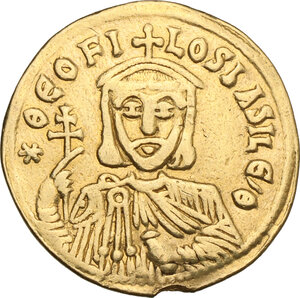
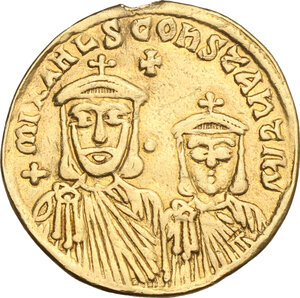
Theophilus, with Constantine and Michael II (829-842). AV Solidus, Constantinople mint. D/ *ΘEOFILOS BASILEI Θ. Crowned and draped bust facing, holding patriarchal cross and akakia. R/ +mIXAHL S COnSTAnTInI. Busts of Michael II and Constantine side by side, facing, both crowned and draped; between heads, cross. D.O. 3; Sear 1653. AV. 4.35 g. 21 mm. Traces of mounting. About VF.
Lot # 613
-
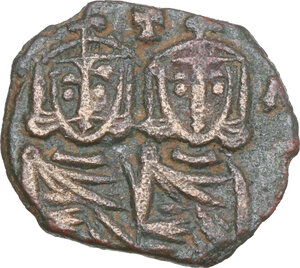
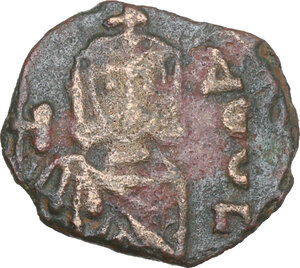
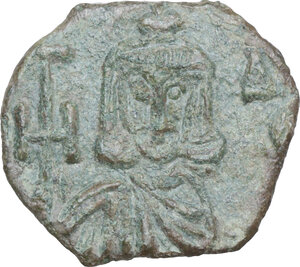
Constantine V Copronymus with Leo IV (751-775). AE Follis. Syracuse mint, 751-775. D/ Crowned facing busts of Constantine V and Leo IV, each wearing crown and chlamys and holding akakia; between, cross. R/ Leo III standing facing wearing crown and chlamys, holding cross potent. D.O. 19; Sear 1569. AE. 2.94 g. 19 mm. Nice copper highlights. VF.
Lot # 612
-
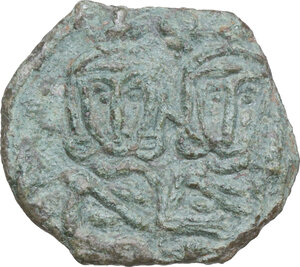
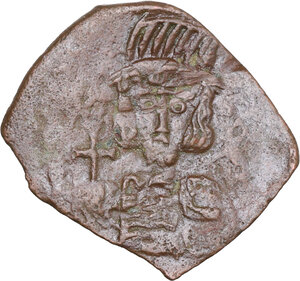
Constantine V Copronymus with Leo IV (751-775). AE Follis. Syracuse mint, 751-775. D/ Crowned facing busts of Constantine V and Leo IV, each wearing crown and chlamys and holding akakia; between, cross. R/ Leo III standing facing wearing crown and chlamys, holding cross potent. D.O. 19; Sear 1569. AE. 2.38 g. 18.5 mm. Good VF.
Lot # 611
-
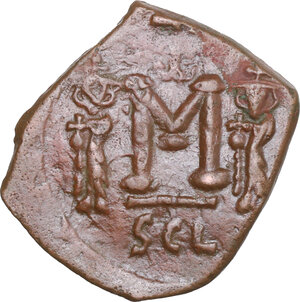
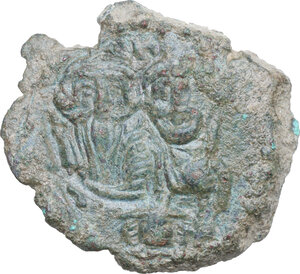
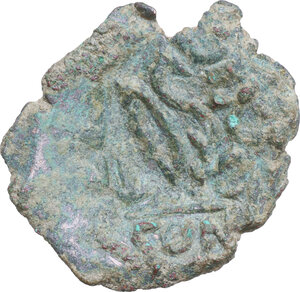
Constantine IV Pogonatus, with Heraclius and Tiberius (668-685). AE Follis, Syracuse mint, 669-672. D/ Helmeted and cuirassed bust facing, holding globus cruciger. R/ Large M (mark of value) flanked by figures of Heraclius and Tiberius, standing front and holding globus cruciger; above, monogram; in exergue, SCL. D.O. 60; MIB 104; Sear 1207. AE. 3.23 g. 24 mm. VF.
Lot # 610
-
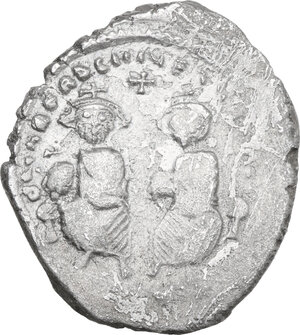
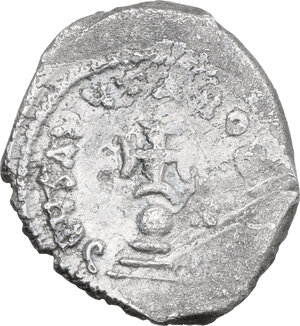
Heraclius, with Heraclius Constantine (610-641). AE Follis, Syracuse mint, 630-641. Countermarked on Follis of Heraclius and Heraclius Constantine from Constantinople mint. D/ c/m: Facing busts of Heraclius with long beard and moustache and Heraclius Constantine with short beard, all within an oval punch stamped over obverse of the undertype. R/ c/m: SCs within a circular punch stamped over reverse of the undertype. Sear 884; D.O. 243. AE. 7.17 g. 27 mm. Countermarked on uncertain issue. Irregular flan. VF.
Lot # 609
-
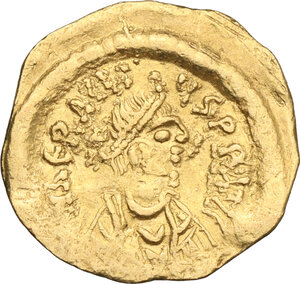
Heraclius (610-641) with Heraclius Constantine. AR Hexagram, Constantinople mint. D/ Heraclius and Heraclius Constantine enthroned facing, both crowned and holding globus cruciger. R/ Cross potent on globe above three steps; to right, K. D.O. 64; MIB 140; Sear 798. AR. 6.38 g. 25 mm. Lightly toned. Areas of flat strike. About VF.
Lot # 608
-
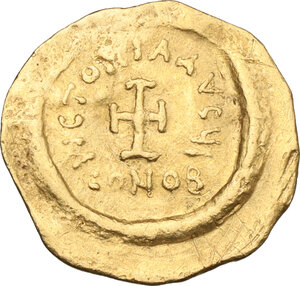
Heraclius (610-641). AV Tremissis, Constantinople mint. D/ dN hЄRACLI-ЧS P P AVG. Diademed, beardless, draped and cuirassed bust right. R/ VICTORIA AGЧI. Cross potent; beneath, CONOB. D.O. 53b; Sear 786. AV. 1.41 g. 16 mm. From rusty dies. Graffiti. VF.
Lot # 607
-
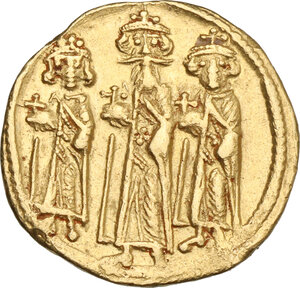
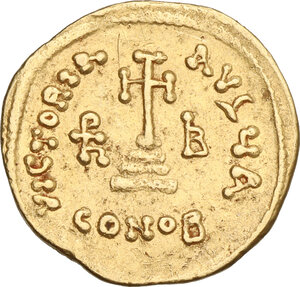
Heraclius, with Heraclius Constantine and Heraclonas. AV Solidus. Constantinople mint. Dated IY 12 (638-639). D/ Heraclius flanked by his sons Heraclius Constantine and Heraclonas; each standing facing, crowned and holding globus cruciger. R/ VICTORIA AVGЧ A. Cross potent set on three steps; to left, monogram; to right, IB; in exergue, CONOB. D.O. 41; MIB 48; Sear 767. AV. 4.4 g. 20 mm. Good VF.
Lot # 606
-
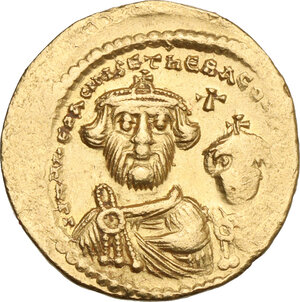
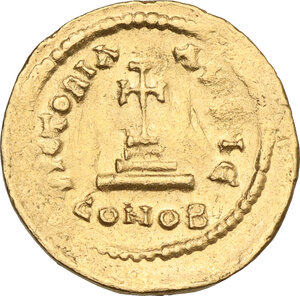
Heraclius, with Heraclius Constantine (610-641). AV Solidus, Constantinople mint. D/ DD NN HЄRACLIЧS ЄT HЄRA CONST PP AVG. Diademed and draped busts facing of Heraclius and Heraclius Constantine; in upper field, cross. R/ VICTORIA AVGЧ Є. Cross potent on three steps; in exergue, CONOB. MIB 11; D.O. 13; Sear 738. AV. 4.32 g. 20.5 mm. Broad flan. Areas of weak strike. Good VF.
Lot # 605
-
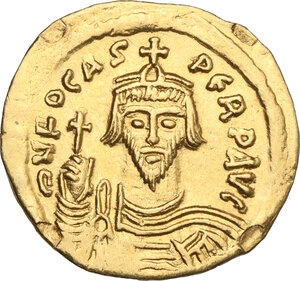
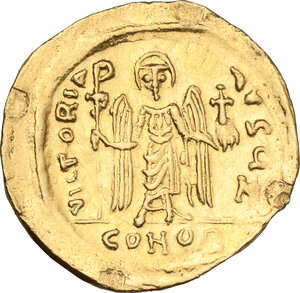
Phocas (602-610). AV Solidus. Constantinople mint, 607-610. D/ ∂N FOCAS PЄRP AVC. Draped and cuirassed bust facing, wearing crown and holding globus cruciger. R/ VICTORIA AVGЧ Z. Angel standing facing, holding globus cruciger and staff surmounted by staurogram; in exergue, CONOB. D.O. 10; Sear 620. AV. 4.42 g. 22 mm. Clipped, otherwise. EF/About EF.
Lot # 604
-
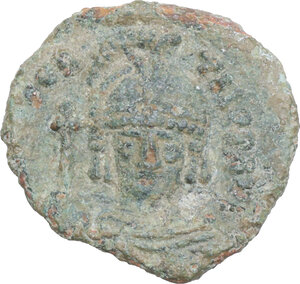
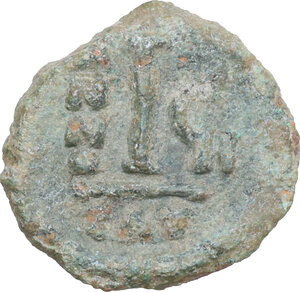
Maurice Tiberius (582-602). AE Decanummium, Catania mint, RY 7 (588-589). D/ DN MAVRC TIb PP AVG. Bust facing, wearing plumed helmet and holding globus cruciger. R/ Large I between A/N/N/O and ςI; in exergue, CAT. D.O. 270; MIB 137D; Sear 581. AE. 2.24 g. 16 mm. Green patina. VF.
Lot # 603
-
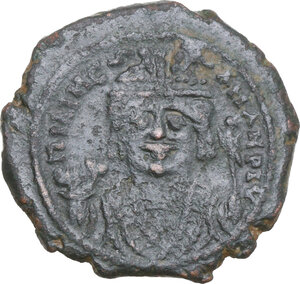
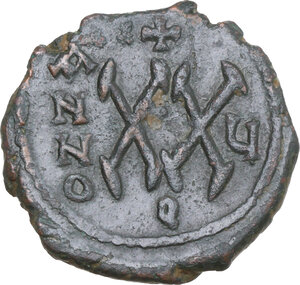
Maurice Tiberius (582-602). AE Half Follis, Theoupolis (Antioch) mint, dated RY 5 (586-587). D/ Facing bust wearing crown (with trefoil ornament) and consular robes; holding mappa and eagle-tipped sceptre. R/ Large XX (mark of value); flanked by, A/N/N/O and Ч; above, cross; below, symbol. MIB 97; D.O. 178; Sear 534. AE. 6.41 g. 23.5 mm. About VF/Good VF.
Lot # 602
-
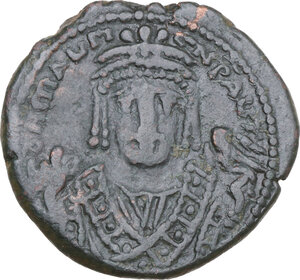
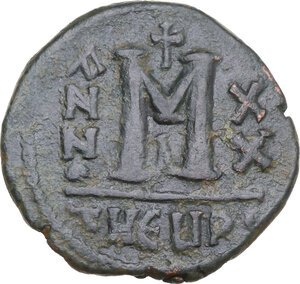
Maurice Tiberius (582-602). AE Follis. Theoupolis (Antioch) mint, dated RY 20 (601/2). D/ Bust facing, crowned, wearing consular robes, holding mappa and eagle-topped sceptre. R/ Large M (mark of value); above, cross; flanked by A/N/N/O and XX; below, Δ; in exergue, τHЄUP’. D.O. 172; MIB 96A; Sear 533. AE. 10.8 g. 27.5 mm. VF.
Lot # 601
-
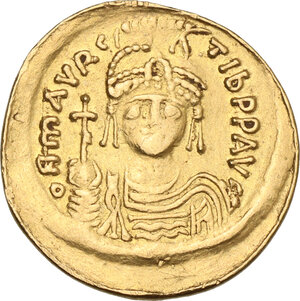
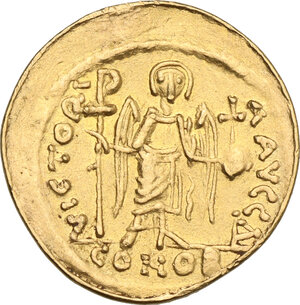
Maurice Tiberius (582-602). AV Solidus, Constantinople mint. D/ d N mAVRC TIb P P AVC. Helmeted and cuirassed bust facing, holding globus cruciger. R/ VICTORIA AVGG Δ. Angel standing facing, holding long sceptre tipped with staurogram, and globus cruciger; in exergue CONOB. MIB 6; D.O. 5; Sear 478. AV. 4.38 g. 21 mm. Edge clipped. Good VF.
Lot # 600
-
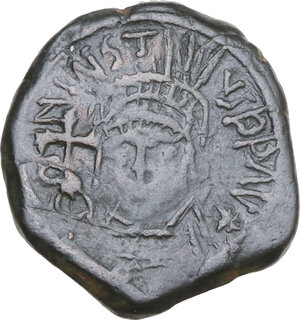
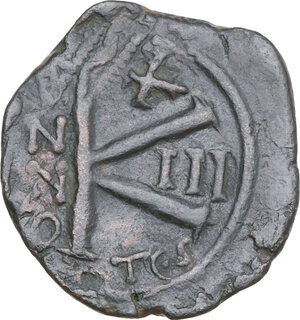
Justin II (565-578). AE Half follis, Thessalonica mint, dated RY 3 (567-568). D/ Helmeted and cuirassed bust facing, holding globus cruciger and shield. R/ Large K (mark of value); above, cross; flanked by A/N/N/O and III; below, TES. MIB 68; D.O. 63; Sear 365. AE. 4.81 g. 22 mm. VF.
Lot # 599
-
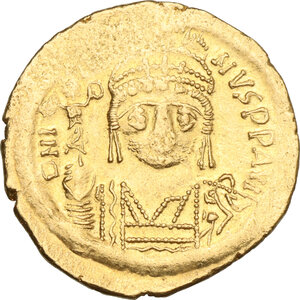
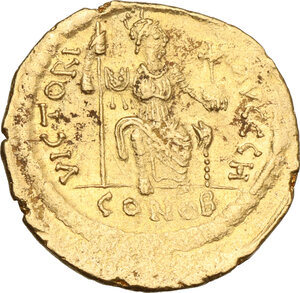
Justin II (565-578). AV Solidus. Constantinople mint. D/ DN I-VSTI-NVS P P AVI. Helmeted and cuirassed bust facing, with short beard, holding crowning Victory on globus and shield decorated with horseman motif. R/ VICTORI-A AVCCC H. Constantinopolis seated facing on throne, head right, holding scepter and globus cruciger; in exergue, CONOB. D.O. 1-3; MIBE 4; Sear 344. AV. 4.48 g. 20 mm. Areas of weak strike. Minor encrustations on reverse. Good VF/VF.
Lot # 598
-
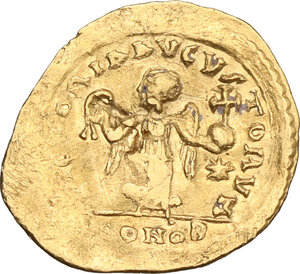
Justinian I (527-565). AV Tremissis, Constantinople mint. D/ Diademed, draped and cuirassed bust right. R/ Victory standing left, holding wreath and globus cruciger; to right, star. MIB 19; D.O. 19; Sear 145. AV. 1.49 g. 18 mm. Areas of weak strike. Light gash, marks and scratches, otherwise. VF.
Lot # 597
-
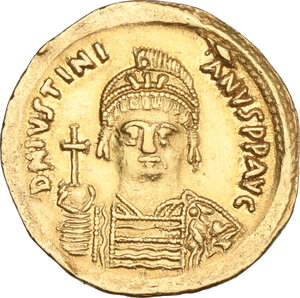
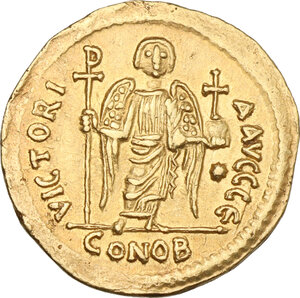
Justinian I (527-565). AV Solidus. Constantinople mint, 545-565. D/ D N IVSTINI-ANVS P P AVC. Helmeted and cuirassed bust facing, holding globus cruciger and shield. R/ VICTORI-A AVGGG Є. Angel standing facing, holding long staff surmounted by staurogram and globus cruciger; star in right field; in exergue, CONOB. D.O. 9; MIB 7; Sear 140. AV. 4.35 g. 20.5 mm. Slightly smoothed obverse. About EF.
Lot # 596
-
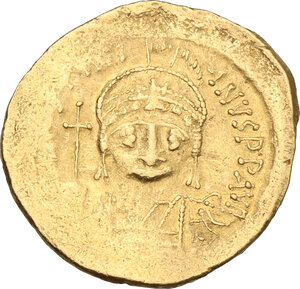
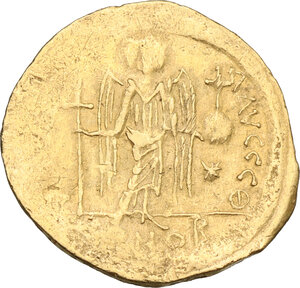
Justinian I (527-565). AV Solidus, Constantinople mint, c. 545-565. D/ DN IVSTINI-ANVS P P AVG. Helmeted and cuirassed bust facing, holding globus cruciger and shield. R/ VICTORI-A AVGGG Θ. Angel standing facing, holding long cross and globus cruciger; star to right; in exergue, CONOB. D.O. 8; Sear 139; MIB 6. AV. 4.46 g. 20.5 mm. Areas of weak strike. About VF.
Lot # 595
-
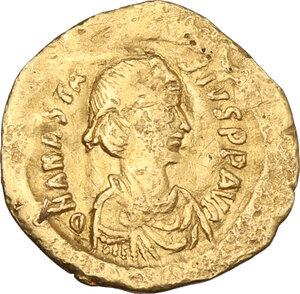
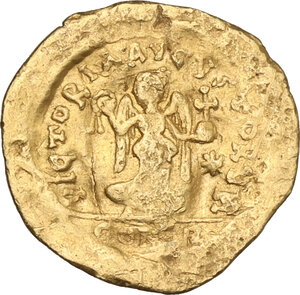
Anastasius I (491-518). AV Tremissis, Constantinople mint. D/ D N ANASTASIVS P P AVG. Diademed, draped and cuirassed bust right. R/ VICTORIA AVGVSTORVM. Winged and draped Victory advancing right, head left, holding wreath and globe cruciger; in right field, star. Sear 8; D.O. 10. AV. 1.42 g. 15 mm. Graffito on obverse. Some marks. Weak spots. About VF.
Lot # 594
-
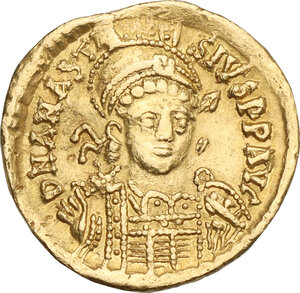
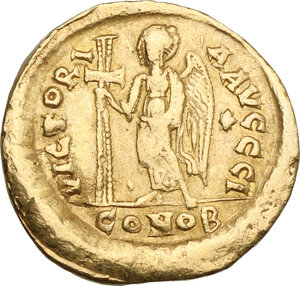
Anastasius I (491-518). AV Solidus, Constantinople mint, c. 492-507. D/ DN ANASTA-SIVS P P AVG. Helmeted and cuirassed bust facing slightly right, holding spear and shield. R/ VICTORI-A AVGGG I. Winged and draped Victory standing left, holding long jewelled cross; star in right field; in exergue, CONOB. D.O. 3-5; Sear 3. AV. 4.47 g. 20 mm. VF.
Lot # 325
-
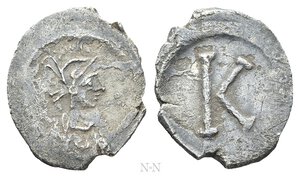
ANONYMOUS. Time of Justinian I (527-565). Half Siliqua. Constantinople. Obv: Helmeted, draped and cuirassed bust of Constantinopolis right.Rev: Large K.Bendall, Anonymous 8c; Vagi 3051. Condition: Near very fine.Weight: 0.99 g. Diameter: 16 mm.
Lot # 24
-
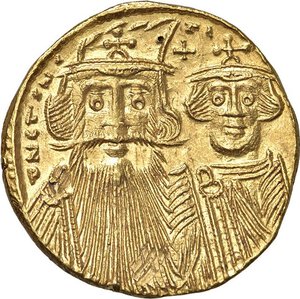
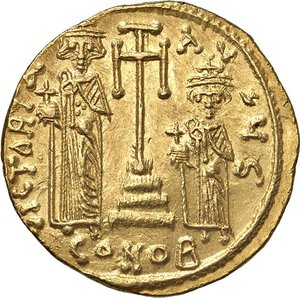
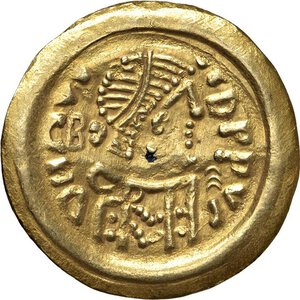
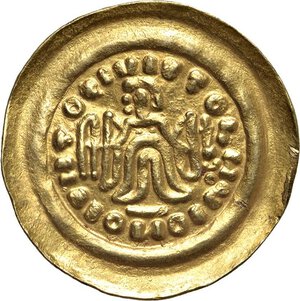
Monete Bizantine e monete Barbariche (shipping only in Italy). IMPERO BIZANTINO – COSTANTE II (661-668) – Solido, s.d., Costantinopoli.in oro4,47 gr. - Diam. 19,40 mm.Dritto: Busti frontali di Costante II e Costantino IV; - Rovescio: Croce potenziata su gradini; ai lati Eraclio e Tiberio stanti. In esergo CONOB.
Sear 964. DOC 30e.
Bello SPL.
Shipping only in Italy.
Lot # 23
-
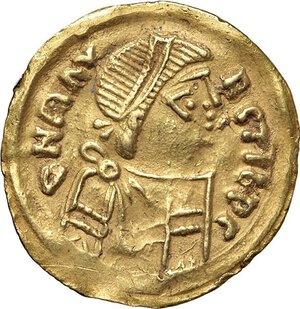
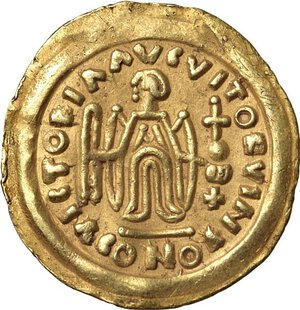
Monete Bizantine e monete Barbariche (shipping only in Italy). LONGOBARDI – MONETAZIONE A NOME DI MAURIZIO TIBERIO (582-602) - Tremisse. Emissione durante i regni di Autari (584-590) e Agilulfo (590-615).in oro1,39 gr. - Diam. 20,00 mm.Dritto: Busto a destra diademato, corazzato e paludato; - Rovescio: la Vittoria alata stante di fronte con corona nella mano destra e globo crucigero, nel campo a destra croce.
Arslan 13-21. MEC 305-6. Bernareggi 1.
SPL.
Shipping only in Italy.
Lot # 22
-
Monete Bizantine e monete Barbariche (shipping only in Italy). LONGOBARDI – MONETAZIONE A NOME DI MAURIZIO TIBERIO (582-602) - Tremisse. Emissione durante i regni di Autari (584-590) e Agilulfo (590-615).in oro1,40 gr. - Diam. 17,20 mm.Dritto: Busto a destra diademato, corazzato e paludato; - Rovescio: la Vittoria alata stante di fronte con corona nella mano destra e globo crucigero, nel campo a destra croce.
Arslan 4. MEC 1, 303-304. Bernareggi 1.
SPL.
Shipping only in Italy.
Lot # 21
-
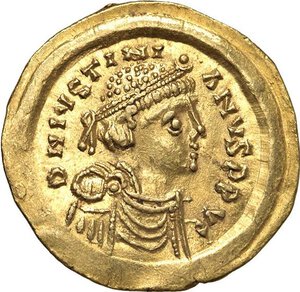
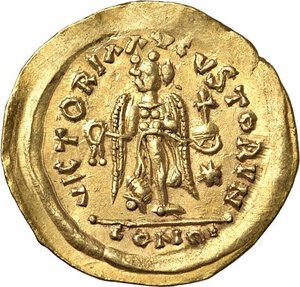
Monete Bizantine e monete Barbariche (shipping only in Italy). EMISSIONE DI ATTRIBUZIONE INCERTA A NOME DI GIUSTINIANO – Tremisse.in oro1,45 gr. - Diam. 16,00 mm.Dritto: Busto diademato, corazzato, e drappeggiato a destra; - Rovescio: la Vittoria stante di fronte con una corona nella mano destra ed un globo crucigero nella mano sinistra.
Sear 145. DOC 19/2.
Gradevole esemplare, di bello stile, per lievi varianti nel ritratto e nella legenda a nostro avviso è da considerarsi di emissione imitativa longobarda.
bello SPL.
Shipping only in Italy.
Quando i Longobardi penetrarono in Italia dopo il 568 d.C. non disponevano di una tradizione monetaria autonoma paragonabile a quella romana o bizantina. Come sottolineato più volte da Ermanno Arslan, la monetazione non costituiva per i Longobardi un elemento strutturale dell’organizzazione statale, bensì uno strumento pragmatico, adottato solo nella misura in cui risultava funzionale all’inserimento nel sistema economico e simbolico mediterraneo. Di conseguenza, nei primi decenni di presenza sul territorio italico, le coniazioni auree longobarde si configurarono prevalentemente come imitazioni, più o meno fedeli, dei tremissi bizantini allora in circolazione.
Indicativa di questa iniziale assenza di una piena “cultura monetaria” è la produzione precedente all’ingresso in Italia, realizzata da artigiani orafi longobardi attivi in area pannonica. Tali esemplari, spesso di stile fortemente stilizzato, sembrano rispondere a una funzione essenzialmente ornamentale e simbolica piuttosto che propriamente monetaria: tremissi o pseudo-tremissi venivano infatti utilizzati come elementi decorativi per monili, gioielli e collane, inserendosi in un contesto culturale in cui il valore del metallo e il prestigio dell’immagine prevalevano sull’uso economico della moneta. Arslan ha opportunamente evidenziato come questa produzione non debba essere interpretata in termini di “decadenza” artistica, bensì come espressione di un diverso rapporto con l’oggetto monetale.
Le imitazioni longobarde riproducono prevalentemente tipologie imperiali di età giustinianea e post-giustinianea, con il busto dell’imperatore al diritto e la figura della Vittoria al rovescio. Tuttavia le legende risultano spesso corrotte, frammentarie o del tutto prive di significato, fenomeno che riflette una conoscenza imperfetta del latino e, più in generale, una comprensione limitata del valore comunicativo della scrittura monetale.
Tale produzione si colloca pienamente in quella che la storiografia numismatica definisce fase “pseudo-imperiale”: nonostante il progressivo consolidamento del dominio longobardo su ampie aree dell’Italia settentrionale e centrale, i modelli monetari bizantini continuarono a essere accettati e riprodotti in quanto depositari di un’autorità economica e simbolica universalmente riconosciuta.
Nell’esemplare qui proposto ci troviamo tuttavia di fronte a un’imitazione caratterizzata da uno stile artisticamente elevato, che si distingue nettamente dalle produzioni più grossolane o meramente ornamentali. Le varianti iconografiche nel ritratto imperiale, unite a una maggiore coerenza compositiva, consentono di interpretarlo come prodotto di un’officina longobarda ormai inserita nel contesto italico, e non più riconducibile alle fasi pannoniche precedenti.
In tal senso risultano particolarmente significativi i confronti stilistici con il celebre tremisse rinvenuto nel Castrum di Castelseprio, scoperto nel pozzo di drenaggio scavato in prossimità dell’abside della chiesa di San Giovanni Evangelista. Tale esemplare secondo gli studiosi è riconducibile agli ultimi decenni del VI secolo.
Results from 651 to 700 of 3053