Byzantine Coins
Results from 551 to 600 of 3012
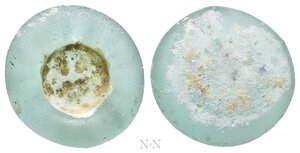
Lot # 888
-
BYZANTINE GLASS WEIGHT. Pale green Weight for Semissis (Circa 6th-7th centuries). Obv: Cruciform monogram.Rev: Blank.Cf. Pera 737. Condition: Good very fine.Weight: 2.1 g. Diameter: 19 mm.
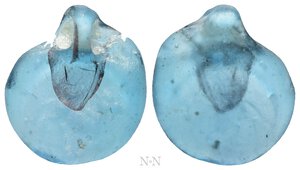
Lot # 887
-
BYZANTINE GLASS WEIGHT. Pale green Weight for Semissis (Circa 6th-7th centuries). Obv: Uncertain.Rev: Blank.. Condition: Very fine.Weight: 2 g. Diameter: 22 mm.
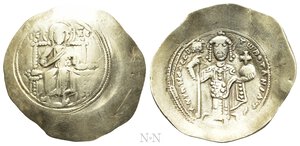
Lot # 886
-
NICEPHORUS III BOTANIATES (1078-1081). EL Histamenon Nomisma. Constantinople. Obv: IC - XC. Christ Pantokrator seated facing on throne with back.Rev: +NIKHΦ ΔECΠ Tω BOTANIAT'. Nicephorus standing facing on daïs, holding labarum and globus cruciger.DOC 2; Sear 1882. Condition: Very fine.Weight: 4.24 g. Diameter: 29 mm.
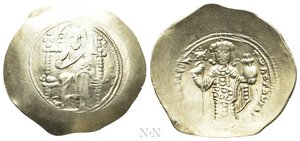
Lot # 885
-
NICEPHORUS III BOTANIATES (1078-1081). EL Histamenon Nomisma. Constantinople. Obv: IC - XC. Christ Pantokrator seated facing on throne with back.Rev: +NIKHΦ ΔECΠ Tω BOTANIAT'. Nicephorus standing facing on daïs, holding labarum and globus cruciger.DOC 2; Sear 1882. Condition: Very fine.Weight: 4.34 g. Diameter: 30 mm.
Lot # 884
-
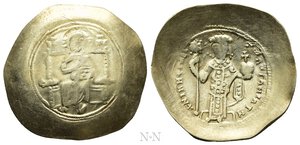
NICEPHORUS III BOTANIATES (1078-1081). EL Histamenon Nomisma. Constantinople. Obv: IC - XC. Christ Pantokrator seated facing on throne with back.Rev: +NIKHΦ ΔECΠ Tω BOTANIAT'. Nicephorus standing facing on daïs, holding labarum and globus cruciger.DOC 2; Sear 1882. Condition: Very fine.Weight: 4.24 g. Diameter: 30 mm.
Lot # 883
-
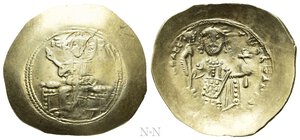
NICEPHORUS III BOTANIATES (1078-1081). EL Histamenon Nomisma. Constantinople. Obv: IC - XC. Christ Pantokrator seated facing on throne without back.Rev: + NIKHΦ ΔECΠ Tω BOTANIAT'. Nicephorus standing facing on daïs, holding labarum with saltire on shaft and globus cruciger with droplet below.DOC 3b; Sear 1881. Condition: Good very fine.Weight: 4.31 g. Diameter: 30 mm.
Lot # 882
-
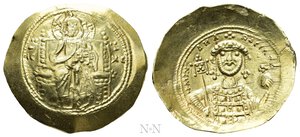
MICHAEL VII DUCAS (1071-1078). GOLD Histamenon Nomisma. Constantinople. Obv: IC - XC. Christ Pantokrator seated facing on throne, raising right hand in benediction and holding book of Gospels.Rev: + MIXAHΛ BACIΛ O Δ. Facing bust of Michael, holding labarum and globus cruciger.DOC 1; Sear 1869. Condition: Good very fine.Weight: 4.39 g. Diameter: 28 mm.
Lot # 881
-
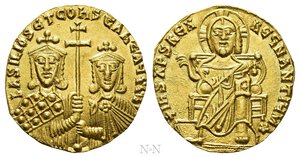
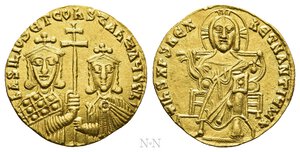
BASIL I THE MACEDONIAN, with CONSTANTINE (867-886). GOLD Solidus. Constantinople. Obv: + IҺS XPS RЄX RЄGNANTIЧM (star). Christ Pantokrator seated facing on throne, raising hand in benediction and holding book of Gospels.Rev: ЬASILIOS ЄT COҺSTAҺT AЧGG Ь. Crowned facing busts of Basil and Constantine, holding between them a patriarchal cross.DOC 2; Sear 1704. Condition: Extremely fine; clipped.Weight: 4.3 g. Diameter: 19 mm.
Lot # 880
-
BASIL I THE MACEDONIAN, with CONSTANTINE (867-886). GOLD Solidus. Constantinople. Obv: + IҺS XPS RЄX RЄGNANTIЧM (star). Christ Pantokrator seated facing on throne, raising hand in benediction and holding book of Gospels.Rev: ЬASILIOS ЄT COҺSTAҺT AЧGG Ь. Crowned facing busts of Basil and Constantine, holding between them a patriarchal cross.DOC 2; Sear 1704. Condition: Near extremely fine.Weight: 4.3 .- g. Diameter: 20 mm.
Lot # 879
-
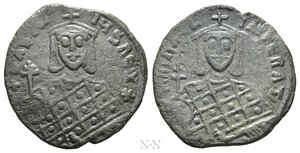
MICHAEL III 'THE DRUNKARD', with BASIL I (842-867). Follis. Constantinople. Obv: + MIҺAЄL IMPЄRAT. Crowned facing bust of Michael, holding akakia and globus surmounted by patriarchal cross.Rev: + ЬASILIЧS RЄX (star). Crowned facing bust of Basil, holding akakia and globus surmounted by patriarchal cross.DOC 8; Sear 1693. Condition: Very fine.Weight: 6 g. Diameter: 26 mm.
Lot # 878
-
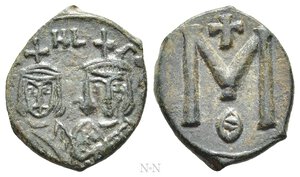
MICHAEL II THE AMORIAN (820-829). Follis. Syracuse. Obv: MIXAHL S ΘЄOF. Crowned facing busts of Michael, with short beard and chlamys to left, and Theophilus, beardless and with loros to right.Rev: Large M, cross above, Θ below.DOC 21; Sear 1652. Condition: Good very fine.Weight: 4.02 g. Diameter: 19 mm.
Lot # 877
-
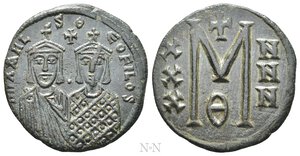
MICHAEL II THE AMORIAN, with THEOPHILUS (820-829). Follis. Constantinople. Obv: MIXAHL S ΘЄOFILOS. Facing busts of Michael, wearing chlamys, and Theophilus, wearing loros; both wearing crown surmounted by cross; cross between their heads.Rev: Large M; X/X/X - N/N/N across field; cross above, Θ below.DOC 10; Sear 1642. Condition: Extremely fine.Weight: 8.03 g. Diameter: 28 mm.
Lot # 876
-
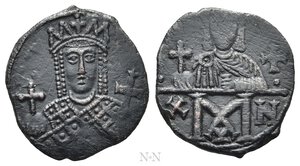
CONSTANTINE VI and IRENE (780-797). Follis. Constantinople. Obv: Crowned facing bust of Irene, holding cruciform sceptre and globus cruciger.Rev: Crowned facing bust of Constantine, holding globus cruciger; cross to right; in exergue, M/A between X - N.DOC 7; Sear 1598.Irene was born in Athens in 752 and was the first woman to reign as emperor. She was the wife of Leo IV with whom she had a son, Constantine VI. Initially she found herself reigning in place of her son, who was only ten years old. But when he became old enough to claim the throne, Irene did everything in her power to remain in charge, going so far as to misadvise him and even having him imprisoned. After the riots that broke out due to the blinding of General Alexios Mosele and the army's disappointment over his escape to the Bulgarians in 792, Constantine VI attempted to flee to the East, but his mother had him captured and blinded. Injuries led to Constantine's death and Irene found herself alone at the command, despite the fact that she was not particularly popular herself, both as a woman and because she was a promoter of a return to image worship and opposed iconoclasm. In 787 she organised the Second Council of Nicaea, where she condemned iconoclasm as heresy and, in order to gain the favour of the people, promoted a policy of donations and tax relief, especially for monasteries. These measures gained her popularity at the expense of state taxes, which did not help in view of defence against external dangers. The Empire was in fact threatened by the growth of the Arab caliphate and the Bulgarians in the north. Moreover, in the west Charlemagne had defeated the Lombards and was supported by the pope, who had turned his back on Constantinople. Before considering a marriage to the Frankish king in 802, Irene was deposed by a palace conspiracy, forced to take her vows and exiled to the island of Lesbos, where she died the following year. Condition: Extremely fine.Weight: 2.78 g. Diameter: 20 mm.
Lot # 875
-
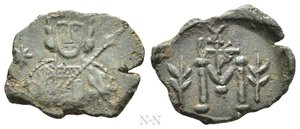
TIBERIUS III APSIMAR (698-705). Follis. Syracuse. Obv: Crowned, draped and cuirassed bust facing, holding shield and spear; star to left.Rev: Large M between two palm branches; monogram above, SCL in exergue.MIB 79b; DOC 32; Sear 1395. Condition: Good very fine.Weight: 4.06 g. Diameter: 20 mm.
Rare and Beautiful Hexagram
Lot # 874
-
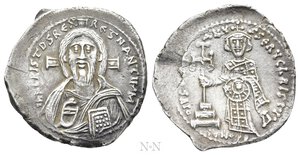
JUSTINIAN II (First reign, 685-695). Hexagram. Constantinople. Obv: IҺS CRISTOS RЄX RЄGNANTIUM. Facing bust of Christ Pantokrator.Rev: D IЧSTINIANЧS SЄRЧ CҺRISTI / CONO[. Justinian standing facing, holding akakia and cross potent set upon three steps.MIB 40; DOC 17; Sear 1259.Very rareSon of Constantine IV and Anastasia, Justinian II became emperor at the age of sixteen and was the last of the Heraclian dynasty. He initially renewed the peace with the Arabs, also at the behest of the new caliph, 'Abd al-Malik ibn Marwan, who agreed to very advantageous terms, and also sent ten thousand Mardaites who were integrated into the Byzantine army. Justinian was thus able to concentrate on the Balkans, sending troops to subdue Bulgarians and Slavs, and achieved an important victory, after which he deported thousands of Slavs to Asia Minor, important for the strengthening of the army and the economic system linked to the working of thematic land. However, probably for religious reasons, there was soon a return to war with the Arabs (691-692), who refused to depict Christ on the coins they minted to pay tribute to Byzantium. The decisive battle took place at Sebastopolis in Armenia, where the army of deported Slavs were corrupted by the caliph's gold. The defeat was a heavy one and Armenia submitted to the Arabs. Justinian II was also hated by the people for his fierce tax policy and by the aristocracy for his concessions to small landowners. Inevitably he was overthrown after ten years of his reign, with the revolt of Leontius in 695. The emperor was imprisoned and had his nose amputated, hence the nickname 'Rhinotmetus' = 'the Slit-Nosed'. Finally he was sent into exile in Crimea. However, he did not give up. He escaped more than one assassination attempt and married the daughter of the Khazars leader, who converted to Christianity and took the name Theodora. He allied himself with the Bulgarians, granting the title of Caesar to Khan Tervel in exchange for military support. He then succeeded in retaking Constantinople in 705 and had Leontius and Tiberius II executed. His second reign was marked by his thirst for revenge against those who had made attempts on his life, especially in the city of Cherson. Hence the revolt that dethroned him the second time, led by Bardanes who, after taking the name Philippicus, cut off Justinian's head and put an end to his dynasty. Condition: Near extremely fine.Weight: 6.4 g. Diameter: 23 mm.
Lot # 873
-
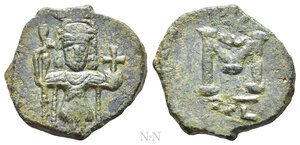
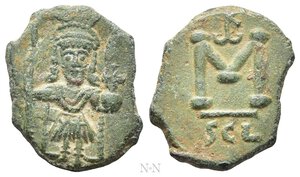
CONSTANTINE IV POGONATUS (668-685). Follis. Syracuse. Obv: Constantine standing facing, holding spear and globus cruciger.Rev: Large M; monogram above; SCL in exergue.MIB 108; DOC 64; Sear 1211.Ex Roma Numismatics E-17 (2015), lot 1134 Condition: Good very fine.Weight: 5.46 g. Diameter: 22 mm.
Lot # 872
-
CONSTANTINE IV POGONATUS (668-685). Follis. Syracuse. Obv: Constantine standing facing, holding spear and globus cruciger.Rev: Large M; monogram above; SCL in exergue.MIB 108; DOC 64; Sear 1211. Condition: Very fine.Weight: 4.05 g. Diameter: 21 mm.
Lot # 871
-
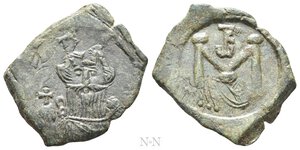
CONSTANS II (641-668). Follis. Syracuse. Obv: Crowned and draped bust facing, holding globus cruciger.Rev: Large M; monogram above; SCL below.MIB 207; DOC 178; Sear 1107. Condition: Good very fine.Weight: 5.64 g. Diameter: 26 mm.
Lot # 870
-
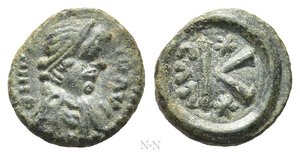
HERACLIUS (610-641). Pentanummium. Catania. Obv: D N ЄRACLIЧS PP AVG. Diademed, draped and cuirassed bust right.Rev: CAT. Large V: star to left and right.MIB 242; DOC 260; Sear 887. Condition: Very fine.Weight: 1.43 g. Diameter: 12 mm.
Lot # 869
-
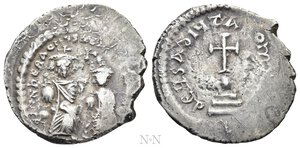
HERACLIUS, with HERACLIUS CONSTANTINE (610-641). Hexagram. Constantinople. Obv: δδ NN ҺЄRACILЧS ЄT ҺЄRA CONST. Heraclius and Heraclius Constantine seated facing on double throne, each holding globus cruciger; cross above.Rev: δЄЧS AδIЧTA ROMANIS. Cross potent set upon globus set upon three steps.Sear 795. Condition: Very fine.Weight: 6.74 g. Diameter: 27 mm.
Lot # 868
-
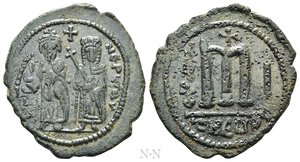
PHOCAS, with LEONTIA (602-610). Follis. Theoupolis (Antioch). Dated RY 1 (602/3). Obv: D N FOCA N PЄP AV. Phocas, holding globus cruciger, and Leontia, holding cruciform sceptre, standing facing; cross above.Rev: Large m; A/N/N/O - I (date) across field; cross above; THЄЧP'.MIBE 83a; DOC 83; Sear 671. Condition: Very fine.Weight: 9.6 g. Diameter: 31 mm.
Lot # 867
-
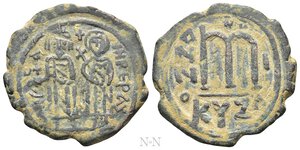
PHOCAS, with LEONTIA (602-610). Follis. Cyzicus. Dated RY 1 (602/3). Obv: d N FOCA VNPЄR AV. Phocas, holding globus cruciger, and Leontia, holding cruciform sceptre, standing facing.Rev: Large m; cross above, A/N/N/O - I across field; KYZA.MIBE 75; DOC 69a; Sear 664. Condition: Very fine.Weight: 12.75 g. Diameter: 32 mm.
Lot # 866
-
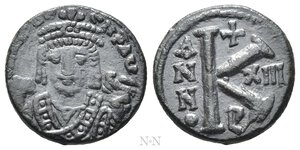
MAURICE TIBERIUS (582-602). Half Follis. Theoupolis (Antioch). Dated RY 13 (595/6). Obv: Crowned bust facing, wearing consular robe and holding mappa and eagle-tipped sceptre.Rev: Large K; cross above, A/N/N/O - XIII across field, e below.MIBE 99C; DOC 188; Sear 535. Condition: Good very fine.Weight: 4.37 g. Diameter: 19 mm.
Lot # 865
-
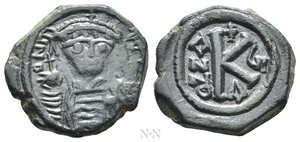
MAURICE TIBERIUS (582-602). Half Follis. Constantinople(?). Dated RY 7 (588/9). Obv: Crowned and cuirassed bust facing, holding globus cruciger and shield.Rev: Large K; cross above, A/N/N/O - ςI across field, A below.Sear 497. Condition: Very fine.Weight: 6.46 g. Diameter: 22 mm.
Lot # 864
-
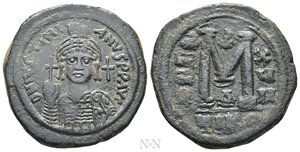
JUSTINIAN I (527-565). Follis. Nicomedia. Dated RY 17 (543/4). Obv: D N IVSTINIANVS P P AVG. Helmeted and cuirassed bust facing, holding globus cruciger and shield decorated with horseman motif; cross to right.Rev: Large M; A/N/N/O - X/X/Ч/II across field, chi-rho above, A below; NIKO.MIBE 114; DOC 123a; Sear 201. Condition: Very fine.Weight: 19.20 g. Diameter: 35 mm.
Lot # 863
-
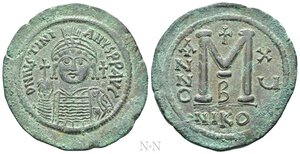
JUSTINIAN I (527-565). Follis. Nicomedia. Dated RY 15 (541/2). Obv: D N IVSTINIANVS P P AVG. Helmeted and cuirassed bust facing, holding globus cruciger and shield decorated with horseman motif; cross to right.Rev: Large M; A/N/N/O - X/Ч across field, cross above, B below; NIKO.MIBE 114; DOC 120b; Sear 201. Condition: Good very fine.Weight: 23.15 g. Diameter: 40 mm.
Lot # 862
-
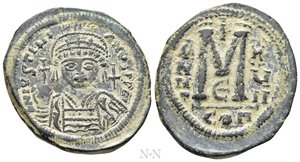
JUSTINIAN I (527-565). Follis. Constantinople. Dated RY 17 (543/4). Obv: D N IVSTINIANVS P P AVG. Helmeted, draped and cuirassed facing bust, holding globus cruciger and shield decorated with horseman motif; cross to right.Rev: Large M; A/N/N/O - X/Ч/II across field, cross above, Є below; CON.MIBE 95a; DOC 42e; Sear 163. Condition: Good very fine.Weight: 20.16 g. Diameter: 37 mm.
Lot # 861
-
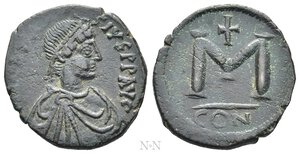
ANASTASIUS I (491-518). Small module Follis. Constantinople. Obv: D N ANASTASIVS P P AVG. Diademed, draped and cuirassed bust right.Rev: Large M; cross above; CON.MIBE 22; DOC 16; Sear 14. Condition: Extremely fine.Weight: 7.00 g. Diameter: 24 mm.
Lot # 860
-
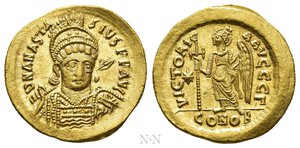
ANASTASIUS I (491-518). GOLD Solidus. Constantinople. Obv: D N ANASTASIVS P P AVG. Helmeted and cuirassed bust facing slightly right, holding spear and shield decorated with horseman motif.Rev: VICTORIA AVGGG Γ / CONOB. Victory standing left, holding long staff surmounted by reversed staurogram; star to left.MIBE 7; DOC 7c; Sear 5.Anastasius was nicknamed ‘dikoros’ (=two pupils) because of the different color of his eyes. When Zeno died, since he had no living heirs, his widow Ariadne had the difficult choice of appointing a successor to the people, who demanded an orthodox emperor. Ariadne eventually chose Anastasius, about whom we only know that he was a palace official, responsible for maintaining silence during important sacred ceremonies. After Zeno's funeral, Anastasius received the crown from the patriarch, was acclaimed augustus by the crowd in 491, and married Ariadne to legitimize the succession.
His main task was to restore Constantinople's finances, which had been severely affected during his predecessor's reign. He managed to balance the budget despite a policy of tax relief, making the people pay less tax, but in cash rather than in kind. This favored the cities but was to the detriment of the people living in the countryside, and in fact many revolts broke out in rural areas. He also revolutionized the tax collection system by introducing the ‘vindices’ and encouraged the return of copper folles, which began to circulate again with a precise value ratio to the gold solidus. Anastasius demonstrated wisdom and competence, and the Byzantine Empire flourished once again. A great amount of money flowed into the state treasury, which favored the work of his successors, particularly Justinian I. With regard to foreign policy, Anastasius reached an agreement with Theodoric, king of the Roman-Barbarian kingdom in Italy, promoting trade that benefited both kingdoms.
Despite his undeniable qualities as an administrator, Anastasius was constantly threatened by intrigues and uprisings. He was also engaged in a long war against the Persians (502-506), which ended with a peace treaty and the construction of the Anastasian Wall to defend Constantinople along the Propontis and the Black Sea.
However, the internal situation was more delicate. The emperor was not orthodox, as the people had asked Ariadne, but a convinced Monophysite, and he attracted much dissent, partly because he contributed to distancing the Eastern Church from that of Rome by interfering in the nomination of the new pope. The discontent led to a civil war (513-515) with the insurrection of Vitalian at the head of the Isaurians, who was eventually defeated by the general Marinus of Syria.
Anastasius died in 518 at the age of almost ninety, but left no children to succeed him to the throne. Condition: Near extremely fine.Weight: 4.47 g. Diameter: 21 mm.
Lot # 859
-
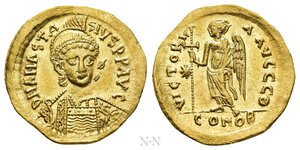
ANASTASIUS I (491-518). GOLD Solidus. Constantinople. Obv: D N ANASTASIVS P P AVG. Helmeted and cuirassed bust facing slightly right, holding spear and shield decorated with horseman motif.Rev: VICTORIA AVGGG Θ / CONOB. Victory standing left, holding long staff surmounted by reversed staurogram; star to left.MIBE 7; DOC 7i; Sear 5.Anastasius was nicknamed ‘dikoros’ (=two pupils) because of the different color of his eyes. When Zeno died, since he had no living heirs, his widow Ariadne had the difficult choice of appointing a successor to the people, who demanded an orthodox emperor. Ariadne eventually chose Anastasius, about whom we only know that he was a palace official, responsible for maintaining silence during important sacred ceremonies. After Zeno's funeral, Anastasius received the crown from the patriarch, was acclaimed augustus by the crowd in 491, and married Ariadne to legitimize the succession.
His main task was to restore Constantinople's finances, which had been severely affected during his predecessor's reign. He managed to balance the budget despite a policy of tax relief, making the people pay less tax, but in cash rather than in kind. This favored the cities but was to the detriment of the people living in the countryside, and in fact many revolts broke out in rural areas. He also revolutionized the tax collection system by introducing the ‘vindices’ and encouraged the return of copper folles, which began to circulate again with a precise value ratio to the gold solidus. Anastasius demonstrated wisdom and competence, and the Byzantine Empire flourished once again. A great amount of money flowed into the state treasury, which favored the work of his successors, particularly Justinian I. With regard to foreign policy, Anastasius reached an agreement with Theodoric, king of the Roman-Barbarian kingdom in Italy, promoting trade that benefited both kingdoms.
Despite his undeniable qualities as an administrator, Anastasius was constantly threatened by intrigues and uprisings. He was also engaged in a long war against the Persians (502-506), which ended with a peace treaty and the construction of the Anastasian Wall to defend Constantinople along the Propontis and the Black Sea.
However, the internal situation was more delicate. The emperor was not orthodox, as the people had asked Ariadne, but a convinced Monophysite, and he attracted much dissent, partly because he contributed to distancing the Eastern Church from that of Rome by interfering in the nomination of the new pope. The discontent led to a civil war (513-515) with the insurrection of Vitalian at the head of the Isaurians, who was eventually defeated by the general Marinus of Syria.
Anastasius died in 518 at the age of almost ninety, but left no children to succeed him to the throne. Condition: Near extremely fine.Weight: 4.49 g. Diameter: 21 mm.
Lot # 858
-
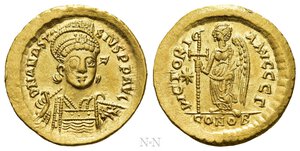
ANASTASIUS I (491-518). GOLD Solidus. Constantinople. Obv: D N ANASTASIVS P P AVG. Helmeted and cuirassed bust facing slightly right, holding spear and shield decorated with horseman motif.Rev: VICTORIA AVGGG Γ / CONOB. Victory standing left, holding long staff surmounted by reversed staurogram; star to left.MIBE 7; DOC 7c; Sear 5.Anastasius was nicknamed ‘dikoros’ (=two pupils) because of the different color of his eyes. When Zeno died, since he had no living heirs, his widow Ariadne had the difficult choice of appointing a successor to the people, who demanded an orthodox emperor. Ariadne eventually chose Anastasius, about whom we only know that he was a palace official, responsible for maintaining silence during important sacred ceremonies. After Zeno's funeral, Anastasius received the crown from the patriarch, was acclaimed augustus by the crowd in 491, and married Ariadne to legitimize the succession.
His main task was to restore Constantinople's finances, which had been severely affected during his predecessor's reign. He managed to balance the budget despite a policy of tax relief, making the people pay less tax, but in cash rather than in kind. This favored the cities but was to the detriment of the people living in the countryside, and in fact many revolts broke out in rural areas. He also revolutionized the tax collection system by introducing the ‘vindices’ and encouraged the return of copper folles, which began to circulate again with a precise value ratio to the gold solidus. Anastasius demonstrated wisdom and competence, and the Byzantine Empire flourished once again. A great amount of money flowed into the state treasury, which favored the work of his successors, particularly Justinian I. With regard to foreign policy, Anastasius reached an agreement with Theodoric, king of the Roman-Barbarian kingdom in Italy, promoting trade that benefited both kingdoms.
Despite his undeniable qualities as an administrator, Anastasius was constantly threatened by intrigues and uprisings. He was also engaged in a long war against the Persians (502-506), which ended with a peace treaty and the construction of the Anastasian Wall to defend Constantinople along the Propontis and the Black Sea.
However, the internal situation was more delicate. The emperor was not orthodox, as the people had asked Ariadne, but a convinced Monophysite, and he attracted much dissent, partly because he contributed to distancing the Eastern Church from that of Rome by interfering in the nomination of the new pope. The discontent led to a civil war (513-515) with the insurrection of Vitalian at the head of the Isaurians, who was eventually defeated by the general Marinus of Syria.
Anastasius died in 518 at the age of almost ninety, but left no children to succeed him to the throne. Condition: Good very fine.Weight: 4.50 g. Diameter: 21 mm.
Lot # 857
-
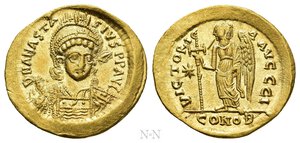
ANASTASIUS I (491-518). GOLD Solidus. Constantinople. Obv: D N ANASTASIVS P P AVG. Helmeted and cuirassed bust facing slightly right, holding spear and shield decorated with horseman motif.Rev: VICTORIA AVGGG I / CONOB. Victory standing left, holding long staff surmounted by reversed staurogram; star to left.MIBE 7; DOC 7j; Sear 5.Anastasius was nicknamed ‘dikoros’ (=two pupils) because of the different color of his eyes. When Zeno died, since he had no living heirs, his widow Ariadne had the difficult choice of appointing a successor to the people, who demanded an orthodox emperor. Ariadne eventually chose Anastasius, about whom we only know that he was a palace official, responsible for maintaining silence during important sacred ceremonies. After Zeno's funeral, Anastasius received the crown from the patriarch, was acclaimed augustus by the crowd in 491, and married Ariadne to legitimize the succession.
His main task was to restore Constantinople's finances, which had been severely affected during his predecessor's reign. He managed to balance the budget despite a policy of tax relief, making the people pay less tax, but in cash rather than in kind. This favored the cities but was to the detriment of the people living in the countryside, and in fact many revolts broke out in rural areas. He also revolutionized the tax collection system by introducing the ‘vindices’ and encouraged the return of copper folles, which began to circulate again with a precise value ratio to the gold solidus. Anastasius demonstrated wisdom and competence, and the Byzantine Empire flourished once again. A great amount of money flowed into the state treasury, which favored the work of his successors, particularly Justinian I. With regard to foreign policy, Anastasius reached an agreement with Theodoric, king of the Roman-Barbarian kingdom in Italy, promoting trade that benefited both kingdoms.
Despite his undeniable qualities as an administrator, Anastasius was constantly threatened by intrigues and uprisings. He was also engaged in a long war against the Persians (502-506), which ended with a peace treaty and the construction of the Anastasian Wall to defend Constantinople along the Propontis and the Black Sea.
However, the internal situation was more delicate. The emperor was not orthodox, as the people had asked Ariadne, but a convinced Monophysite, and he attracted much dissent, partly because he contributed to distancing the Eastern Church from that of Rome by interfering in the nomination of the new pope. The discontent led to a civil war (513-515) with the insurrection of Vitalian at the head of the Isaurians, who was eventually defeated by the general Marinus of Syria.
Anastasius died in 518 at the age of almost ninety, but left no children to succeed him to the throne. Condition: Extremely fine.Weight: 4.47 g. Diameter: 21 mm.
Lot # 856
-
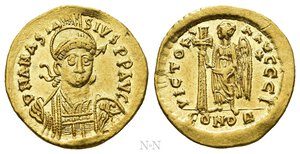
ANASTASIUS I (491-518). GOLD Solidus. Constantinople. Obv: D N ANASTASIVS P P AVG. Helmeted and cuirassed bust facing slightly right, holding spear and shield decorated with horseman motif.Rev: VICTORIA AVGGG I / CONOB. Victory standing left, holding jeweled cross; star to right.MIBE 4a; DOC 4b; Sear 3.Anastasius was nicknamed ‘dikoros’ (=two pupils) because of the different color of his eyes. When Zeno died, since he had no living heirs, his widow Ariadne had the difficult choice of appointing a successor to the people, who demanded an orthodox emperor. Ariadne eventually chose Anastasius, about whom we only know that he was a palace official, responsible for maintaining silence during important sacred ceremonies. After Zeno's funeral, Anastasius received the crown from the patriarch, was acclaimed augustus by the crowd in 491, and married Ariadne to legitimize the succession.
His main task was to restore Constantinople's finances, which had been severely affected during his predecessor's reign. He managed to balance the budget despite a policy of tax relief, making the people pay less tax, but in cash rather than in kind. This favored the cities but was to the detriment of the people living in the countryside, and in fact many revolts broke out in rural areas. He also revolutionized the tax collection system by introducing the ‘vindices’ and encouraged the return of copper folles, which began to circulate again with a precise value ratio to the gold solidus. Anastasius demonstrated wisdom and competence, and the Byzantine Empire flourished once again. A great amount of money flowed into the state treasury, which favored the work of his successors, particularly Justinian I. With regard to foreign policy, Anastasius reached an agreement with Theodoric, king of the Roman-Barbarian kingdom in Italy, promoting trade that benefited both kingdoms.
Despite his undeniable qualities as an administrator, Anastasius was constantly threatened by intrigues and uprisings. He was also engaged in a long war against the Persians (502-506), which ended with a peace treaty and the construction of the Anastasian Wall to defend Constantinople along the Propontis and the Black Sea.
However, the internal situation was more delicate. The emperor was not orthodox, as the people had asked Ariadne, but a convinced Monophysite, and he attracted much dissent, partly because he contributed to distancing the Eastern Church from that of Rome by interfering in the nomination of the new pope. The discontent led to a civil war (513-515) with the insurrection of Vitalian at the head of the Isaurians, who was eventually defeated by the general Marinus of Syria.
Anastasius died in 518 at the age of almost ninety, but left no children to succeed him to the throne. Condition: Near extremely fine.Weight: 4.47 g. Diameter: 20 mm.
Lot # 255
-
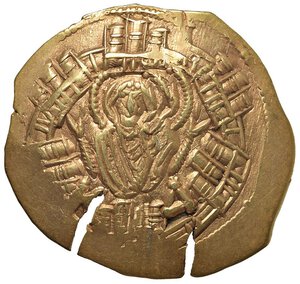
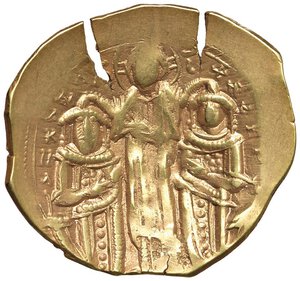
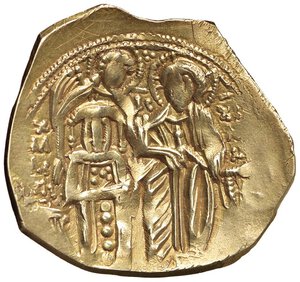
Andronico II e Michele IX (1295-1320) Hyperpyron - Busto della Vergine all'interno delle mura - R/ Gli imperatori di fronte incoronati da Cristo - Sear 2396 AU (g 4,18) Fratture del tondello qSPL
Lot # 254
-
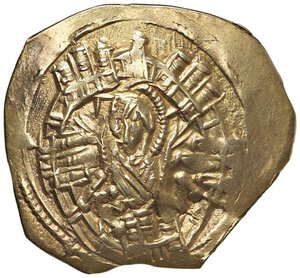
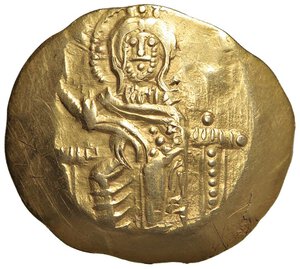
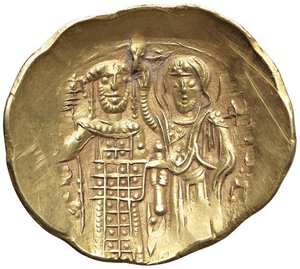
Michele VIII (1261-1282) Hyperpyron - Busto della Vergine all'interno delle mura - R/ L'imperatore di fronte a Cristo, dietro, San Michele - Sear 2242 AU (g 4,00) Graffiti sul bordo al D/ e al R/ BB+
Lot # 253
-
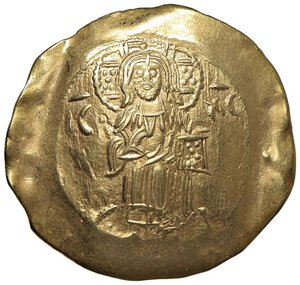
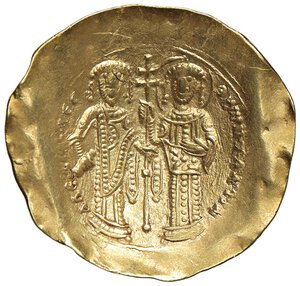
IMPERO DI NICEA Giovanni III (1222-1254) Hyperpyron - Cristo seduto in trono di fronte - R/ L'imperatore di fronte incoronato dalla Vergine - Sear 2073 AU (g 4,46) Graffiti sul bordo al D/ e al R/ SPL
Lot # 252
-
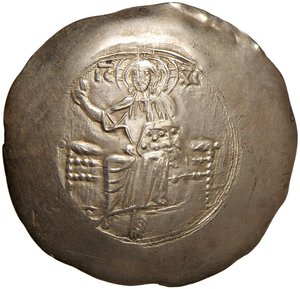
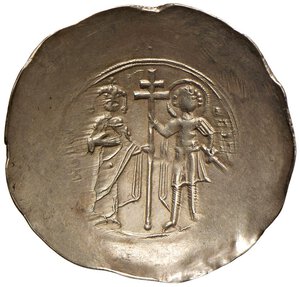
Alessio III (1195-1203) Hyperpyron - Cristo seduto in trono di fronte - R/ L'imperatore e San Costantino stanti di fronte - Sear 2007 AU (g 4,43) Schiacciature al bordo SPL
Lot # 251
-
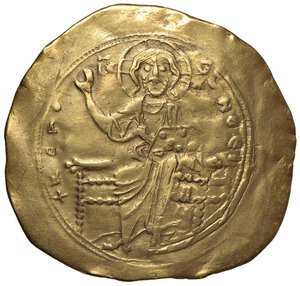
Giovanni II Komnenos (1118-1143) Aspron Trachy - Cristo seduto in trono di fronte - R/ L'imperatore e San Giorgio stanti di fronte - Sear 1941 EL (g 4,54) Colpi al margine BB
Lot # 250
-
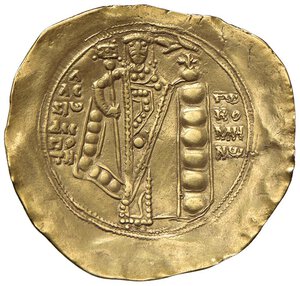
Alexios I Komnenos (1081-1118) Hyperpyron - Cristo seduto in trono di fronte - R/ L'imperatore stante di fronte - Sear 1913 AU (g 4,31) Schiacciature marginali BB
Lot # 249
-
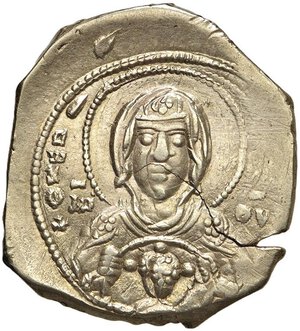
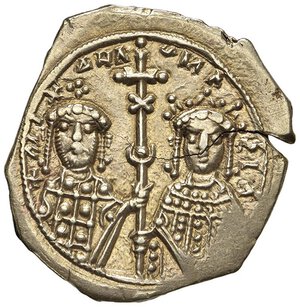
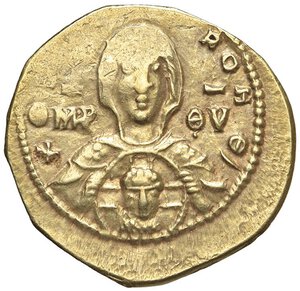
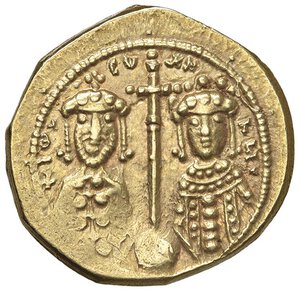
Michele VII (1071-1078) Tetarteron Nomisma - Busto della Vergine di fronte - R/ Busti dell'imperatore e della moglie di fronte - Sear 1872 AU (g 4,00) RR Ampia frattura del tondello SPL
Lot # 248
-
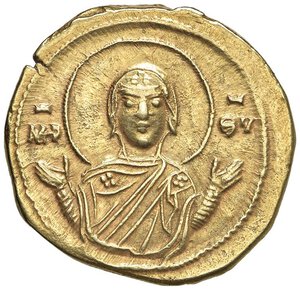
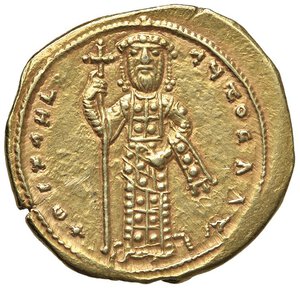
Romano IV (1068-1071) Tetarteron Nomisma - Busto della Vergine di fronte - R/ Busti dell'imperatore e della moglie di fronte - Sear 1862 AU (g 4,07) RR Debolezza di conio BB+
Lot # 247
-
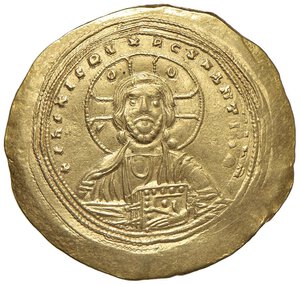
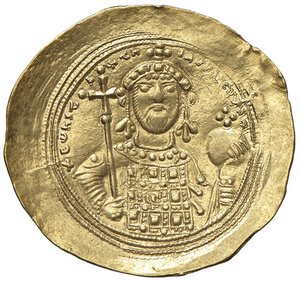
Michele VI (1056-1057) Tetarteron Nomisma - Busto della Vergine di fronte - R/ L'imperatore stante di fronte - Sear 1841 AU (g 3,46) RRR SPL
Lot # 246
-
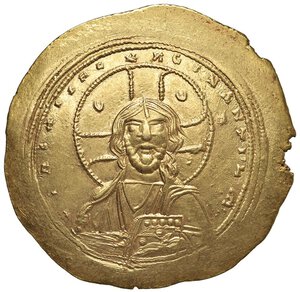
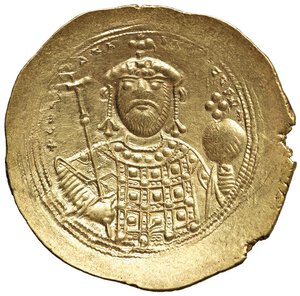
Constantino IX (1042-1055) Istamenon nomisma - Busto di Cristo di fronte - R/ Busto di fronte - Sear 1830 AU (g 4,40) Schiacciature marginali SPL
Lot # 245
-
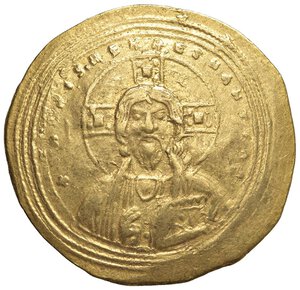
Constantino IX (1042-1055) Istamenon nomisma - Busto di Cristo di fronte - R/ Busto di fronte - Sear 1830 AU (g 4,40) SPL
Lot # 244
-
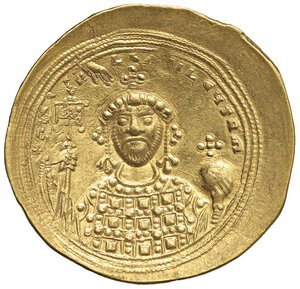
Michele IV (1034-1041) Istamenon Nomisma - Busto di Cristo di fronte - R/ Busto di fronte, a s., la manus Dei - Sear 1824 AU (g 4,32) Ribattuto al R/ BB/SPL
Lot # 243
-
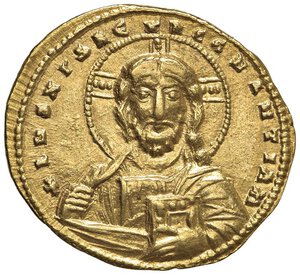
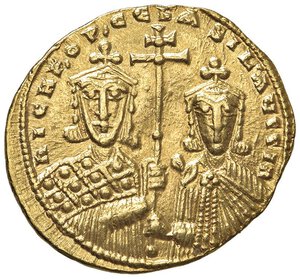
Niceforo II (963-969) Istamenon Nomisma - Busto di Cristo di fronte - R/ Busti di fronte di Niceforo e Basilio - Sear 1776 AU (g 4,47) qSPL
Lot # 242
-
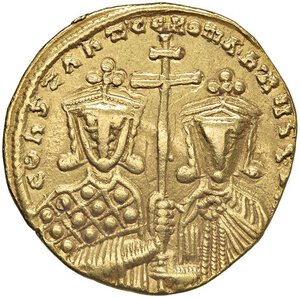
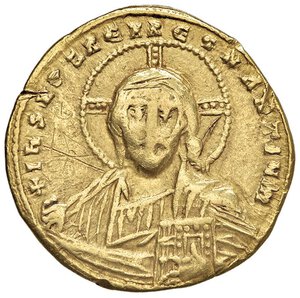
Costantino VII (913 - 959) Solido - Busto di Cristo di fronte - R/ Busti deglli imperatori di fronte - Sear 1751 AU (g 4,16) Graffi e colpi, forse da montatura BB
Lot # 241
-
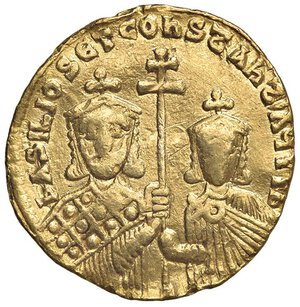
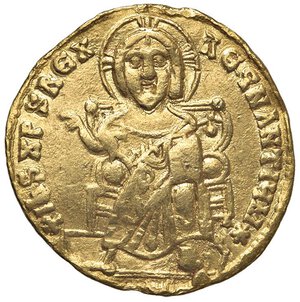
Basilio I (867 - 886) Solido - Cristo seduto in trono di fronte - R/ Gli imperatori di fronte - Sear 1704 AU (g 4,35) Da montatura BB
Lot # 240
-
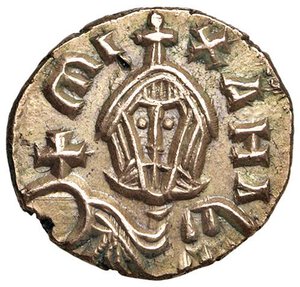
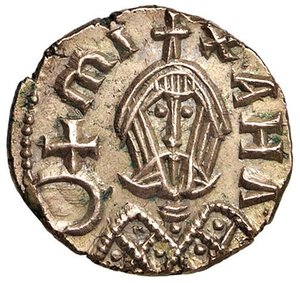
Michele III (842 - 867) Semisse (Siracusa) Busto di fronte - R/ Busto di fronte - Sear 1695 EL (g 1,67 - Ø 13 mm) SPL
Lot # 239
-
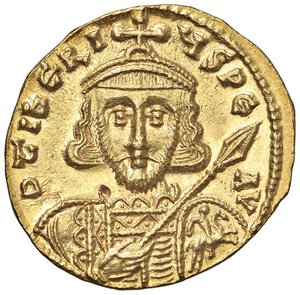
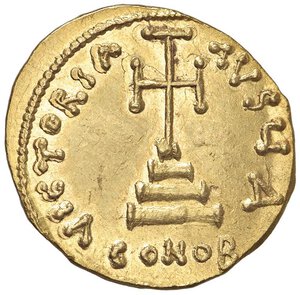
Tiberio III (698-705) Solido - Busto coronato di fronte - R/ Croce potenziata - Sear 1360 AU (g 4,44) RR Un minimo colpetto nel campo del R/ ma splendio esemplare dal metallo lucente qFDC
Results from 551 to 600 of 3012