Medals
Results from 20651 to 20700 of 25472
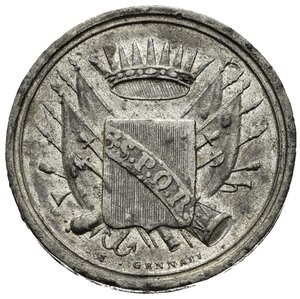
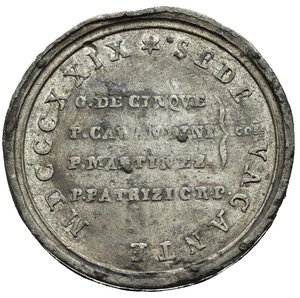
Lot # 483
-
Medaglie Papali – Stato Pontificio - Sede Vacante 1829 – II Variante – Rara (R). Medaglia non portativa, emessa nel 1829 a ricordo della Sede Vacante dai Conservatori della Città di Roma. apertura della Porta santa e dell’Anno Santo, fu distribuita ai pellegrini che visitavano Roma. Al dritto stemma coronato di Roma con nastro diagonale con scritta S.P.Q.R. su trofeo d’armi e di bandiere in basso L. GENNARI. Al rovescio legenda SEDE VACANTE MDCCCXXIX nel campo A. DE CINQVE P. CARANDINI P. MARTINEZ graffato a d. COSS sotto P. PATRIZI C R P. Opus Luigi Gennari. Medaglia in STAGNO (SN) (ø 31.5mm, 13gr.). Riferimenti Bartolotti p. 248. Conservazione MB/BB. Rara (R). La medaglia è stata emessa dai Conservatori della città di Roma Odoardo De' Cinque, Paolo Carandini, Paolo Martinez e dal Capo dei Caporione (CRP sta per Caput Regione Populi) Filippo Patrizi, in carica durante la Sede Vacante pontificia. Sin dal Medioevo, i tre Conservatori di nomina curiale insieme al Priore eletto dai 14 Caporioni ed al Senatore, nominato dal Papa, costituivano la Camera Capitolina che provvedeva, entro limiti prefissati, all'amministrazione della città di Roma. Tra le funzioni attribuite ai Conservatori ed al Capo Caporione, in carica per la durata di un trimestre, vi era anche quella di partecipare, durante il periodo della sede vacante, all’elezione del nuovo pontefice, o alla nomina di un nuovo Senatore, Camerlengo o Governatore. Con l’emissione di tali medaglie commemoranti i nomi dei Conservatori e del Capo Caporione in carica, implicitamente si ribadiva il vecchio principio secondo cui il Papa veniva eletto dal popolo per il tramite di suoi rappresentati. Queste medaglie venivano coniate in diversi metalli; quelle in argento erano destinate alle personalità cittadine di maggior rilievo, quelle in bronzo, piombo e mistura ai dipendenti dell’amministrazione civica.
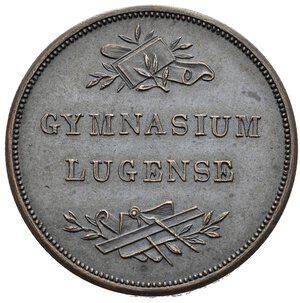
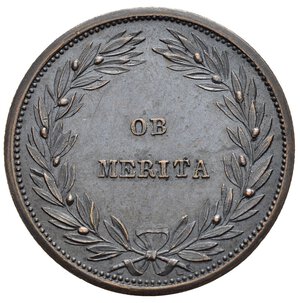
Lot # 482
-
Medaglie Italiane – Stato Pontificio - Ginnasio – Premiale - Lugo di Romagna (?) - Molto Rara (RR). Medaglia non portativa, di tipo premiale scolastica. Al dritto legenda GYMNASIUM LUGENSE sopra libro e pergamena fra fronde di rami in basso foglio, riga e compasso fra rami di foglie. Al rovescio legenda OB MERITA corona di lauro chiusa in basso da fiocco. Realizzata in bronzo (AE) (Ø 36.5mm, 26.1g.). Manca nei testi da noi consultati. Conservazione BB. Dovendo datarla pensiamo al primo ventennio del 1800.
Lot # 481
-
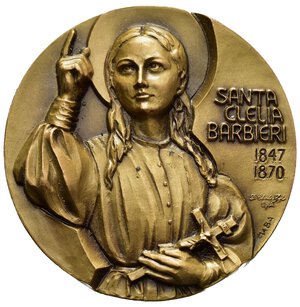
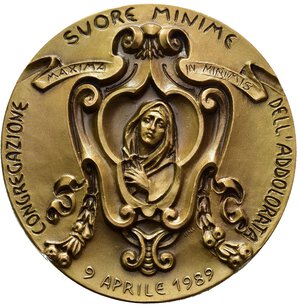
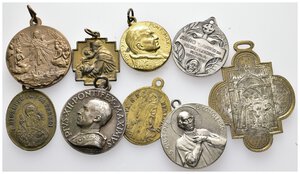
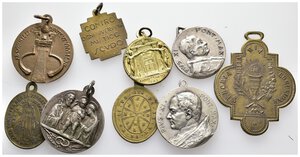
Medaglie Italiane. Medaglie Religiose. Medaglia Santa Clelia Barbieri - Congregazione suore minime dell'Addolorata. AE (91,36 g - 50 mm). FDC
Lot # 480
-
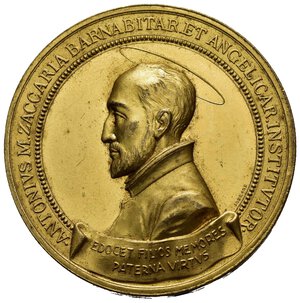
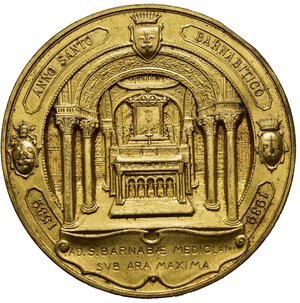
Medaglie Religiose. Medaglia Anno Santo Barnabitico 1939 - Antonio Maria Zaccaria (medico Italiano, nato a Cremona nel 1502) per il 400° anniversario della morte (1539 - 1939). D/ Busto nimbato del Santo a sinistra; R/ vista interna della chiesa di S. Barnaba in Milano con l'altare maggiore che conserva un'urna di vetro contenente il corpo incorrotto del fondatore dei Barnabiti, Sant'Antonio Maria Zaccaria. AE dorato (41,85 g - 47 mm). SPL
Lot # 479
-
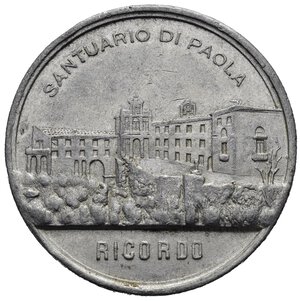
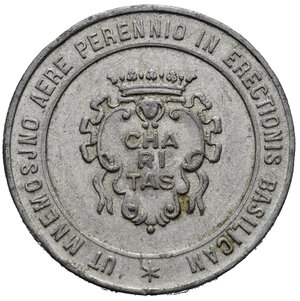
Medaglie religiose. Medaglia ricordo Santuario di Paola (Calabria). Al (8,97 g - 39,5 mm). BB
Lot # 478
-
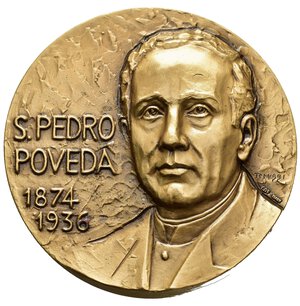
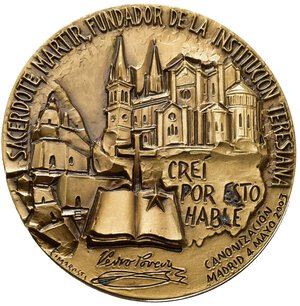
Medaglie Religiose. Spagna. Medaglia S.Pedro Poveda (1874-1936) fondatore dell'Istituzione Teresiana. Madrid 2003. AE (138 g - 60 mm). FDC
Lot # 477
-
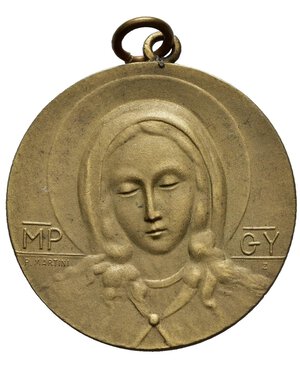
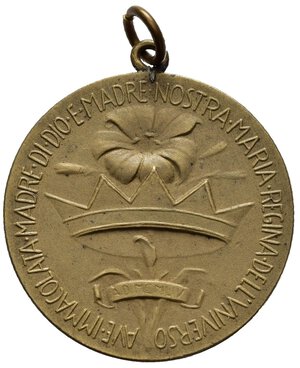
Medaglie Religiose – Beata Vergine. Medaglia religiosa portativa con appiccagnolo e anello. Al dritto legenda in greco MARIA volto della B.V. Al rovescio legenda AVE IMMACOLATA MADRE DI DIO E MADRE NOSTRA MARIA REGINA DEL’VNIVERSO al centro corona con fiore e cartiglio con data A.D,MCMLIV. Realizzata in bronzo (AE) (Ø 31.1mm, 11.6g). Conservazione SPL/FDC.
Lot # 476
-
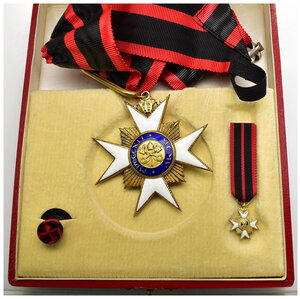
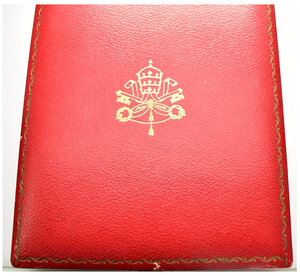
Medaglie Papali – Ordine Equestre San Silvestro Papa – Croce da Commendatore (post 1905) - Molto Rara. Croce da Commendatore dell’Ordine Equestre di San Silvestro Papa al lotto compete anche la croce mignon e la rosetta a bottoncino per abiti civili della medesima decorazione. La croce dell'Ordine consiste in una croce d'oro smaltata di bianco, al centro della quale è impressa l'immagine di San Silvestro, circondata da un cerchio blu con le lettere d'oro SANC. SYLVESTER P. M. Al recto, in centro, viene raffigurata la tiara papale e due chiavi incrociate con la data di restaurazione sotto papa Gregorio: MDCCCXLI, e quella della riforma di Pio X, MCMV, impresse in oro su un cerchio blu. Il nastro delle decorazioni è di seta, composto di cinque bande, tre rosse e due nere. Molto Rara (RR). Realizzata in bronzo dorato (AE) e smalti policromi (56x56mm ca,, 45.9g.). Conservazione SPL/FDC. In astuccio coevo della ditta Tanfani e Bertarelli di Roma con stemma pontificio inciso in oro nel piatto anteriore.
Lot # 475
-
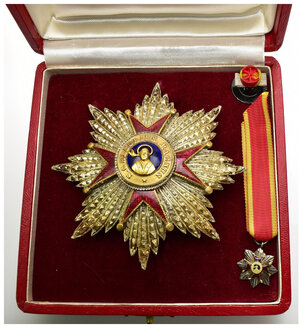
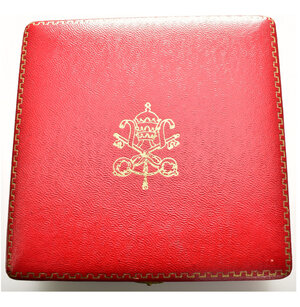
Medaglie Papali – Ordine Equestre San Gregorio Magno – Placca da Commendatore - Molto Rara. Placca da Commendatore dell’Ordine Equestre di San Gregorio Magno al lotto compete anche la croce mignon e la rosetta a bottoncino per abiti civili della medesima decorazione. Al dritto S. GREGORIUS MAGNUS. Al rovescio TANFANI BERTARELLI. Viene insignita a candidati/e particolarmente benemeriti, con almeno 50 anni di età e dopo 10 anni dal conferimento di una onorificenza di grado inferiore. L'Ordine equestre pontificio di San Gregorio Magno (in latino: Ordo Sancti Gregorii Magni) è un ordine cavalleresco della Santa Sede. Esso venne fondato da papa Gregorio XVI il 1º settembre 1831, dopo appena sette mesi dalla sua elezione, mediante il breve Quod summis. L'Ordine di San Gregorio Magno è ancora oggi uno dei cinque ordini pontifici della Santa Sede, precede l'Ordine di San Silvestro. Secondo il cerimoniale diplomatico è un ordine di prima classe. L'ordine è riservato a uomini e donne di religione cattolica (rarissimi sono i casi di conferimento a non cattolici) in riconoscimento per il loro servizio alla Chiesa, per impieghi straordinari, in supporto alla Santa Sede e per il loro buon esempio presso le comunità e nel paese. È riservato a cattolici di distinta condizione, anche se non sono richiesti requisiti nobiliari. È concesso anche a militari solo a partire dal grado di maggiore. Gode del privilegio del saluto militare da parte delle guardie svizzere. I cavalieri di gran croce godono del trattamento di "Eccellenza". Il motto dell'Ordine è Pro Deo et Principe (letteralmente: "Per Dio e per il sovrano", dove si gioca sulla duplice valenza del titolo latino "princeps" tra sovrano dello Stato - inteso nella figura del papa regnante – e princeps apostolorum, "principe degli apostoli", titolo riconosciuto a San Pietro, primo papa). I membri dell'Ordine non avevano particolari privilegi, ma è curioso notare che a loro venne riconosciuto il diritto di cavalcare sin dentro la basilica di San Pietro a Roma, un privilegio ad ogni modo usato di rado e presto annullato. Tuttora godono di precedenze durante le cerimonie. L'Ordine dispone di quattro classi di benemerenza: cavaliere di gran croce, a candidati/e di alto profilo nel servizio della Chiesa, a livello nazionale e internazionale, con almeno 55 anni di età e dopo 10 anni dal conferimento di una onorificenza di grado inferiore; commendatore con placca, a candidati/e particolarmente benemeriti, con almeno 50 anni di età e dopo 10 anni dal conferimento di una onorificenza di grado inferiore; commendatore, a candidati/e benemeriti, con almeno 45 anni di età e dopo 10 anni dal conferimento di una onorificenza di grado inferiore (come in questo caso); cavaliere, a candidati/e con almeno 40 anni di età. Molto Rara (RR). Realizzata in argento (AG) e smalti policromi (81x81mm ca,, 83.6g.). Conservazione SPL/FDC. In astuccio coevo della ditta Tanfani e Bertarelli di Roma con stemma pontificio inciso in oro nel piatto anteriore.
Lot # 648
-
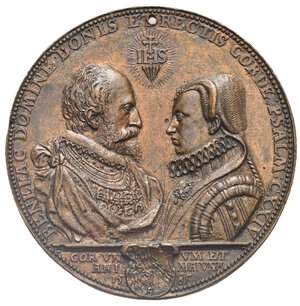
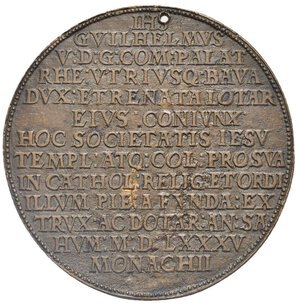
Germany. William V Duke of Bavaia, 1548-1626, and Renata of Lorraine, 1544-1602, daughter of Duke Feanz I. of Lorraine. Copper plated bronze medal 1585 by Hubert Gerhart, München. (Copper plated bronze, 77.00 mm). BENEFAC DOMINE BONIS ET RECTIS CORDE PSALM CXXIV Faced busts. William bearded is wearing a cuirass with a drape and a showy collar of the Order of the Golden Fleece, left. Renata is wearing a high-necked dress with a Spanish ruff and a gaudy jewel with pendant at the breast. Her hair is tied into a hairnet ending in a sort of ponytail and a jewel with pendant on the forehead is holding the hairstyle. In exergue in three lines between a coat-of-arm, COR VN VM ET ANI MA VNA 15 85. High in the field within a radiate halo the Jesuit monogram, HIS surmounted by a flowered cross and three studs beneath. Rev. HIS GVILHELMVS V D G COM PALAT RHE VTRIVSQ BAVA DVX ET RENATA LOTAR EIVS CONIVNX HOC SOCIETATIS IESV TEMPL ATQ COL PROSVA IN CATHOL RELIG ET ORDI ILLVM PIE A FVNDA EX TRVX AC DOTAR AN SA HVM M D LXXXV MONACHI in thirteen lines in the field. Habich nr. 3191, plate CCCIV, 3; Ges. Wittelsbach, nr. 566; Dworschak, Jahrbuch a. a. O. p. 233, plate XXIX, 4. Pierced. An extremely fine original cast.
The medal shows the year 1585 during which the duke obtained the famous decoration of the Order of the Golden Fleece and the Jesuit monogram reminds the putting of the first stone for the construction of the Jesuit Church of Saint Michael in München.
Ex Astarte XX, 30 Ottobre 2009 lot 471.
Lot # 647
-
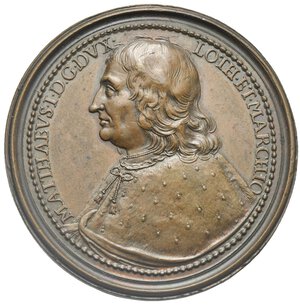
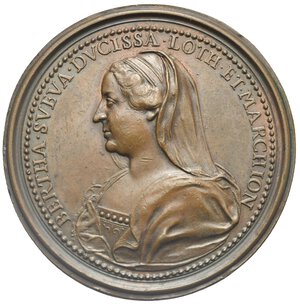
Matthew I of Lorraine, le Débonnaire, 1119-1176, and Bertha of Swabia. Bronze medal about 1720 Nancy. By Ferdinand de Saint-Urbain. (Bronze, 46.93 mm, 50.46 g). MATTHAEVS I D G DVX LOTH ET MARCHIO Bust of Matthew I Duke of Lorraine left. Rev. BERTHA SVEVA DVCISSA LOTH ET MARCHION Draped bust of Bertha of Hohenstaufen left. Forrer V, 26. Extremely Fine.
Matthew I of Lorraine, known as the Débonnaire, was Duke of Lorraine from 1139 to 1176. He married around 1138 Judith de Hohenstaufen (1123-1195), also called Bertha. This medal belongs to a series minted by Ferdinand de Saint-Urbain in Nancy, representing the Dukes and Duchesses of Lorraine.
Lot # 646
-
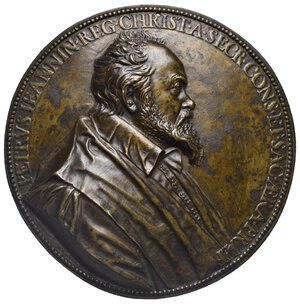
France. Pierre Jeannin, c. 1540-1622, firstly president of the parliament in Dijon in 1581, became adviser to the king of France and superintendent of finance. Voluminous bronze uniface medal by Guillaume Dupré. (Bronze, 186.00 mm, 871.00 g). PETRVS IEANNIN REG CHRIST A SECR CONS ET SAC AERA PRAEF Bare-headed bust on the right, wavy hair on top, long beard and toga with wide neck. Jones 94, 50 var. (signed G. Dupré). Mazerolle II, 683 var. (signed). Kress 106, 564 var. (signed). Hole. Extremely Fine late cast.
Pierre Jeannin was born in Autun around 1540 and died in Paris in 1622 or 1623. He was a lawyer and in 1579 he became President of the Burgundian Parliament and soon after an influential advisor to King Henry IV leading many diplomatic missions. Being a member of the Council of State, he had an important role in the politics of that time and from 1607 to 1609 he was ambassador to the United Provinces. After the murder of the King , Henry IV in 1610, Jeanin was responsible of the finances for Maria de’ Medici and her son, King Louis XIII, until his dismissal in 1616.
Lot # 645
-
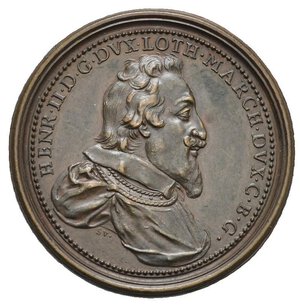
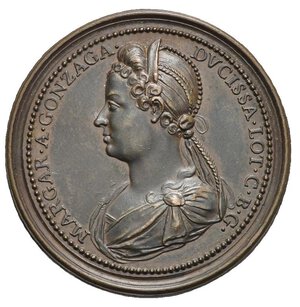
France. Nancy. Henry II, Duke of Lorraine, 1563-1624, and his wife Margherita Gonzaga, 1591-1632. Bronze medal 1704 (Bronze, 46.61 mm, 45.44 g). By Ferdinand de Saint-Urbain. HENR II D G DVX LOTH MARCH DVX C B G. Bust right with beard and wavy hair; he wears paludamentum, armor and high collar. Under the shoulder truncation, SV. Rev. MARGAR A GONZAGA DVCISSA LOT C B G Bust left with showy curly hair on the forehead, diadem and small braids gathered at the nape of the neck with a jeweled clasp and falling onto the shoulders. Shawl fastened to one shoulder with a stud. Beaded outline and molded edge. Magnaguti p. 149, n. 213. Coll. Johnson II, 478. Extremely fine.
Ex Astarte XX, 30 October 2009, lot 476.
The medal belongs to the metallic series struck by Saint-Urbain at Nancy in 1704, representing the dukes and duchesses of House Lorraine.
Lot # 644
-
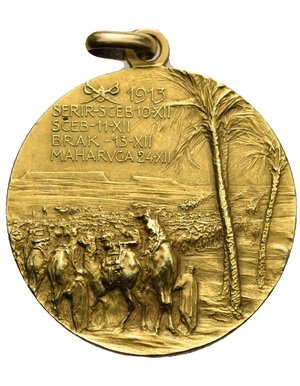
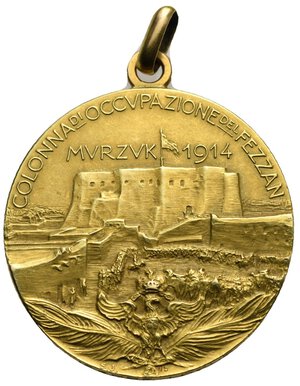
Italian occupation of Libia, conquest of Fezzan. Gold medal for military valour to Giuseppe Locurcio, 1914. (Gold, 31.63 mm, 18.20 g). COLONNA DI OCCUPAZIONE DEL FEZZAN MVRZVCK 1914 Towered city surrounded by walls, long column of soldiers is entering in the city; in the foreground, a crowned and open winged eagle upon two palm branches. Rev. 1913 SERIR-SCEB 10 XII SCEB 11-XII BRAK 15-XII MAHARVGA 24-XII in five lines in the field. On the right two high palm trees, besides a long column of people walking slowly, some leading a camel, towards a city whose walls are in the background. Engraved on the edge, GIUSEPPE LOCURCIO. Extremely Fine. Very Rare.
The medal celebrates the feats of the Italian army during the Italian-Turkish War and is dedicated to the valiant captain Giuseppe Locurcio. In 1913, an expedition was organised under the command of Lieutenant Colonel Antonio Giuseppe Miani to conquer the remote Fezzan region. The 5th Eritrean battalion commanded by Captain Domenico De Dominicis managed to rout the enemy near the oasis of Esc Scebb and was victorious in the bloody battle of Maharuga, where the Neapolitan captain lost his life, earning him the gold medal for military valour. Another brave member of the Italian contingent was Giuseppe Locurcio, an experienced artillery captain who had distinguished himself several times in Benadir, Somalia. He was chosen to be in charge of the artillery contingent in support of the infantry and on 13 December 1913, after defeating the enemy, his unit entered the town of Brak victorious. The Italian flag flew in one of the most important oases in that region and within a few days, with concerted war actions with Captain De Dominicis' infantry, the entire Fezzan region was conquered. From an artistic point of view, the medal shows an interesting usage of perspective.
Lot # 643
-
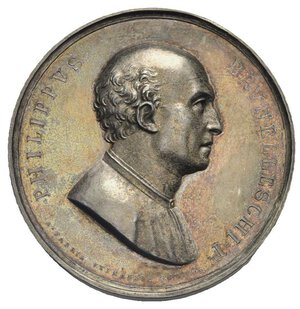
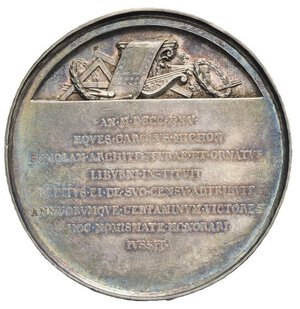
Italy. Livorno. Architect Filippo Brunelleschi. Silver prize medal 1825 by A. Fabris, for the students of the Carlo Michon school, in honour of Filippo Brunelleschi. (Silver, 52,21 mm, 56.00 g). Bare-headed bust right. Rev. Architect’s technical instruments at the top; inscription of eight lines with date. F. Saracino, L’opera medaglistica dell’incisore Cav. Antonio Fabris (Udine 1790-Venezia 1865), “ Medaglia” 20, 1985 p. 64, n. 2. Toned. Extremely Fine.
Ex Astarte XV, 27.November 2004, lot 447.
Lot # 642
-
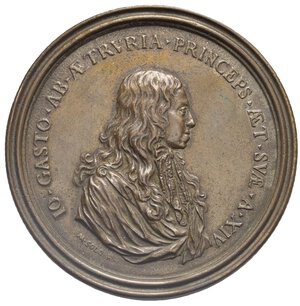
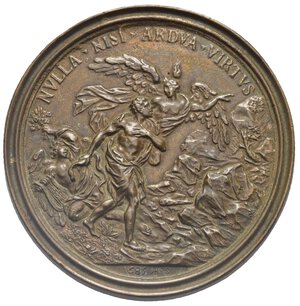
Italy. Florence. Gian Gastone de’ Medici, last Grand Duke of Tuscany, 1671-1737. Medal 1685 (Bronze, 87 mm, 193.84 g). By Massimiliano Soldani Benzi. IO GASTO AB ETRVRIA PRINCEPS AET SVAE A XIV Long-haired bust of the future Grand Duke of Florence as a young teenager to right. Signed M SOLD F below bust. Rev. NVLLA NISI ARDVA VIRTVS Winged Virtue directs the young prince away from Frivolity, shown holding flowers and lyre, toward the mountain top. Under the exergual line, 1685 M S (date and initials of the sculptor). Vannel Toderi vol. II, n. 192. Deposits, otherwise, Extremely Fine original cast.
Lot # 641
-
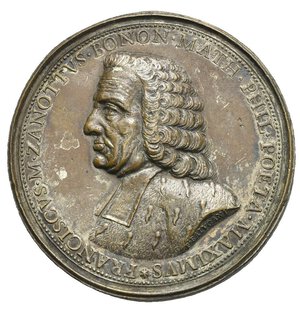
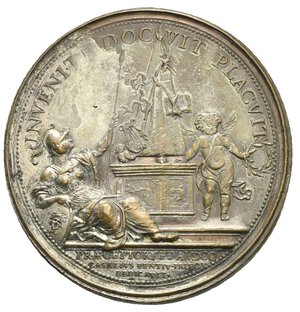
Italy. Bologna. Francesco Zanotti, 1692-1777. Philosopher and Physicist. Bronze medal (Bronze, 55 mm, 83.00 g). By F. Balugani. FRANCISCVS M ZANOTTVS BONON MATH PHIL POETA MAXIMVS Bust left with long wig, wearing ermine cape; on neck cut F. BALVGANI. Rev. INVENIT DOC VIT PLACVIT Obelisk on pedestal decorated with bas-reliefs and hanging compasses, a square, a book and a lyre. Helmeted and galleyed Minerva on the left, holding shield and spear; on the right, a winged genius holds a laurel wreath. In the exergue PRAECEPTORI ET AMICO CASALIVS BENTIV PALEOT DEDICAVIT. S. Johnson, Johnson Collection of Medals II, 267. Rizzini 1301. Noé, Profilo nella medaglia bolognese nel settecento, "Medaglia" 19, 1984, p. 105, n. 26. Extremely Fine original cast.
The medal was dedicated to Zanotti by his pupil and friend, Marquis Gregorio Casali Bentivogli Paleotti, professor and chancellor of the University of Bologna.
Ex Astarte XX, 30 October 2009, lot 477.
Lot # 640
-
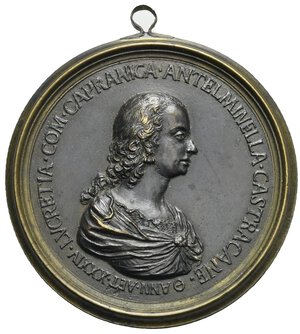
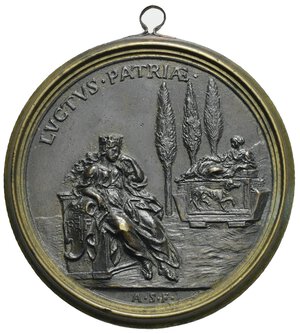
Italy. Fano. Lucrezia Capranica Antelminelli Castracani, 1716-1750. Bronze medal 1750 by Antonio Selvi (Bronze, 83.00 mm, 176,56 g). LVCRETIA COM CAPRANICA ANTELMINELLA CASTRACANE Q ANN AET XXXIV Bust to the right with long loose hair falling over the shoulders. A small jewel fastens the scarf that wraps around her shoulders and chest. R/ LVCTVS PATRIAE The personification of the city of Fano seated on a throne with the coat of arms of Fano and F F. In the background, a sarcophagus with a dog on the pediment, surmounted by a reclining female statue; behind, three cypress trees; on the exergue A S F. Johnson 147; Vannel-Toderi 1987, 213. Extremely fine original cast with original period suspension ring. Brown patina. Very rare.
The medal commemorates the death of Lucrezia Capranica in 1750. The two F F on the coat of arms of Fano refer to the city's Latin name 'Fanum Fortunae', while the dog carved on the sarcophagus represents the coat of arms of the Castracani family, and the cypresses that of the Capranica family.
Lot # 639
-
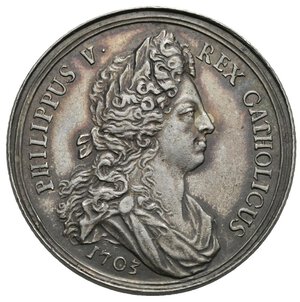
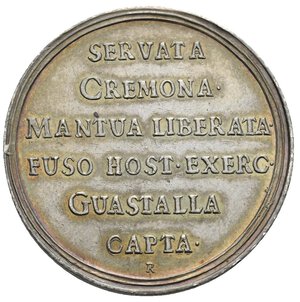
Italy. Philip V of Spain, 1700-1724. Medal 1703 (Silver, 31.28 mm, 8.65 g). By Roettiers. PHILIPPVS V · REX CATHOLICVS Laureate and draped bust of Philip V to right with long curling hair; date 1703 below. Rev. SERVATA CREMONA MANTVA LIBERATA FUSO HOST EXERC GVASTALLA CAPTA in six lines; R below. Cf. Forrer, p. 190 (described as jeton). Magnaguti Medaglie p. 138. Lovely old cabinet toning. Extremely Fine.
This medal, struck in the Flanders, commemorates some Italian successes that occurred during the War of the Spanish Succession: the defense of Cremona, the conquest of Mantova and the victory over Guastalla.
Lot # 638
-
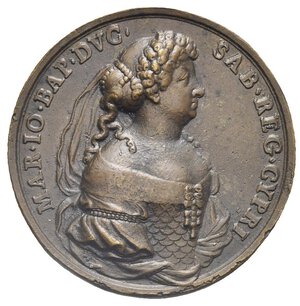
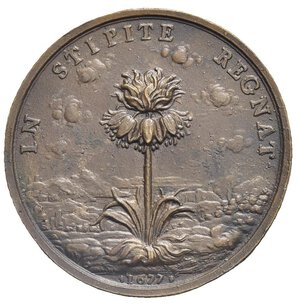
Italy. Savoia. Maria Giovanna Battista Savoia-Nemours, 1644-1724.). Medal 1677. (Bronze, 55.45 mm, 41,48 g) MAR IO BAP DVC SAB REG CYPRI Bust of the duchess right wearing a dress with a wide neckline, low puffed sleeves and bodice; hair curled on the forehead and gathered at the nape of the neck with strings of pearls and a fluttering veil; on the chest, a striking pendant. Rev. IN STIPITE REGNAT Flowering plant with long trunk and crown of bell-shaped flowers loaded with pistils (fritillary, an exotic plant); in the background, sky with 6 clouds and mountain landscape in the distance and partly rocky in the foreground. At the exergue, 1677. UdS XXIX, 2. Dark -brown patina. Very Fine. Rare.
Lot # 637
-
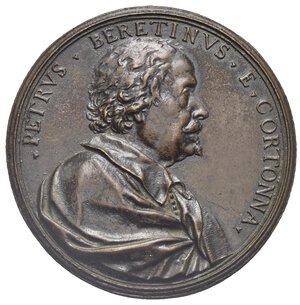
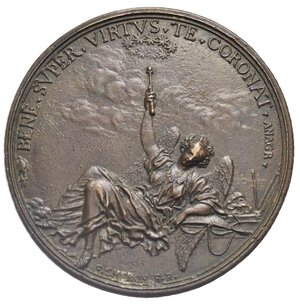
Pietro Berettini “da Cortona” , 1596-1669. Bronze medal by C.J.F. Cheron (Bronze, 72.74 mm, 108.95 g). PETRVS BERETINVS E CORTONNA Right bust of Berettini with draped cloak. Rev. BENE SVPER VIRTVS TE CORONAT ANAGR The Winged Lady, lying in a long draped tunic. The right arm is outstretched and the right hand holds a sceptre towards a crown of eight-pointed stars above. In small F CHERON F R. Johnson I, p. 204, n.124. Rizzini 885. Museum Mazzucchellianum II, CXX/ 2. Extremely Fine.
The legend on the reverse of this medal is an anagram of the wording on the obverse.
Lot # 636
-
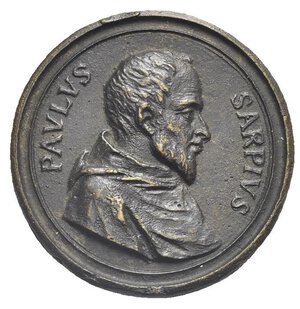
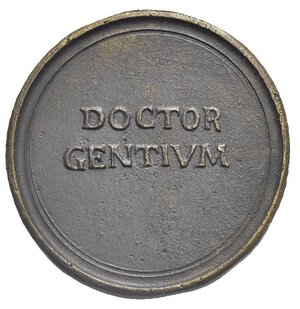
Italy. Venice. Fra Paolo Sarpi, 1552-1623, theologian and advisor to the Republic. Bronze cast medal 1623. (Bronze, 41.42 mm, 32.44 g). PAVLVS SARPIVS Bust right in cassock. R/ DOCTOR GENTIVM Inscription in two lines. Johnson I, 257 (this specimen). Voltolina 891. Toderi-Vannel 16. Brown patina. Extremely Fine original cast. Very rare.
Ex Astarte IXX, 05.2006, lot 302.
The Reverse legend refers to Saint Paul “Apostle to the people”, whose name the friar had taken by entering the Order. Born in Venice in 1552, he entered the Servite Order in 1565 and graduated in theology and philosophy in 1569 in Mantua under the auspices of Duke Guglielmo Gonzaga. When he arrived in Milan, Carlo Borromeo wanted him as his confessor. Active between Padua and Venice, he dedicated himself to the physical and mathematical sciences, holding the position of Advisor of Serenissima State. He was the author, among others, of the Istoria del Concilio Tridentino.
Lot # 635
-
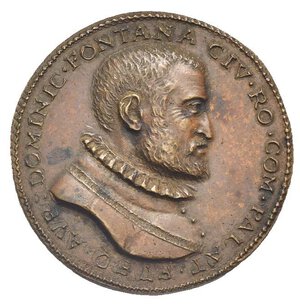
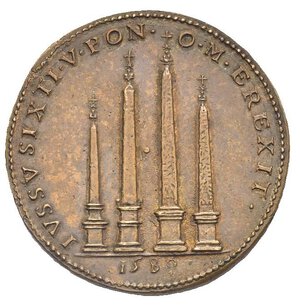
Italy. Rome. Domenico Fontana, architect, 1543-1607. Medal 1589 by D. Poggini. (Bronze, 39.49 mm, 31.12 g). DOMINIC FONTANA CIV RO COM PALAT ET EQ AVR Bust right with stiff gorgon collar. Rev. IVSSV SIXTI V PONT O M EREXIT The four obelisks erected in Rome by Domenico Fontana; on the exergue, 1559. Toderi-Vannel 1498. Attwood 825. Pollard III/840. Armand II, 63, 6. Extremely Fine Contemporary cast.
The Swiss architect, of Ticino origin worked in Rome and Naples in the late Renaissance period.
Ex Kunst und Münzen XXVII, 18 April1989, lot 219.
Lot # 634
-
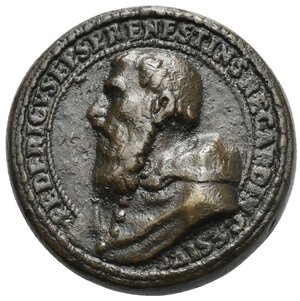
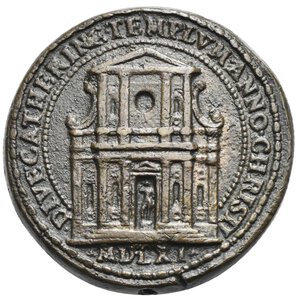
Italy. Rome. Federico Cesi, 1500-1565, Cardinal. Medal 1561 by G.F. Bonzagna (Bronze, 35.01 mm, 34.95 g). FEDERICVS EPS PRENESTIN S R E CARDIN CAESIVS Bare headed bust with long beard to left. Rev. DIVE CATHERINE TEMPLVM ANNO CHRISTI MDLXI Facade of the church of S. Caterina de’ Funari in Roma with statue on the entrance door. Bauten Roms 250, 398. Toderi-Vannel 690, 2161. Börner 121, 490. Attwood 959. Armand I, 221, 1. Hole on edge h 12, some deposits. Old cast. Very Fine.
Lot # 633
-
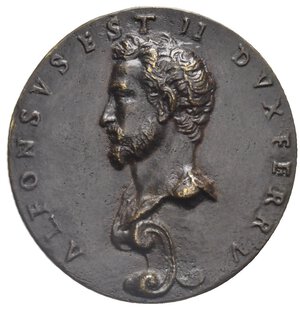
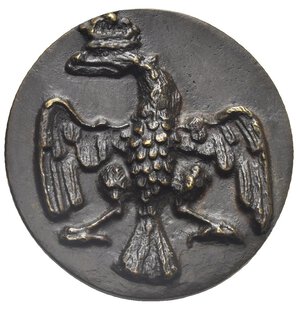
Italy. Ferrara. Alfonso II d'Este, 1533-1597, fifth Duke of Ferrara, 1559. Medal after 1559, by Giambattista Cambi (d.1582 ?), called "Bombarda" (Bronze, 65 mm, 123 g). ALFONSVS EST II DVX FERRV Draped, bare-headed bust left, ornate curl below. Rev. Crowned d'Este eagle in high relief and head turned left. Boccolari 138. Johnson-Martini 1090. Armand II, 194, 7. Stunning dark patina. About Extremely Fine. Old cast.
From the Neil A. Goodman Collection. Ex Spink 390, 8 sept 2023, lot 8.
Lot # 632
-
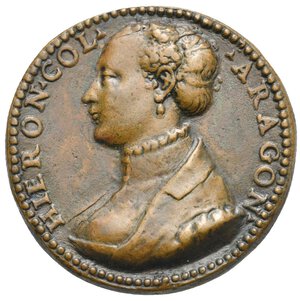
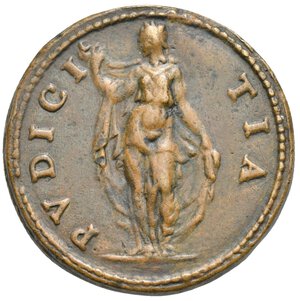
Italy. Girolama Colonna. XVI Century. Bronze medal by Domenico Poggini. (Bronze, 37.86 mm, 27.32 g). HIERON COL ARAGON Bust with high-necked robe on left, hair gathered by ribbon into soft chignon and earrings. Beaded border. Rev. PVDICITIA Personification of Modesty standing, head turned left while lifting her robe with her right hand. Toderi-Vannel 1475. Attwood p. 421. Armand I, 191, 22. Very Fine contemporary cast.
Daughter of Ascanio Colonna and Giovanna of Aragon, wife of Camillo Pignatelli, Girolama composed poetry and devoted herself to astrology.
Ex Astarte IX, 15 May 2002, lot 775.
Lot # 631
-
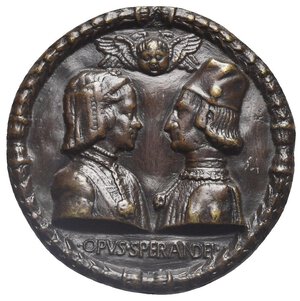
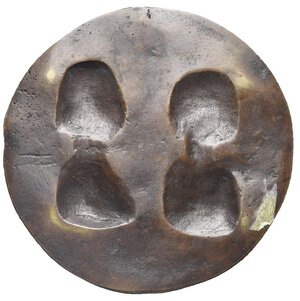
Italy. Ferrara. Ercole I Este, 1471-1505, duke of Ferrara and his wife Eleonora of Aragona, 1450-1493, firstly consort of Massimiliano Sforza, duke of Bari. Uniface bronze medal by Sperandio. (Bronze, 113.02 mm, 264.00 g). Facing busts of the dukes, vis-à-vis. Hercules on the right with soft cap embellished by a jewel and collar with pendant, Eleonora on the left with richly adorned headcloth, dress with square-cut corsage and chain with pendant; on the top a cherub with four wings facing, looking down; at the esergue, OPVS SPERANDEI; all within laurel wreath. Armand I, 68, 21. Hill 366. Kress 27, 116 var. (lead). Pollard 2007, 85. Börner 46, 125. Boccolari 56. Very Fine late cast, brown patina.
The medal commemorates the wedding of Hercules and Eleanor on 3 July 1473.
Lot # 630
-
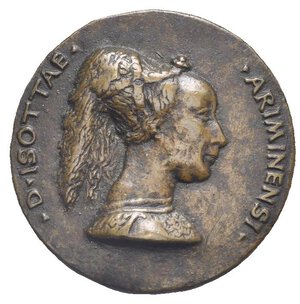
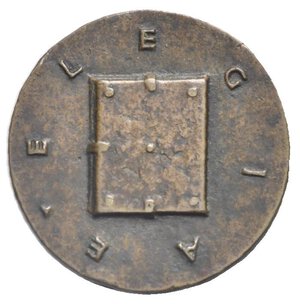
Italy. Isotta degli Atti, 1432/3-1474, mistress [1446] then wife [1456] of Sigismondo Pandolfo Malatesta. Bronze medal undated but 1446 (Bronze, 42.11 mm, 35.13 g), by Matteo di Andrea de’ Pasti. D ISOTTAE ARIMINENSI Bust right, her hair in a high frame, tied at the nape of the neck, falling into two tails and a jewel atop forehead. Rev. ELEGIAE Closed book. Armand I, 22/23. Hill 1930, 188. Kress 64. An Extremely Fine late old cast, lustrous leather-coloured patina.
Matteo di Andrea de’ Pasti (active from 1441- died 1467/8) was a famous sculptor, architect and illuminator who worked in Venice in 1441and successively in Verona and Rimini. Sigismondo Malatesta commissioned many works to the master among which the reconstruction of the Rimini cathedral, commonly known as Tempio Malatestiano, a gorgeous exemple of the XV century’s Italian art. Sigismondo Malatesta and his mistress Isotta are the subject of the greater part of de’ Pasti’s work.
Results from 20651 to 20700 of 25472