Greek And Roman Art
Results from 51 to 100 of 524
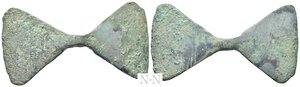
Lot # 1077
-
GREEK. Bronze Double-Axe (Circa 3rd-1st century BC). Possibly used as pendant or amulet. Obv: .Rev: .. Condition: See picture.Weight: 11.46 g. Diameter: 63 mm.
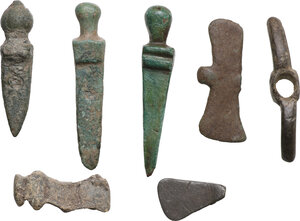
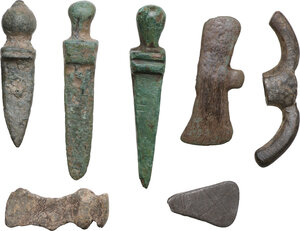
Lot # 1035
-
SEVEN ANCIENT ITEMS From the Roman to the Byzantine period, c. 1st–12th century AD. Lot of seven bronze, lead, and silver items, including a silver pendant and a lead pendant in the form of axe-blades, a bronze votive element in the shape of a double axe and a pickaxe, and three bronze fastener pegs from Byzantine bindings (some with non-through holes). Dimensions: 20 × 13 mm; weight: 1.32 g (silver pendant). Commonly and erroneously interpreted as gladius-shaped amulets, this type of object is instead to be attributed to the sphere of Byzantine bookbinding. The holes in the pegs are probably for fastening them with rivets. Bibl: Szirmai J., The Archaeology of medieval bookbinding, 1999, pp. 81-83.
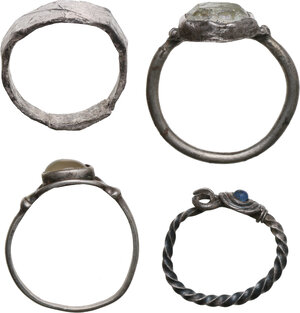
Lot # 1034
-
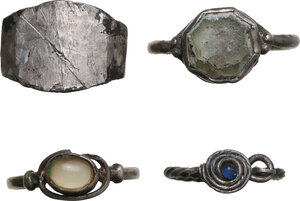
FOUR ANCIENT AND MODERN SILVER RINGS From the Late Roman period to modern times. Lot of four silver rings of various sizes and decorative styles, including examples with glass paste inlays and glass gemstones. Total weight: 11.06 g.
Lot # 1033
-
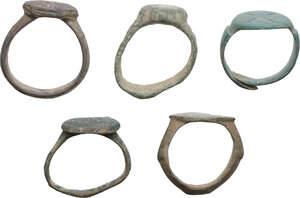
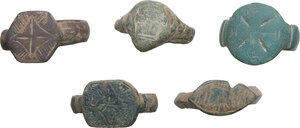
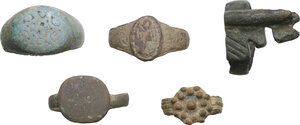
FIVE ANCIENT BRONZE RINGS From the Late Roman period to the Renaissance. Lot of five ancient bronze rings of various sizes and decorative types.
Lot # 1032
-
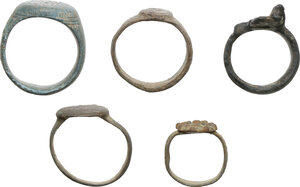
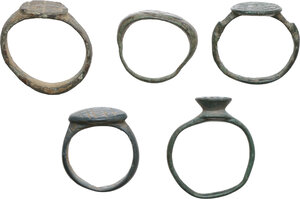
FIVE ANCIENT BRONZE RINGS From the Late Roman period to the Renaissance. Lot of five ancient bronze rings of various sizes and decorative types, including one intact Roman key-ring.
Lot # 1031
-
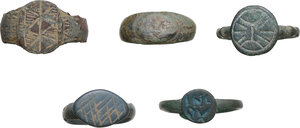
FIVE ANCIENT BRONZE RINGS From the Late Roman period to the Renaissance. Lot of five ancient bronze rings of various sizes and types, each with different decorative motifs, including one Byzantine ring with the engraved legend INI / VX on the bezel.
Lot # 1030
-
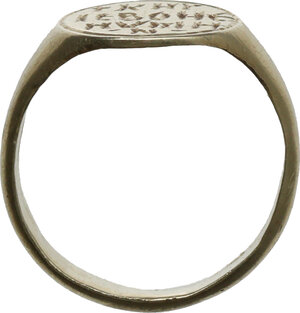
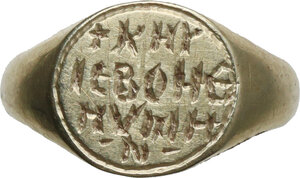
GOLD SEAL RING Byzantine period (?), c. 6th–9th century AD. Gold seal-ring with a Greek inscription in three lines within a border. Inner diameter: 17 mm; weight: 4.09 g. Traces of tooling on the inner surface.
Lot # 1029
-
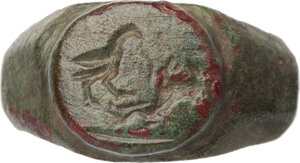
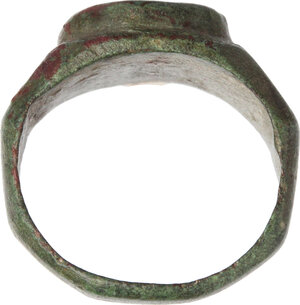
BRONZE RING Late Roman to Byzantine period, c. 4th–8th century AD. Bronze ring with an engraved bezel depicting an eagle with its prey. Inner diameter: 12 mm. Intact and complete.
Lot # 1028
-
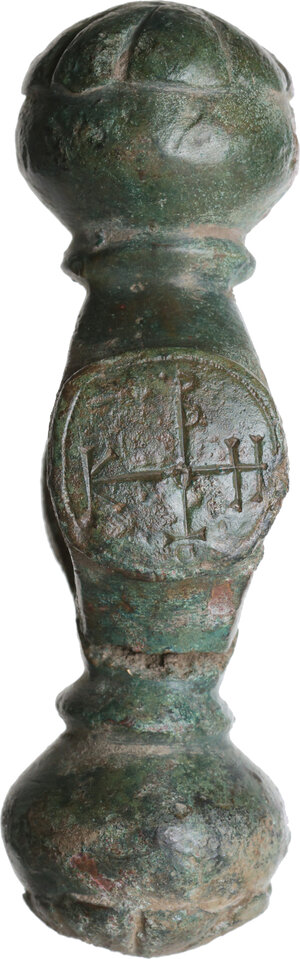
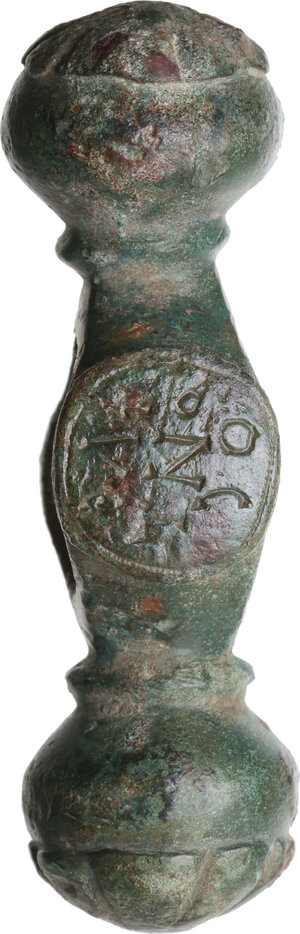
STAMP SEAL Byzantine period, c. 6th–9th century AD. D/ Cruciform invocative monogram of Θεοτόκε βοήθει. R/ Legend in three lines. AE. 229.7 g. 33 mm. RR. Very interesting and unusually well preserved. EF.
Lot # 1027
-
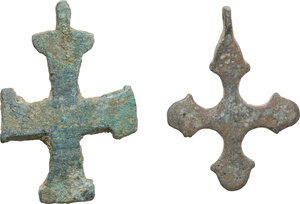
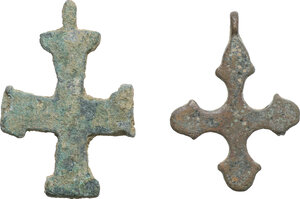
LOT OF TWO BRONZE CROSS PENDANTS Byzantine period, c. 6th–10th century AD. Lot of two bronze cross pendants of similar type. Dimensions: 23 × 33 mm and 23 × 35 mm.
Lot # 1026
-
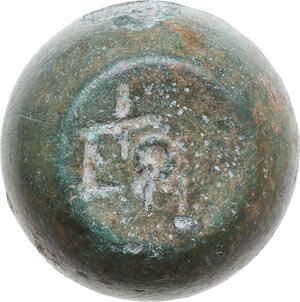
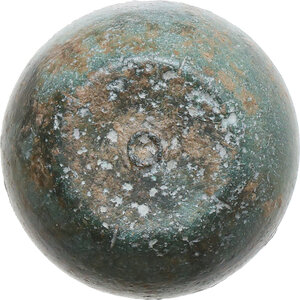
COMMERCIAL WEIGHT Byzantine period, c. 5th–10th century AD. Spherical bronze commercial weight of one ounce, with engraved letters on the top indicating its value. Cf. Bendall 33. 27.56 g. 18.5 mm.
Lot # 1025
-
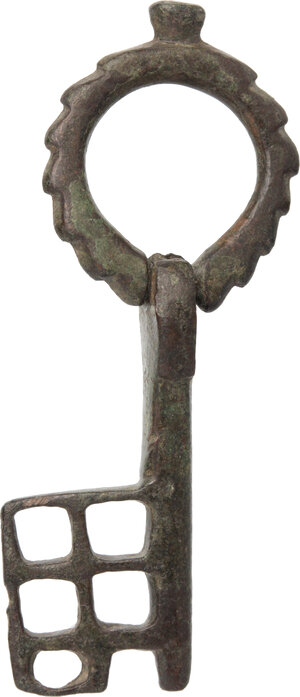
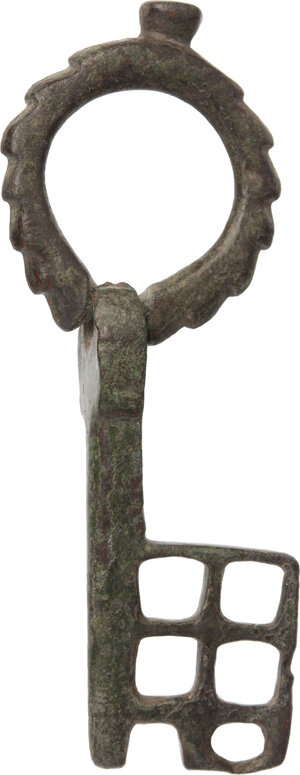
FOLDABLE BRONZE KEY Byzantine period, c. 5th–6th century AD. Bronze key with foldable shank and openwork bit, attached to a ring with notched edges. Length: 57 mm. 6.26 g. 53 mm. Intact and complete.
Lot # 1024
-
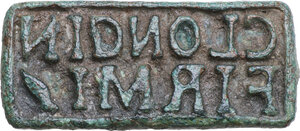
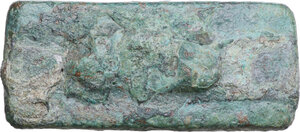
BRONZE BREAD STAMP Roman period, c. 1st–5th century AD. Bronze bread stamp inscribed in two lines with Latin capital letters: CLONGIN / FIRMI. Dimensions: 53 × 23 mm. AE. 41.68 g. Handle missing.
Lot # 1023
-
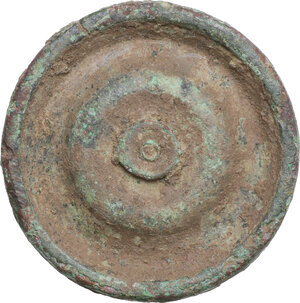
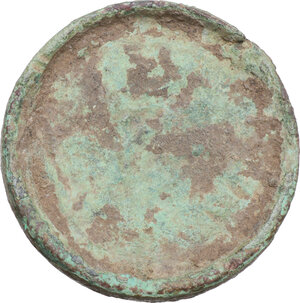
BRONZE BOARDGAME PIECE Roman period, 1st–5th century AD. Small bronze gaming piece of conical form, probably used for a board game such as latrunculi. 10.55 g. 29.5 mm.
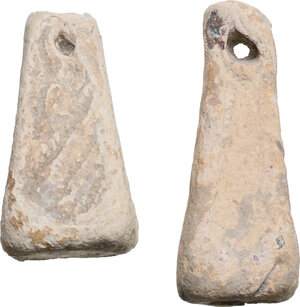
Lot # 1022
-
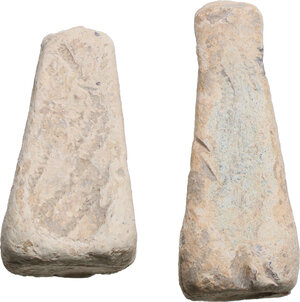
Roman period, 1st–4th century AD. Lot of two (2) lead weights of cylindrical form. Heights: 33.5 and 28.5 mm. Total weight: 22.77 g.
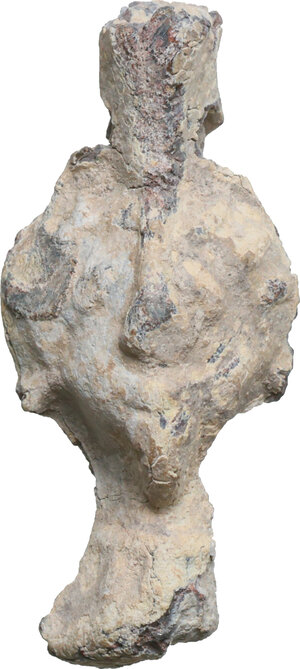
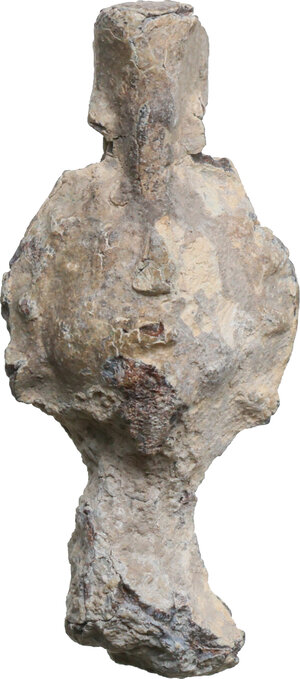
Lot # 1021
-
“GROMA” HEAD WEIGHT Roman period, 1st–4th century AD. Lead (?) weight in the form of a janiform head, with suspension loop on top; probably part of a groma. Height: 34 mm. Weight: 20.56 g.


Lot # 1020
-
ROMAN SILVER LIGULA Roman period, c. 1st–4th century AD. Pin-like medical instrument (ear scoop) or cosmetic spoon with a small scoop at the profiled end. Length: 87 mm. AR. 3.49 g. Slightly bent.
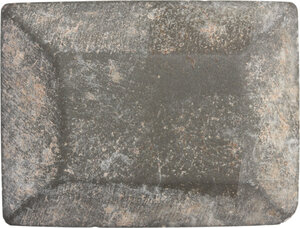
Lot # 1019
-
ROMAN COSMETIC PALETTE Roman period, c. 1st–3rd century AD. Rectangular cosmetic palette made of schist, with bevelled edges. Dimensions: 53 × 41 × 9 mm. One corner slightly chipped, otherwise completely intact.
Lot # 1018
-
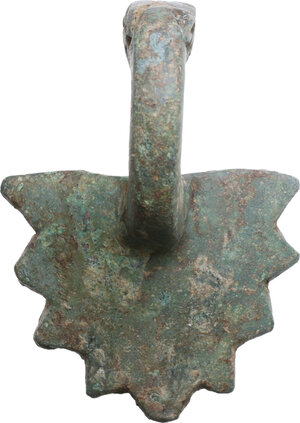
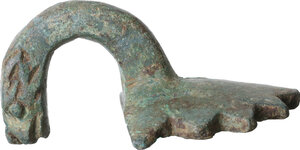
BRONZE VASE HANDLE Roman period, c. 1st–4th century AD. Bronze handle from a vessel, ending in a stylized animal head. Dimensions: 71 × 51 × 34 mm.
Lot # 1017
-
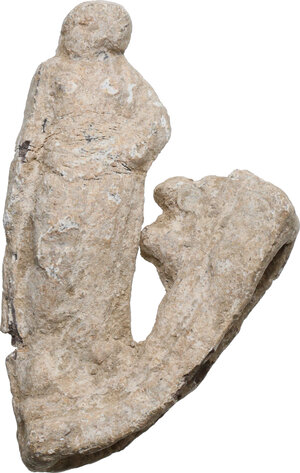
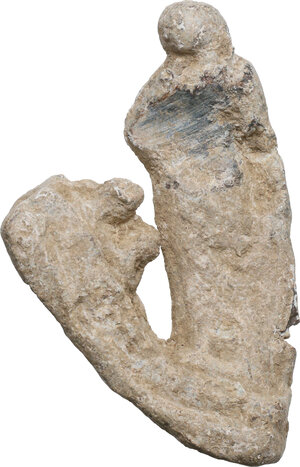
LEAD FIGURATIVE HANDLE Roman period (?), c. 1st–3rd century AD. Lead handle in the form of a standing female figure, possibly from a vessel or small casket. Dimensions: 50 × 30 mm.
Lot # 1016
-
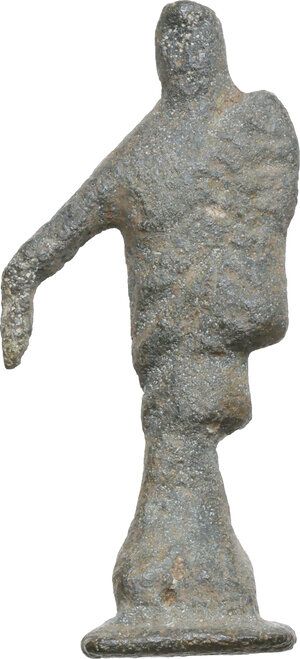
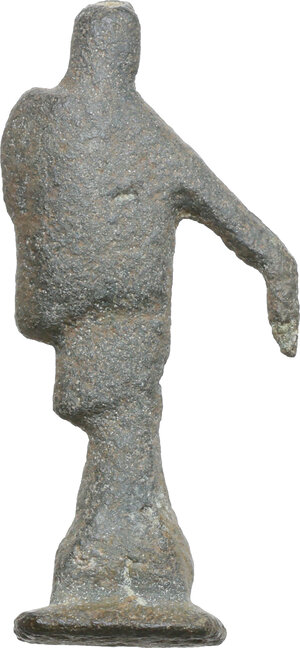
BRONZE STATUETTE Late Roman period, c. 4th–5th century AD, Balkans. Small bronze statuette of Hermes/Mercury (?), possibly a votive offering. Dimensions: height 40 mm; width 10 mm.
Lot # 1015
-
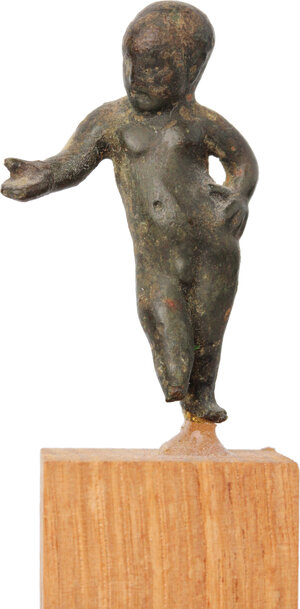
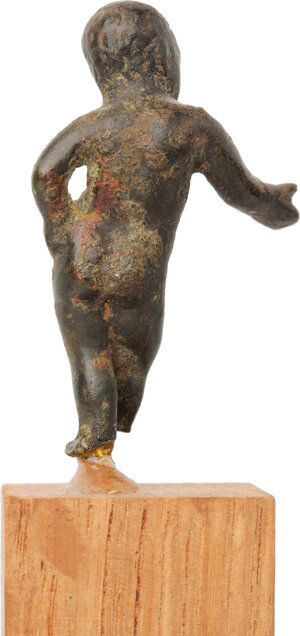
BRONZE STATUETTE Roman period, 1st–3rd century AD. Small bronze statuette of a nude young boy standing on his left leg, with the right leg raised, the right arm outstretched and the left hand resting on the hip. Mounted on a wooden base (61 × 24 × 22 mm) for exhibition purposes. Dimensions: height 42 mm; width 25 mm. Right foot missing.
Lot # 1014
-
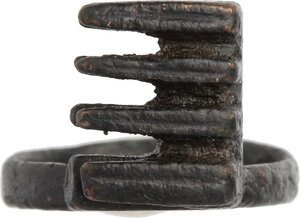
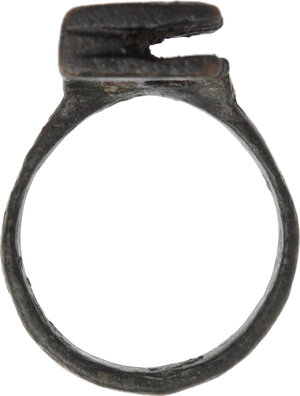
BRONZE KEY-RING Roman period, 1st–4th century AD. Bronze key-ring with integral key bit. Dimensions: length of bit 12 mm; inner diameter 17 mm.
Lot # 1013
-
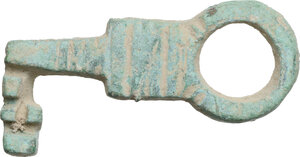
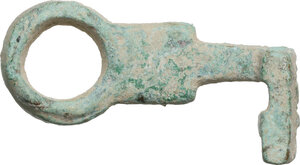
ROMAN BRONZE KEY Roman period, c. 1st–3rd century AD. Solid bronze key with a rectangular bow and short bit. Length: 52.5 mm. 30.76 g. 52.5 mm.
Lot # 1012
-
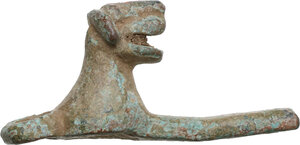
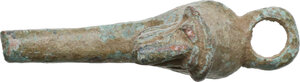
BRONZE DOG PENDANT Roman period, c. 1st–3rd century AD. Bronze pendant in the form of the forepart of a dog, with the original suspension loop preserved. Length: 45 mm; height: 23 mm.
Lot # 1011
-
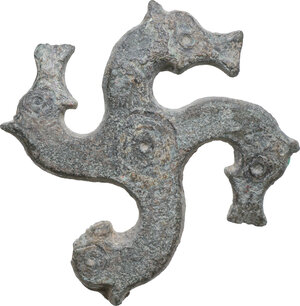
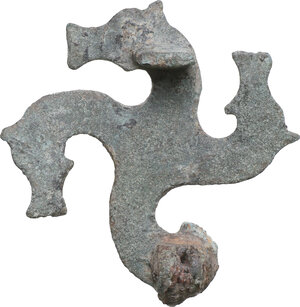
ROMAN BRONZE FIBULA Roman period, Balkan region, c. 4th–5th century AD. Bronze “swastika” fibula, the four arms ending in horse’s heads and the center decorated with concentric circles. Diameter: c. 41 mm. Missing pin; minor damage.
Lot # 1010
-
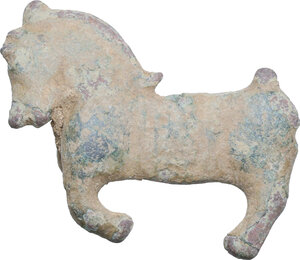
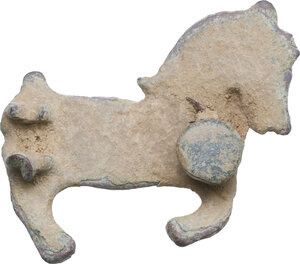
BRONZE HORSE-SHAPED BELT PLAQUE Roman Imperial period, c. 200–400 AD. Bronze belt plaque in the shape of a horse, with decorative engravings. The underside is flat, with a stud and two loops for attachment. Dimensions: 31 × 29 mm. Le fibule dal V al I sec, n. 598, Tav. 38, p. 216; Apollo Art Auctions, auction March 2025, lot 240. Earthy deposits.
Lot # 1009
-
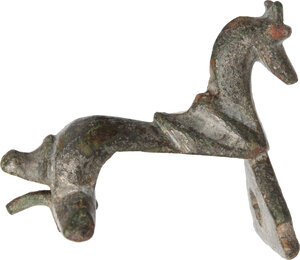
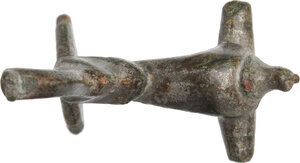
BRONZE ZOOMORPHIC FIBULA Roman period, 2nd–3rd century AD. Bronze fibula in the shape of a horse; pin missing but spring mechanism intact. Dimensions: length 34 mm; width 20 mm; height 30 mm.
Lot # 1008
-
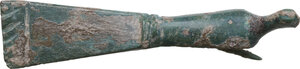
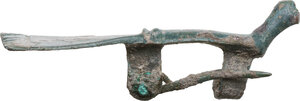
ROMAN BIRD FIBULA Roman period, c. 2nd century AD. Bronze fibula in the shape of a bird, probably a dove, with a long tail. Length: 51 mm. Intact and complete; the pin is preserved but displaced.
Lot # 1007
-
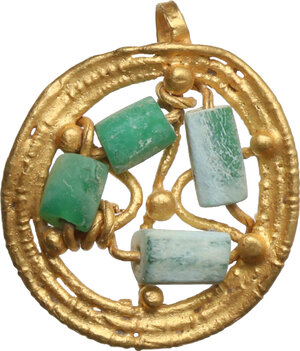
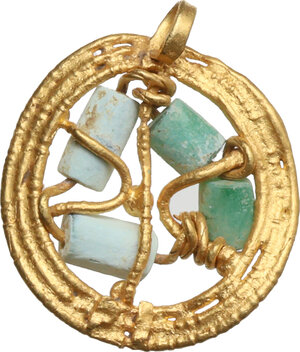
GOLD PENDANT WITH GREEN STONES Roman period, c. 3rd century AD. Gold pendant with an openwork, wheel-like design, set with four cylindrical green stones threaded on gold wires. 0.83 g. 14 mm.
Lot # 1006
-
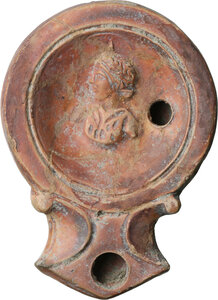
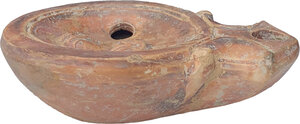
Roman period, c. 1st–3rd century AD. Roman oil lamp decorated with a profile bust facing left. Dimensions: 88 × 64 × 25 mm. Slightly restored; some deposits and minor areas of chipping.
Lot # 1005
-
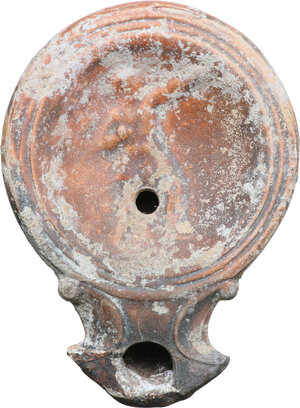
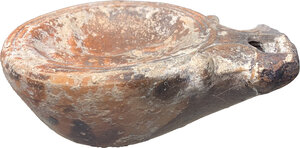
ROMAN OIL LAMP Roman period, c. 1st–2nd century AD. Terracotta oil lamp depicting a boxer standing right, his left arm raised, on the central discus. Flat base. Length: 100 mm. Very fascinating for the uncommon subject depicted. Plaster-reconstructed nozzle.
Lot # 1004
-
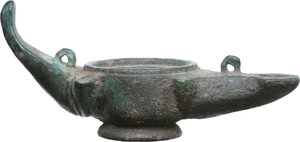
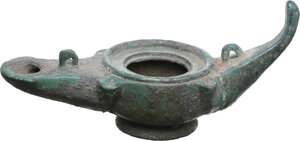
ROMAN BRONZE OIL LAMP Roman period, c. 1st century AD. Roman bronze oil lamp with with overlapping rear handle, four knobs on the side of the tub, two small suspension rings. Dimensions: 118 x 41.5 x 51 mm. 182 g. Intact and complete. Minor metal flaw on foot.
Lot # 1003
-
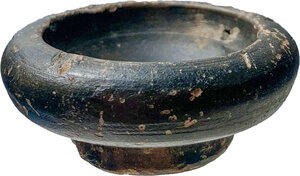
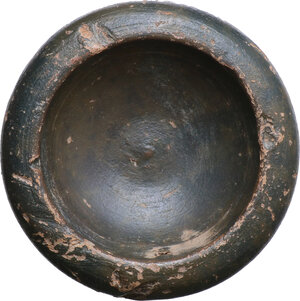
SMALL BLACK GLAZED POTTERY CUP Southern or Central Italy, c. 4th - 2nd century BC. Small black glazed pottery cup, with thick bowl and foot ring. Dimensions: 58 x 23 mm.
Lot # 1002
-
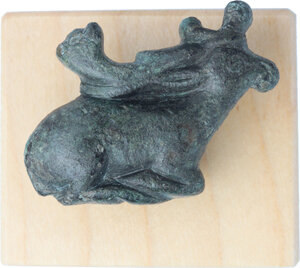
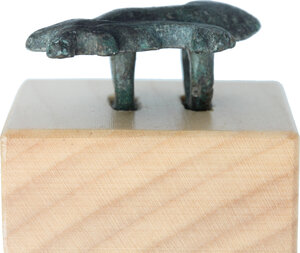
SCYTHIAN BRONZE APPLIQUÉ IN THE FORM OF A STAG Scythian culture, c. 6th–3rd century BC. Bronze appliqué in the form of a recumbent stag, with two attachment rings on the back. Mounted on a small wooden base for display. Dimensions: 34 × 27 × c.16 mm (without base).
Lot # 1001
-
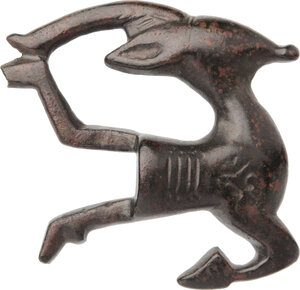
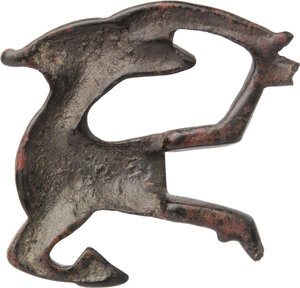
SCYTHIAN BRONZE APPLIQUÉ Scythian culture, c. 6th century BC – 3rd century AD. Bronze appliqué in the form of an ibex protome, the legs folded beneath the body. Dimensions: 35.5 × 36 mm; weight: 12.64 g.
Lot # 1000
-
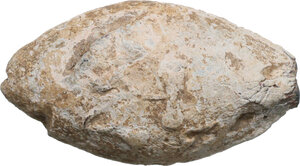
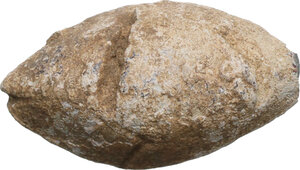
LEAD SLINGSHOT BULLET Greek Period, 4th - 3rd century BC. Large ΣΙ and traces of an inscription. Dimensions: length: 33 mm; weight: 32.54 g.
Lot # 999
-
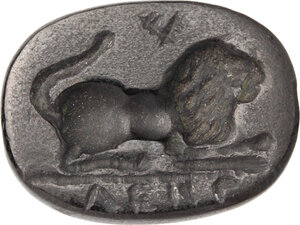
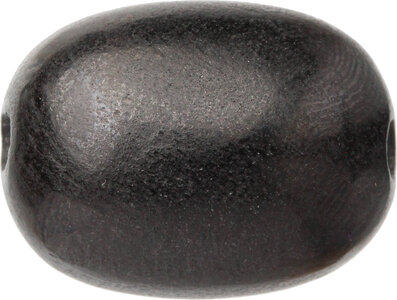
HEMATITE SEAL STAMP Greek (?), c. 5th–3rd century BC. Domed hematite seal engraved with a recumbent lion; in exergue, ΛΕΝΓ. Pierced lengthwise for suspension. Dimensions: 20 × 14.5 × 7 mm.
Lot # 998
-
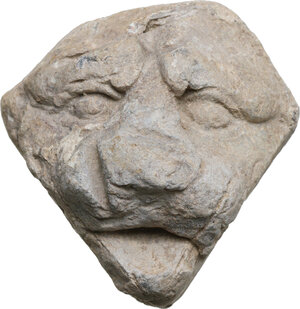
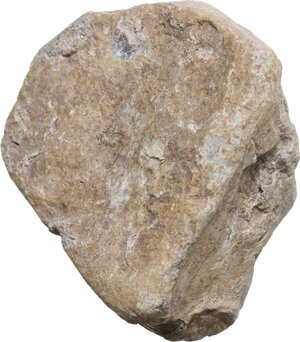
LEAD WEIGHT Greek, c. 4th–2nd century BC. Triangular lead weight featuring a relief representation of a stylized face, possibly human or animal. The features are crudely modeled, with prominent nose and lips. Dimensions: 46 × 46 × 28 mm. Weight: 241 g.
Lot # 997
-
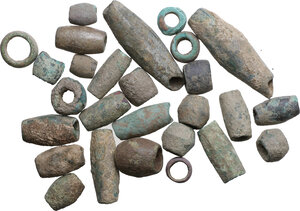
BRONZE NECKLACE Italic or Danubian area, c. 9th–6th century BC. Necklace composed of twenty-seven (27) bronze beads of varying cylindrical and conical shapes. Attractive patina and well-preserved ancient surfaces. Comparable examples are known from Italic and Balkan contexts of the Early Iron Age. Dimensions from 38.5 mm to 8.5 mm. Minor damages.
Lot # 360
-
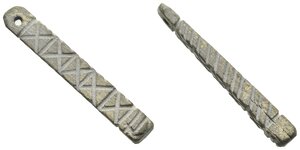
Roman Tessera Annonaria (?) marked "X X X X X": a measurement token attached to a grain sack. Circa 1st - 3rd centuries AD (Bone, 4.0 x 0.5 cm). Published in L. Pedroni and G. Devoto, "Tessere da una collezione privata", in Archeologia Classica, XLVII, 1995, p. 192, fig. 20 (this tessera).
From a British Private Collection.
These tokens typically bear the letter "A" for Annona, followed by a number (e.g., X, XX, XXX) indicating the weight in modii — approximately 40, 80, or 120 kg. 1.96 g
Lot # 359
-
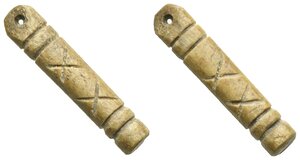
Roman Tessera Annonaria (?) marked "X X": a measurement token attached to a grain sack. Circa 1st - 3rd centuries AD (Bone, 3.1 x 0.5 cm). Published in L. Pedroni and G. Devoto, "Tessere da una collezione privata", in Archeologia Classica, XLVII, 1995, p. 191, fig. 19 (this tessera).
From a British Private Collection.
These tokens typically bear the letter "A" for Annona, followed by a number (e.g., X, XX, XXX) indicating the weight in modii — approximately 40, 80, or 120 kg. 1.32 g
Lot # 358
-
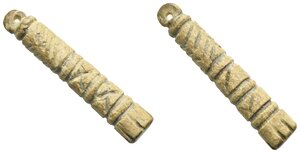
Roman Tessera Annonaria (?) marked "X X": a measurement token attached to a grain sack. Circa 1st - 3rd centuries AD (Bone, 3.7 x 0.7 cm). Published in L. Pedroni and G. Devoto, "Tessere da una collezione privata", in Archeologia Classica, XLVII, 1995, p. 191, fig. 19 (this tessera).
From a British Private Collection.
These tokens typically bear the letter "A" for Annona, followed by a number (e.g., X, XX, XXX) indicating the weight in modii — approximately 40, 80, or 120 kg. 1.94 g
Lot # 357
-
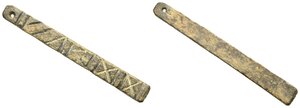
Roman Tessera Annonaria marked "A X X": a measurement token attached to a grain sack. Circa 1st - 3rd centuries AD (Bone, 4.7 x 0.5 cm). Published in L. Pedroni and G. Devoto, "Tessere da una collezione privata", in Archeologia Classica, XLVII, 1995, p. 191, fig. 17b (this tessera).
From a British Private Collection.
These tokens typically bear the letter "A" for Annona, followed by a number (e.g., X, XX, XXX) indicating the weight in modii — approximately 40, 80, or 120 kg. 1.08 g
Lot # 356
-
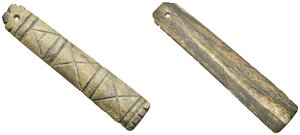
Roman Tessera Annonaria marked "A X X": a measurement token attached to a grain sack. Circa 1st - 3rd centuries AD (Bone, 5.4 x 1.1 cm). Published in L. Pedroni and G. Devoto, "Tessere da una collezione privata", in Archeologia Classica, XLVII, 1995, p. 191, fig. 17c (this tessera).
From a British Private Collection.
These tokens typically bear the letter "A" for Annona, followed by a number (e.g., X, XX, XXX) indicating the weight in modii — approximately 40, 80, or 120 kg. 2.20 g
Lot # 355
-
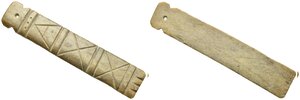
Roman Tessera Annonaria marked "A X X": a measurement token attached to a grain sack. Circa 1st - 3rd centuries AD (Bone, 7.7 x 1.4 cm). Published in L. Pedroni and G. Devoto, "Tessere da una collezione privata", in Archeologia Classica, XLVII, 1995, p. 191, fig. 17e (this tessera).
From a British Private Collection.
These tokens typically bear the letter "A" for Annona, followed by a number (e.g., X, XX, XXX) indicating the weight in modii — approximately 40, 80, or 120 kg. 5.9 g
Lot # 1060
-
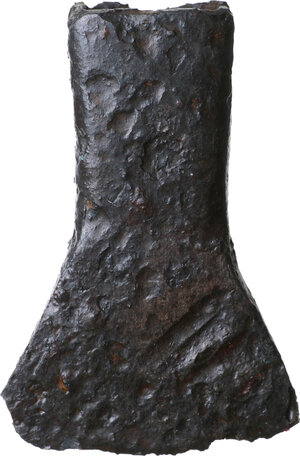
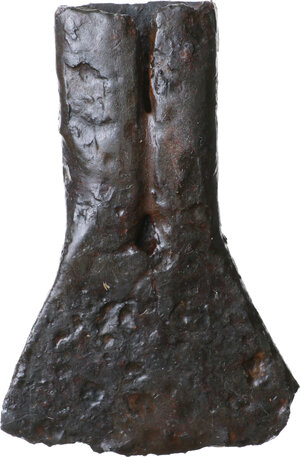
IRON CHISEL Roman to Medieval period, c. 1st - 13th century AD. Iron chisel with rectangular-section handles. Dimensions: 93.5 x 62.5 mm. Oxidation.
Lot # 1059
-
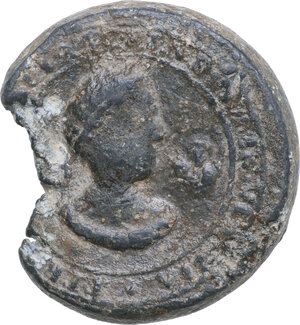
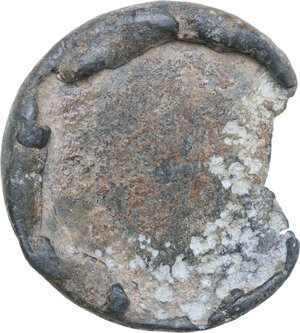
LEAD THERIAC CAPSULE SEAL. Alla Testa d'Oro Pharmacy, Venice, 17th century. D/ Laureate and draped bust right. PB. 37.55 g. 38 mm. About VF. Theriac, described by Klein as a 'wonder drug', was an all-purpose medicinal product originating as far back as the Hellenistic period. The centre for sale of this product was Venice, from where it was exported all over the world. Its composition, made up of opium, spices and snake flesh, amongst other ingredients, was a closely guarded secret, making it all the more desirable. The capsule seals were made exclusively of lead or lead alloy and stamped with the symbol of the pharmacy as a guarantee of the authentic nature of the product. This did not prevent counterfeit products purporting to be from the well-established pharmacies in Venice, many of which have been found in the Balkans.
Lot # 1058
-
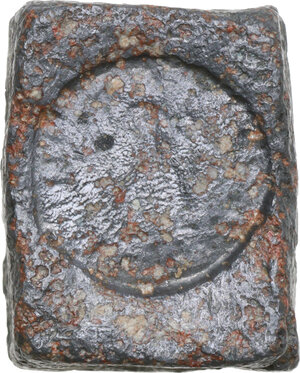
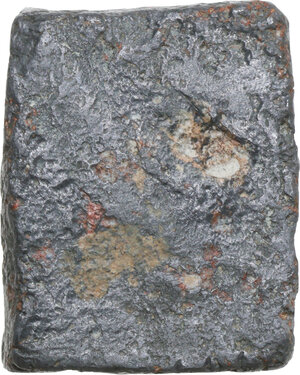
LEAD TRIAL Late Roman period, c. 4th century AD. Lead Trial mould made without creating the actual mould. Victory advancing to right. Dimensions: 24 x 20 mm. 46.26 g. Interesting study item. Ex Rex Numismatics 10, 2024, 597. Sold as is, no return.
Lot # 1057
-
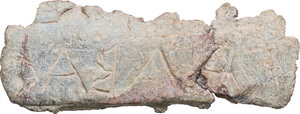
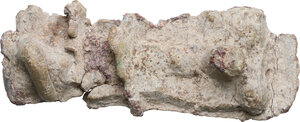
LEAD PLAQUE Roman period, c. 2nd - 4th century AD. Enigmatic lead plaque with rivets on the back and an inscription on the reverse engraved with the letters V (?) ABAC. Dimensions: 74.5 x 27 mm. PB. 77.2 g. 50.5 mm. This may be an engraving dedicated to Abraxas, a deity of Gnostic-Mithraic origin.
Results from 51 to 100 of 524