Roman Imperial Coins
Results from 2351 to 2400 of 32902
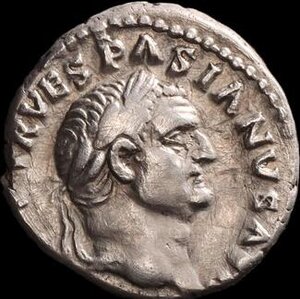
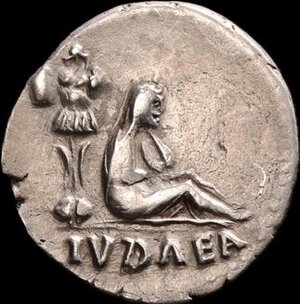
Lot # 10220
-
ROMAN. Vespasian. A.D. 69-79. Silver Denarius (3.37g). Judaea Capta issue. Rome mint. Struck A.D. 69-71. Laureate head right / IVDAEA in exergue, Judaea, in attitude of mourning, seated right on ground; trophy behind. RIC II 15; Hendin 759; RSC 226. gVF. Pleasing silver quality. A choice example for the type. (P)Estimate: AUD 1000
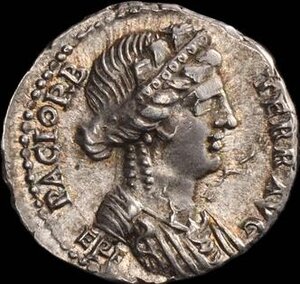
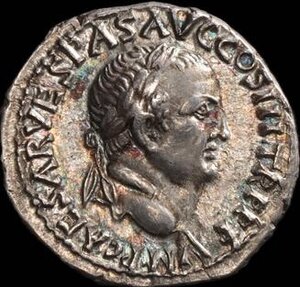
Lot # 10219
-
ROMAN. Vespasian. A.D. 69-79. Silver Denarius (3.49g). Ephesus mint. Struck A.D. 71. IMP CAESAR VESPAS AVG COS III TR P P P, laureate head right / PACI ORB TERR AVG, turreted and draped bust of female right; EPHE (PHE ligate) in lower left field. RIC II 334; RPC II 835; BMCRE 459; BN 356; RSC 293. gEF. An incredible coin in hand. This amazing denarius carries Vespasian's message that peace had finally returned to a troubled empire. The personification of Pax, with her turreted crown, quietly tells eastern subjects that their cities and trade routes are safe again under the new Flavian order. From the David Allan Collection; acquired from Triton IX (10 Jan 2006), lot 1423. (P)Estimate: AUD 1500
Lot # 10218
-
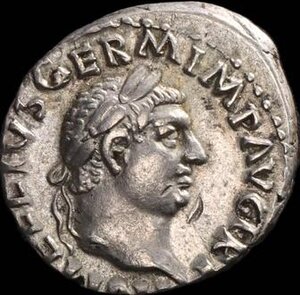
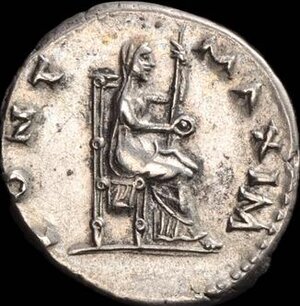
ROMAN. Vitellius. A.D. 69. Silver Denarius (3.26g). Rome mint. Laureate head right / Vesta seated right, holding sceptre and patera. RIC I 107; RSC 72. aEF, with tiny punch on obverse, otherwise well struck from fresh dies and a very choice example for the type. For the same type see; CNG 366, lot 768, hammered USD 3,750, with the present coin clearly superior in style and preservation. It is roughly comparable to Triton XXVII, lot 715, hammered USD 3,000 on 9 January 2024, though our example is somewhat better centred. From the David Allan Collection; acquired from CNG 270 (14 December 2011), lot 268. (P)Estimate: AUD 1500
Lot # 10217
-
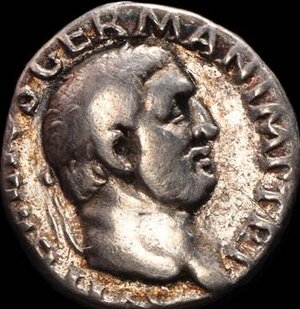
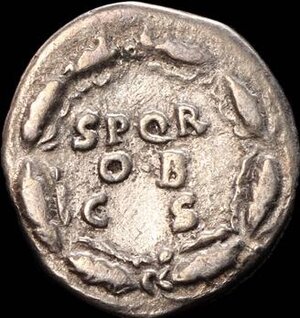
ROMAN. Vitellius. A.D. 69. Silver Denarius (3.16g). Rome mint. Struck circa late April-20 December A.D. 69. A VITELLIVS GERMAN IMP TR P, laureate head right / S P Q R / OB / C S in three lines within oak wreath. RIC I 83; RSC 86; BMCRE 15-16; BN 45. aVF. A very attractive coin for the type. Acquired from Freeman A-166/56. (P)Estimate: AUD 300
Lot # 10216
-
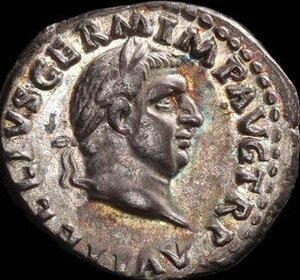
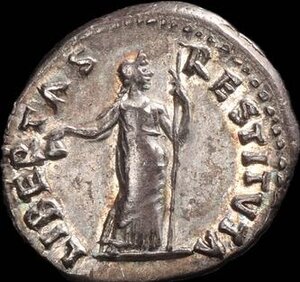
ROMAN. Vitellius. A.D. 69. Silver Denarius (3.30g). Struck circa late April to December A.D. 69. A VITELLIVS GERM IMP AVG TR P, laureate head right / LIBERTAS RESTITVTA, Libertas standing facing, head right, holding pileus and long rod. Cohen 47; BMC 31; RIC 105; CBN 67. Deep, enchanting old grey cabinet toning with subtle flashes of gold and blue. Very rare in this condition, a truly beautiful coin with full, clear legends and excellent centring on both sides. Not to be confused with RIC 81; this exact variety corresponds to the NAC Auction 125, lot 650 example, which realised USD 11,000. (P)Estimate: AUD 1500
Lot # 10215
-
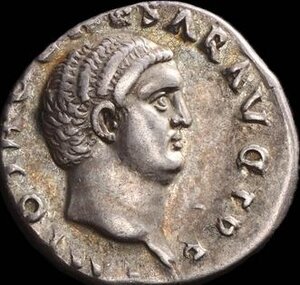
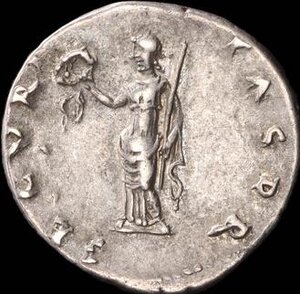
ROMAN. Otho. A.D. 69. Silver Denarius (3.56g). Rome mint. Struck 15 January-8 March A.D. 69. Bare head right / Securitas standing left, holding wreath and sceptre. RIC I 10; Muona Group 2, Type 9B, Portrait Type D; RSC 15. Superb. aEF for the type. Fantastic portrait and beautiful example. Rare in this condition. This denarius shows Otho bareheaded, presenting himself with studied simplicity while Rome reeled from civil war. On the reverse, Securitas stands calmly with wreath and sceptre, a pointed promise of stability from a ruler whose reign would last barely three months. For the type and recent result see; Triton XXVI, lot 720, hammered USD 8,000. (P)Estimate: AUD 1500
Lot # 10214
-
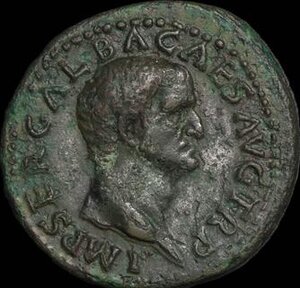
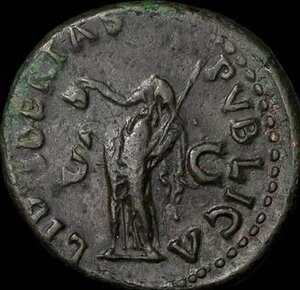
ROMAN. Galba. A.D. 68-69. Copper As (11.79g). Rome mint. Struck July A.D. 68 to January A.D. 69. IMP SER GALBA CAES AVG TR P, bare head right / LIBERTAS PVBLICA, Libertas standing facing, head left, holding pileus and vertical sceptre; S C across fields. RIC I 372; BMCRE 146; Cohen 124. VF, reverse double-struck. Bold portrait. Acquired from Leu Numismatik, Web Auction 8, lot 1001 (29 Jun 2019), hammered CHF 320; from the collection of a Swiss scholar, formed over thirty years. (P)Estimate: AUD 500
Lot # 10213
-
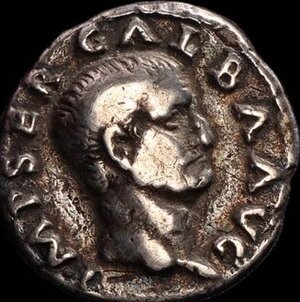
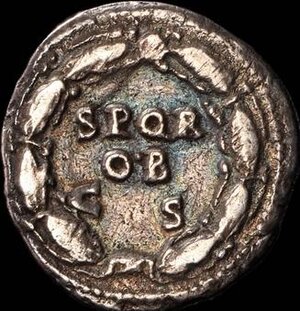
ROMAN. Galba. A.D. 68-69. Silver Denarius (3.17g). Rome mint. Struck July A.D. 68 to January A.D. 69. IMP SER GALBA AVG, bare head right / S P Q R OB C S in three lines within oak wreath. RIC I 167; CBN 76; Cohen 287; cf. BMCRE p. 314, note. VF, lustrous and attractive, with an excellent portrait. Galba came to power in June A.D. 68 as the Senate's choice after Nero's collapse, a veteran governor known for strict discipline rather than charm. Rome expected rewards and reassurance, but he refused the donative, dealt harshly with opponents, and quickly lost support, especially among the Rhine legions. When those armies backed Vitellius on 1 January A.D. 69, Galba tried to secure the future by adopting Piso, a move that pushed his former ally Otho into open conspiracy. Five days later the Praetorians turned, and Galba and Piso were cut down in the Forum, one of the decisive murders of the Year of the Four Emperors. Acquired from Dr. Busso Peus Nachf., early 2019. (P)Estimate: AUD 750
Lot # 10212
-
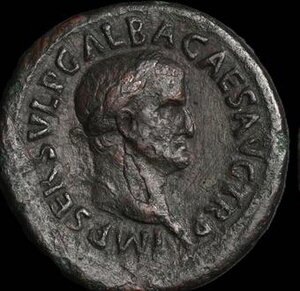
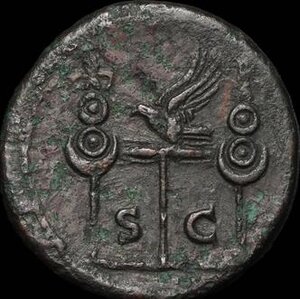
ROMAN. Galba. A.D. 68-69. Bronze As (9.97g). Rome mint. Struck A.D. 68. IMP SER SVLP GALBA CAES AVG TR P, laureate head right / Aquila on thunderbolt between two standards; S C across fields below. RIC I 329; BMCRE 152. gVF, lightly tooled and smoothed. Very rare. Acquired from Roma Numismatics Ltd., E-Sale 78, lot 1339 (17 Dec 2020), hammered AUD 375; from the collection of Z.P., Austria. (P)Estimate: AUD 500
Lot # 10211
-
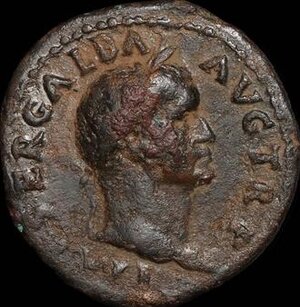
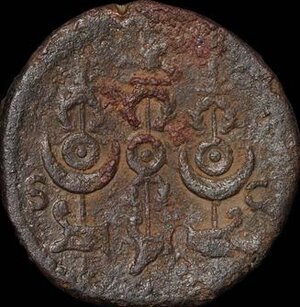
ROMAN. Galba. A.D. 68-69. Bronze As (9.88g). Rome mint. Struck June to August A.D. 68. IMP SER GALBA AVG TR P, laureate head right / Aquila between two signa, all set on galley prows; S C across fields. RIC I 303. VF. Very rare. Acquired from Roma Numismatics Ltd., E-Sale 78, lot 1338 (17 Dec 2020), hammered AUD 350; auctioned in association with, and on behalf of, Numismatica Lucernae, Jaen. (P)Estimate: AUD 300
Lot # 10210
-
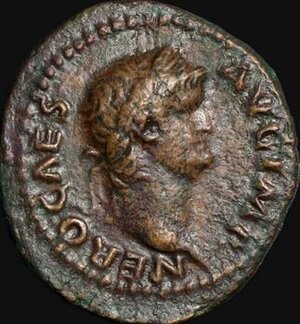
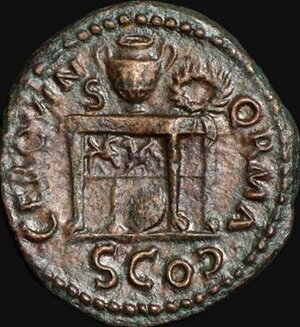
ROMAN. Nero. A.D. 54-68. Bronze Semis (3.25g). Struck circa A.D. 64. NERO CAES AVG IMP, laureate head right / CER QVI-N-Q ROM CO / S C, table seen in perspective bearing urn and wreath, front panel decorated with two confronted griffins, round shield leaning against table leg. RIC I 228; BMC 265. Brown toning. gVF. (P)Estimate: AUD 250
Lot # 10209
-
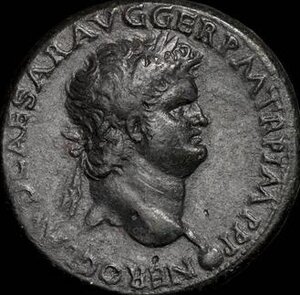
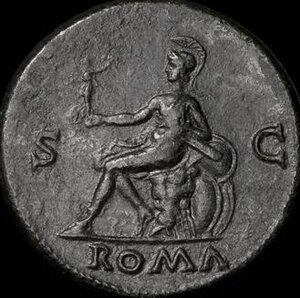
ROMAN. Nero. A.D. 54-68. Bronze Sestertius (25.11g). Lugdunum (Lyon) mint. Struck circa A.D. 65. NERO CLAVD CAESAR AVG GER P M TR P IMP P P, laureate head right, globe at point of neck / ROMA in exergue, S C across field, Roma seated left on cuirass, holding Victory in outstretched right hand and resting left hand on parazonium; helmet and shields around. RIC I 442; WCN 421; Lyon 112; BMCRE 324-5; BN 76. aEF. A very attractive dark brown-green patina. This sestertius was struck at Lyon around A.D. 65, when Nero's image was being promoted strongly across the empire, with confidence displayed on the coinage while tension was building in the background. Lugdunum bronzes are often especially well made, and this issue with Roma and Victory is classic public messaging: stability, strength, and Rome in control. Ex Noble Numismatics Auction 121, lot 4447 (August 2019). (P)Estimate: AUD 1000
Lot # 10208
-
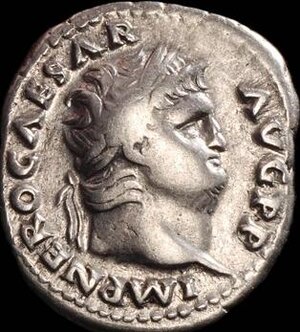
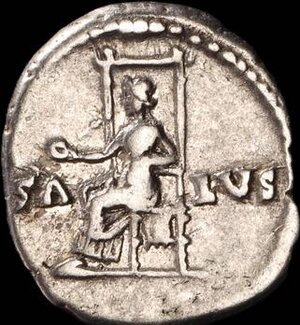
ROMAN. Nero. A.D. 54-68. Silver Denarius (3.48g). Rome mint. Struck circa A.D. 67-68. Laureate head right / Salus seated left on ornamented throne, holding patera and resting hand at side. VF. Nero, born Lucius Domitius Ahenobarbus in A.D. 37, became emperor in A.D. 54 and presided over one of the most controversial reigns in Roman history. Initially welcomed as a capable and charismatic young ruler, his early administration showed signs of stability and competent governance under the guidance of senior advisers. In time, however, Nero's appetite for personal glory, artistic notoriety and monumental building projects, most famously the Domus Aurea, placed increasing strain on the imperial finances. His harsh response to the Pisonian conspiracy, alongside the brutal repression of perceived opponents and the persecution of Christians, further darkened contemporary and later assessments of his rule. The Great Fire of Rome in A.D. 64, long associated with Nero but still debated by modern historians, became a defining episode in his image as a tyrant. His authority ultimately collapsed in the face of military unrest and senatorial revolt, leading to his suicide in A.D. 68. With his death the Julio-Claudian dynasty came to an end, leaving Nero remembered both as an extravagant patron of the arts and as a lasting symbol of imperial excess and autocracy.Estimate: AUD 1000
Lot # 10207
-
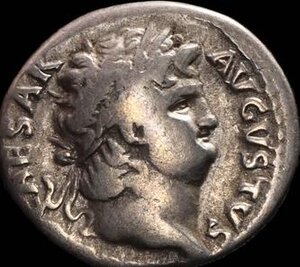
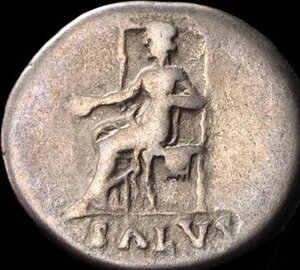
ROMAN. Nero. A.D. 54-68. Silver Denarius (3.20g). Rome mint. Struck circa A.D. 65-66. NERO CAESAR AVGVSTVS, laureate head right / SALVS in exergue, Salus, draped, seated left on ornamented throne, holding patera in right hand and resting left hand at side. RIC I 60; RSC 314; BMCRE 90-3; BN 228. aVF. Acquired from V Auctions 337/450. (P)Estimate: AUD 250

Lot # 10206
-
ROMAN. Nero. A.D. 54-68. Bronze As (9.56g). Lugdunum mint. Struck A.D. 64-67. IMP NERO CAESAR AVG P MAX TR P P P, bare head right, globe at point of truncation; SPQR countermark across neck / Victory flying left, holding shield inscribed S P Q R. RIC I 543. NGC Fine, Strike 4/5, Surface 3/5, with countermark. This SPQR countermark is typically seen on bronze asses of Nero, placed horizontally on the neck, and is generally attributed to application in Gallia Lugdunensis, possibly under Julius Vindex during the revolt, or under Galba, March to June A.D. 68. Acquired from the Morris Collection; Heritage Auctions, Auction 271920, lot 40127 (26 May 2019), hammered US$260.Estimate: AUD 250
Lot # 10205
-
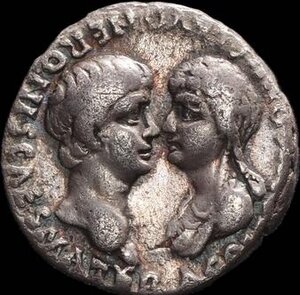
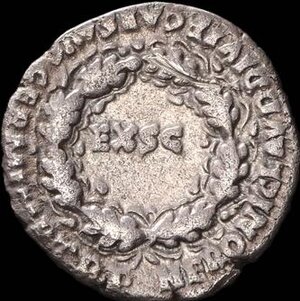
ROMAN. Nero, with Agrippina Junior. A.D. 54-68. Silver Denarius (3.27g). Lugdunum (Lyon) mint. Struck December A.D. 54. Bare head of Nero right, facing draped bust of Agrippina Junior left / EX S C within oak wreath. RIC I 2 (Rome); WCN 36; Lyon 5 (unlisted dies); RSC 7. gVF. This denarius was struck just after the death of Claudius in A.D. 54, showing Nero facing his mother Agrippina as though they shared power over the Roman world. For a brief moment, it advertised a joint rule shaped by her influence before Nero pushed her aside and had her killed. The coin preserves the short-lived image of a mother and son ruling together. For the type see; CNG Auction 105, lot 823, hammered USD 4,750. (P)Estimate: AUD 2500
Lot # 10204
-
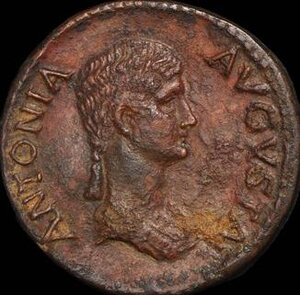
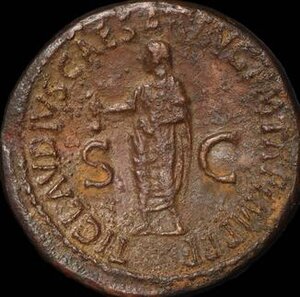
ROMAN. Antonia Minor, mother of Claudius. Bronze Dupondius (15.61g). Rome mint. Struck A.D. 50-54. ANTONIA AVGVSTA, draped bust right / TI CLAVDIVS CAESAR AVG P M TR P IMP P P, Claudius veiled and togate standing left, holding simpulum; S C across fields. RIC I 104. VF. Acquired from Roma Numismatics, London. (P)Estimate: AUD 300
Lot # 10203
-
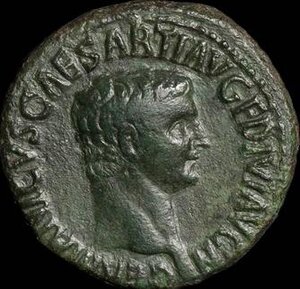
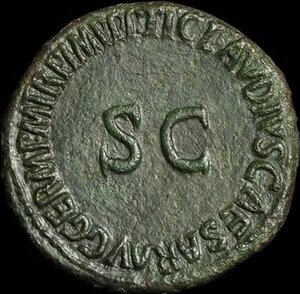
ROMAN. Germanicus. Died A.D. 19. Bronze As (11.72g). Rome mint. Struck under Claudius, A.D. 42-43. Bare head right / Legend around large S C. RIC I 106 (Claudius); von Kaenel Type 79. An amazing dark green patina. Seldom seen in this choice condition. aEF. (P)Estimate: AUD 500
Lot # 10202
-
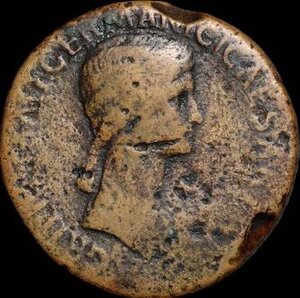
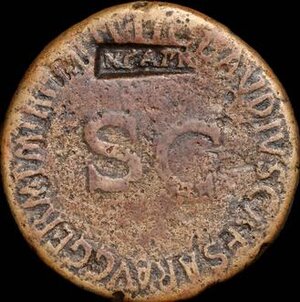
ROMAN. Agrippina I. Died A.D. 33. Bronze Sestertius (26.55g). Rome mint. Struck under Claudius, A.D. 42-43. Rare. AGRIPPINA M F GERMANICI CAESARIS, draped bust right / TI CLAVDIVS CAESAR AVG GERM P M TR P IMP P P, around large S C; NCAPR within rectangular countermark. RIC 102 (Claudius); BMCRE 219 (Claudius); Pangerl 1. Lightly toned. Fine. The interpretation of this countermark remains uncertain and has been discussed extensively in the literature. Several expansions of the legend have been proposed, most commonly Nero Caesar Augustus Probavit, implying official approval, or alternatively Nero Caesar Augustus Populo Romano, suggesting an issue sanctioned for the Roman people. A further interpretation assigns the countermark to a later period, reading it as Nerva Caesar Augustus Probavit. The place of application is equally unresolved. Although an Italian origin is often proposed, stylistic and historical considerations also allow for a provincial context, most plausibly Gaul or Spain. In the absence of definitive evidence, both the meaning and the place of application must remain uncertain. For the same type see; Agora Auctions, Sale 27, lot 121, hammered USD 225. (P)Estimate: AUD 500
Lot # 10201
-
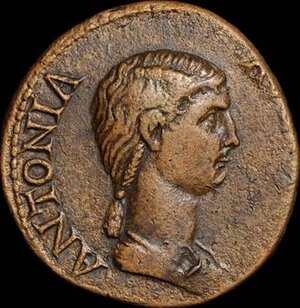
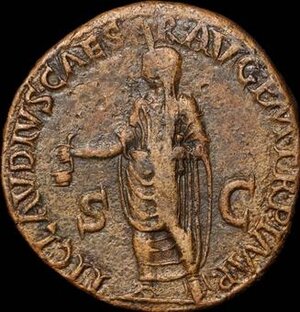
ROMAN. Antonia Minor. Augusta, A.D. 37 and 41. Bronze Dupondius (13.51g). Rome mint. Struck under Claudius, A.D. 41-42. Draped bust right, wearing hair in long plait / Claudius, togate, standing left, holding simpulum. RIC I 92 (Claudius); von Kaenel Type 59; for c-m: Pangerl 60. gVF. An amazing tan river toning with a very attractive portrait. This dupondius links a powerful Roman woman to the new emperor who owed her everything. Antonia Minor, daughter of Mark Antony and Octavia and mother of Claudius, was only granted the title Augusta after her death, when Claudius came to the throne in A.D. 41. Struck at Rome in A.D. 41-42, this coin shows her draped bust with the characteristic long plaited hair, a sober and dignified image of the matron at the heart of the Julio-Claudian dynasty. On the reverse, Claudius appears togate, holding a simpulum, a small ritual ladle, presenting himself as a pious priest-emperor who honours his mother while asserting his own religious authority. Together, the portrait of Antonia and the standing figure of Claudius make this piece a quiet but eloquent statement of family, legitimacy, and gratitude at the beginning of his reign. From the Titan Collection; previously from the celebrated Buddy Ebsen Collection, formed by the American actor and The Beverly Hillbillies star, a noted connoisseur of rare United States gold who co-founded the Beverly Hills Coin Club, sold by Superior Galleries, June 1987, lot 4380.Estimate: AUD 1500
Lot # 10200
-
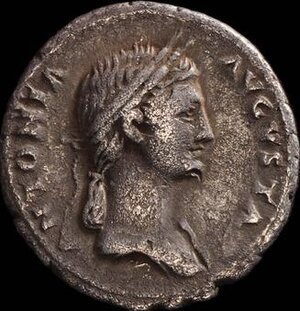
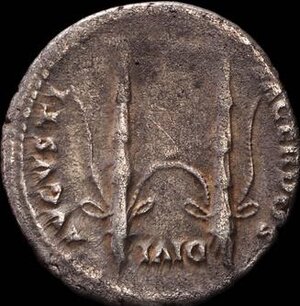
ROMAN. Antonia Minor. Augusta, A.D. 37 and 41. Silver Denarius (3.55g). Rome mint. Struck under Claudius, A.D. 41-42. Laureate and draped bust right / Two long torches linked by ribbon. RIC I 68 (Claudius); RSC 5. Lightly toned. VF and rare. This coin carries the posthumous portrait of Antonia Minor, struck in her honour by her son Claudius on his accession to the throne. Antonia, widely admired in antiquity for her virtue and beauty, was the younger daughter of Mark Antony and Octavia. After Antony's death, Augustus allowed her to benefit from her father's estate, and she emerged as a wealthy and influential figure at the heart of the Julio-Claudian dynasty. She married the distinguished general Nero Claudius Drusus, to whom she bore several children, three of whom survived to adulthood: Germanicus, the immensely popular prince of the imperial house; the future emperor Claudius; and a daughter, Livilla. Drusus' death in A.D. 9 while campaigning in Germania marked the beginning of a long sequence of tragedies that overshadowed Antonia's later life. Her eldest son Germanicus died in A.D. 19 under suspicious circumstances during his command in the East, where he had just reorganised Commagene and Cappadocia into Roman provinces. His bitter quarrel with the governor of Syria, Gnaeus Calpurnius Piso, and the rise of Tiberius' powerful prefect Sejanus gave rise to persistent rumours that Germanicus had been poisoned at the instigation of Piso or Sejanus. Her younger son Claudius, born with significant physical disabilities, was largely excluded from public life and treated as a figure of ridicule within his own family. Paradoxically, this humiliation may have ensured his survival, since he was not regarded as a political threat and escaped the purges that consumed other members of the dynasty, later proving himself an able and conscientious emperor. Antonia's misfortunes extended to her daughter Livilla, who was accused of poisoning her husband Drusus the Younger, son of Tiberius. Cassius Dio reports that Tiberius handed Livilla over to her mother, whereupon Antonia confined her and starved her to death. After Tiberius' death, Antonia's grandson Caligula became emperor. Although she attempted to advise and restrain him, he openly rejected her counsels and made it clear that he considered himself unanswerable to anyone. Caligula is said to have ordered the execution of his young cousin Gemellus in order to remove a rival claimant, an act that particularly outraged Antonia, who was grandmother to both. Unable to endure further tyranny and family bloodshed, she either took her own life or, as Suetonius suggests, was herself poisoned on Caligula's orders. Despite a childhood in which he was marginalised and reportedly neglected by his mother, Claudius clearly revered Antonia's memory. After his accession, he conferred upon her the posthumous title Augusta, decreed that her birthday should be observed as a public holiday with annual games and sacrifices, and ordered her image to be carried in procession in a chariot. This dignified commemorative issue is therefore not only a portrait of a prominent Julio-Claudian matron, but a poignant numismatic tribute from an emperor-son to a mother who had stood at the very centre of Rome's imperial tragedies and politics. From the David Allan Collection; acquired from CNG Electronic Auction 287 (26 Sep 2012), lot 401, hammered USD 1,200. (P)Estimate: AUD 2500
Lot # 10199
-
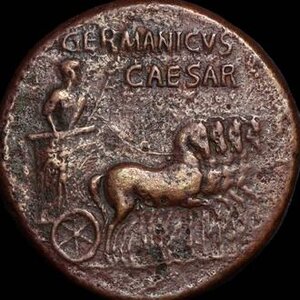
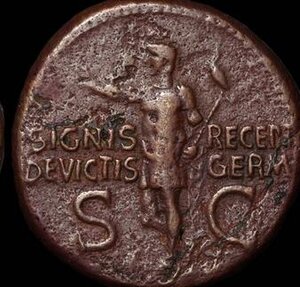
ROMAN. Germanicus. Died A.D. 19. Bronze Dupondius (16.14g). Rome mint. Struck under Gaius (Caligula), A.D. 37-41. Germanicus driving triumphal quadriga right, holding eagle-tipped sceptre and reins / Germanicus standing left, raising hand and holding aquila. RIC I 57 (Gaius). Brown patina, with brassy highlights and areas of minor porosity. aVF. (P)Estimate: AUD 500
Lot # 10198
-
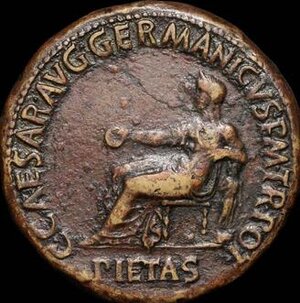
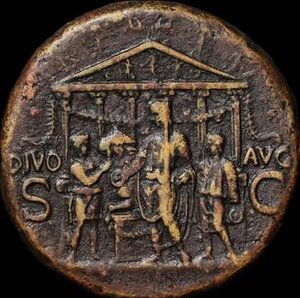
ROMAN. Gaius (Caligula). A.D. 37-41. Bronze Sestertius (29.30g). Rome mint. Struck A.D. 37-38. C CAESAR AVG GERMANICVS P M TR POT, Pietas seated left, holding patera and resting arm on small draped figure standing facing on base, PIETAS in exergue / DIVO AVG S C, Gaius standing left, holding patera over garlanded altar; victimarius holding bull for sacrifice and attendant holding patera standing on either side; garlanded hexastyle temple of Divus Augustus in background; pediment decorated with sacrificial scene; quadriga and Victories as acroteria; statues of Romulus and Aeneas along roof line. RIC I 36. gVF. Despite his enduring reputation as one of the most controversial Roman emperors, Caligula produced coinage of considerable artistic and ideological refinement. This sestertius, struck early in his reign (A.D. 37-38), portrays the emperor performing a sacrifice before the temple of his deified grandfather, Divus Augustus. The reverse displays remarkable architectural precision, including the garlanded hexastyle temple, sculptural roof statuary, and pedimental decoration echoing the sacrificial ritual below. Standing before the altar and holding a patera, Caligula asserts his piety and emphasises his dynastic connection to Augustus' divine status. (P)Estimate: AUD 3000
Lot # 10197
-
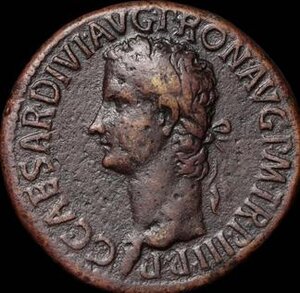
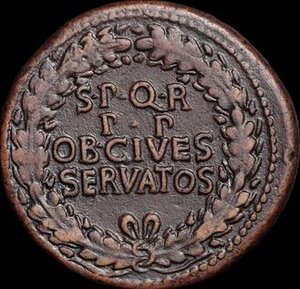
ROMAN. Gaius (Caligula). A.D. 37-41. Bronze Sestertius (27.28g). Rome mint. Struck A.D. 40-41. C CAESAR DIVI AVG PRON AVG P M TR P IIII P P, laureate head left / S P Q R/P P/OB CIVES/SERVATOS in four lines within oak wreath. RIC I 53; BMCRE p. 157 note, pl. 29, 13; BN 101-2. gVF. Brown patina with lighter highlights. (P)Estimate: AUD 2500
Lot # 10196
-
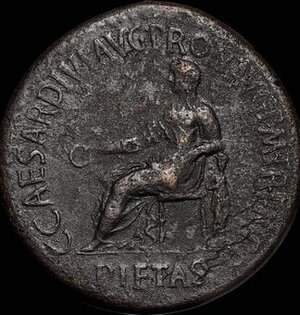
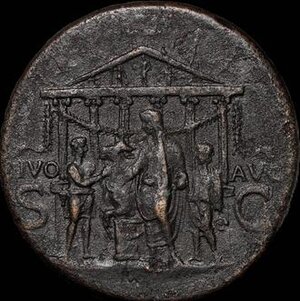
ROMAN. Gaius (Caligula). A.D. 37-41. Bronze Sestertius (26.97g). Rome mint. Struck A.D. 40-41. PIETAS in exergue, Pietas seated left, holding patera and resting arm on small draped figure standing facing on base / Gaius (Caligula) standing left, holding patera over altar; on either side, a victimarius holding bull for sacrifice, and an attendant holding patera; hexastyle, garlanded temple of Divus Augustus in background. RIC I 51; Elkins, Monuments fig. 70. Dark brown surfaces, with roughness. aVF. (P)Estimate: AUD 1000
Lot # 10195
-
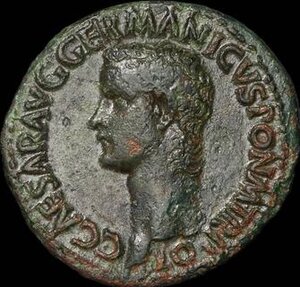
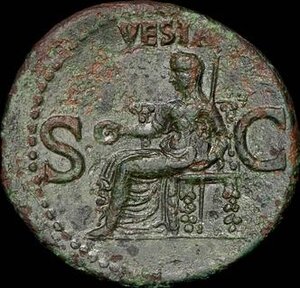
ROMAN. Gaius (Caligula). A.D. 37-41. Bronze As (10.42g). Rome mint. Struck A.D. 37-38. Bare head left / Vesta seated left on ornamental throne, holding patera and sceptre. RIC I 38. Green patina, with some roughness. VF. Acquired from CNG Electronic Auction 447, lot 442 (3 Jul 2019); from the Rye Collection. (P)Estimate: AUD 250
Lot # 10194
-
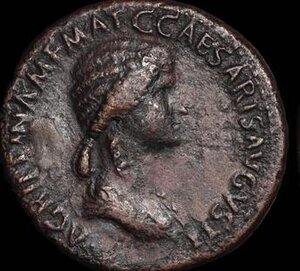
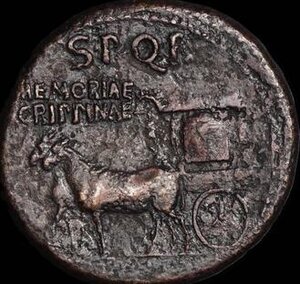
ROMAN. Agrippina Senior. Died A.D. 33. Bronze Sestertius (25.15g). Rome mint. Struck under Gaius (Caligula), A.D. 37-41. Draped bust right, hair in long plait / Two mules drawing ornamented carpentum left. RIC I 55 (Gaius); Trillmich Group II. Brown surfaces, smoothed, with minor tooling and a spot of fill on the obverse. aVF. Acquired from CNG Electronic Auction 449, lot 541 (31 Jul 2019), realised US$475. (P)Estimate: AUD 750
Lot # 10193
-
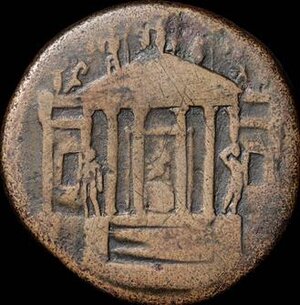
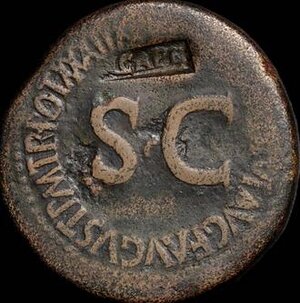
ROMAN. Tiberius. A.D. 14-37. Bronze Sestertius (27.24g). Rome mint. Temple of Concordia. Concordia seated left on throne within the temple. The hexastyle facade is flanked by statues of Hercules and Mercury; the pediment is adorned with figures of Jupiter, Juno and Minerva, with two Victories in the acroteria. The wings of the cella, with windows, are visible behind / CAESAR DIVI AVG F AVGVST P M TR POT XXXVI, around S C. RIC 55; Hunter 33; Cohen 68. With countermark NCAPR (Nero Caesar Augustus Probavit). Lightly toned. VG. Apparently only the second example recorded in CoinArchives, with an interesting countermark. Very rare. The first Temple of Concordia was originally constructed near the Roman Forum in 367 BC. It underwent a complete reconstruction in 121 BC and was later restored and formally dedicated by Tiberius in A.D. 10. The temple was renowned for its impressive collection of statues and works of art. For the type see; UBS Auction 78, lot 1405, hammered USD 900. (P)Estimate: AUD 500
Lot # 10192
-
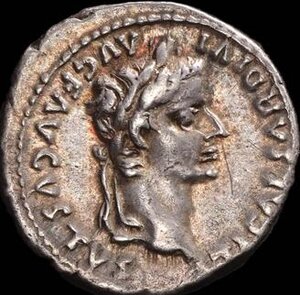
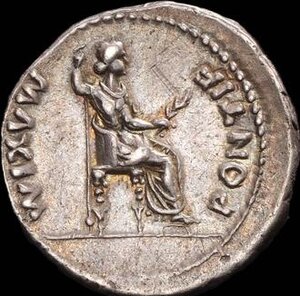
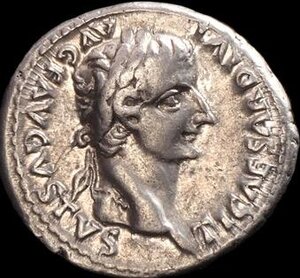
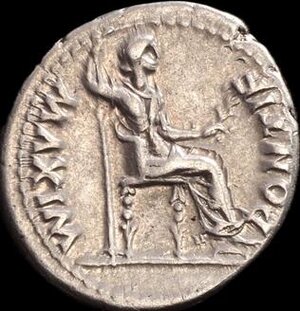
ROMAN. Tiberius. A.D. 14-37. Silver Denarius (3.72g). Tribute Penny type. Lugdunum (Lyon) mint. Group 4, A.D. 18-35. TI CAESAR DIVI AVG F AVGVSTVS, laureate head right; one ribbon on shoulder / PONTIF MAXIM, Livia as Pax seated right on chair, holding sceptre in right hand and olive branch in left, feet on footstool; ornate chair legs, single line below. RIC I 30; Lyon 150; RSC 16a; BMCRE 48-60; BN 28-31. Superb EF. Beautiful old collection toning, displaying bold, crisp detail on both sides. Struck from dies of the highest artistic quality, this is an exceptional and particularly choice example. (P)Estimate: AUD 1500
Lot # 10191
-
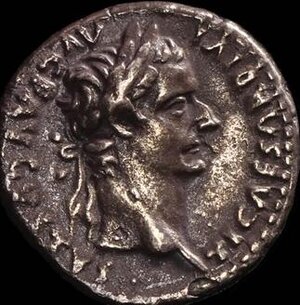
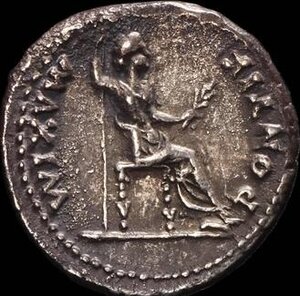
ROMAN. Tiberius. A.D. 14-37. Silver Denarius (3.64g). Tribute Penny type. Lugdunum (Lyon) mint. Group 5, A.D. 36-37. Laureate head right / Livia (as Pax) seated right on chair, feet on footstool, holding sceptre and olive branch; ornate chair legs, single line below. RIC I 30; Lyon 152; RSC 16b. gVF. (P)Estimate: AUD 1000
Lot # 10190
-
ROMAN. Tiberius. A.D. 14-37. Silver Denarius (3.65g). Lugdunum mint. Struck A.D. 36-37. TI CAESAR DIVI AVG F AVGVSTVS, laureate head right / PONTIF MAXIM, female figure seated right on chair with ornamented legs, holding branch and sceptre; single exergual line below. RIC I 30; BMCRE 48; RSC 16a. VF. Acquired from Roma Numismatics Ltd., E-Sale 57, lot 818 (30 May 2019), hammered GBP 200; from the collection of an antiquarian, Bavaria, formed circa 1960s-1990s. (P)Estimate: AUD 500
Lot # 10189
-
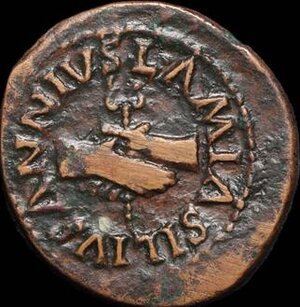
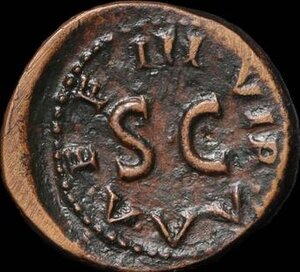
ROMAN. Augustus. 27 BC-A.D. 14. Bronze Quadrans (3.26g). Rome mint. Moneyers Lamia, Silius and Annius. LAMIA SILIVS ANNIVS, clasped hands over caduceus / III VIR A A A F F around large S C. RIC I 420. VF. An amazing example.Estimate: AUD 250
Lot # 10188
-
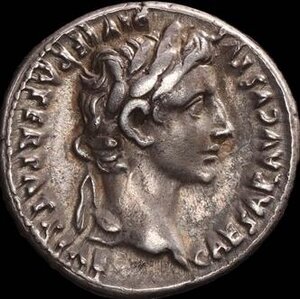
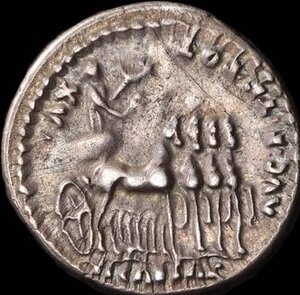
ROMAN. Augustus. 27 BC-A.D. 14. Silver Denarius (3.84g). Lugdunum (Lyon) mint. Struck A.D. 13-14. [CAES]AR AVGVSTVS DIVI F PATER PA[TRIAE], laureate head right / TI CAESAR in exergue, AVG F TR POT [XV], Tiberius standing right, driving triumphal quadriga, holding eagle-tipped sceptre in left hand, laurel branch and reins in right hand; all horses facing right. RIC I 222; Lyon 90; RSC 300; BMCRE 512; BN 1688-9; CNR VI 822 (this coin). Boasting incredible old cabinet toning, this coin is quite possibly the finest known for the type and is certainly far superior to the most recently sold example, Triton XXVIII, lot 644, hammered USD 1,600 on 14 January 2025. A truly great piece that deserves a place in every serious Roman collection. gEF. This denarius was struck at Lugdunum in the closing years of Augustus' life, its obverse celebrating him as Father of the Fatherland, while the reverse shows Tiberius in a triumphal quadriga, a clear visual announcement of the heir destined to carry the imperial mantle into the next generation. (P)Estimate: AUD 1500
Lot # 10187
-
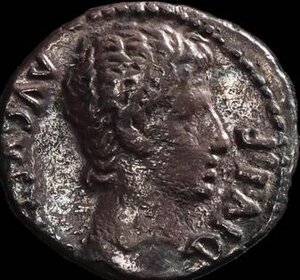
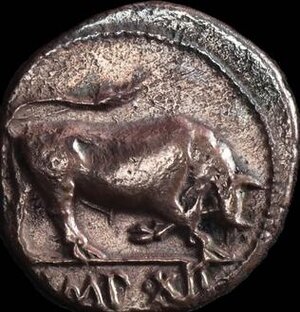
ROMAN. Augustus. 27 BC-A.D. 14. Silver Denarius (3.50g). Lugdunum (Lyon) mint. Struck 10 BC. Laureate head right / IMP (.) XII in exergue, bull butting right, lashing his tail. RIC I 187a; Lyon 52; RSC 155. Fine patina, with light roughness. VF. Acquired from CNG Electronic Auction 446, lot 335 (19 Jun 2019), hammered US$170. (P)Estimate: AUD 250
Lot # 10186
-
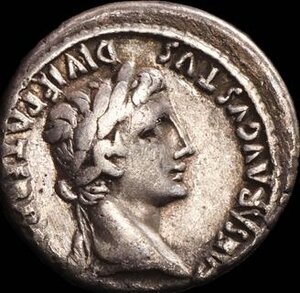
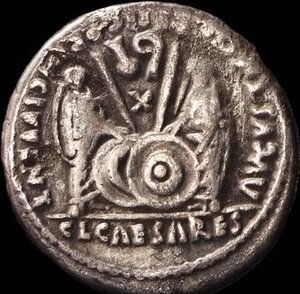
ROMAN. Augustus. 27 BC-A.D. 14. Silver Denarius (3.53g). Lugdunum mint. Struck 7-6 BC. CAESAR AVGVSTVS DIVI F PATER PATRIAE, laureate head right / AVGVSTI F COS DESIG PRINC IVVENT, Gaius and Lucius Caesar standing facing, each togate and resting hand on shield; spear behind each shield; lituus and simpulum above; X in centre field; C L CAESARES in exergue. RIC I 211; BMCRE 537; RSC 43a. VF, with pleasing portrait. Scarce variant with X in the centre field. (P)Estimate: AUD 300
Lot # 10099
-
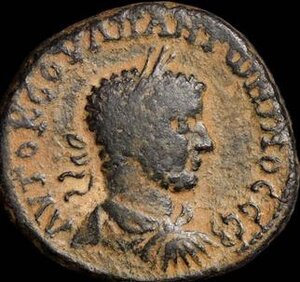
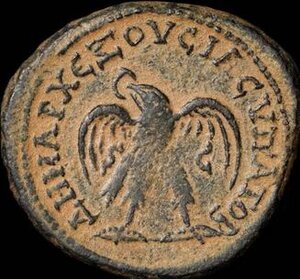
ROMAN. Uranius Antoninus. Usurper, A.D. 253-254. Billon Tetradrachm (10.95g). SYRIA, Seleucis and Pieria. Emesa. Laureate, draped and cuirassed bust right / DHMARX EXOVCIAC VPA TO B, eagle standing facing, head and tail left, wings displayed, holding wreath in beak; S C beneath wings. Baldus - (dies XVIII/- [unlisted reverse die]); cf. Prieur 1044; cf. CNG 58, 963. VF, with black-green patina and earthen undertones. Unlisted. Extremely rare variety. Uranius Antoninus is a shadowy figure of the mid third century, unknown to the main ancient historians and glimpsed almost entirely through his coinage. Active at Emesa in Syria around A.D. 253-254, he appears to have been a local priest-king of the sun god who assumed imperial trappings in response to repeated Persian attacks, rather than as a direct challenger to Rome. His coins give him the elaborate name Lucius Julius Aurelius Sulpicius Severus Uranius Antoninus and often feature local temple types, underlining his regional power base and religious role. Later writers, such as Zosimus, seem to confuse him with other usurpers bearing similar names, which has only added to the uncertainty around his career. What can be said with some confidence is that his authority was short-lived and was probably extinguished when Valerian advanced east to restore imperial control, leaving Uranius Antoninus as one of the more enigmatic protagonists of the crisis-ridden third century, preserved for us almost solely through his rare and historically important coins. From the Titan Collection; previously from the David Allan Collection, acquired from Classical Numismatic Group, Auction 88, 14 September 2011, lot 1030, hammered US$3500. (P)Estimate: AUD 7500
Lot # 10098
-
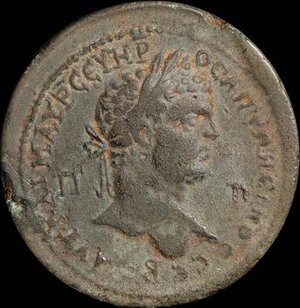
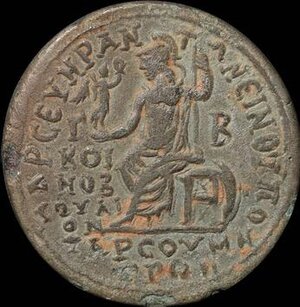
ROMAN. CILICIA, Tarsus. Caracalla. A.D. 198-217. Bronze (17.70g). Laureate head right / Roma seated left, holding Nike and spear; shield resting on ground behind. SNG Levante -; SNG Levante Suppl. 263 (this coin); SNG France 1489 (same dies); SNG von Aulock -. gVF. With a wonderful green patina and earthen highlights. From the inventory of I. S. Wright, acquired from Classical Numismatic Group, Mail Bid Sale 66 (19 May 2004), lot 1182; among the finest examples to have appeared since.Estimate: AUD 750
Lot # 10097
-
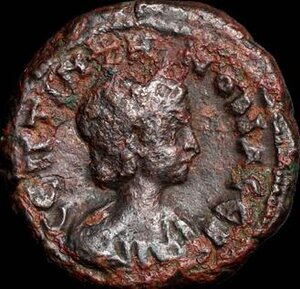
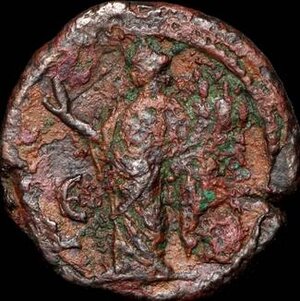
ROMAN. Zenobia. Usurper, A.D. 268-272. Potin Tetradrachm (6.65g). Alexandria mint. Dated RY 5 of Vaballathus, A.D. 272. CEPTIM ZHNOBIA CEB, draped bust right, wearing stephane / Homonoia standing facing, head left, raising right hand and holding double cornucopia; L E in left field. Koln -; Dattari (Savio) 5512 (this coin); K&G 108.2; Emmett 3912.5 (R2); Staffieri, Alexandria in Nummis 247 (this coin). Dark brown patina with traces of green. gVF for this difficult and very rare issue, and clearly better than most examples seen on CoinArchives. An absolutely choice coin for the type. Septimia Zenobia, widow of Odenathus of Palmyra, became the real power in the East after his assassination around A.D. 267. Ruling as regent for her young son Vaballathus, she used the wider instability of the period to push Palmyra outward, carefully navigating between Rome and Persia. In A.D. 269, her forces took Egypt, bringing the grain supply under Palmyrene control and turning a regional power into a direct challenge to Rome. Ancient sources also say she claimed prestigious ancestry, linking herself to figures such as Cleopatra VII and the legendary Dido. When Aurelian came to the throne in A.D. 270, he first focused on the West and, for a time, tolerated Zenobia's position. In A.D. 272, he moved against Palmyra, sacked the city, and captured Zenobia and Vaballathus as they tried to escape toward Persia. She was taken to Rome and shown in Aurelian's triumph in A.D. 274, and later tradition places her in retirement at Tibur. (P)Estimate: AUD 3000
Lot # 10096
-
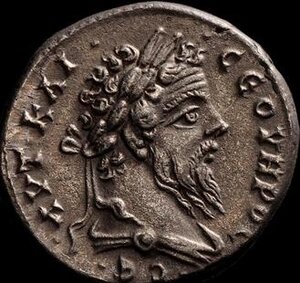
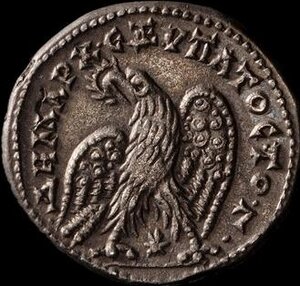
ROMAN. SELEUCIS AND PIERIA, Laodicea ad Mare. Septimius Severus. A.D. 193-211. Silver Tetradrachm (12.43g). Struck A.D. 208-209. Laureate and draped bust right / Eagle standing facing, head left, with wings spread, holding wreath in beak; star between legs. Prieur & Amandry Group III, 34a; McAlee, Severan, Group III, 25; Prieur 1149. Attractive old grey cabinet toning with hints of light golden lustre. aEF. An incredible example. (P)Estimate: AUD 500
Lot # 10095
-
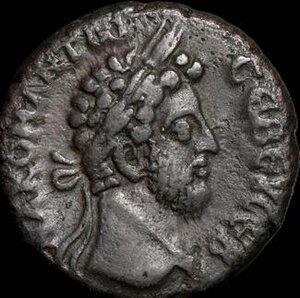
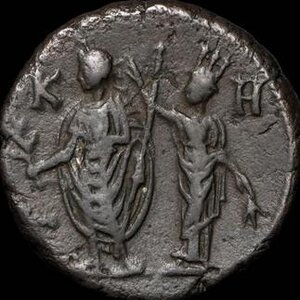
ROMAN. Commodus. A.D. 177-192. Billon Tetradrachm (12.11g). Alexandria mint. Dated regnal year 28 of Marcus Aurelius, A.D. 187/8. Laureate head right / Commodus standing facing, head left, holding olive branch and sceptre; to right, Alexandria facing, turreted, crowning Commodus and holding two grain ears; L K H (date) across field. Koln 2230; Dattari-Savio 3854; K&G 41.92; Emmett 2537.28. A choice example for the type. A very attractive dark brown-green patina. gVF. (P)Estimate: AUD 250
Lot # 10094
-
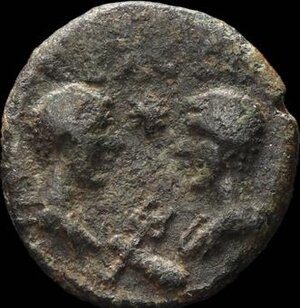
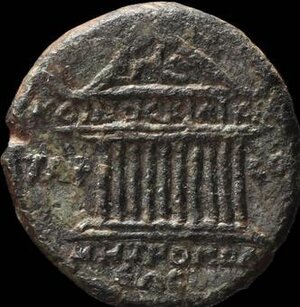
ROMAN. CILICIA, Tarsos. Commodus and Annius Verus. A.D. 161-165. Bronze (3.72g). Confronted busts of Commodus and Annius Verus as the Dioskouroi; star, caduceus and club between / Dekastyle temple. SNG Paris 1456 (same obverse die). VF, with green patina. Very rare. From the David Allan Collection; previously from the David Tong Collection; acquired from CNG Auction 55 (24 September 1997), lot 1027. (P)Estimate: AUD 500
Lot # 10093
-
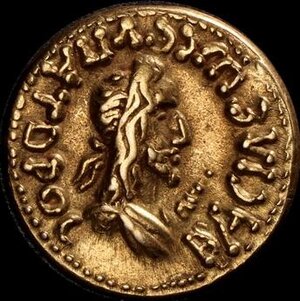
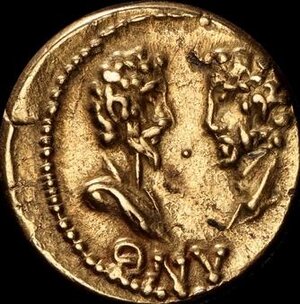
ROMAN. KINGS OF THE BOSPOROS. Eupator, with Marcus Aurelius and Lucius Verus. Electrum Stater (7.76g). Dated Bosporan Era 459 = A.D. 162/3. Diademed and draped bust of Eupator to right; club before / Head of Marcus Aurelius to left, facing draped bust of Lucius Verus to right, pellet between; ONV (date) below. RPC IV.1 3742 (temporary); Frolova pp. 160-161; MacDonald 469/1. Reverse off-centre. gVF. (P)Estimate: AUD 2500
Lot # 10092
-
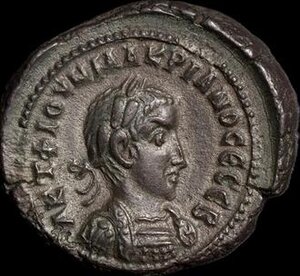
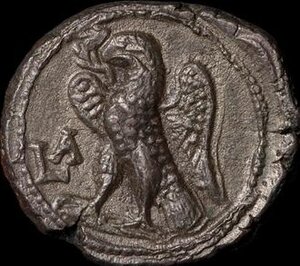
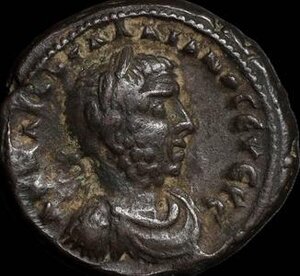
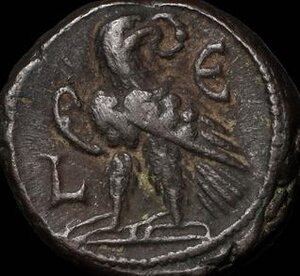
ROMAN. EGYPT, Alexandria. Macrianus. Usurper, A.D. 260-261. Potin Tetradrachm (11.89g). Dated RY 1 (A.D. 260/1). Laureate and cuirassed bust right, seen from the front / Eagle standing left, wings displayed, holding wreath in beak; L A (date) to lower left. Koln 3011; Dattari (Savio) 5380; K&G 94.1; Emmett 3785.1. Wonderful toning. An incredible example and undoubtedly the finest known. gEF. This tetradrachm comes from the brief Macrian interlude of A.D. 260-261, after Valerian's capture by Shapur I threw the East into crisis. Macrianus Senior rallied the armies and pushed the Persians back beyond the Euphrates with the help of Callistus Ballista, then declined the throne and raised his sons Macrianus and Quietus as emperors. Alexandria struck local potin tetradrachms for the new regime, but the attempt collapsed almost immediately; Macrianus was killed in the West, while Quietus and Ballista fell soon after in Syria, ending the dynasty within months. For a recently sold example see; Kolner Auction A122, lot 893, hammered USD 550. (P)Estimate: AUD 750
Lot # 10091
-
ROMAN. EGYPT, Alexandria. Valerian I. A.D. 253-260. Potin Tetradrachm (11.36g). Dated Regnal Year 5, A.D. 257/8. Laureate and cuirassed bust right, seen from the front / Eagle standing left, head and tail right, holding wreath in beak; L E across field. Koln 2868; Dattari (Savio) 5185; K&G 88.29; Emmett 3705.5. Dark brown patina with traces of red. Well struck. gVF.Estimate: AUD 300
Lot # 10090
-
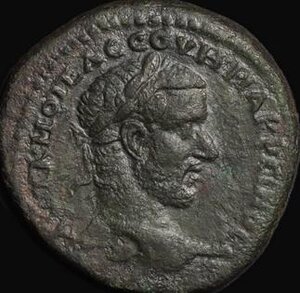
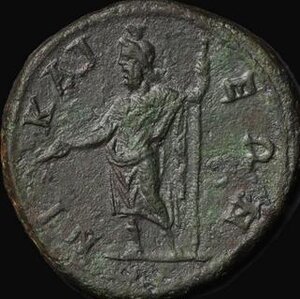
ROMAN. BITHYNIA, Nicaea. Macrinus. A.D. 217-218. Bronze Diassarion (13.70g). Laureate head right / Serapis standing facing, head left, holding grain ears and sceptre. Recueil General 536 var. (bust variety); SNG Copenhagen 510 var. (same); BMC 166.89 var. (same); SNG von Aulock unlisted. Bust variety and reverse legend not recorded in the standard references. Extremely rare. VF. (P)Estimate: AUD 300
Lot # 10089
-
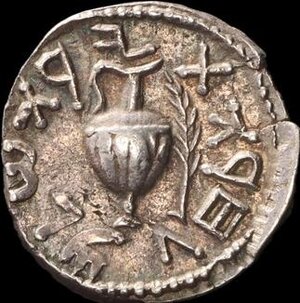
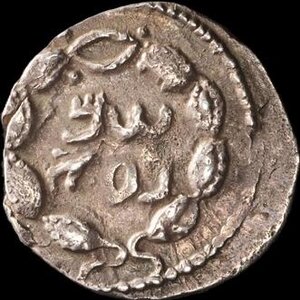
ROMAN. Judaea, Bar Kokhba Revolt. Silver Zuz (2.97g), A.D. 132-135. Undated, attributed to Year 3 (A.D. 134/5). 'Shim'on' (Paleo-Hebrew) within wreath of thin branches wrapped around eight almonds, with medallion and tendrils / 'For the freedom of Jerusalem' (Paleo-Hebrew), fluted jug with handle on left; willow branch in right field. Hendin 1422; Mildenberg 89.2 (O15/R58; this coin); TJC 283a. Extremely rare, only three specimens cited by Mildenberg, this being the one selected to illustrate the dies. Wonderfully toned. gVF. The jug and willow branch refer to the water libation ceremony of Sukkot, once performed at the Jerusalem Temple. Struck decades after the Temple?s destruction in A.D. 70, this imagery became a powerful symbol of memory, faith and resistance, recalling a sacred ritual that could no longer be performed while proclaiming the rebels? hope for Jerusalem?s freedom. (P)Estimate: AUD 1500
Lot # 10088
-
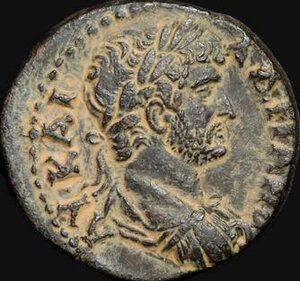
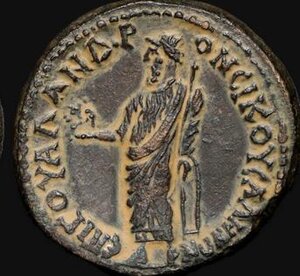
ROMAN. LYDIA. Sala. Hadrian, A.D. 117-138. Bronze Diassarion (7.62g). C. Val. Androneikos, magistrate. AY KAI ADRIANOC, laureate, draped and cuirassed bust of Hadrian right, seen from behind / EPI G OYAL ANDPONEIKOY CALHNON, Zeus Lydios standing facing, head left, holding eagle in his right hand and sceptre in his left. RPC III 2442; BMC 31-32. Dark green-brown patina with attractive earthen highlights. A superb example, apparently among the finest known. gEF. For a similar example in comparable quality, see Leu Auction 14, lot 977, 12 December 2020, hammered CHF 200, approximately AUD 375. The present coin is clearly finer, with far better centering and sharper details. (P)Estimate: AUD 300
Lot # 10087
-
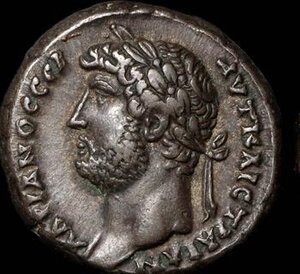
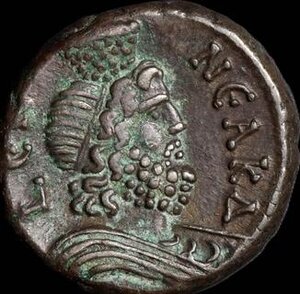
ROMAN. EGYPT, Alexandria. Hadrian. A.D. 117-138. Billon Tetradrachm (13.74g). Dated Regnal Year 19, A.D. 134-135. AUT KAIC TRAIAN ADRIANOC CEB, laureate head of Hadrian left / L EN-NEAK D, draped bust of Sarapis right, wearing kalathos. Dattari (Savio) 1465; Geissen 1150; K&G 32.621; RPC III 5943. Wonderfully toned and well centred. aEF. (P)Estimate: AUD 500
Lot # 10086
-
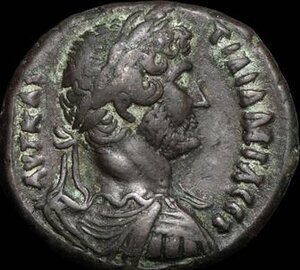
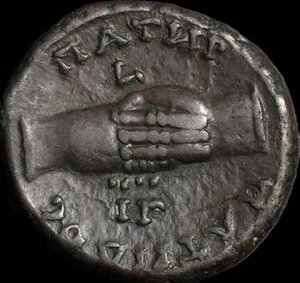
ROMAN. EGYPT, Alexandria. Hadrian. A.D. 117-138. Billon Tetradrachm (13.79g). Dated RY 12, A.D. 127/8. Laureate, draped and cuirassed bust right, seen from behind / Two clasped right hands; L IB (date) above and below. Koln 979-80; Dattari (Savio) 1524; K&G 32.459; RPC III 5715; Emmett 848.12. Toned, with traces of deposits. gVF. (P)Estimate: AUD 1000
Lot # 10085
-
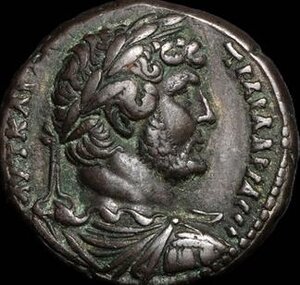
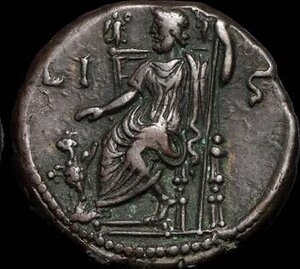
ROMAN. EGYPT, Alexandria. Hadrian. A.D. 117-138. Billon Tetradrachm (13.47g). Dated Regnal Year 16, A.D. 131/2. AVT KAIC-TPAI ADPIA CEB, laureate, draped and cuirassed bust of Hadrian right, seen from behind / Serapis enthroned left, holding grounded sceptre in left hand and extending right hand toward Cerberus seated at his feet. L I-S across fields. RPC III 5789. Well centred and well defined for the type. Superb attractive patina. aEF. Acquired from I. S. Wright in the early 2000s. This tetradrachm was struck at Alexandria during the sixteenth regnal year of Hadrian, one of the most widely travelled and intellectually ambitious emperors of Rome. Born in A.D. 76 and connected by family ties to Trajan, he rose through a distinguished public and military career before succeeding to the throne in A.D. 117. Rather than continue Trajan's eastern expansion, Hadrian reshaped the empire through consolidation, reform, and direct imperial presence, personally visiting provinces across the Roman world. Under his rule, Roman culture, architecture, and administration reached a refined and enduring high point. (P)Estimate: AUD 400
Results from 2351 to 2400 of 32902