Info & contacts
PDF Catalogue
My bids
Watched Lots
Terms Of Sale
Shipping costs
Payment methods
Printable results
Live Bidding Thursday 9th April 2026 02:30:00 PM CET
The Connoisseur’s Collection (1-136)
Greek (137-254)
Roman Republic (255-299)
Roman Empire (300-345)
Migration of the German tribes (346-346)
Byzantine (347-354)
Colombia (355-355)
Ethiopia (356-356)
France (357-360)
Italy (361-376)
Papal States (377-379)
Savoy (380-382)
Islam (383-384)
Netherlands (385-385)
Switzerland (386-391)
French Medals (392-397)
Italian Medals (398-411)

Risultati: 136
Pagina 3
Lot # 121
-
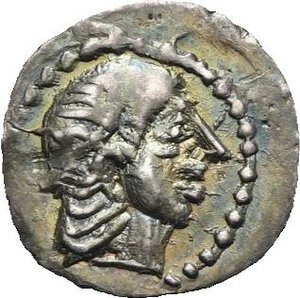
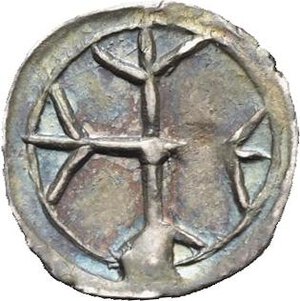
Sicily. Syracuse. Deinomenid Tyranny, circa 485-466 BC. 'Barbarische' Hemiobol (Silver, 9.54 mm, 0.25 g). Diademed head of Arethusa right; border of dots. Rev. Wheel of four spokes. Boehringer pl. 29, B 42 = Jameson 751 (this coin illustrated). SNG Ashmolean 1942 (same dies). C. Boehringer, "Die Barbarisierten Münzen von Akragas, Gela, Leontinoi und Syrakus im 5. Jahrhundert V. Chr.," AIIN Suppl. 20 (1975), p. 186, 9 and pl. XXIII, 9 (same dies). Cf. SNG ANS 116 (obol, prototype). Cf. HGC 2, 1371 (obol, prototype). Hemiobol of a very crude style, but beautifully patineted with hints of blue iridescence. Extremely Fine. Rare variety.
Ex Sternberg XXXI, 28 October 1996, lot 736. From the Jameson Collection and A.J.E. Collection.
These barbarous-unofficial coins allude to those from the archaic period, but may well have been produced later.
Lot # 122
-
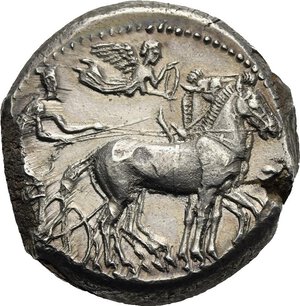
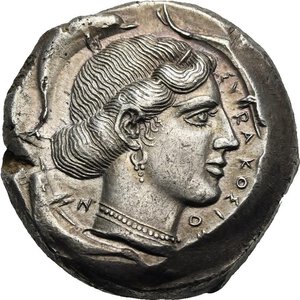
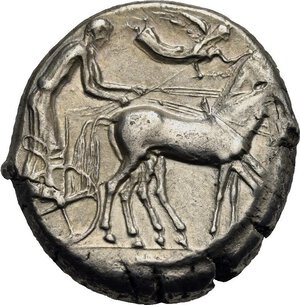
Sicily. Syracuse. Second Democracy, circa 460-440 BC. Tetradrachm (Silver, 23.42 mm, 17.40 g). Charioteer driving slow quadriga right on exergue line, holding kentron and reins; above, Nike flying right, crowning horses; in exergue, Ketos (not visible); border of dots. Rev. ΣY-RΑΚΟΣΙΟ - Ν, Diademed head of Arethusa right, wearing pendant earrings and pearl necklace with hair rolled in thin band; four dolphins around. Boehringer 512 (V269/R364, same dies). SNG ANS 164 (same dies). SNG Copenhagen 646 (same dies). SNG München 1015 (same dies). Rizzo pl. XXXVII, 5 (same dies). MFA Boston 367 = Warren 330 (same dies). Gillet 563 (same dies). Buceti 250 b (same dies). Cf. HGC 2, 1311. Lightly toned, with a detailed handsome portrait, crisply struck from fresh dies. Obverse slightly off-center. Extremely Fine. Rare.
Ex Dieter Gorny 81, 3 March 1997, lot 137.
Lot # 123
-
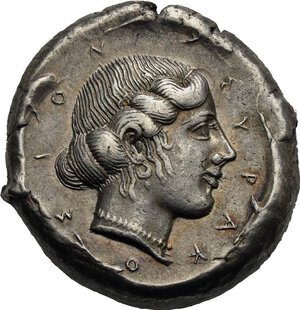
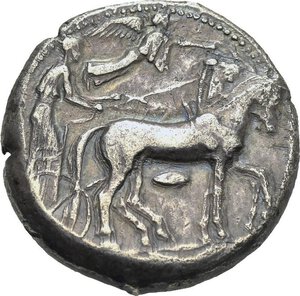
Sicily. Syracuse. Second Democracy, circa 460-440 BC. Tetradrachm (Silver, 23.90 mm, 17.30 g). Charioteer driving slow quadriga right on exergue line, holding kentron and reins; above, Nike flying right, crowning horses; in exergue, Ketos (not visible); border of dots. Rev. Σ Y P Α Κ Ο Σ Ι Ο Ν, Diademed head of Arethusa right, wearing pendant earrings and pearl necklace with hair rolled in thin band; four dolphins around. Boehringer 509 (V268/R362, same dies). SNG ANS 162 (same dies). SNG Ashmolean 1965 (same dies). MFA Boston 366 (same dies). Buceti 248 c (same dies). Cf. HGC 2, 1311. Lightly toned with hints of iridescence. Beautiful portrait crisply struck from fresh dies. Obverse slightly off-center. Extremely Fine. Rare.
Ex InAsta 13, 12 November 2005, lot 36.
Lot # 124
-
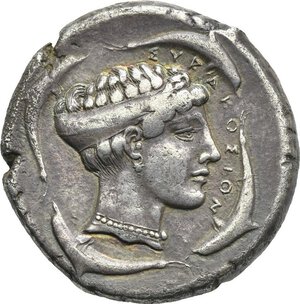
Sicily. Syracuse. Second Democracy, circa 440-430 BC. Tetradrachm (Silver, 26.12 mm, 17.18 g). Charioteer driving slow quadriga right on exergue line, holding kentron and reins; above, Nike flying right, crowning horses; below horses, grain of barley; in exergue, Ketos (not visible); border of dots. Rev. ΣYRΑΚΟΣΙΟΝ, Head of nimph Arethusa right, wearing pendant earrings and pearl necklace, with her hair held in broad band (taenia); four dolphins around. Boehringer 594 (V293/R397, same dies). SNG ANS 192 (same dies). SNG Lloyd 1336 (same dies). Rizzo pl. XXXVIII, 1 (same dies). Gillet 576 = Jameson 771 (this coin illustrated). Buceti 281 (same dies). MFA Boston 381 (same reverse die). Cf. HGC 2, 1313. Beautiful old cabinet tone. A very elegant portrait of fine style. Obverse struck from a slightly deteriorated die, otherwise, Good Very Fine. Very Rare.
Ex Dr. Busso Peus Nachfolger 368, 25 April 2001, lot 51; Sternberg XXXIII, 18 September 1997, lot 8. From the Gillet Collection (Photo file n. 571) and Jameson Collection.
Lot # 125
-
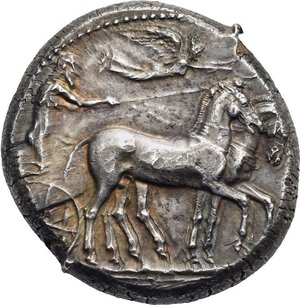
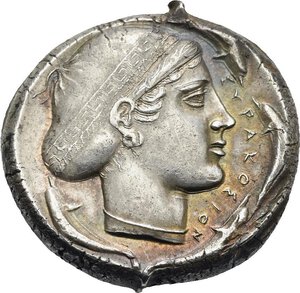
Sicily. Syracuse. Second Democracy, circa 430-420 BC. Tetradrachm (Silver, 24.55 mm, 17.38 g). Charioteer driving slow quadriga right on double exergue line, holding kentron and reins; above, Nike flying right, crowning horses; border of dots. Rev. ΣYPΑΚΟΣΙΟΝ, Head of nimph Arethusa right, wearing double spiral earrings and a simple necklace; hair bound in sakkos decorated with meander and zig-zag pattern, ampyx ornamented with leaf wreath; four dolphins around. Boehringer 642 (V326/R442, same dies). SNG ANS 207 (same dies). SNG Lockett 953 (same dies). Jameson 783 (same dies). Weber 1591 (same dies). Gillet 582 (same dies). Gulbenkian 269 (same dies). AMB 448 (same dies). Buceti 298 (same dies). Cf. HGC 2, 1319. An exceptional piece, one of the finest known, perfectly centred with attractive iridescent toning. A very elegant portrait in a splendid classical style. Struck on the usual tight flan with die break on obverse (on the wheel). Choice Extremely Fine. Rare.
Ex Astarte XVII, 8 May 2005, lot 81.
The 'transitional' era of Greek numismatic art is perfectly exemplified by the dies of this Syracusan tetradrachm, which displays a blend of Archaic and Classical artistic conventions.
Lot # 126
-
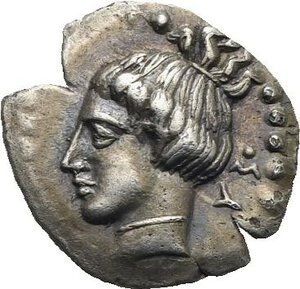
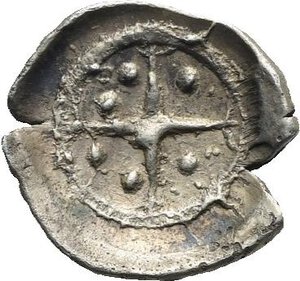
Sicily. Syracuse. Second Democracy, circa 430-425 BC. Hemilitron or Hexonkion (Silver, 10.37 mm, 0.40 g). ΣY and pellet, Head of the nymph Arethusa left, wearing a simple necklace with her hair tied up in bun at the top of her head; behind and above, six pellets (mark of value?) or part of border of dots. Rev. Four -spoked wheel with two pellets in first and second quarters and with one in the third and fourth (mark of value); all within shallow incuse circle. Boehringer cfr. 612 for the obv. (V303) but unlisted die of reverse = HGC 2, 1385 (same obverse die). Buceti 308 var. Cf. Rizzo pl. XXXVIII, 11-12 (but head right and different pellets positions). Cammarata -. Manganaro -. Light iridescent toning. Well centred and with a wonderful head of Arethusa, engraved by a master in refined Classic style. Thin die break on reverse. Good Extremely Fine/Very Fine. An apparently unpublished type in the standard references.
Ex Nomisma 21, 10 April 2002, lot 35.
Lot # 127
-
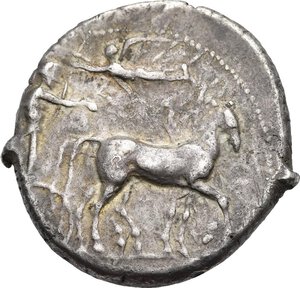
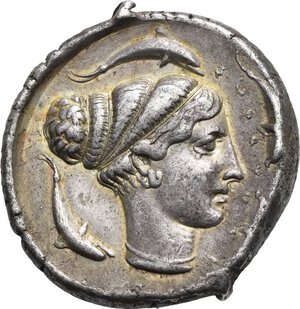
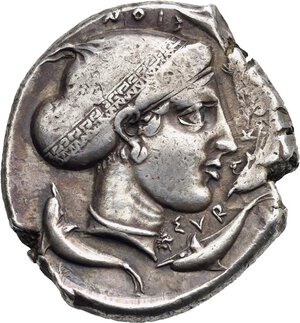
Sicily. Syracuse. Second Democracy, circa 425-420. Tetradrachm (Silver, 27.93 mm, 17.06 g). Charioteer driving slow quadriga right on exergue line, holding kentron and reins; above, Nike flying left, crowning him; border of dots. Rev. ΣYPΑΚΟΣΙ - ΟΝ, Head of nimph Arethusa right, wearing earrings and a simple necklace, hair tied at the nape of the neck with a ribbon; four dolphins around. Boehringer 684 (V339/R465, same dies). Winterthur 913 (same dies). Buceti 320 (same dies). SNG ANS 225 (same obverse die). Cf. HGC 2, 1321. Attractively toned with hints iridescence. An exceptional piece with a broad flan and a portrait in a splendid Classical style. The obverse struck from a somewhat worn die. Very Fine/Extremely Fine. Rare variety.
Ex Aretusa 3, 25 November 1994, lot 48.
Lot # 128
-
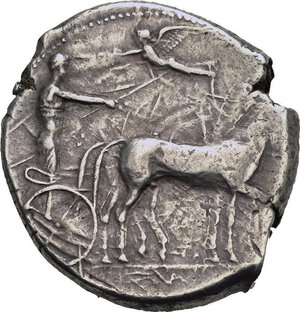
Sicily. Syracuse. Second Democracy, circa 425-420 BC. Tetradrachm (Silver, 28.06 mm, 17.34 g). Charioteer driving slow quadriga right on exergue line, holding kentron and reins; above, Nike flying left, crowning him; border of dots. Rev. ΣYP – ΑΚΟ - ΣΙΟΝ (retrograde), Head of nimph Arethusa right, wearing double spiral earrings and a simple necklace with a lion's head; hair bound in sakkos decorated with meander and zig-zag pattern, ampyx ornamented with olive-wreath; around, four dolphins. Boehringer 698 (V344/R476, same dies). SNG ANS 233 (same dies). BMC Sicily 161, 115 (same dies). Weber 1592 (same dies). Buceti 324 b (same dies). HGC 2, 1322 (same dies). Toned. Obverse slightly off-center and struck from a somewhat worn die. A detailed handsome portrait, struck on a broad flan. Very Fine. Rare.
Ex Ferri & Associates (Vinchon), 10 November 2022, lot 735. From M. Pierre Lallier Collection.
Lot # 129
-
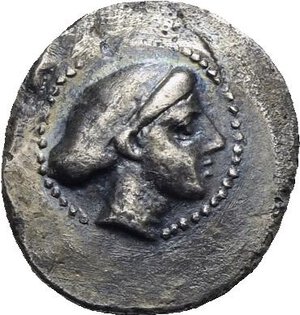
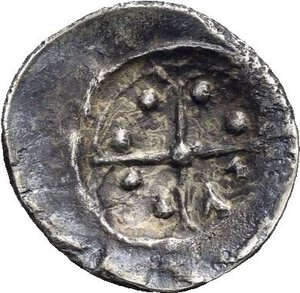
Sicily. Syracuse. Second Democracy, circa 420-415 BC. Hemilitron or Hexonkion. (Silver, 11.45 mm, 0.59 g). Head of the nymph Arethusa right, wearing a pearl necklace with her hair bound in ampyx and sakkos; border of dots. Rev. Four-spoked wheel with two pellets in each of three quarters, ΣY within the fourth section; all within shallow incuse circle. Boehringer 713 (V348/R487, same dies). E. Cammarata, “Da Dionisio a Timoleonte. Problemi di numismatica della Sicilia antica”, 1984, pl. I, 6 (same dies). Buceti 334a (same dies). Cf. SNG ANS 240. Cf. HGC 2, 1389. Hemilitron of large module and heavy weight. Attractive old cabinet tone with light blue iridescence. Extremely Fine. Very Rare.
Ex Asta del Titano 44, 18 June 2013, lot 28.
Lot # 130
-
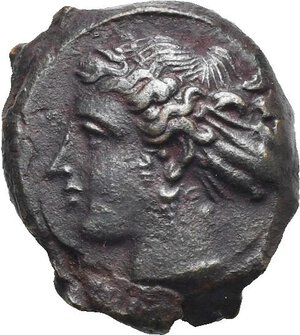
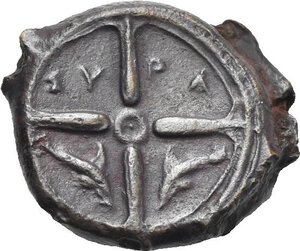
Sicily. Syracuse. Second Democracy, circa 415-405 BC. Hemilitron (Bronze, 15.53 mm, 3.60 g). Head of the nymph Arethusa left, wearing earring and necklace, hair bound in ampyx and sphendone; within linear circular border. Rev. ΣY – ΡΑ, Four-spoked wheel with the legend in the upper two quarters and two opposed dolphins in the lower; within linear circular border. Calciati CNS II, 50, 22 (these dies). Cf. SNG ANS 404-410. SNG Morcom 685 (these dies). SNG Copenhagen 696 (these dies). Laffaille 214 (these dies). Buceti 407 a (these dies). Cf. HGC 2, 1479. Dark brown patina. Good Very Fine.
Ex Dieter Gorny 87, 2 March 1998, lot 75.
Lot # 131
-
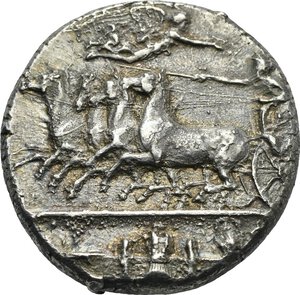
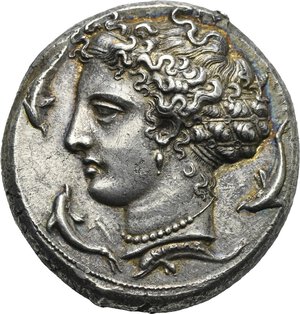
Sicily. Syracuse. Dyonisus I, circa 405-400 BC. Dekadrachm (Silver, 35.08 mm, 43.08 g). Signed by the artist Kimon. Charioteer driving fast quadriga left, holding kentron and reins; Nike flying above crowning him; under the heavy exergue line inscribed KIMΩN (only traces visible, as usual), panoply of arms arranged on two steps, the lower inscribed [ΑΘΛΑ] ("prizes"). Rev. ΣΥ[ΡΑΚΟΣΙΩ], Head of Arethusa left wearing single-pendant and pearl necklace, hair bound in front with ampyx and caught up behind by net; around, four dolphins swimming, the one below neck inscribed KIMΩN, border of fine dots. Jongkees 4 (dies A/δ). SNG München 1073 (same dies). Rizzo pl. L,4 (same dies). Regling, Dekadrachmon 4 (same dies). Franke-Hirmer 119 (same reverse die). HGC 2, 1298. Nicely toned with hints of golden iridescence. A spectacular specimen, visually striking and in high relief. Struck (as always on this combination) from a somewhat rusty obverse die. A small hit on the reverse border of dots. One of the great masterpieces of the die engraver's art for the Greek series. Extremely Fine. Very Rare.
Ex Tkalec, 29 February 2000, lot 29.
By the winter of 406-405 BC, Dionysus became tyrant and stregos of Syracuse, the premier city of Sicily. During his reign (405-367 BC), he fought three wars against the Carthaginians, handing them defeat after defeat, and confining the Carthaginians to their older territorial dominions in the western part of Sicily. This accomplished, Syracuse, with its rapidly increasing prestige and wealth, began its own program of territorial and political expansionism, eventually controlling in some form most of southern Italy. Under Dionysios, Syracuse became the most splendid and the best fortified of all Greek cities. Its naval power was vastly increased, likewise, until its fleet was the most powerful in the Mediterranean. Dionysus reintroduced the large and ostentatious silver dekadrachms, a denomination that had not been used in Syracuse since the issue of the Demareteion decades earlier. Dionysus entrusted two of the greatest local numismatic artists, Kimon and Euainetos to design these impressive pieces. Scholars have long attempted to ascribe the dekadrachms to an historical event as they seem in every way to be commemorative medallions. The current thought on the dating of this issue favours the victorious actions of Syracuse in the devastating invasion of Sicily by the Carthaginians from 406 to 405 BC. The most compelling reason to associate the Kimonian dekadrachms with a military victory is the display of armour and weaponry that appears in the exergue along with the inscription AΘΛA, which indicates 'prizes', or at least 'agonistic contests'.
Lot # 132
-
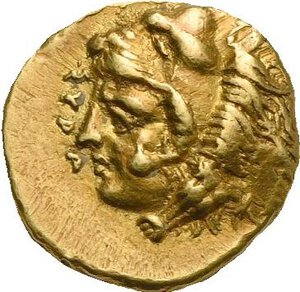
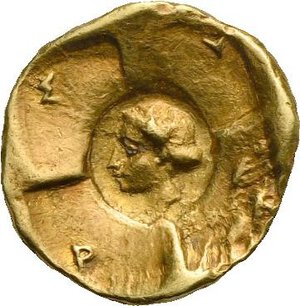
Sicily. Syracuse. Dionysus I, circa 405-400 BC. Tetradrachm or 20 Litrai (Gold, 10.46 mm, 1.16 g). ΣΥΡΑ, Head of Herakles left, wearing lion's skin headdress. Rev. Σ - Υ - Ρ - Α, Quadripartite incuse square; in deeper incuse circle in center, small head of Arethusa left, wearing ampyx and sphendone. C. Boehringer, "Zu Finanzpolitik und Münzprägung des Dionysios von Syrakus," in Essays in honor of Margaret Thompson, pl. 38, 13. D. Bérend, “Le monnayage d'or de Syracuse sous Denys I”, in Atti dell' VIII Convegno, Napoli 1983, pp. 91-108, pl. XI, 6 (same dies). SNG ANS 351 (same dies). SNG Copenhagen 684 (same dies). Rizzo pl. XLVIII, 9 (same dies). Dewing 866 (same dies). Buceti 476. HGC 2, 1289. Beautiful portrait of the young Herakles. Good Very Fine. Rare.
Ex Classical Numismatic Group 66, 19 May 2004, lot 140; Vinchon 29 April 1974, lot 30. From the Peyrefitte Collection.
Lot # 133
-
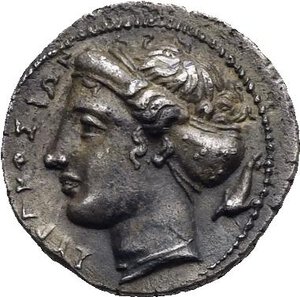
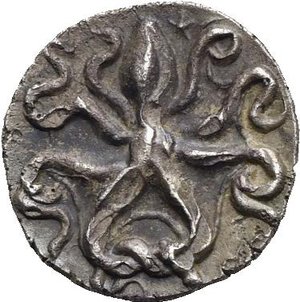
Sicily. Syracuse. Dionysus I, circa 405-400 BC. Litra (Silver, 10.93 mm, 0.79 g). ΣYPAKOΣIΩN, Head of nymph Arethusa left, wearing pearl necklace and with her hair bound by an ampyx in the front and a sphendone in the back; behind, dolphin; border of dots. Rev. Octopus with entwined central tentacles. SNG ANS 293 (same dies). SNG Copenhagen 675 (same dies). SNG Lloyd 1400 (same dies). SNG Ashmolean 2018 (same dies). E. Cammarata, “Da Dionisio a Timoleonte. Problemi di numismatica della Sicilia antica”, 1984, pl. IX, 88 (same dies). Buceti 543 (same dies). HGC 2, 1381 (same dies). Struck in high relief. A wonderful and incredibly detailed portrait with beautiful old collection toning. Extremely Fine. Rare.
Ex Sternberg XXXI, 28 October 1996, lot 741.
Lot # 134
-
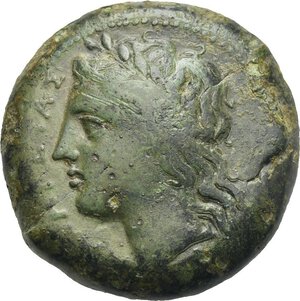
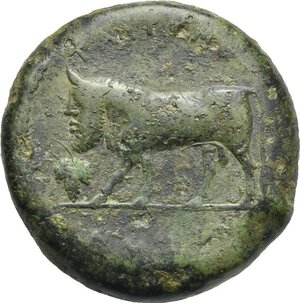
Sicily. Tauromenion. Circa 339-336 BC. Hemilitron (Bronze, 25.06 mm, 17.90 g). ΑΡΧΑΓΕΤΑΣ, Laureate head of Apollo Archagetas left; border of dots. Rev. TAYPOM – [ENI]TAN, Man-headed bull standing left on exergue line, the river god of Tauromenion; below left, bunch of grapes; border of dots. Calciati CNS III, 211, 4 (same dies). Castrizio Series III, pl. XVIII, 1β (same dies). SNG Lloyd 1676 (same dies). SNG Morcom 842 (same dies). Campana CNAI III (partial), 99, 1b (same dies). Virzì 1995 (same dies). Cf. Buceti 1. HGC 2, 1577 (same obverse die). Green patina. Some deposits a couple light scratches, otherwise, Good Very Fine. Rare.
Ex CGB Numismatics 49, 30 June 2011, lot 113. From the stock of Crédit de la Bourse (1995).
Lot # 135
-
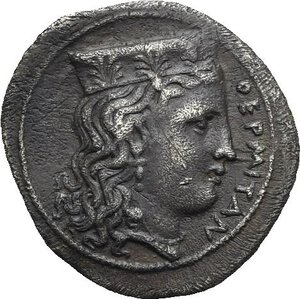
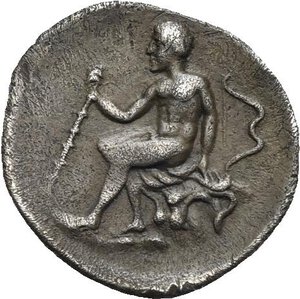
Sicily. Thermai Himeraiai. Circa 383-367 BC. Litra (Silver, 13.64 mm, 0.72 g). ΘΕΡΜΙΤΑΝ, Head of Hera right, wearing stephane and polos decorated with three palmettes, a pendant earring and a pearl necklace; within a linear circle. Rev. Herakles-Melkart naked, seated left on a rock covered by lion's skin, holding club; behind, bow. Campana CNAI III (partial), 164, 2A (this coin mentioned). Viola CNP 947 (same dies, but incorrect description). SNG ANS 1341 var. (flower in obverse). De Luynes 984 var. (monogram in obverse). McClean 2309 (same dies). Weber 1365 (same dies). Buceti 3C (same dies). HGC 2, 1614 (same, but incorrect description). Attractively toned. A fascinating head of Hera, engraved by a master in a refined Classic style. Good Very Fine. Rare.
Ex Gorny & Mosch 76, 22 April 1996, lot 39.
The city of Thermai Himeraiai was founded by Carthage using Punic settlers and the survivors of the original city of Himera that Carthage had destroyed in her campaigns against Selinos and Himera in the Second Sicilian War (410-404 BC). The new city was subject to Punic rule and this continued until the city surrendered to Rome towards the end of the First Punic War. The name Thermai Himeraiai is due to the existence of hot thermal springs nearby, still used today.
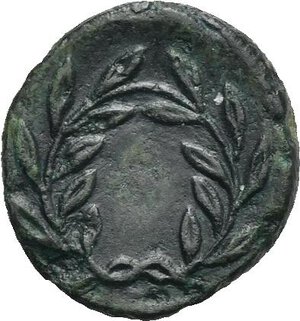
Lot # 136
-
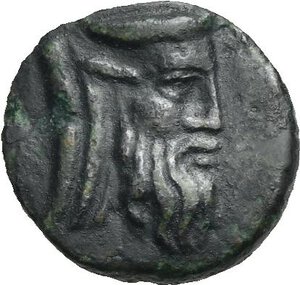
Sicily. Uncertain mint. Circa 350 BC. Bronze (AE, 12.12 mm, 1.15 g). Man-headed bull right. Rev. Laurel wreath. Calciati CNS -. SNG ANS -. SNG Copenhagen -. SNG Morcom -. Laffaille 117 (this coin illustrated). HGC 2, -. Beautiful dark green patina. Extremely Fine. Apparently an unpublished type in the standard references.
Ex Fritz Rudolf Künker 133, 11 October 2007, lot 7119; Münzen und Medaillen 76, 19 September 1991, lot 117.
From the Collection Maurice Laffaille.
The attribution of this anonymous bronze to Sicily is uncertain.
Caricamento altri risultati...