Roman Imperial Coins
Results from 18051 to 18100 of 32905
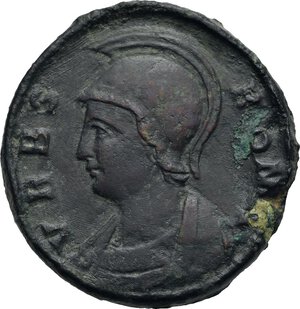

Lot # 406
-
Time of Constans and Constantius II. Medallion. Rome. Circa AD 340-350. (Bronze, 31.85 mm, 20.11 g). VRBS - ROMA, Helmeted bust of Roma left, wearing the imperial mantel. Rev. She-wolf left, suckling Romulus and Remus; above, two stars. RIC VIII 391. Cohen 15. Gnecchi III, p. 138, n. 6. Dark patina with corrosions. Smoothed and tooled areas of cuprite. Otherwise, About Very Fine. Very Rare.
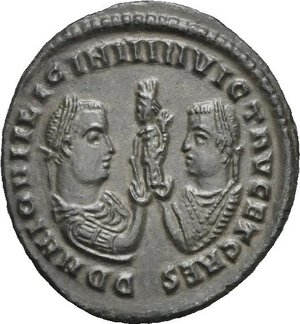
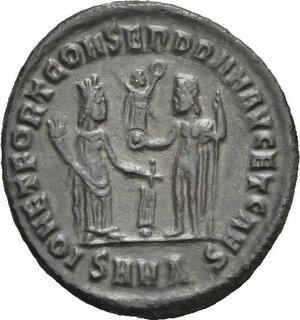
Lot # 405
-
Licinius I and Licinius II Caesar, 317-324. Follis. Nicomedia. AD 320 (Bronze, 21.82 mm, 3.62 g). DD NN IOVII LICINII INVICT AVG ET CAES, Confronted, laureate and draped busts of Licinius I and Licinius II, holding together and between them the statue of Fortuna, with rudder set on globe and cornucopiae. Rev. I O M ET FORT CONSER DD NN AVG ET CAES / SMNA, Fortuna on left, holding cornucopia and rudder set on globe, confronting with Jupiter on right, holding scepter and Victory on globe. RIC VII 38. Cohen 210. Homogeneous grey-green patina. Full legends. Extremely Fine. Extremely Rare.
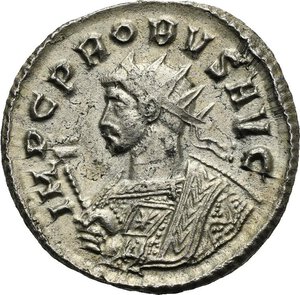
Lot # 404
-
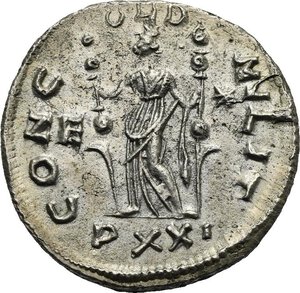
Probus, 276-282. Antoninianus. Ticinum. AD 281 (Silver, 22.05 mm, 4.07 g). IMP C PROBVS AVG, Radiate bust left, wearing imperial mantle and holding eagle tipped scepter. Rev. CONC - ORD - MILIT / E - * / PXXI, Concordia standing facing, head left, holding two standards. RIC V.2 480. Cohen 121. Lightly toned. Thick flan. Good Very Fine. Rare in silver.
Accompanied by purchase tags from Münzen & Medaillen Deutschland and Aes Rude.
Lot # 403
-
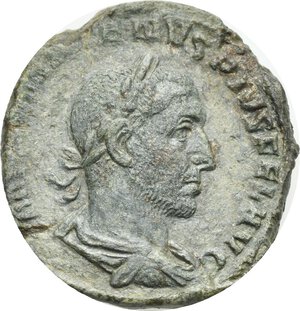
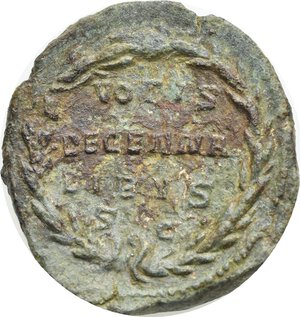
Aemilian, July - September 253. Sestertius. Rome. AD 253 (Bronze, 30.41 mm, 16.74 g). IMP AEMILIANVS PIVS FEL AVG, Laureate, draped and cuirassed bust right. Rev. VOTIS / DECENNA / LIBVS / S C, Legend within wreath. RIC IV 42a. Cohen 65. Banti 17. Untouched green patina, with iron spots. A beautiful portrait well struck. About Extremely Fine. Very rare and in nice condition for this very difficult issue.
Lot # 402
-
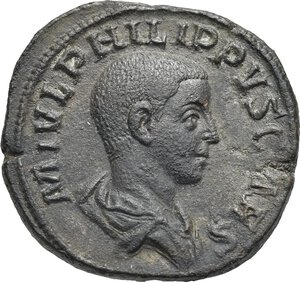
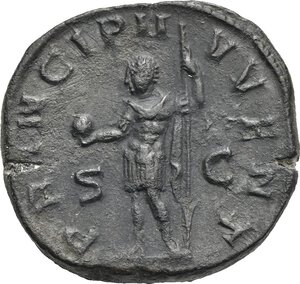
Philip II, as Caesar. Sestertius struck under his father Philip I. Rome. AD 244-246 (Bronze, 30.80 mm, 18.80 g). M IVL PHILIPPVS CAES, Draped bust right. Rev. PRINCIPI I - VVENT / S - C, The young Philip, in military dress, standing left, holding globe and spear. RIC IV.3 256a. Cohen 49. Banti 9. Dark patina. Lovely portrait. Good Very Fine.
Purchased from Frank Kovacs, Fixed Price List XVI, 1982, no. 354.
Lot # 401
-
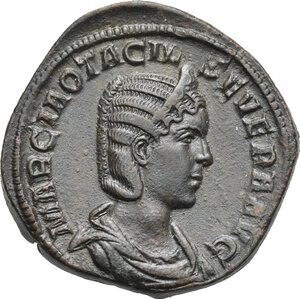
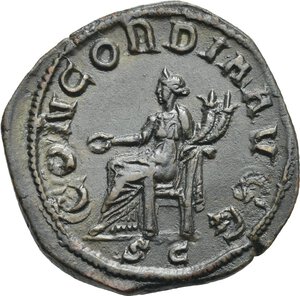
Otacilia Severa. Sestertius struck under her husband Philip I. Rome. AD 244-249 (Bronze, 31.20 mm, 16.97 g). MARCIA OTACIL - SEVERA AVG, Diademed and draped bust right. Rev. CONCORDIA AVGG / S C, Concordia seated left, holding patera and double cornucopiae. RIC IV.3 203a. Cohen 10. Dark brown patina. Well struck on a large flan. Nice portrait. About Extremely Fine.
From a Swiss Collection, formed before 2005.
Lot # 400
-
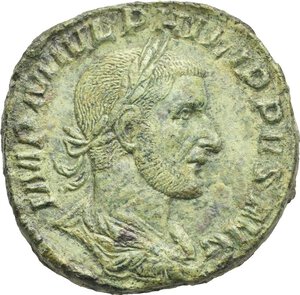
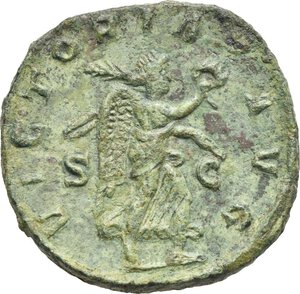
Philip I, 244-249. Sestertius. Rome. AD 244 (Bronze, 28.97 mm, 16.55 g). IMP M IVL PHILIPPVS AVG, Laureate, draped and cuirassed bust right. Rev. VICTORIA - AVG / S - C, Victory advancing right, holding wreath and palm branch. RIC IV.3 191a. Cohen 228. Untouched olive green patina. About Extremely Fine.
Lot # 399
-
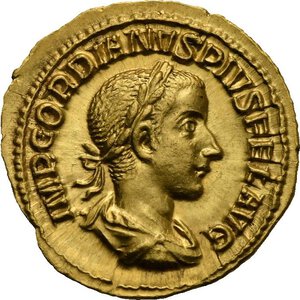
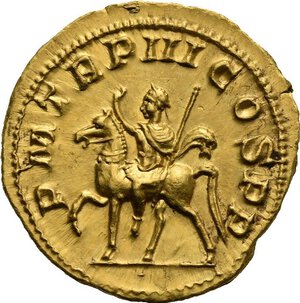
Gordian III, 238-244. Aureus. Rome. AD 240 (Gold, 19.1 mm, 4.85 g). IMP GORDIANVS PIVS FEL AVG, Laureate, draped and cuirassed bust right. Rev. P M TR P III COS P P, Emperor, in military dress, riding on horse left, holding spear and raising in salutation. RIC IV.3 80. Cohen 233. Calicó 3220. Well struck with underline luster. Nice portrait. Good Extremely Fine. Rare.
Lot # 398
-
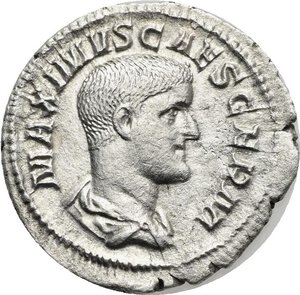
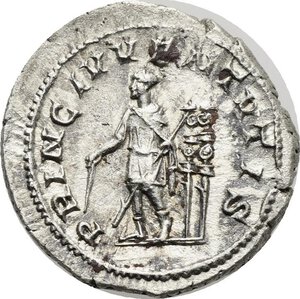
Maximus Caesar. Denarius struck under his father Maximinus I. Rome. AD 236-238 (Silver, 20.90 mm, 2.70 g). MAXIMVS CAES GERM, Draped bust right. Rev. PRINC IVVENTVTIS, Maximus standing left, holding baton and transverse spear, two standards behind. RIC IV.2 3. Cohen 10. BMCRE 211. Light toned. Slightly porous. About Extremely Fine.
Lot # 397
-
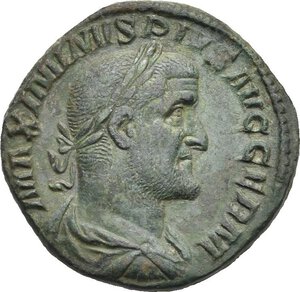
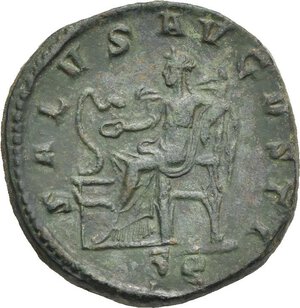
Maximinus I, 235-238. Sestertius. Rome. AD 236-237 (Bronze, 30.77 mm, 20.44 g). MAXIMINVS PIVS AVG GERM, Laureate, draped and cuirassed bust right. Rev. SALVS AVGVSTI / S C, Salus seated left, feeding serpent out of patera coiled around altar at her feet left. RIC IV.2 85. Cohen 92. BMCRE 175. Green patina. Good Very Fine.
Lot # 396
-
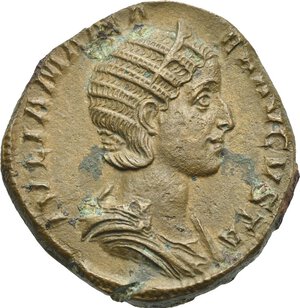
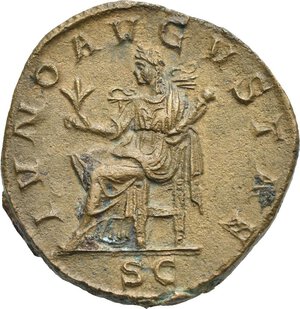
Julia Mamaea. Sestertius struck under her son Severus Alexander. Rome. AD 222-235 (Bronze, 29.69 mm, 18.89 g). IVLIA MAMA - EA AVGVSTA, Diademed and draped bust right. Rev. IVNO AVGVSTAE / S C, Juno seated left, holding flower and infant in swaddling clothes. RIC IV.2 683. Cohen 33. Banti 9. Riverine patina. Sharp reliefs and nice portrait. Good Extremely Fine.
Lot # 395
-
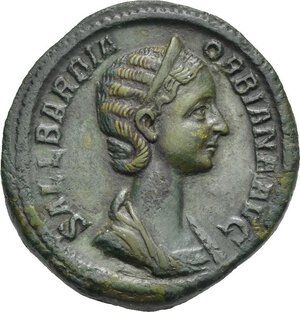
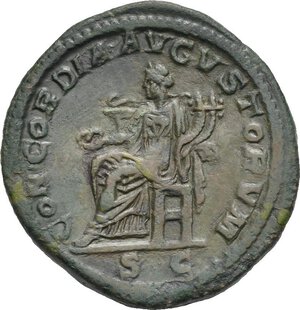
Orbiana. Sestertius struck under her husband Severus Alexander. Rome. AD 225 (Bronze, 32.55 mm, 24.92 g). SALL BARBIA - ORBIANA AVG, Diademed and draped bust right. Rev. CONCORDIA AVGVSTORVM / SC, Concordia seated left, holding patera and double cornucopiae. RIC IV.2 655. Cohen 4. BMCRE 293. Green and brownish tone with glossy finish. Attractive portrait in high relief. Good Very Fine. Rare.
Lot # 394
-
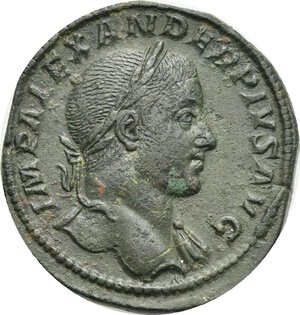
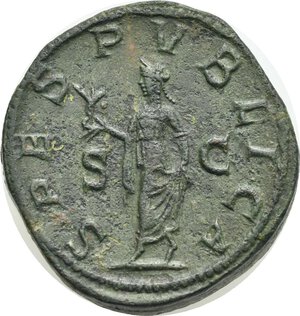
Severus Alexander, 222-235. Sestertius. Rome. AD 231-235 (Bronze, 30.29 mm, 26.94 g). IMP ALEXANDER PIVS AVG, Laureate bust right, slight drapery on shoulder. Rev. SPES PVBLICA / S - C, Spes advancing left, raising skirt and holding flower. RIC IV.2 648b. Cohen 548. BMCRE 902. Green patina. Very thick flan. Slightly porous. Otherwise, About Extremely Fine.
Lot # 393
-
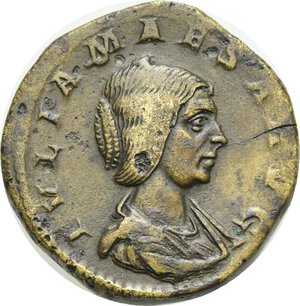
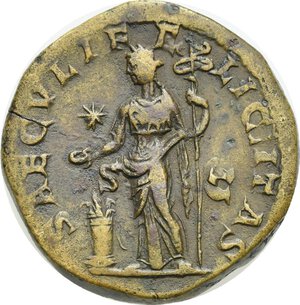
Julia Maesa. Sestertius struck under her grandson Elagabalus. Rome. AD 218-222 (Bronze, 31.41 mm, 23.41 g). IVLIA MAESA AVG, Draped bust right. Rev. SAECVLI F - ELICITAS / S - C, Felicitas standing left, holding long caduceus and sacrificing out of patera over lighted altar; star in left field. RIC IV.2 421. Cohen 47. Banti 10. Beautiful chestnut-brownish patina. Minor flan crack. Splendid portrait. Good Very Fine. Rare.
Lot # 392
-
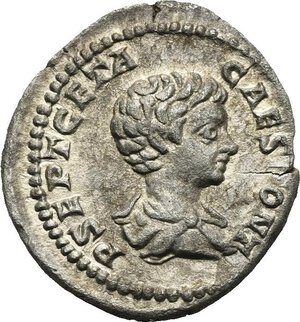
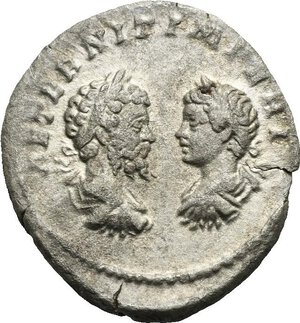
Geta, as Caesar. Denarius struck under his father Septimius Severus. Rome. AD 200-202 (Silver, 19.95 mm, 2.50 g). P SEPT GETA - CAES PONT, Draped bust right. Rev. AETERNIT IMPERI, Confronted busts of Septimius Severus and Caracalla. RIC IV.1 5. Cohen 1. BMCRE 214. Toned. Very Fine. Very Rare.
Lot # 391
-
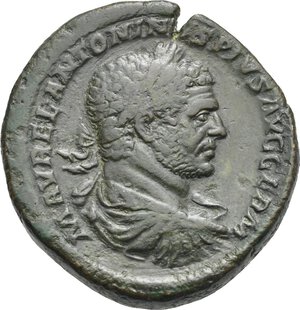
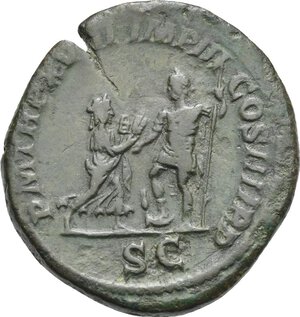
Caracalla, 211-217. Sestertius. Rome. AD 215 (Bronze, 31.98 mm, 26.46 g). M AVREL ANTONINVS PIVS AVG GERM, Laureate, draped and cuirassed bust right. Rev. P M TR P XVIII IMP III COS IIII PP / S C, Emperor, in military dress, standing left, holding spear and resting left foot on crocodile, facing to Isis advancing right, holding ears of grain and sistrum to present to him. RIC IV.1 544. Cohen 334. BMCRE 286. Dark green patina. Flan edge split. Expressive portrait. Good Very Fine. Rare.
From the Giovanni Maria Staffieri Collection; ex Astarte 1, 11 May 1998, lot 279.
From the pen of G.M.S.: This important and rare sestertius of Caracalla, in excellent condition and with a fine patina, features first of all a severe and expressive portrait of the emperor, combining both courtly and realistic styles. On the reverse, along the exergual line, we find a scene depicting Caracalla on the right, in the guise of a military leader, standing left, holding a sceptre (or spear) in his left hand, and placing his right foot upon a crocodile. He receives the homage of Isis, who stands facing him on the left, holding a sistrum and extending two ears of wheat toward the emperor. This is not a reference to a past event, but rather a clear anticipation of the imperial voyage to Egypt, which would take place in AD 216. There, Caracalla would become infamous for the brutal repression of the people of Alexandria, who had dared to mock him—especially for the fratricide of Geta and the cult of Alexander the Great which he sought to appropriate.
Lot # 390
-
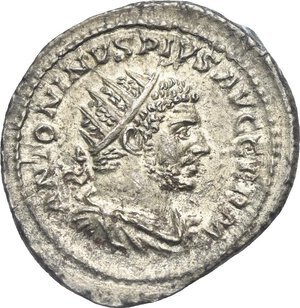
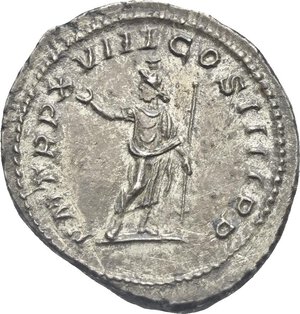
Caracalla, 211-217. Antoninianus. Rome. AD 215 (Silver, 23.78 mm, 5.54 g). ANTONINVS PIVS AVG GERM, Radiate, draped and cuirassed bust right. Rev. P M TR P XVIII COS IIII P P, Serapis standing right, head turned left, holding transverse scepter and raising hand. RIC IV.1 263e. Cohen 295. BMCRE 130. Nicely toned. About Extremely Fine.
Lot # 389
-
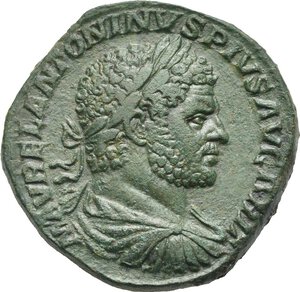
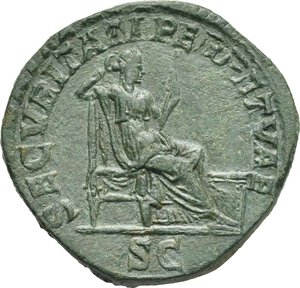
Caracalla, 211-217. Sestertius. Rome. AD 210-213 (Bronze, 31.64 mm, 23.26 g). M AVREL ANTONINVS PIVS AVG BRIT, Laureate, draped and cuirassed bust right. Rev. SECVRITATI PERPETVAE / S C, Securitas seated right on throne with altar to right, holding sceptre. RIC IV 512a. Cohen 576. BMCRE 248. Lovely natural olive green patina. Well struck. About Extremely Fine.
Lot # 388
-
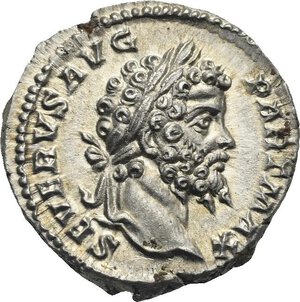
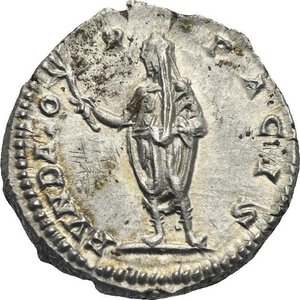
Septimius Severus, 193-211. Denarius. Rome. AD 200-201 (Silver, 18.20 mm, 3.39 g). SEVERVS AVG PART MAX, Laureate head right. Rev. FVNDATO - R - PACIS, Emperor, togate and veiled, standing left, holding olive branch and scroll. RIC IV.1 160. Cohen 203. BMCRE 190. Hill 529. Well toned. Very nice portrait. Extremely Fine.
Lot # 387
-
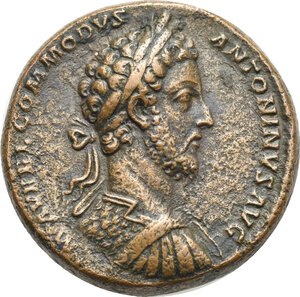
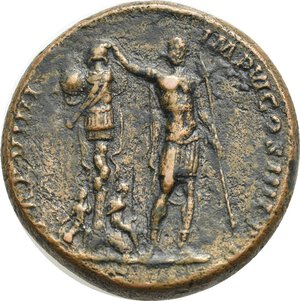
Commodus, 177-192. Medallion. Rome. Circa AD 184. (Bronze, 36.92 mm, 41.88 g). M AVREL COMMODVS - ANTONINVS AVG, Laureate and cuirassed bust right. Rev. TR P VIIII - IMP VI COS IIII P P, Commodus in military attire, holding spear and resting hand on a helmet placed atop a trophy; at the base of which, two small captives are bound. Cohen 913. BMCRM -. Gnecchi II, p. 69, n. 155. Well struck with full legends and excellent overall details. Typical 19th-century collection cleaning, with the patina removed. The surface shows a bronze tone with dark spots from aged wax. Good Very Fine. Extremely Rare type with the sixth salutatio imperatoria.
The reverse presents Commodus clad in full military dress, gripping a spear and triumphantly presiding over a grand trophy of war. At its base, two defeated captives crouch in submission, emphasizing the emperor’s dominance. Far larger than the prisoners, Commodus looms above them — a deliberate exaggeration that reflects not just Roman victory iconography, but the emperor’s own fixation with strength and heroic stature. The scene transforms the medallion into a bold statement of imperial might and personal vanity.
Lot # 386
-
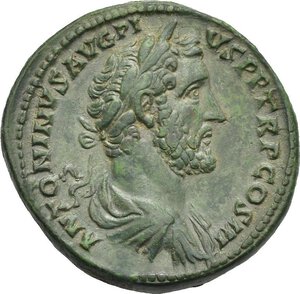
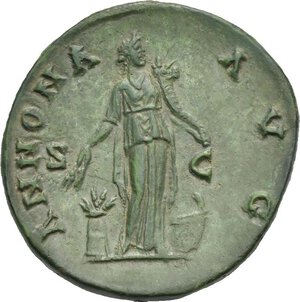
Antoninus Pius, 138-161. Sestertius. Rome. AD 140-144 (Bronze, 33.27 mm, 22.34 g). ANTONINVS AVG PI - VS P P TR P COS III, Laureate and draped bust right. Rev. ANNONA - AVG / S - C, Annona standing facing, head right, holding ears of grain and cornucopia, modius with ears of grain left, prow of galley right. RIC III 597b. Cohen 37. BMCRE 1226. Even green tone with glossy finish. Beautiful portrait. About Extremely Fine.
Lot # 385
-
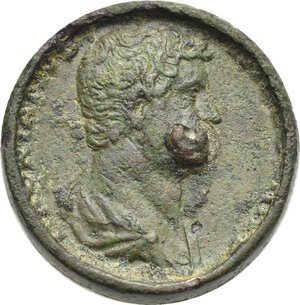
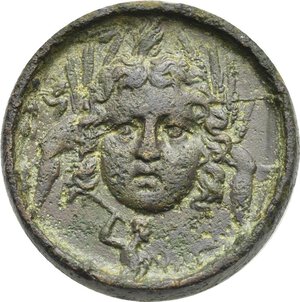
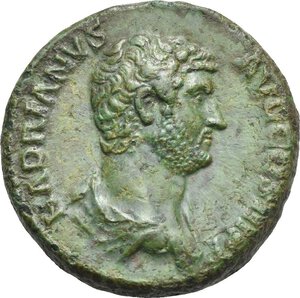
Hadrian, 117-138. "Proto-Contorniate" Medallic Sestertius. Rome. AD 130-138 (Bronze, 28.44 mm, 19.08 g). HADRIANVS - [AVG COS] III [P P], Bareheaded and draped bust right. Rev. [SICILIA], Charybdis represented as a triskeles and a Medusa-like face, with ears of wheat among the hair instead of snakes; below is the monster Scylla wielding what is probably the rudder; on the left, above the leg of the triskeles, a musician playing the aulos is visible, facing left (a detail never noticed before); the rest of the elements described by previous numismatists, namely a temple on hill on the left and a lighthouse (also interpreted as a helmet and standing figure) on the right, are not visible due to the hammered edge. RIC II.3 2896. Cohen 1141 (250 Francs). Banti -. Gnecchi III, p. 19, n. 87, pl. 145, n. 10 (only one specimen). Untouched green patina, with a red cuprite crystal on the emperor's lips. Small die break on the reverse, which probably caused the coin to be minted in a very limited number of specimens. Almost unattainably Rare: the third recorded specimen, with the other two held in institutional collections. Despite the hammered edge, it represents the finest example among all in terms of preservation.
Once his power was sufficiently consolidated, Hadrian undertook a series of travels throughout the Empire (Gaul, Germany, Britain, Spain, Mauretania) to personally assess the needs and take the necessary measures to make the defensive system efficient. In 128, he inspected the province of Africa, and probably during this visit, he had the opportunity to tour Sicily. If we are to judge by the reverse of this Medallic Sestertius to understand the outcome of his Sicilian stay, we can confidently say it was extraordinary—both a mystical and archaic experience, much like it still is today. The obverse portrait features an extremely detailed representation of the hair, unlike the usual bareheaded portrait seen on Hadrian's coins. The curls above the forehead undoubtedly reflect the sublime style of the engraver known as the 'Alphaeus Master.'
The edge of the coin has been subtly worked to create a raised rim, a characteristic sometimes associated with Proto-Contorniates. This Medallic Sestertius has lived more than one life. At some point—though perhaps not for the last time—it may have been repurposed as a presentation piece, possibly set into a phalera for display.
Lot # 384
-
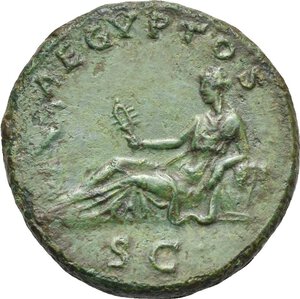
Hadrian, 117-138. As or Dupondius. Rome. AD 134-138 (Bronze, 26.85 mm, 12.84 g). HADRIANVS - AVG COS III P P, Draped bust right. Rev. AEGYPTOS / SC, Egypt reclining left on basket, holding sistrum and resting elbow on basket of fruit; in front, ibis standing on a column. RIC II.3 1604. Cohen 110. BMCRE 1700. Glossy green patina. Nice portrait. About Extremely Fine.
From the Giovanni Maria Staffieri Collection; ex Bertolami Fine Arts 67, 11 July 2019, lot 421.
From the pen of G.M.S.: A finely preserved bronze from the same Roman series commemorating Hadrian’s historic journey to Egypt in AD 130–131—a voyage that also marked the tragic death of his beloved Antinous. The obverse features a bust of Hadrian of exceptional quality and artistic merit, notably without the customary laurel wreath. This stylistic choice, along with the refinement of the engraving, confirms the hand of a master artist steeped in the Roman-Hellenistic tradition. On the reverse, the figure of the divine Isis is once again delicately shown reclining on a lectisternium, rendered with the same graceful style.
Lot # 383
-
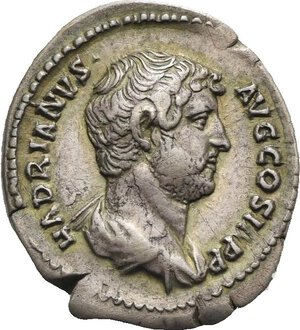
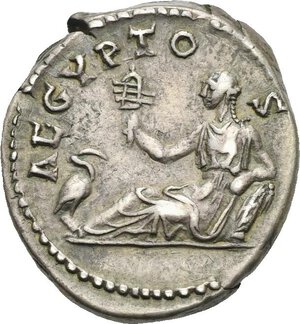
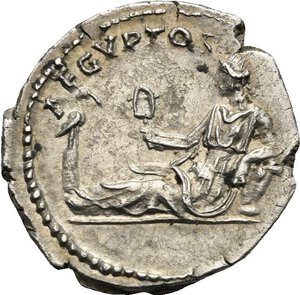
Hadrian, 117-138. Denarius. Rome. AD 134-138 (Silver, 17.52 mm, 3.45 g). HADRIANVS - AVG COS II (sic!) P P, Draped bust right. Rev. AEGYPTO - S, Egypt reclining left on basket, holding sistrum and resting elbow on basket of fruit; in front, ibis. RIC II.3 1486. Cohen 102. BMCRE 800. Cabinet tone. About Extremely Fine.
From the Giovanni Maria Staffieri Collection.
From the pen of G.M.S.: Here is another silver denarius of Hadrian that pays homage to the emperor’s physical and cultural closeness to the imperial province of Egypt. As head of state, he exercised authority over the region with the historical—and symbolically enduring—dignity of a pharaoh, while governance was entrusted to a prefect acting with the powers of a viceroy. The obverse differs from the previous specimen by depicting a draped bust with a bare head, and it features the erroneous legend COS II instead of the correct COS III. On the reverse, Isis once again appears reclining with the sistrum, but this time the ibis is freely positioned on the exergual line. The reverse legend also differs in layout, with the S of AEGYPTOS notably detached. All these distinctive features make this coin a particularly rare variant, in addition to its excellent state of preservation.
Lot # 382
-
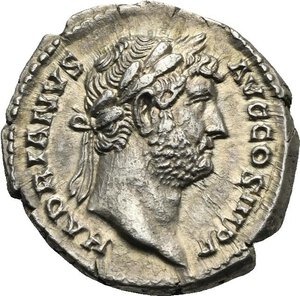
Hadrian, 117-138. Denarius. Rome. AD 134-138 (Silver, 18.61 mm, 3.05 g). HADRIANVS - AVG COS III P P, Laureate head right. Rev. AEGYPTOS, Egypt reclining left on basket, holding sistrum and resting elbow on basket of fruit; in front, ibis standing on a column. RIC II.3 1481. Cohen 103. BMCRE 797. Lightly toned. Amazing specimen. Good Extremely Fine.
From the Giovanni Maria Staffieri Collection; ex Bertolami Fine Arts 67, 11 July 2019, lot 420.
From the pen of G.M.S.: This silver denarius of Hadrian belongs to a series of imperial coins from the Latin area, also issued in bronze and gold, designed to commemorate the emperor's journey to the East and Egypt in AD 129-131. The coin is in a splendid state of preservation: the senile portrait of Hadrian is reproduced with masterly style, as is the Isis with chiton and peplos lying softly on the lectisternium and bearing the canonical sistrum. Singular on the left is the image of the small ibis perched on the capital of a small column in front of the deity.
Lot # 381
-
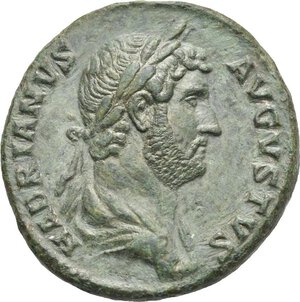
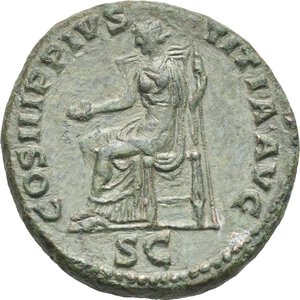
Hadrian, 117-138. Sestertius. Rome. AD 129-130 (Bronze, 26.37 mm, 12.65 g). HADRIANVS - AVGVSTVS, Laureate and draped bust left. Rev. COS III P P IVS - TITIA AVG / S C, Justitia seated left, holding patera and sceptre. RIC II.3 1219 var. (different distribution of reverse legend). Banti 471 var. (same). Green patina, somewhat gently smoothed. Good Very Fine. Very Rare variant.
Lot # 380
-
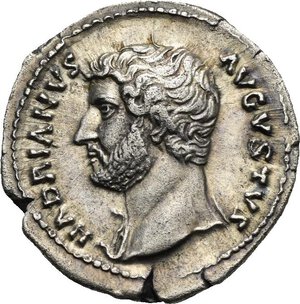
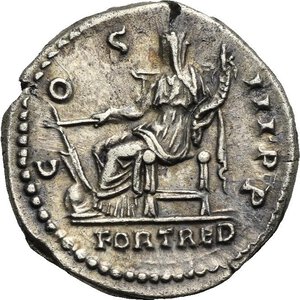
Hadrian, 117-138. Denarius. Rome. AD 129-130 (Silver, 19.01 mm, 3.36 g). HADRIANVS - AVGVSTVS, Bareheaded bust left, slight drapery on shoulder. Rev. C - OS - III P P / FORT RED, Fortuna seated left, holding rudder set on globe and cornucopiae. RIC II.3 1090. Strack 341. BMCRE 547. Nicely toned. Good Very Fine. Very Rare.
Lot # 379
-
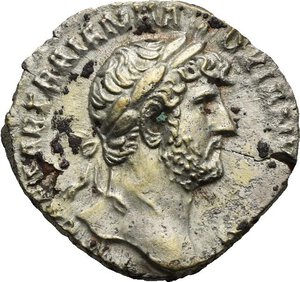
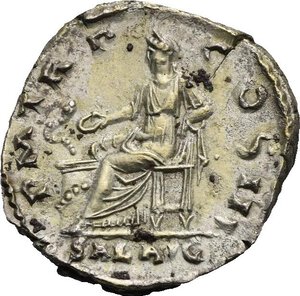
Hadrian, 117-138. Denarius. Rome. AD 120-121 (Silver, 18.82 mm, 3.12 g). [IMP CAES]AR TRAIAN HADRIAN[VS AVG], Laureate head right. Rev. PM TR P - COS III / SAL AVG, Salus seated left, feeding out of patera serpent entwined around altar. RIC II.3 374. RIC II 137a. Cohen 1324. BMCRE 314. Toned with deposits. About Extremely Fine.
Lot # 378
-
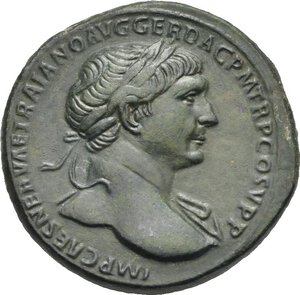
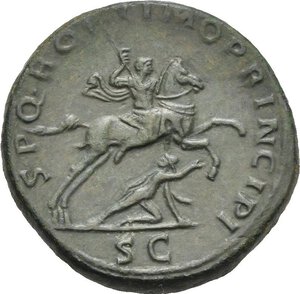
Trajan, 98-117. Sestertius. Rome. AD 104-107 (Bronze, 32.83 mm, 23.97 g). IMP CAES NERVAE TRAIANO AVG GER DAC P M TR P COS V P P, Laureate bust right, slight drapery on shoulder. Rev. SPQR OPTIMO PRINCIPI / S C, Emperor, in military dress, on horseback prancing right, throwing javelin at Dacian enemy fallen under the horse. RIC II 534. Cohen 504. BMCRE 834. Even green tone with glossy finish. Good Very Fine.
Lot # 377
-
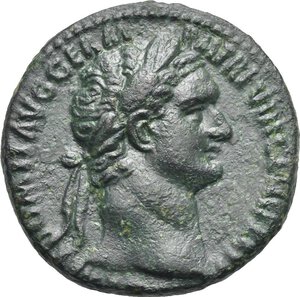
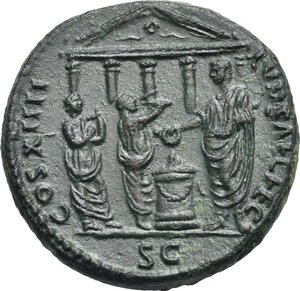
Domitian, 81-96. As. Rome. October AD 88 - Secular Games Issue (Bronze, 28.06 mm, 12.35 g). IMP CAES DOMIT AVG GERM - P M TR P VIII CENS PER P P, Laureate head right. Rev. COS XIIII - LVD SAEC FEC / S C, Domitian standing left, sacrificing over lit and garlanded altar; on left, lyre player and flute player; tetrastyle temple in the background. RIC II.1 623. Cohen 85. BMCRE 434. Untouched dark green patina. Beautiful and finely detailed reverse composition. Good Very Fine / Extremely Fine.
Lot # 376
-
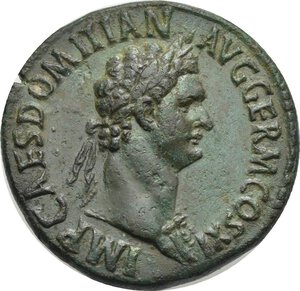
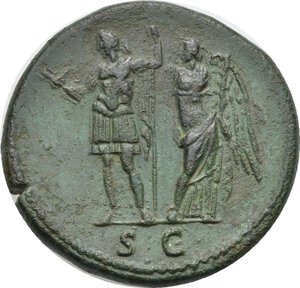
Domitian, 81-96. Sestertius. Rome. AD 85 (Bronze, 34.36 mm, 21.98 g). IMP CAES DOMITIAN - AVG GERM COS XI, Laureate head right, with aegis. Rev. S C, Domitian standing left in military dress, holding thunderbolt and spear, crowned by Victory standing behind him. RIC II.1 283. Cohen -. BMCRE -. Green patina. Large flan. Good Very Fine. Very Rare type for the eleventh consulship.
Lot # 375
-
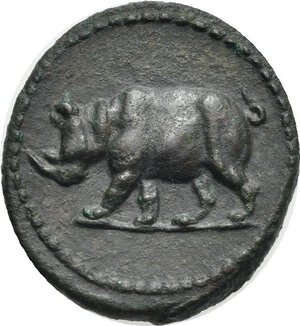
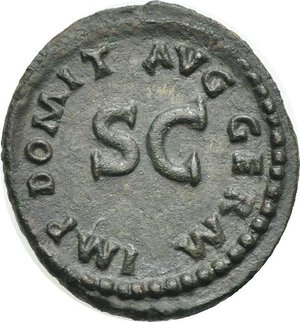
Domitian, 81-96. Quadrans. Rome. AD 84-85 (Bronze, 18.67 mm, 2.84 g). Rhinoceros standing left. Rev. IMP DOMIT AVG GERM, Around S C. RIC II.1 250. Cohen 674. BMCRE 498. Untouched and uniform green patina. A well-centered specimen in excellent preservation, certainly one of the finest known. About Uncirculated.
Lot # 374
-
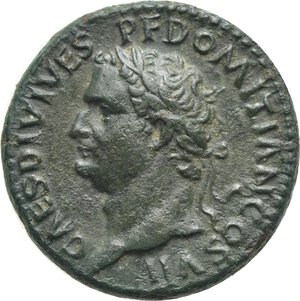
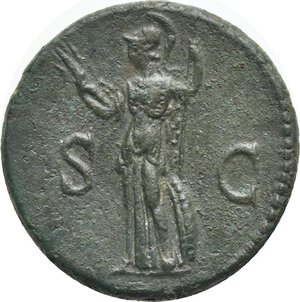
Domitian, as Caesar. As struck under his brother Titus. Rome. AD 80-81 (Bronze, 26.57 mm, 10.58 g). CAES DIVI VES - P F DOMITIAN COS VII, Laureate head left. Rev. S - C, Minerva standing left, holding thunderbolt, spear and grounded shield. RIC II.1 348. Cohen 443. BMCRE 247 var. Untouched green patina. Nice portrait. A full Good Very Fine.
Lot # 373
-
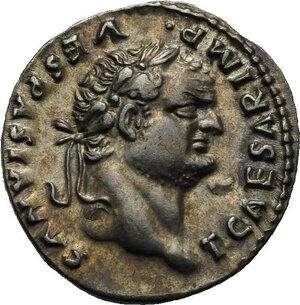
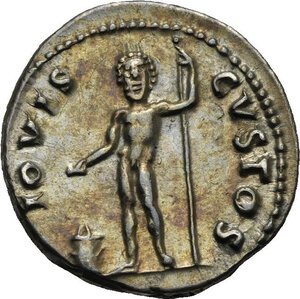
Titus, as Caesar. Denarius struck under his father Vespasian. Rome. AD 76 (Silver, 18.72 mm, 3.52 g). T CAESAR IMP - VESPASIANVS, Laureate head right. Rev. IOVIS - CVSTOS, Jupiter standing facing nude, holding scepter and patera over lighted altar. RIC II.1 874. Cohen 106. BMCRE 305. Old cabinet tone. Expressive portrait. About Extremely Fine.
Acquired from ACAMA in 2005.
Lot # 372
-
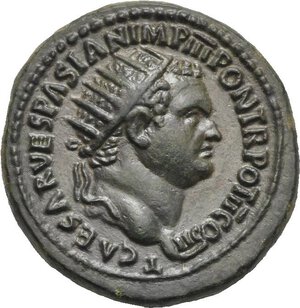
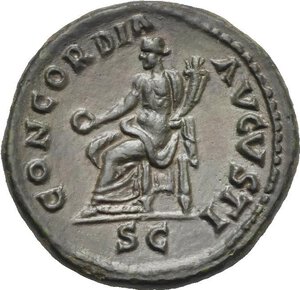
Titus, as Caesar. Dupondius struck under his father Vespasian. Rome. AD 72 (Bronze, 27.24 mm, 14.85 g). T CAES VESPASIAN IMP III PON TR POT II COS II, Radiate head right. Rev. CONCORDIA - AVGVSTI / S C, Concordia seated left, holding patera and cornucopiae. RIC II.2 481. Cohen -. BMCRE -. BN 581. Even grey tone with glossy finish. Attractive portrait struck in high relief. Good Very Fine. Very Rare.
Lot # 371
-
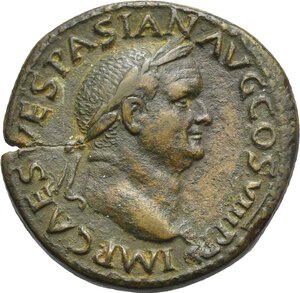
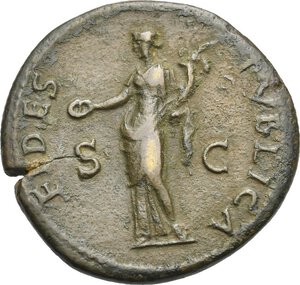
Vespasian, 69-79. Dupondius. Lugdunum. AD 77-78 (Bronze, 28.40 mm, 11.88 g). IMP CAES VESPASIAN AVG COS VIII P P, Laureate head right, globe at point of neck. Rev. FIDES - PVBLICA / S - C, Fides standing left, holding patera and cornucopia. RIC II.1 1210. Cohen 166. BMCRE 828. Nice brownish patina. Minor flan slot. Nice portrait. Good Very Fine.
Lot # 370
-
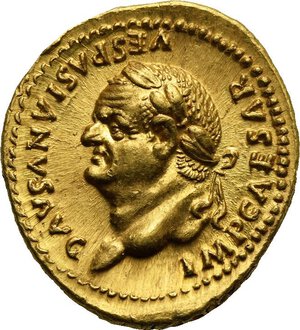
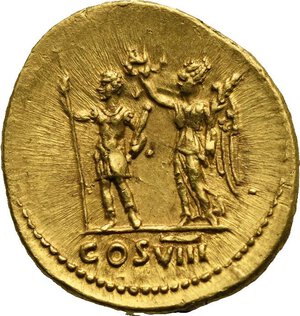
Vespasian, 69-79. Aureus. Rome. AD 77-78 (Gold, 20 mm, 7.34 g). IMP CAESAR - VESPASIANVS AVG, Laureate head left. Rev. Vespasian standing left, holding spear and parazonium, crowned by Victory standing left, holding wreath and palm; in exergue, COS VIII. RIC II.1 936. Cohen 131. BMCRE 205. BN 183. Calicó 625. Very well struck with an impressive portrait and highly lustrous. Good Extremely Fine.
From a Swiss Collection, formed before 2005.
Lot # 369
-
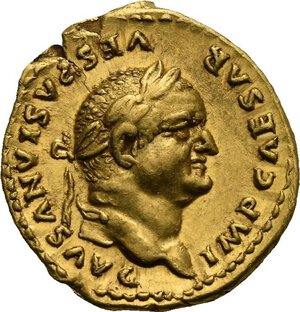
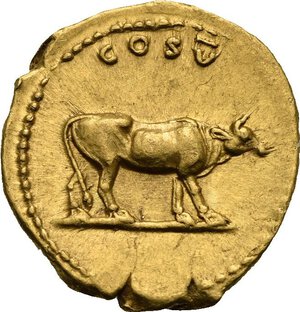
Vespasian, 69-79. Aureus. Rome. AD 76 (Gold, 19.8 mm, 7.29 g). IMP CAESAR - VESPASIANVS AVG, Laureate head right. Rev. COS V, Heifer walking right. RIC II.1 843. Cohen 105. BMCRE 132 (cf. note). BN -. Calicó 618. Beautiful portrait and remains of original luster. Nearly Extremely Fine. Extremely Rare with the head to right.
From a Swiss Collection, formed before 2005.
Lot # 368
-
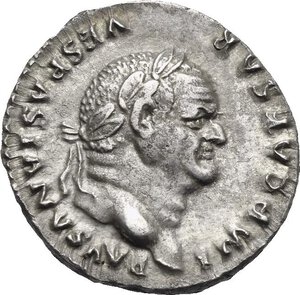
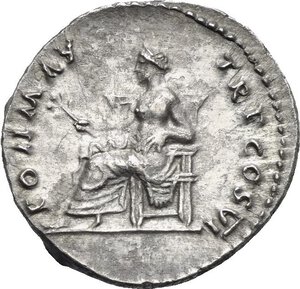
Vespasian, 69-79. Denarius. Rome. AD 75 (Silver, 18.96 mm, 3.28 g). IMP CAESAR - VESPASIANVS AVG, Laureate head right. Rev. PON MAX - TR P COS VI, Pax seated left, holding branch. RIC II.1 772. Cohen 366. BMCRE 161. Attractive toning. About Extremely Fine.
Lot # 367
-
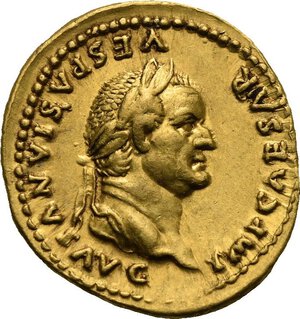
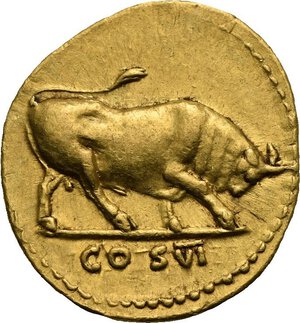
Vespasian, 69-79. Aureus. Rome. AD 75 (Gold, 21 mm, 7.31 g). IMP CAESAR - VESPASIANVS AVG, Laureate head right. Rev. Bull butting right; in exergue, COS VI. RIC II.1 768. Cohen 112 corr. (obverse legend). BMCRE 159. BN 137. Calicó 620. Nice, centered, portrait. A full Good Very Fine.
From a Swiss Collection, formed before 2005.
Lot # 366
-
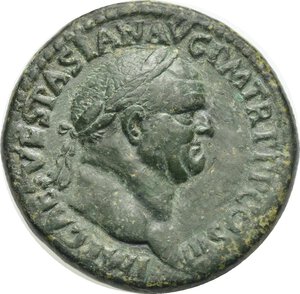
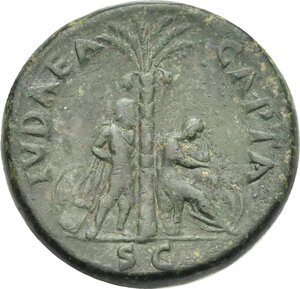
Vespasian, 69-79. Sestertius. Rome. AD 71 (Bronze, 32.88 mm, 25.01 g). IMP CAES VESPASIAN AVG P M TR P P P IMP COS III, Laureate head right. Rev. IVDAEA - CAPTA / S C, Palm tree; to left, bound male captive standing right; to right, Judaea seated right on cuirass in attitude of mourning; both figures surrounded by arms. RIC II.1 159. Cohen 233. Hendin 6530. BMCRE 535. Beautiful green patina. Minor tooling. Good Very Fine.
Lot # 365
-
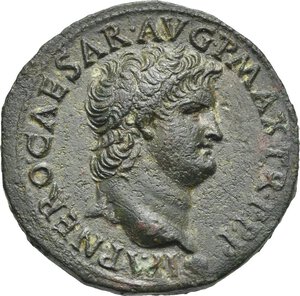
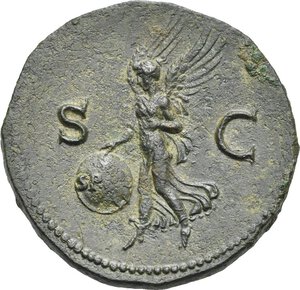
Nero, 54-68. As. Lugdunum. Circa AD 66 (Bronze, 29 mm, 10.57 g). IMP NERO CAESAR AVG P MAX TR P P P, Bare head right, globe at point of bust. Rev. S - C, Victory flying left, holding a round shield inscribed S P Q R. RIC I 543. Cohen 302. BMCRE 381. Attractive dark green patina. About Extremely Fine.
From the Molard Collection, Switzerland.
Lot # 364
-
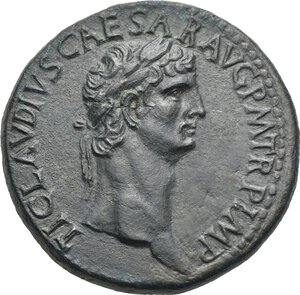
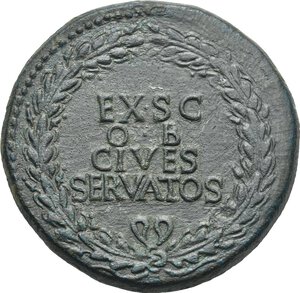
Claudius, 41-54. Sestertius. Rome. AD 41-42 (Bronze, 35.27 mm, 26.37 g). TI CLAVDIVS CAESAR AVG P M TR P IMP, Laureate head right. Rev. EX S C / OB CIVES / SERVATOS, Within oak wreath. RIC I 96. Cohen 39. BMCRE 115. Superb dark green patina. One of the most refined portraits. Extremely Fine.
Ex Gorny & Mosch 141, 10 October 2005, lot 259.
Lot # 363
-
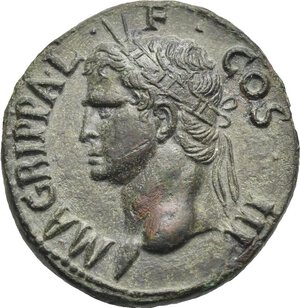
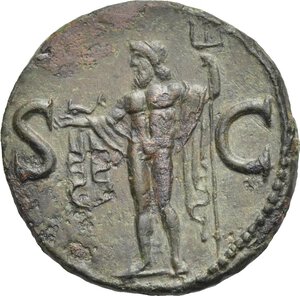
Agrippa, died AD 12. As struck under Caligula. Rome. AD 37-41 (Bronze, 29.19 mm, 12.60 g). M AGRIPPA L - F COS III, Head left, wearing rostral crown. Rev. S - C, Neptune standing left, holding small dolphin and trident. RIC I 58. Cohen 3. BMCRE (Tiberius) 161. Untouched green patina, with some areas of smoothed cuprite. An old, patinated scratch on the obverse. Among the most refined Agrippa's portraits. About Extremely Fine.
From the Molard Collection, Switzerland.
Lot # 362
-
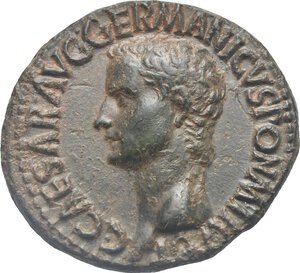
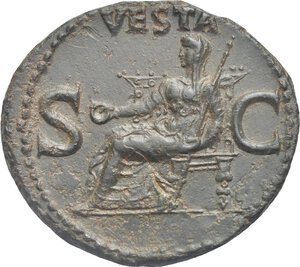
Gaius, 37-41. As. Rome. AD 37-38 (Bronze, 29.52 mm, 10.73 g). C CAESAR AVG GERMANICVS PON M TR POT, Bare head left. Rev. VESTA / S - C, Vesta veiled and draped seated left on decorated throne, holding patera and scepter. RIC I 38. Cohen 27. BMCRE 45. Glossy green-brownish patina. Beautiful Caligula's portrait. About Extremely Fine.
Lot # 361
-
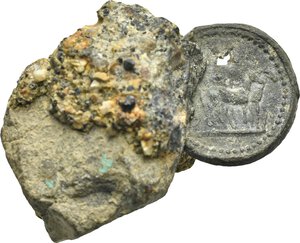
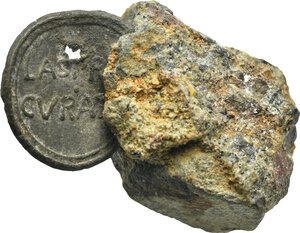
Time of Tiberius. Tessera. Rome. Circa AD 15-24 (Lead, 20.08 mm, 22.16 g). Slow chariot or biga advancing right. Rev. L ASPR[...] / CVRAT[...]. Ficoroni -. Rostovtsev -. Overbeck -. Turcan, Nigra Moneta -. Arzone & Marinello, Lead Tokens of Museo di Castelvecchio -. Baratta, Instrumenta Inscripta VIII -. Embedded in Roman opus caementicium. Minor metal loss. Otherwise, Extremely Fine. Unpublished and possibly Unique.
The reverse mentions Lucius (Nonius) Asprenas, who could be the consul of 6 AD or, more likely, his son, who held the consulship in 29 AD. The latter was involved, along with the Legio III Augusta, in the construction of a road in Tacape, Africa. The same Asprenas also served as Curator locorum publicorum iudicandorum (Curator of Public Land Disputes), being part of a special commission tasked with resolving boundary conflicts between public and private property. It is possible that this tessera was issued to commemorate a celebration related to the recovery of private land for public use. A similar event is also attested by several inscriptions found in various areas of Rome (CIL 06, 01267a-b, 31573-4, 37037), dated between AD 15 and 24.
Lot # 360
-
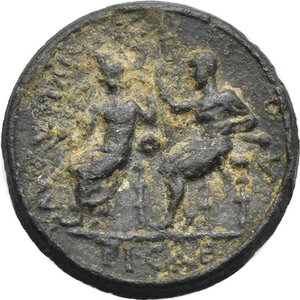
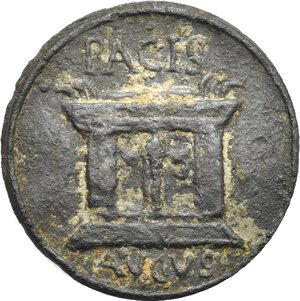
Tiberius, 14-37. Tessera. Rome. Circa AD 14 (Lead, 19.71 mm, 2.32 g). Tiberius Caesar and Livia seated on a throne left; Tiberius, on the right, holds scepter; in the exergue and in the right field: TI CAE - SA; Livia, on the left, holds a scepter and a branch (?); in the left field: IVLI - A AVG. Rev. PACIS / AVGVS, The Ara Pacis Augustae: altar-enclosure with ornamented top and central door. Ficoroni -. Rostovtsev -. Overbeck -. Turcan, Nigra Moneta -. Arzone & Marinello, Lead Tokens of Museo di Castelvecchio -. Baratta, Instrumenta Inscripta VIII -. Dark Tiber patina. Full Very Fine. Unpublished and possibly Unique.
The Ara Pacis was commissioned by the Roman Senate in 13 BC to honor Augustus' return to Rome after three years in Hispania and Gaul, and was consecrated in 9 BC. Years later, in AD 4, Tiberius was adopted by Augustus, and his name was changed from Tiberius Claudius Nero to Tiberius Iulius Caesar. The identity of the Julia depicted at his side can only be that of his mother, Livia Drusilla, who had been Augustus’ wife since 38 BC. At that time, Tiberius — born from Livia’s previous marriage — was only two years old. It should be noted that Livia assumed the name Julia only after Augustus' death in AD 14, when she was granted the title of Augusta by his will; during Augustus' lifetime, she continued to be known simply as Livia. Moreover, Tiberius' marriage to Julia Major, Augustus’ daughter, had ended in divorce six years before his adoption as Caesar. We are therefore inclined to associate the issuance of this tessera with the festivities celebrating the beginning of Tiberius' principate, which took place on September 17, AD 14, amid grand celebrations.
Lot # 359
-
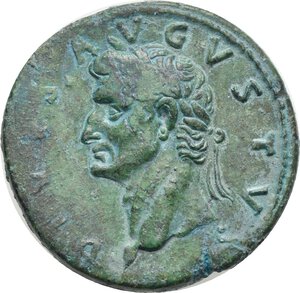
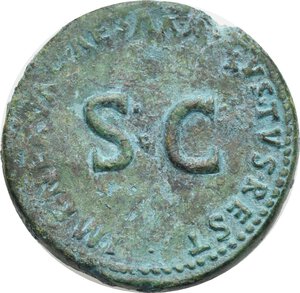
Divus Augustus, died AD 14. Sestertius struck under Nerva. Rome. AD 97-98 (Bronze, 34.85 mm, 26.49 g). DIVVS AVGVSTVS, Laureate head of Augustus left. Rev. IMP NERVA CAESAR AVGVSTVS REST, around S C. RIC II 135. Cohen 569. BMC Nerva 149 note. Untouched green patina. Powerful portrait with minor flattening and mint plier marks. Otherwise, Good Very Fine. Rare.
Lot # 358
-
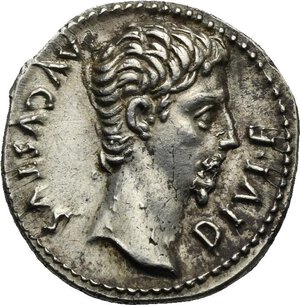
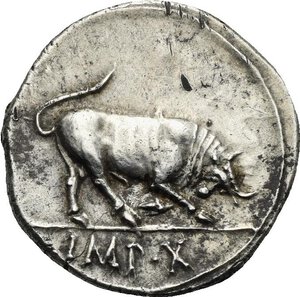
Augustus, 27 BC - AD 14. Denarius. Lugdunum. 15-13 BC (Silver, 19.07 mm, 3.84 g). AVGVSTVS - DIVI F, Bare head right. Rev. Bull butting right; in exergue, IMP X. RIC I 167a. Cohen 137. BMCRE 451. Toned. Some scattered marks and a die break on the obverse, across Augustus' mouth. Otherwise, Extremely Fine.
Lot # 357
-
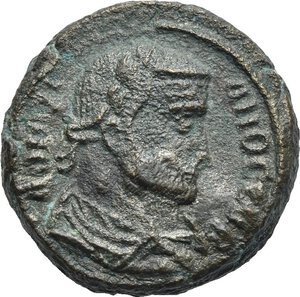
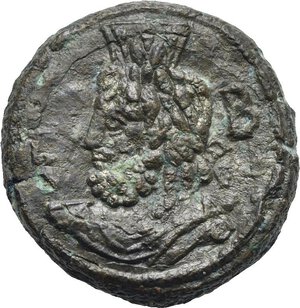
Egypt, Alexandria. Domitius Domitianus, 296-298. Tetradrachm. (Bronze, 21.97 mm, 10.56 g). Dated RY 2 = AD 297/8. AOMЄTIANOC CЄB Draped and cuirassed bust right. Rev. Draped Serapis bust left wearing kalathos on head; L B (date) across fields. Geissen -. Milne-.BMC 2625 + Plate XIII (reverse illustrated). Dattari-Savio 10820 (this specimen). Emmett 4243 (5). Traces of silvering on obverse. Second known and unique specimen in private hands.
Ex Giovanni Dattari collection. Ex NAC, Auction Q, 06.04.2006, lot 2048.
We are fast approaching the sunset of the glorious Egyptian monetary autonomy embodied during the first three centuries of the Roman Empire by the mint of Alexandria. My paper “Testimonianze sulla fine della monetazione autonoma alessandrina (296-298 d. C.)" presented at the 13th International Congress in Madrid in 2003 (see bibliography), investigate further the topic. The suspension of the autonomous coinage in August 296 AD and the unpopular monetary and fiscal reforms decreed in 296-297 AD by Diocletian, gave rise to the Alexandrian revolt led by Domitius Domitian, who took possession of the mint and proclaimed himself sovereign, minting in his short period in power (May 297-April 298 AD) coins first in the new ‘Latin’ genre and then, in his second official year in power (August 297-April 298 AD), of the autonomous type of the earlier tradition, in an extreme but now futile attempt to restore it. To this very rare series marked L B = year 2, belongs our tetradrachm, of which only two specimens are known, one kept in the British Museum in London and the other, the only one in private hands, which comes from the distinguished collection of Giovanni Dattari, here in this collection. The presence on the reverse of the bust of Serapis Soter, the greatest Greek-Egyptian deity and protector of the capital city of Alexandria, should have supported the revolution of Domitius Domitian, but history has instead ordered the restoration of the Tetrarchy and the new economic-social course imposed by Diocletian.
Results from 18051 to 18100 of 32905