Roman Imperial Coins
Results from 18101 to 18150 of 32905
Lot # 356
-
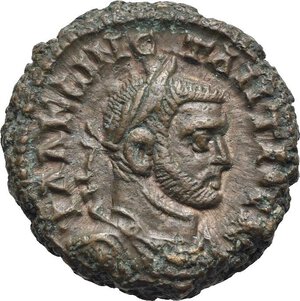
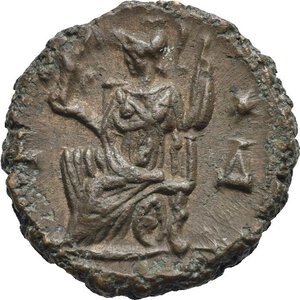
Egypt, Alexandria. Constantius I as Caesar, 293-305. Tetradrachm. (Billon, 19.80 mm, 6.82 g). Dated RY 4 = AD 295/6. ΦΛA KωCTANTIOC K Laureate, draped and cuirassed bust right. Rev. Enthroned Athena seated left wearing Corinthian helm, holding in her right hand a winged crowning Nike and in her left a sceptre; upwards right, six-pointed star and L Δ (date) in field. Geissen -. Dattari-Savio Plate 289, 6037 (this coin). Emmett 4173. Extremely Fine.
Ex Giovanni Dattari collection. Ex Naville Numismatics Ltd., Auction 40, 27.05.2018, lot 438.
In this rare and splendid tetradrachm, too, from the famous Dattari collection, the rough portrait of Caesar Constantius presents a realistic physiognomic profile also favoured by the enviable condition of preservation of the coin with its high and sharp relief. The Athena of the reverse, solemnly seated on her throne, sumptuously clothed and equipped with all the canonical divine attributes, watches over the rulers of the Tetrarchy constantly engaged in defending the borders of the empire.
Lot # 355
-
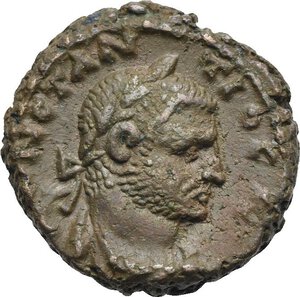
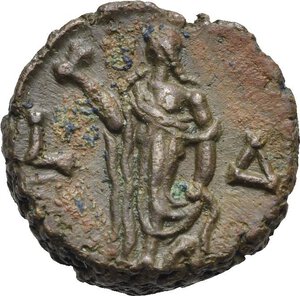
Egypt, Alexandria. Constantius I as Caesar, 293-305. Tetradrachm. (Billon, 19.00 mm, 7.52 g). Dated RY 4 = AD 295/6. ΦΛA KωCTANTIOC K Laureate, draped and cuirassed bust right. Rev. Elpis advancing left, wearing chiton and peplos, holding a lotus flower in her outstretched right hand and rising with her left a robe hem; in field, L Δ (date). Geissen 3353. Dattari-Savio Plate 289, 6058. Emmett 4185. Very Fine.
Ex Naville Numismatics Ltd., Auction 72, 08.05.2022, lot 301.
On the excellent obverse of this tetradrachm can be recognized a realistic and physiognomic portrait of Constantius I, a rare example in a coin of the last year of the autonomous Alexandrian series. On the reverse is Elpis, Hope, also portrayed in the tetradrachms nrs. 339 and 340 of this collection: the deity is auspicious for the complex management of the empire during the tetrarchy.
Lot # 354
-
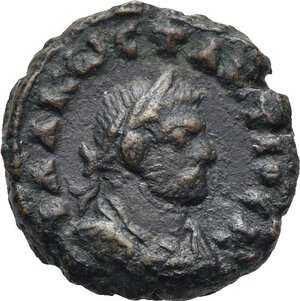
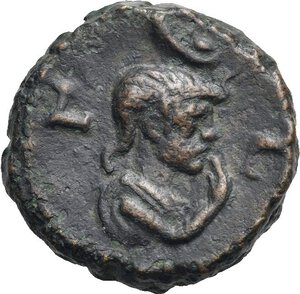
Egypt, Alexandria. Constantius I as Caesar, 293-305. Tetradrachm. (Potin, 18.00 mm, 7.01 g). Dated RY 3 = AD 294/5. ΦΛA KωCTANTIOC K Laureate, draped and cuirassed bust right seen from the front. Rev. Draped bust of Harpokrates facing right, wearing pshent crown, hair in “youth lock”, right hand to lips; L Γ (date) across fields. Geissen -. Dattari-Savio 6065. K&G 121.22. RPC X Online 76179. BMC -. Milne -. Curtis X – 2122 (believed unique). Demetrio -. Emmett 4189 (5). Extremely rare, only five known to RPC. Dark brown patina, slight roughness. Very Fine.
From the Dr. Thomas E. Beniak Collection, purchased from Harlan J. Berk, 18 January 2003. Ex CNG, E-Auction 556, 21.02.2024, lot 429.
Constantius I ‘Chlorus’ is the glorious Roman general of Illyrian origin based in Trier, was created Caesar by Maximian. He was the father of Constantine I the Great and as such the founder of the Constantinian imperial dynasty that ruled from 305 AD to 363 AD with six sovereigns. Extremely rare coin of valuable preservation, especially for its reverse with the bust of the child Harpokrates, a Hellenised Egyptian deity, shown here in its commonly known official version.
Lot # 353
-
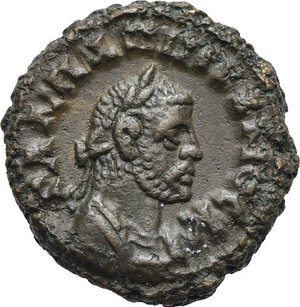
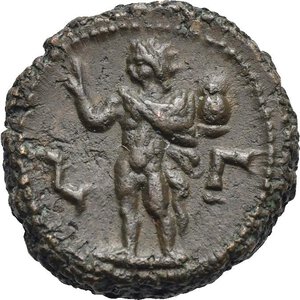
Egypt, Alexandria. Galerius Valerious Maximianus as Caesar, 293-305. Tetradrachm. (Billon, 19.20 mm, 7.65 g). Dated RY 3 = AD 294/5. ΓAΛ MAΞIMIANOC K Laureate, draped and cuirassed bust right. Rev. Half-naked Helios radiate and draped standing facing, head turned left, wearing a cloth on his shoulders and raising right hand as a sign of greeting and holding a globe in his left hand; L Γ (date) in field. Geissen-. Dattari-Savio Plate 290, 10790 (this coin). Emmett 4225 (5). Extremely rare. Extremely fine.
Ex Giovanni Dattari Collection. Ex Naville Numismatics Ltd., Auction 47, 03.03.2019, lot 345.
Splendid and perhaps unique tetradrachm from a prestigious collection: images sharp and sculptural, perfectly centred. A practically uncirculated coin and listed only by Dattari-Savio and Emmett. On the reverse, the full figure of the Alexandrian Helios saluting recalls the similar statues placed one on the top of the Lighthouse of Alexandria and the other on the column in front of the Serapeum that we still find in situ today, erect and bare.
Lot # 352
-
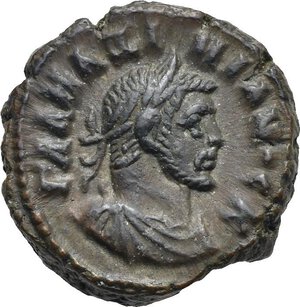
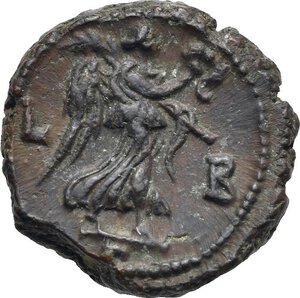
Egypt, Alexandria. Galerius Valerius Maximianus as Caesar, 293-305. Tetradrachm. (Silver, 19.63 mm, 8.37 g). Dated RY 3 = AD 293/4. ΓAΛ MAΞIMIANOC K Laureate and cuirassed bust right. Rev. Winged Nike walking right, holding wreath in her right hand and carries a palm branch on her left shoulder; L B (date) in field; Γ on the exergue, meaning the third workshop of Alexandria mint. Geissen 3360 v. BMC -. Milne 5127. Dattari 6147. C. 2129. Emmett 4230. Rare Emperor in this series. More than Extremely Fine.
Ex Empire Coins Auction 7, 07.05.1987, lot 264.
In Diocletian’s institutional organization of the first tetrarchy, General Galerius appears as Caesar of Diocletian (whose daughter Galeria Valeria he marries) with residence in Sirmium in Pannonia and with the right of succession to the throne at the end of the fixed period of duration of the function and so it happened on May 1, 305 AD. The coin is in extremely fine condition and more, with statuesque relief images and precisely detailed on both sides and with a stunning original brown patina.
Lot # 351
-
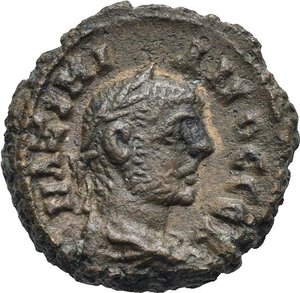
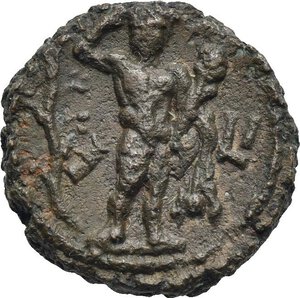
Egypt, Alexandria. Maximianus Herculius, first reign 286-305. Tetradrachm. (Billon, 19.10 mm, 7.51 g). Dated RY 10 = AD 294/5. MAΞIMIANOC CЄB Laureate, draped and cuirassed bust right. Rev. Naked Heracles standing, facing, raising his right hand upwards and holding club and lion skin in his left hand; in left field, a tree upon which a quiver hangs; LI (date) in right field. Geissen -. Dattari- Savio Plate 287, 10722 (this specimen) and Plate XXXXIV (this reverse illustrated). Emmett 4135 (5). Apparently unique. Nice brown tone, Extremely Fine.
Ex Giovanni Dattari Collection. Ex Naville Numismatics Ltd., Auction 48, 07.04.2019, lot 308.
Probably a unique and valuable specimen of this coin from the famous Dattari collection and surveyed only by the then owner and Emmett. We find again the Heracles close friend with Maximian mentioned in previous no 350 of the collection, but here in the exceptional setting of his presence in the ‘garden of Hesperides’, the penultimate of the mythological hero's 12 labours, waiting to pluck the golden apples from the tree.
Lot # 350
-
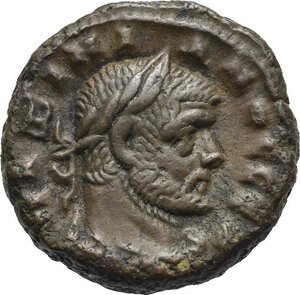
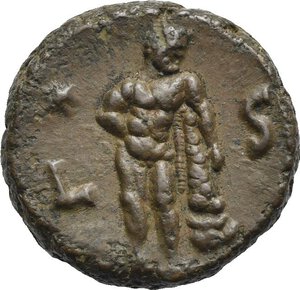
Egypt, Alexandria. Maximianus Herculius, first reign 286-305. Tetradrachm. (Billon, 19.00 mm, 7.12 g). Dated RY 6 = AD 290/1. MAΞIMIANOC CЄB Laureate, draped and cuirassed bust right. Rev. Naked Heracles standing, facing right, leaning with left arm on club, placed on rock; upper left a six-pointed star; L S in field. Geissen -. Dattari 5902. Emmett 4134 (4). Attractive brown tone. About Extremely Fine.
From the E. E. Clain-Stefanelli collection. Ex Naville Numismatics Ltd., Auction 23, 12.06.2016, lot 263.
Tetradrachm of excellent preservation and noteworthy iconographic value for the realistic iconographic likeness of the portrait of Maximian on the obverse. The reverse shows here, as on other tetradrachms of the sovereign of this collection, the figure of Heracles in various poses as iconographic confirmation of the synonym ‘Herculean’ attributed to him as ‘secundus inter pares’ behind the undisputed overriding charm of his colleague Diocletian Jovius.
Lot # 349
-
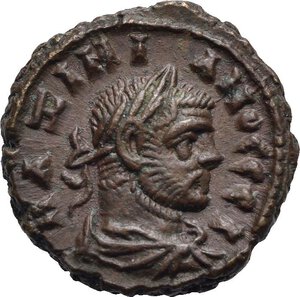
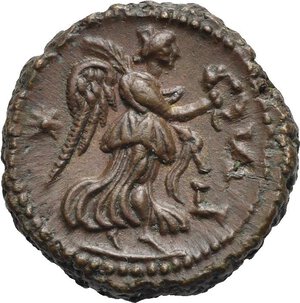
Egypt, Alexandria. Maximianus Herculeus, first reign 286-305. Tetradrachm. (Billon, 20.00 mm, 7.80 g). Dated RY 6 = AD 290/1. MAΞIMIANOC CЄB Laureate and cuirassed bust right. Rev. Winged Nike advancing right, holding palm branch on her left shoulder and wreath in her right hand; in left field behind Nike’s wings, a seven-pointed star and in right L S (date). Geissen 3312. Dattari-Savio 5965. Emmett 4147. Extremely Fine.
Ex Naville Numismatics Ltd., Auction 57, 26.04. 2020, lot 277.
On this tetradrachm too, it is worth noting on the obverse the realistic physiognomy of the portrait of Augustus Maximianus, probably the work of the same skilled engraver as the following number of the collection, also because it was executed in the same year of issue. The coin is of extremely fine quality, very well centred and practically uncirculated, as can be seen in particular from the sharpness of the details of the winged Nike on the reverse, with its high relief and sharp profile.
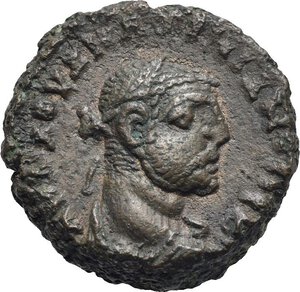
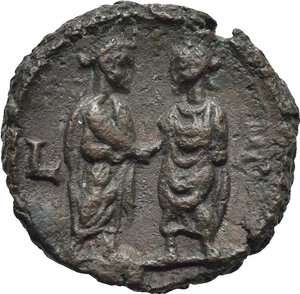
Lot # 348
-
Egypt, Alexandria. Maximianus Herculius, first reign 286-305. Tetradrachm. (Billon, 20.50 mm, 7.98 g). Dated RY 1 = AD 285/6. A K MAOYA MAΞIMIANOC CЄB Laureate, draped and cuirassed bust right. Rev. Diocletian (at left) and Maximianus (at right) with paludamentum standing facing each other and clasping in right hand; B in exergue and L A (date) in field. Geissen-. Dattari-Savio Plate 285, 5823 (this coin). Emmett 4122 (5). Extremely rare and interesting. About Extremely Fine.
Ex Giovanni Dattari collection. Ex Naville Numismatics Ltd., Auction 40, 27.05.2018, lot 436.
Tetradrachm of extreme rarity and exceptional preservation from the famous collection of Giovanni Dattari, the first competent methodical global treatise on Alexandrian coinage. Well-centred coin with unusually high relief engraved figures. The portrait of the ruler Maximian is rather generic, but particularly significant is the scene on the reverse, which depicts the Homonoia, i.e. the ‘Concordia Augustarum’ of Diocletian Jovius ‘Primus Augustus’ with his colleague of the first tetrarchy Maximian Herculean ‘paris Augustus’, which lasted until 305 AD.
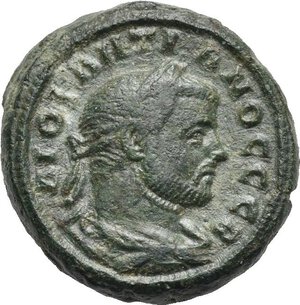
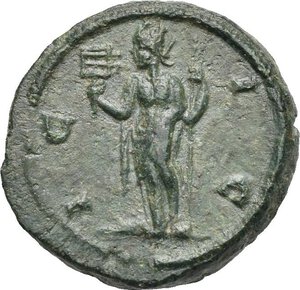
Lot # 347
-
Egypt, Alexandria. Diocletian 284-305. Tetradrachm. (Bronze, 19.24 mm, 7.05 g). No date but AD 298. “Not issued” series. ΔIOKΛHTIANOC CЄB Laureate, draped and cuirassed bust right. Rev. IC -IC Tyche standing left, wearing crown, chiton and peplos, holding sistrum in her right hand and sceptre in her left. Dattari -. Emmett 4090 (one specimen cited). See Vagi II, pp. 566-9. Choice jade green patina, Near Extremely Fine.
Ex Triton VI, New York, Auction 14-15.01.2003, lot 605.
Having invaded Egypt in July 297 AD, besieged and conquered Alexandria in April 298 AD, Diocletian took over the mint again and in a very short time (June-October 298 AD) thought about restoring the autonomous Alexandrian monetary system by minting an experimental series of undated bronze coins with the portraits of the Augusti (Diocletian and Maximian) and on the reverse the bust of Serapis-Soter (for the supposed "octodrachms") or the standing figure of Isis-Tyche with sistrum and sceptre (for the alleged "tetradrachms" and "diddrachms"). They are all very rare coins, usually found in splendid condition because they apparently were not circulated, engraved and minted with particular care, with a rather Roman-centric style and careful iconographic research. I defined them as “not issued” series because they are experimental and were not put in circulation indeed (see my quoted paper “Testimonianze sulla fine della monetazione autonoma alessandrina, 296-298 d. C." and bibliography). In fact, it would be an ephemeral project on the part of the Tetrarchs, managed in any case by the Prefect of Egypt who was the Viceroy, perhaps intended as an action as part of a reconciliation announced by Diocletian after the retaking of Alexandria, a project immediately abandoned because it was unsuited for the policy of union and irreversible globalization passed by the Tetrarchy. Our specimen, in this case defined as a "tetradrachm", is fully part of this series as a specimen of great quality and conservation, with a magnificent original emerald patina that uniformly covers the coin. This series chronologically concludes the issues of the glorious autonomous Alexandrian coinage (30 BC -298 AD).
Lot # 346
-
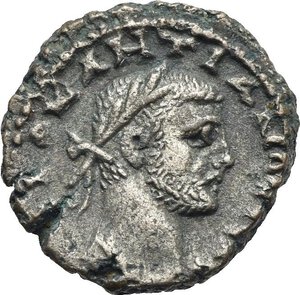
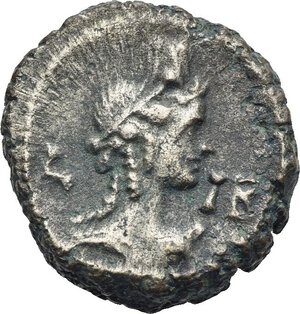
Egypt, Alexandria. Diocletian 284-305. Tetradrachm. (Billon, 18.00 mm, 6.24 g). Dated RY 12 = AD 295/6. ΔIOKΛHTIANOC CЄB Laureate head right. Rev. Draped and diademed bust of Isis right with Basileion on head and the Isiac knot on the chest; L IB (date) across fields. Geissen-. Dattari-Savio Plate 283, 5711 (this coin). Emmett 4063 (3). Traces of silvering on both sides. Rare, Good Very Fine.
Ex Giovanni Dattari collection. Ex Naville Numismatics Ltd., Auction 47, 03.03.2019, lot 337.
We are still at the temporal extremes of the autonomous Alexandrian coinage with legends and symbols and dating expressed in Greek. Here the clear but rather impersonal facial portrait of the emperor is offset by the light, meek and serene figure of Isis, the most important and ancient female deity of Egyptian theogony, expressed here with delicate features attributed to her by the Hellenistic-Roman master engraver. The soft, satin appearance of this tetradrachm is accentuated by the soft silvering spread evenly on the coin surface.
Lot # 345
-
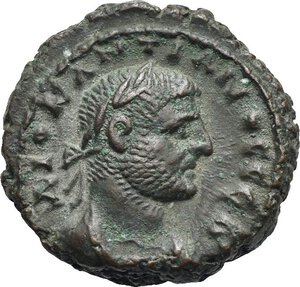
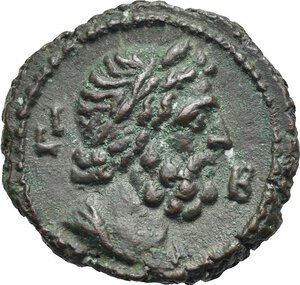
Egypt, Alexandria. Diocletian 284-305. Tetradrachm. (Billon, 19.00 mm, 7.28 g). Dated RY 12 = AD 295/6. ΔIOKΛHTIANOC CЄB Laureate, draped and cuirassed bust right. Rev. Laureate and draped bust of Zeus right; LIB (date) across fields. Dattari-Savio 5772.3. Emmett 4086. Rare, Good Very Fine.
Ex Roma Numismatics Ltd., E-sale 63, 07.11.2019, lot 573.
This rare and splendid tetradrachm was minted in the last year of the Alexandrian autonomous issues and immediately precedes the introduction of the controversial new global monetary and fiscal system imposed by Diocletian with the unit of the bronze ‘folles’ with Latin legend that triggered the social and political revolt of 296-98 AD led by the usurper Domitius Domitian that we find at no. 357 of this collection. The historiated complex of this fatal period has been reconstructed by Giovanni Maria Staffieri in his report to the thirteenth International Congress of Numismatics in Madrid entitled: “Testimonianze sulla fine della monetazione autonoma alessandrina (296-298 AD) " in "ACTAS XIII Congreso Internacional de Numismatica - Madrid 2003", pp. 1037-1043 (Plate I). On the reverse, the severe and solemn portrait of the Capitoline Zeus is a clear indication of the autocratic Roman-centric policy of the sovereign Diocletian "Jovius" (of Zeus).
Lot # 344
-
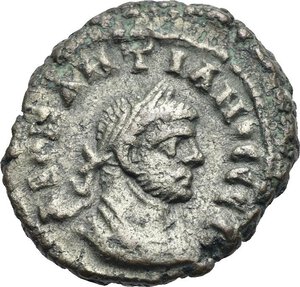
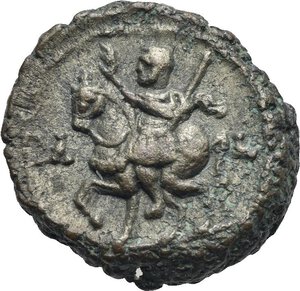
Egypt, Alexandria. Diocletian 284-305. Tetradrachm. (Billon, 20.00 mm, 7.80 g). Dated RY 11 = AD 294/5. ΔIOKΛHTIANOC CЄB Laureate, draped and cuirassed bust right. Rev. The Emperor, laureate-headed, in military dress, riding the horse at a left trot, holding sceptre and greeting with the right arm outstretched; L KA (date) in field. Geissen-. Dattari-Savio Plate 282, 5619 (this coin). Emmett 4048 (5). Extremely rare, Good Very Fine.
Ex Giovanni Dattari collection. Ex Naville Numismatics Ltd., Auction 48, 27.01.2018, lot 325.
A splendid coin, especially for its reverse with the emperor on horseback in glorious and solemn military attire, holding a sceptre, advancing and saluting with his right hand. According to Vogt (I, p.225), the scene preludes a forthcoming arrival of Diocletian in Egypt, but it is also possible that it is an issue celebrating the sovereign's ‘decennalia’ celebrated in Nicomedia in November 294 AD.
Lot # 343
-
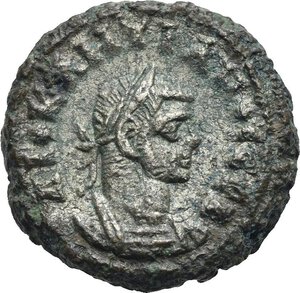
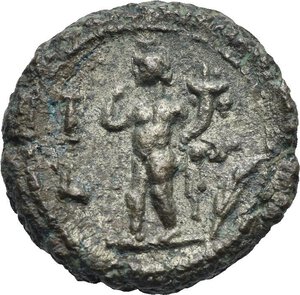
Egypt, Alexandria. Diocletian 284-305. Tetradrachm. (Billon, 20.50 mm, 7.73 g). Dated RY 10 = AD 293/4. ΔIO KΛHTIANOC CЄB Laureate, draped and cuirassed bust right. Rev. Tipical Harpokrates standing half-naked facing, wearing hem-hem crown, head left, holding in his left arm a cornucopia and a flap of the chlamys while putting his right index finger in his mouth; behind him a papyrus branch; LI (date) in field. Geissen -. Dattari-Savio Plate 283,10656 (this coin). Emmett 4053(5). Good Very Fine.
Ex Giovanni Dattari collection. Ex Naville Numismatics Ltd., Auction 41, 24.06.2018, lot 380.
On the reverse of this very rare tetradrachm is reproduced the image of the official iconography of the child Harpokrates, son of the mystical union of Isis and Osiris, no longer an infant and not yet an adolescent, also reproduced in coeval statuary in several variants. To be distinguished from the Harpokrates of Pelusium mentioned in no. 341 of this collection.
Lot # 342
-
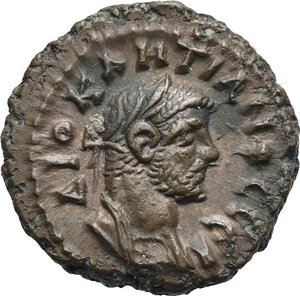
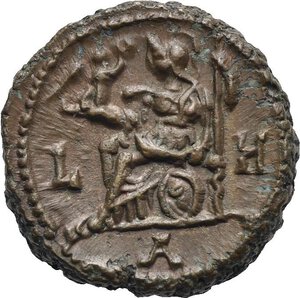
Egypt, Alexandria. Diocletian 284-305. Tetradrachm. (Billon, 19.40 mm, 6.67 g). Dated RY 8 = AD 291/2. ΔIOKΛHTIANOC CЄB Laureate, draped and cuirassed bust right. Rev. Athens seated left wearing Corinthian helmet, holding sceptre in her left hand and with her right holds a Nike handing her a crown; below throne, shield; in exergue A, referring to the first workshop of Alexandria mint; across field L H (date). Geissen 3253 var. Dattari-Savio Plate 282, 5642 (this coin). Emmett 4032. Rare. Extremely Fine.
Ex Giovanni Dattari collection. Ex Naville Numismatics Ltd., Auction 48, 07.04.2019, lot 306.
A tetradrachm of splendid preservation and excellent centring with an incisive portrait of Diocletian on the obverse and the warlike and victorious Athena enthroned on the reverse, indicating the hard times of the active safeguard of the borders of the vast empire in which the Senior Augustus Diocletian Jovius was a master.
Lot # 341
-
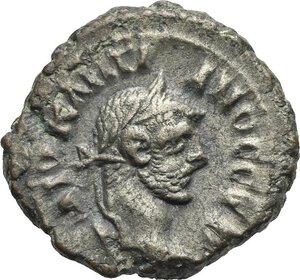
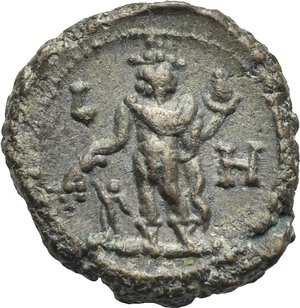
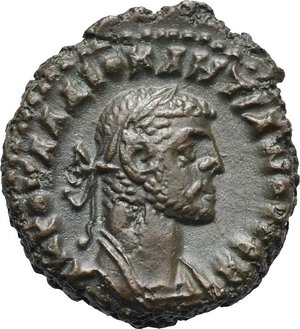
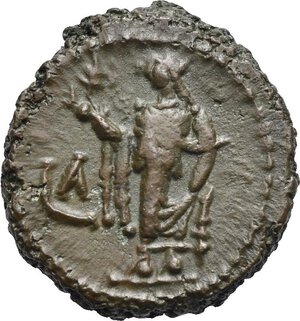
Egypt, Alexandria. Diocletian 284-305. Tetradrachm. (Billon, 21.50 mm, 7.73 g). Dated RY 1 = AD 284/5. ΔIOKΛЄTIANOC CЄB Laureate head to right. Rev. Harpokrates of Pelusium half-naked standing facing, head left, wearing hem-hem crown, chlamys on shoulders and holding pomegranate in his raised left hand and in his right a branch with appendages that a nude pygmy (?) (Paniskos?) at the bottom left at Harpokrates’ feet, tries to grasp; in field, L-H (date). Geissen -. Dattari-Savio Plate 238, 5696 (this coin). Emmett-. Rare. Good Very Fine.
Ex Giovanni Dattari collection, Il Cairo. Ex naville Numismatics Ltd., Auction 37, 28.01.2018, lot 418.
This tetradrachm, recorded only in the famous Dattari collection to which it belonged, is to all intents and purposes a unicum, quite distinct from the reverse of the next no 343 in this collection, which also refers to Harpokrates, but the canonical one. Sharp, detailed and unmistakable is the unique scene on the reverse with the Harpokrates of Pelusium intent on performing an unknown ritual with a tiny human figure standing next to him. We find the same scene on the reverse of a tetradrachm from the year 15 of Gallienus (267-268 AD) and on one from the year 2 of Claudius II 269-270 AD).
Lot # 340
-
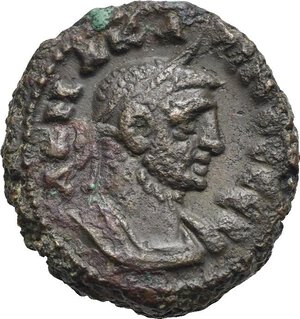
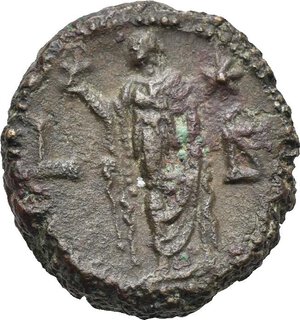
Egypt, Alexandria. Diocletian 284-305. Tetradrachm. (Billon, 21.00 mm, 8.15 g). Dated RY 1 = AD 284/5. A K Γ OYAΛ ΔIOKΛHTIANOC CЄ Laureate and cuirassed bust to right. Rev. Elpis standing facing, dressed in chiton and peplos, head to left, holding lotus flower and raising hem of chiton; LA (date) in left field. Dattari-Savio 5669. K&G 119.4. Milne 4750. Emmett 4046.1. Near Extremely Fine.
Purchased from Fritz Rudolf Kunker GmbH & Co, March 2008. Ex Roma Numismatics Ltd, E-Sale 105, 19.01.2023, lot 666.
The figure of Elpis, Hope, appears rarely in Alexandrian coinage and often accompanied by other deities; she belongs more properly to Greco-Roman mythology. Here she is in her auspicious institutional role with the typical Egyptian lotus flower.
Lot # 339
-
Egypt, Alexandria. Carinus 283-285. Tetradrachm. (Billon, 19.00 mm, 7.85 g). Dated RY 2 = AD 283/4. A K M A KAPINOC CЄΒ Laureate and cuirassed bust to right. Rev. Elpis advancing to left, wearing peplos and chiton, whose hem she is holding with her left hand and a lotus flower, with her left; a six-pointed star to right; L B (date) across fields. Geissen 3180. Dattari-Savio 5584. K&G 115.10 var. (no star). Emmett 4007. Very Fine.
From the Vitangelo Collection. Ex Roma Numismatics Ltd., Auction 259, 13.04.2022, lot 741.
It seems that Elpis, the Hope, which we do not often find on Alexandrian coins, was an important element of the harmony (Homonoia) between the August brothers Carinus and Numerian during the troubled and warlike period of their co-regency (283-284). According to Vogt (I, p. 221), the star on the reverse would indicate a specific mint workshop.
Lot # 338
-
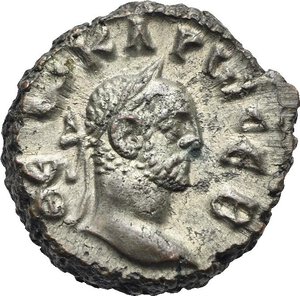
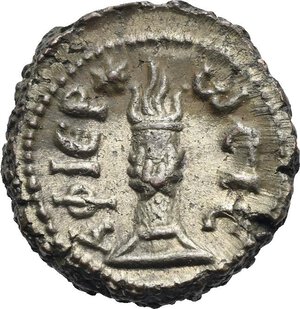
Egypt, Alexandria. Divus Carus 282-283. Tetradrachm. (Billon, 18.60 mm, 7.11 g). Without date but RY 2 or 3 = 283-4. ΘЄO ΚΑΡⲰ CЄΒ Laureate head of Divus Carus to right. Rev. AΦIЄPOCIC Flaming altar tied with garland; in upper left field, star. Dattari-Savio, Plate 280, 5571 (this coin). Emmett 3995. Geissen 3167. Of an exceptional quality. Extremely Fine.
Ex Giovanni Dattari Collection. Ex Naville Numismatics Ltd., Auction 77, 13.11.2022, lot 310.
A coin of exceptional quality that preserves its original silvering; this is the only example of an imperial consecration coin found in Alexandrian coinage: AΦIЄPOCIC means ‘consecration’ and as such is undated with the intention of virtually indicating the year of the sovereign's death, between the 2nd and 3rd of his reign and that of his sons Carinus and Numerian.
Lot # 337
-
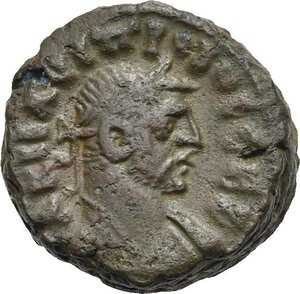
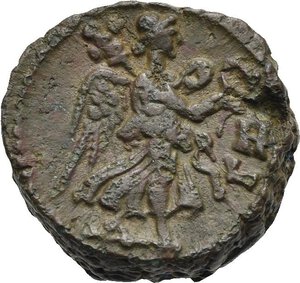
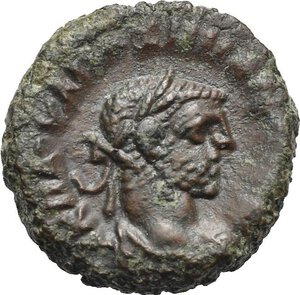
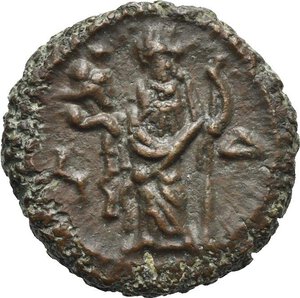
Egypt, Alexandria. Probus 276-282. Tetradrachm (Bronze, 18.20 mm, 9.44 g). Dated RY 8 = August-September 282 AD. A K MAYP ΠPOBOC CЄB Laureate and cuirassed bust of Probus right. Rev. Winged Nike advancing right carrying trophy and wreath; L H (date) before, in right field. Dattari-. Emmett 3991(5). Geissen -. Very rare. Very Fine.
Ex Empire Coins Ltd., Sale 8, 07.12.1987, lot 807: “Unpublished. An unknown type from a very rare year (he actually died in late August, in his seventh Alexandrian year).”
A coin of extreme rarity, recorded only by Emmett with the highest valuation: it is perhaps the only known specimen for this year of Probus' issues, which is reduced to a single month between August and September AD 282 since Probus was the victim of a military revolt in Sirmio precisely in September of that year. Also noteworthy is the exceptional thickness of the coin, practically a piedfort.
Lot # 336
-
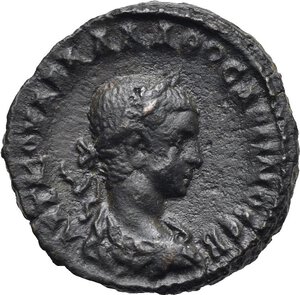
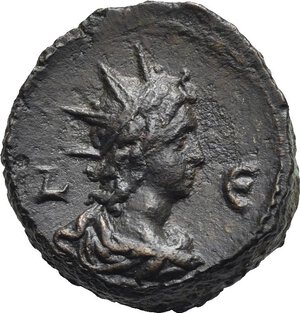
Egypt, Alexandria. Probus 276-282. Tetradrachm (Bronze, 18.41 mm, 7.12 g). Dated RY 4 = 278/9. A K MAYP ΠPOPOC CЄB Laureate and cuirassed bust of Probus right. Rev. Alexandria, standing and facing left, wearing chiton and peplos, holds in her left hand a bust of Serapis with kalathos and with her right, a sceptre and a peplos’ fold; L Δ(date) across the field. Dattari-. Geissen-. BMC -. Emmett-. Very rare. Green-brown patina, Very Fine.
Ex Dr. Busso Peus Nachfolger, Auction 406, 25-27.04.2012, lot 676.
Specimen of excellent preservation, especially the images: the lack of evidence in the repertories makes it an absolute unicum for a sovereign who was very prolific in issues.
Lot # 335
-
Egypt, Alexandria. Vabalathus (Lucius Julius Aurelianus Septimius Vabalathus) 271-272. Tetradrachm (Bronze, 21.40 mm, 8.78 g). Dated RY 5 = AD 271/2. AYT K OYABAΛΛAΘOC AΘHNO CЄB Laureate and cuirassed bust right. Rev. Radiate bust of Helios right wearing paludamentum; L Є (date) across field. Dattari 5508. Emmett 3909 (4). Milne 4349. Geissen -. BMC -. Extremely rare. Dark brown patina, Very Fine.
Ex Bankhaus Aufhӓuser, Auction 7, 9-10.10.1990, lot 706.
A rare and splendid coin, as out of the mint, centred and well patinated: probably the best specimen ever known. Pictures of courtly style, high relief and accurate workmanship. Vabalathus was the young and impersonal son of the powerful Zenobia, the true ruler of the Palmyrene secession destroyed in 272 AD by Aurelian's army that led them both in triumph to Rome.
Lot # 334
-
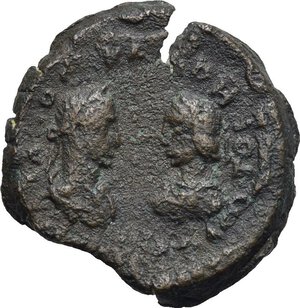
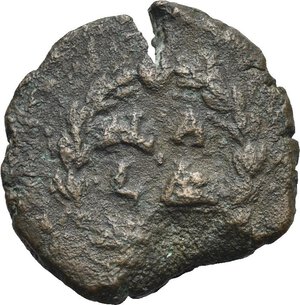
Egypt, Alexandria. Aurelian (Lucius Domitius Aurelianus) and Vabalathus (Lucius Julius Aurelianus Septimius Vabalathus Athenodorus), 271-272. Reduced Drachm (Bronze, 24.00 mm, 8.29 g). Dated RY 1 of Aurelian = AD 270/1 and RY 4 of Vabalathus = AD 270/1. AYPHΛIANOC AΘHNOΔΩPOC Confronted busts of Aurelian, to left, and Vabalathus, to right, both laureate, cuirassed and wearing paludamentum. Rev. L A (date) above and L Δ (date) below, within laurel wreath tied above with medallion. Dattari-Savio 5429. Geissen 3057. BMC 2395-96. Vogt II, 160. Emmett 3916. Extremely rare. Fine.
Ex Italo Vecchi, London, purchased in October 1975.
Of this type of coin, which represents the last Alexandrian bronze issue, two numerals are known, both very rare and distinguishable more by weight than by diameter, poorly minted and always in suboptimal condition. Our specimen is a reduced drachm. As on tetradrachms with images of the two rulers in an ephemeral and unnatural concord (Homonoia), this forced association lasted until the defeat of Vabalathus and his mother Zenobia by Aurelian's army. Cf. a similar specimen appeared in Astarte SA, Auction 23, lot 506: “This rare issuing of Aurelian and Vabalathus combined, by hasty strikes and always irregular size, is the final bronze Alexandrian coinage, of which exist two different numerals that we will fix as reduced drachm (of the weight of circa 8,5 g.) and reduced Hemidrachm (just a little over 4 g.). Our specimen should be considered a reduced drachm and belongs to the short-lived period of imposed Homonoia of 271- beginning of 272 AD, of Aurelianus together with the son of the notorious Zenobia. For further information on this subject, see, Staffieri G. M. Alexandria in Nummis, n. 245 and pp. 487-488.
Lot # 333
-
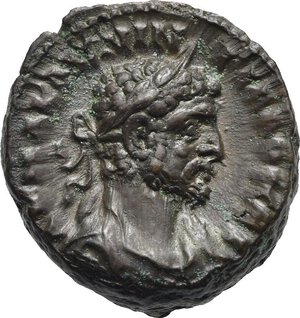
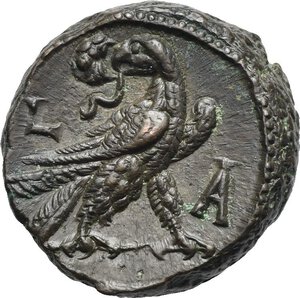
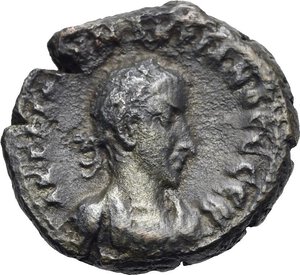
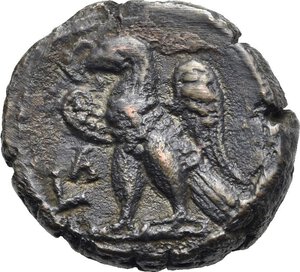
Egypt, Alexandria. Quintillus 270. Tetradrachm (Potin, 21.00 mm, 10.71 g). Dated RY 1 = AD 270. A K M A KΛ KYINTIΛΛOC CЄB Laureate, draped and cuirassed bust right. Rev Imperial eagle walking right, head left, wings closed, holding laurel wreath in beak; L A (date) across field. Geissen 3049. Dattari-Savio 5419. K&G 105.1. Emmett 3907.1 (2). Dark brown patina with flecks of verdigris. Exceptional condition. Extremely Fine.
Ex CNG E-Auction 482, 16.12.2020, lot 315: “Quintillus was the younger brother of Claudius II, and had been placed in command by his brother at Aquileia to protect the western borders, while Claudius was in command of the effort against the Goths. In August or September of 270, when news reached Italy and Aquileia of Claudius' death, Quintillus paid a donative to the army, curried the support of the Senate, and was then hailed emperor. His tenure was to be short-lived as the Illyrian troops proclaimed Aurelian, Claudius' successor in the Gothic campaign in the Balkans, as emperor. In either October or November of 270, Quintillus committed suicide, after his own soldiers had abandoned his cause.”
Tetradrachm in exceptionally well-preserved condition with a brilliant dark-brown patina and a portrait of excellent workmanship.
Lot # 332
-
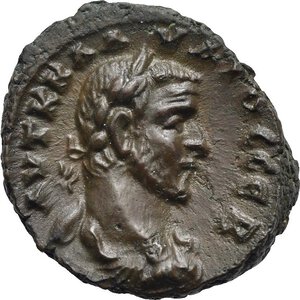
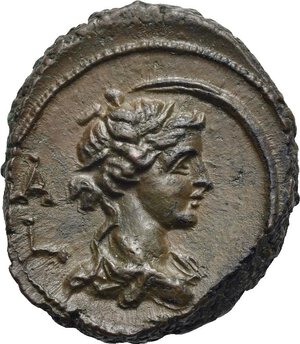
Egypt, Alexandria. Claudius II Gothicus 268-270. Tetradrachm (Billon, 24.00 mm, 10.31 g). Dated RY 1 = 268/9. AYT K KΛAYΔIOC CЄB Laureate, draped and cuirassed bust right. Rev. Draped bust of Selene right wearing taenia; moon crescent in front; LA (date) in left field. Geissen 3025. Dattari 5408. Emmett 3895. Nice brown tone. Extremely Fine.
Ex Naville Numismatics Ltd., Sale 57, 26.04.2020, lot 360.
A coin in a wonderful state, practically uncirculated and with a bright, uniform brown patina. The portrait of Claudius II is well drawn in high relief, with careful iconographic research recalling that of the gilded bust in the Museum of Santa Giulia in Brescia, Italy. The image of Selene on the reverse is of equal sculptural quality.
Lot # 331
-
Egypt, Alexandria. Macrianus, usurper 260-261. Tetradrachm (Billon 23.22 mm, 11.43 g). Dated RY 1 = 260/1. A K T Φ IOYN MAKPIANOC Є CЄB Laureate and cuirassed bust of Macrianus right. Rev. Imperial eagle left with spread wings and a laurel wreath in beak; L A (date) in lower left field. Dattari 5380. BMC 2301. Emmett 3785. Coin of great condition and large diameter. Very Fine.
Ex Numismatica Aretusa SA, Lugano, (Franco Chiesa). Specimen purchased in May 1988.
Macrianus and his brother Quietus were usurpers of Gallienus in the East at the time of the defeat of Valerian I at Edessa, who had been taken prisoner by the Sassanids. In fact, the two brothers took possession of Alexandria and the mint from September 260 to June 261, when they were overwhelmed and killed: Macrianus by Gallienus' armies in Thrace and Quietus by those of Odenatus of Palmyra in the East.
Lot # 330
-
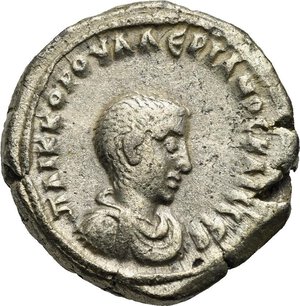
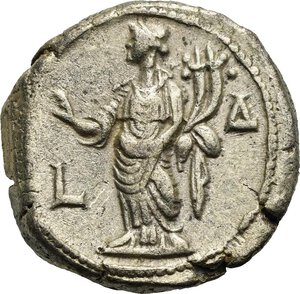
Egypt, Alexandria. Valerian II as Caesar 256-258. Tetradrachm (Silver, 23.00, 11.63 g). Dated RY 4 (of Valerian I and Gallienus) = AD 256/7. Π ΛIK KOP OYAΛERIANOC KAIC CЄB Bareheaded, draped and cuirassed bust right, seen from the front. Rev. Homonoia standing facing left, wearing chiton and peplos, raising right hand in greeting, holding double cornucopia and fold of garment in left hand; L Δ (date) across field. Geissen 2993. Dattari-Savio 5358 (Saloninus). BMC 2284. Milne 3930. Curtis 1548. Demetrio 3166. K&G 92.4. RPC X online 75340. Emmett 3766.4. Extremely/Very rare. High silver content. Light porosity. Good Very Fine.
From the Dr. Thomas E. Beniak Collection. Ex Numismatic Fine Arts, Fall M 95, 18.10.1990, lot 2508. Ex CNG, E-Auction 556, 21.02.2024, lot 415.
Another tetradrachm of large diameter and weight, minted in good silver, which was exceptional for the time and is related to the similar example in number 327 of this collection: it is a very compelling subject to study. Valerian II predeceased his father in 258
Lot # 329
-
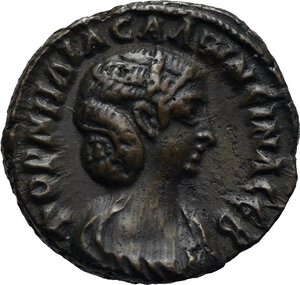
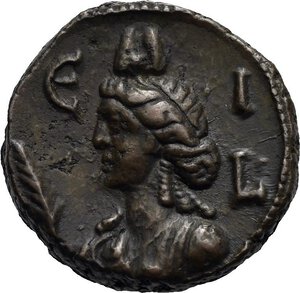
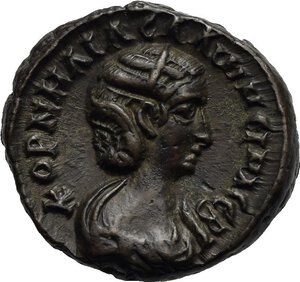
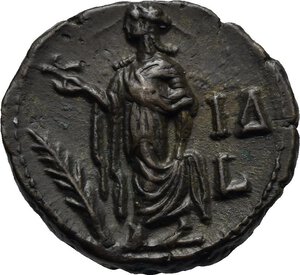
Egypt, Alexandria. Salonina, wife of Gallienus, Augusta 254-268. Tetradrachm (Billon, 22.03, 9.74 g). Dated RY 15 (of Gallienus) = AD 267/8. KOPNHΛIA CAΛѠNЄINA CЄB Diademed and draped bust right. Rev. Draped bust of Isis left, hair gathered in curls and chignon at the nape of the neck, and wearing Basileion; before, palm frond; L I Є (date) across fields. Dattari-Savio 10555. Geissen 2987 (reverse same die). Milne 4172. Emmett 3859 (4). Superb patina and style. Extremely Fine.
Ex Jean-Pierre Righetti Collection. Ex Münzen und Medaillen Deutschland GmbH., Auction 12, 11.04.2003, lot 662.
Very rare coin for the issuing year, with Isis facing left, then also remarkable for the sculptural portrait of Salonina, of great delicacy and elegance, and finally, for the splendid chocolate brown patina.
Lot # 328
-
Egypt, Alexandria. Salonina, wife of Gallienus, Augusta 254-268. Tetradrachm (Billon, 22.90, 8.65 g). Dated RY 14 (of Gallienus) = AD 266/7. KOPNHΛIA CAΛѠNЄINA CЄB Diademed and draped bust right. Rev. Elpis standing facing left, wearing chiton and peplos, holding in her left hand a lotus flower and a fold of peplos in her right; L I Δ (date) in right field. Dattari 5333. BMC 2250. Geissen 2969. Milne 4102. Emmett 3856. Great style and surfaces, too. Superb Extremely Fine.
Ex Walter Niggeler Collection, Basel. Ex Empire Coins, Sale 8, 07.12.1987, lot 755.
A virtually uncirculated coin in mint condition with an excellent statuary and physiognomic portrait of Salonina. Unblemished specimen from a renowned Swiss collection.
Lot # 327
-
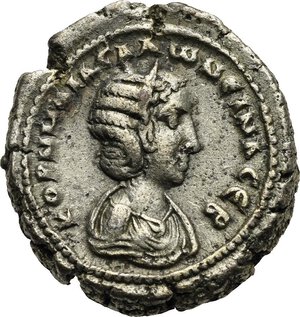
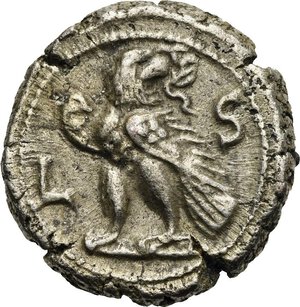
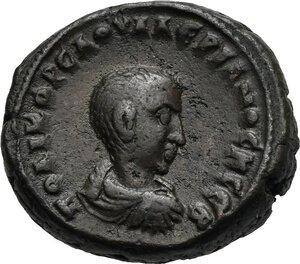
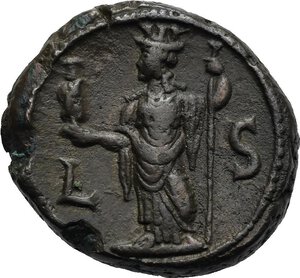
Egypt, Alexandria. Salonina, wife of Gallienus, Augusta 254-268. Tetradrachm (Silver, 24.00, 12.55 g). Dated RY 6 (of Valerian I and Gallienus) = AD 258/9. KOPNHΛIA CAΛѠNEINA CЄB Draped and bust right, wearing stephane. Rev. Eagle standing left, head right, holding wreath in beak; L Ϛ (date) across field. Geissen 2964. Dattari-Savio 5321. K&G 91.20. Emmett 3747.6. Kellner p. 133, p. 15, Fig. 4 (this coin). Fully silvered and rare as such. Lightly toned, some minor porosity. Very Fine.
Ex A.K. Collection (Triton XXIII), 14.01.2020, lot 835 (part of): purchased privately by A.K. from Münzen und Medaillen AG, 1970. Ex CNG, E-Auction 463, 11.03.2020, lot 286.
Tetradrachm of large diameter and increased weight, an extremely rare coin to be minted in full silver perhaps for ostentation. Perfectly centred with on the obverse the canonical portrait of Salonina and on the reverse the triumphant imperial eagle.
Lot # 326
-
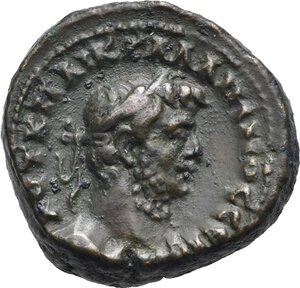
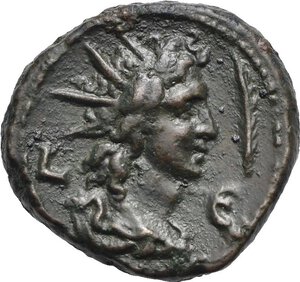
Egypt, Alexandria. Saloninus, as Caesar 258-260. Tetradrachm (Potin, 24.00, 13.64 g). Dated RY 6 (of Valerian I and Gallienus) = AD 258/9. Π ΛIK KOP OYAΛEPIANOC KAIC CЄB Bareheaded, draped and cuirassed bust right, seen from behind. Rev. Alexandria, standing facing left, wearing turreted cap, chiton and peplos, is holding head of Serapis crowned with kalathos and resting left hand on long sceptre; L Ϛ (date) across field. Dattari-Savio 5352. Geissen 3003. K&G 93.4. Demetrio 3177. Milne 4004. RPC X online 75390. Emmett 3774.4 (R3). Dark brown patina, small edge chips on reverse. Rare. Very Fine.
From the Dr. Thomas E. Beniak Collection. Ex Empire Coins, Sale 8, 07.12.1987, lot 760. Ex CNG, E-Auction 556, 21.02.2024, lot 416.
The introduction of Saloninus Caesar into Alexandrian coinage was to prepare him to succeed his father Gallienus, after the death of his elder brother Valerian II. Sent by his father to Gaul, he fell victim to the usurper Postumus in Cologne in July 260 AD.
Lot # 325
-
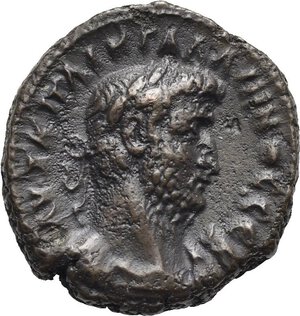
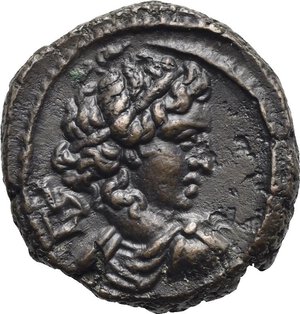
Egypt, Alexandria. Gallienus 253-268. Tetradrachm (Billon, 23.03 mm, 10.89 g). Dated RY 15 = AD 267/8. AYT K Π ΛIK ΓAΛΛIHNOC CЄB Laureate and cuirassed bust of Gallienus right. Rev. Radiate and draped bust of Helios right; palm front before; L [I] B (date) across fields. (The numeral “I” is missing but the year is definitely the 15th and last of the reign 267/268 AD) Cf. Dattari 5240. Geissen 2949. Cf. BMC 2159-2160. Emmett 3813. Very rare. Good Very Fine.
Ex Fritz Rudolf Künker GmbH & Co., Auction 89, 08-09.03.2004, lot 1834.
A coin of splendid conservation with a portrait of Gallienus on the obverse in courtly ‘Renaissance’ style and a bust of Helios in high relief on the reverse.
Lot # 324
-
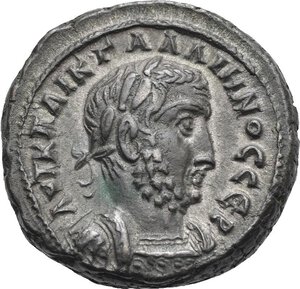
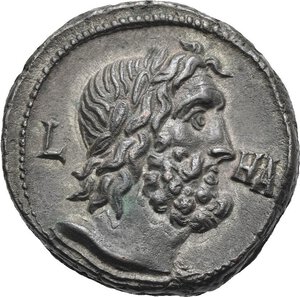
Egypt, Alexandria. Gallienus 253-268. Tetradrachm (Billon, 21.13 mm, 10.38 g). Dated RY 14 = AD 266/7. AY T KΠ ΛIK ΓAΛΛIHNOC CЄB Laureate and cuirassed bust of Gallienus right. Rev. Draped bust of Selene right wearing taenia; before, lunar crescent; L IΔ (date) in left field. Dattari 5264. Emmett 3834. Very rare in this condition Extremely Fine.
Ex Victor England, CNG, purchased in February 1988.
Well-preserved and centred coin with high relief, statuary images. Portrait of Gallienus in the new classical style and a soft, delicate bust of Selene, which pairs with that of Helios, no. 325, in this collection.
Lot # 323
-
Egypt, Alexandria. Gallienus 253-268. Tetradrachm (Billon, 23.05 mm, 11.59 g). Dated RY 8 (of Valerianus I and 1 of Gallienus ruling on his own) = AD 260/1. AY TK Π ΛIK ΓAΛΛIHNOCCЄB Laureate and cuirassed bust right; slight drapery on left shoulder. Rev. Laureate head of Zeus right; L HA (date) across fields. Dattari 5270 (this specimen). Emmett 3841 (4). Extremely rare. Extremely Fine.
Ex Giovanni Dattari Collection 5270: obverse illustrated in Plate VI and reverse in plate XXV. Ex Dr. Piero Beretta, Milano. Ex Renzo Canavesi Collection, Sagno. Specimen bought in 1996.
An extremely rare coin, in exceptional condition and also historically important because it marks the transition to the head of the empire from Valerian I, taken prisoner by Shapur I, after the lost battle of Edessa against the Sassanid Persians, who short after, deceased. It should be noted that the handcrafted portrait looks more like that of Valerian I than that of his son Gallienus.
Lot # 322
-
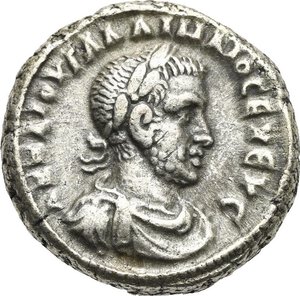
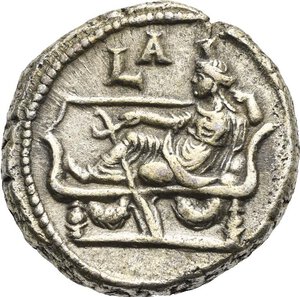
Egypt, Alexandria. Gallienus 253-268. Tetradrachm (Silver, 22.00 mm, 10.60 g). Dated RY 1 = AD 253/4. A K Π AI OY ΓAΛΛIHNOC ЄY ЄYC Laureate, draped, and cuirassed bust right. Rev. Tyche reclining left on lectisternium (couch), holding rudder, resting elbow on pile of pillows and propping head on hand; L A (date) above, in upper field. Geissen –. Dattari-Savio 5213. K&G 90.6. Emmett 3743.1 (R5). Kellner p. 130, pl. 14, Abb. 16 (this coin). Toned, a couple of old scratches on Gallienus' face. Extremely rare type for this regnal year. Full silver. Good Very Fine.
Purchased privately by A.K from Münzen und Medaillen AG, 1970. Ex A.K. Collection (Triton XXIII, 14 January 2020), lot 835 (part of). Ex CNG, E-Auction 463, 11.03.2020, lot 277.
A coin of great rarity because it was exceptionally minted in full silver at a time when the misture was of low alloy. On the obverse, a beautiful statuary portrait of the young emperor then co-regent with his father Valerian I. The Tyche of Alexandria, which appears on the lectisternium only in this reign year, is auspicious of the ‘adventus augusti’.
Lot # 321
-
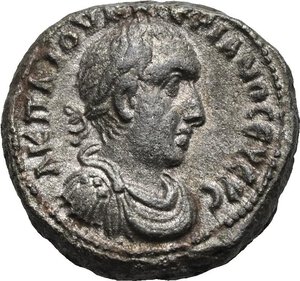
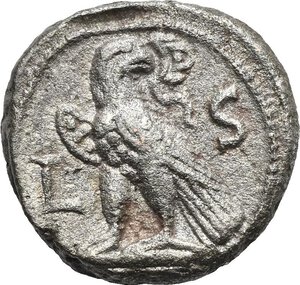
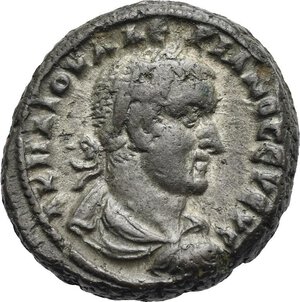
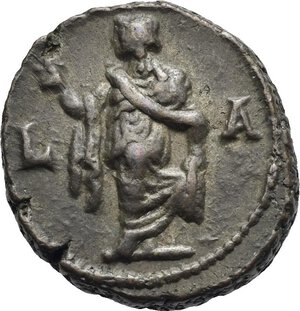
Egypt, Alexandria. Valerian I, 253-260. Tetradrachm (Billon fully silvered, 22.00 mm, 11.57 g). Dated RY 6 = AD 258/9. A K Π ΛI OYAΛЄPIANOC ЄY ЄY C Laureate, draped and cuirassed bust right. Rev. Eagle standing to left, head to right holding wreath in beak; L S (date) across fields. Dattari-Savio 5186. Emmett 3705.6. Scarce. Very Fine.
Ex Fritz Rudolf Künker GmbH & Co., purchased in March 2008. Ex CNG Auction 463, lot 273 and ex Roma Numismatics Ltd., E-Sale 95, 13.04.2022, lot 736.
Fully silvered tetradrachm of Valerian, featuring on the obverse a robust and realistic high-relief portrait of the emperor, struck just months before he was captured in 260 by Shapur I, king of the Sassanid Persians, who defeated him at the Battle of Edessa, deported him, enslaved him, and whose wretched end remains unknown.
Lot # 320
-
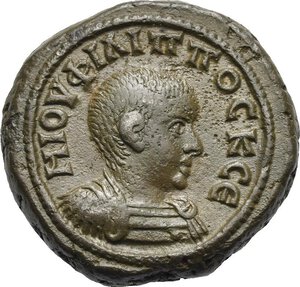
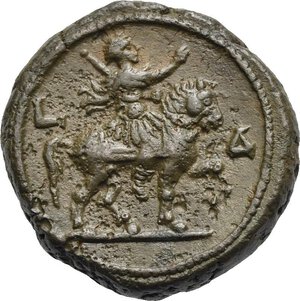
Egypt, Alexandria. Valerian I, 253-260. Tetradrachm (Billon, 21.72 mm, 11.84 g). Dated RY 1 = AD 253/4. AK Π ΛI OYAΛЄPIANOC ЄY ЄYC Laureate, draped and cuirassed bust of Valerian right; gorgoneion on chest. Rev. Elpis standing, facing left, dressed in chiton and peplos, is holding a flower in her right hand; L A (date) across fields. Dattari 5151 (this specimen). Dattari-Savio Plate 269, 5151 (this specimen). Milne 3867. Emmett 3709. Nice portrait and patina. Good Very Fine.
Ex Giovanni Dattari Collection, il Cairo. Ex Jean-Pierre Righetti Collection I. Ex Münzen und Medaillen Deutschland, Auction 12, 11.04.2003, lot 653.
Tetradrachm struck at the beginning of Valerian’s reign: Year A = AD 253–254, featuring on the obverse a well-executed and fairly physiognomic imperial portrait. On the reverse, Elpis, the Greek goddess of hope, walks solemnly and confidently. Yet hope played little role in favour of Valerian, whose fate was both humiliating and tragic. An excellent coin, formerly part of the Giovanni Dattari collection.
Lot # 319
-
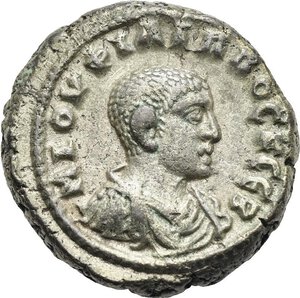
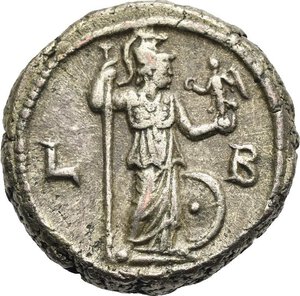
Egypt, Alexandria. Philippus II as Caesar, 244-247. Tetradrachm (Billon, 23.00 mm, 13.33 g). Dated RY 4 (of Philippus I) = AD 246/7. M IOY ФIΛIΠΠOC K CЄ Bareheaded and cuirassed bust of Philippus II right, seen from the front; gorgoneion on cuirass. Rev. Philippus I, laureate, on horseback right, wearing chlamys, flowing from shoulder; right arm outstretched while holding in left hand a short sceptre resting on shoulder; L Δ (date) across fields. Geissen 2792. BMC 2052. Milne 3688. Dattari 5016 var. Dattari-Savio 12476. K&G 76.34. RPC VIII online 2820. Curtis 1394-1395. Emmett 3588 (5). Very rare. Brown patina, light roughness. Very Fine.
From the Dr. Thomas Beniak Collection. Ex Empire Coins Sale 8, 07.12.1987, lot 758 and ex CNG, E-Auction 556, 21.02.2024, lot 404.
Once again Philip II as Caesar (he would be made Augustus by his father in AD 247), with a fine tetradrachm struck using the typical technique and metal of the period. Here he is portrayed as a child—he was in fact 6 or 7 years old—in AD 246–247, on the eve of his elevation to Augustus by his father, who appears on the reverse, cuirassed and triumphant, riding a horse at a trot to the right. This coin clearly served as a piece of dynastic propaganda in anticipation of the millennium of Rome, which was celebrated only in AD 248.
Lot # 318
-
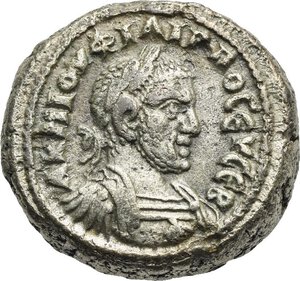
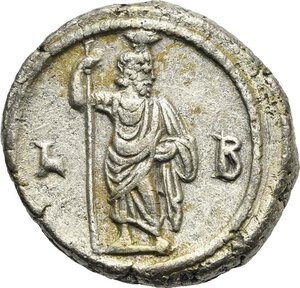
Egypt, Alexandria. Philippus II as Caesar, 244-247. Tetradrachm (Silver, 22.76 mm, 12.81 g). Dated RY 2 (of Philippus I) = AD 244/5. M IOY ФIΛIΠΠOC K CЄB Draped and cuirassed bust of Philippus II as Caesar right. Rev. Helmeted Athena standing facing right towards a small Victory, she is holding in her left hand; a spear, in her right hand and a shield at her feet right; L B (date) across field. Geissen -. BMC -. Dattari -. Emmett 3583 (5). Extremely rare. Minted in full silver. Very Fine.
We are still in the second year of the reign of Philip I the Arab (AD 144–145), with another extremely rare tetradrachm struck in the name of his son Philip, still Caesar at the time, using the same piedfort-style flan technique and, most notably, in solid silver—an exceptional and unusual occurrence that likely corresponds to some significant event that took place in that year, though it has yet to be identified. On the reverse shines the imposing figure of Athena Parthenos as a warrior, holding in her left hand a graceful little Victory who crowns her.
Lot # 317
-
Egypt, Alexandria. Philippus I, 244-249. Tetradrachm (Virtually Billon but Silver, 23.39 mm, 13.89 g). Dated RY 2 = AD 244/5. A K M IOY ФIΛIΠΠOC ЄYCЄB Laureate and cuirassed bust right; gorgoneion on cuirass. Rev. Serapis standing, wearing Kalathos, head turned right, is holding a sceptre in his left hand; L B (date) across field. Geissen 2713. Dattari-Savio 4997. Emmett 3506. Really minted in full silver. Very rare as such. Extremely Fine.
Ex Victor England (CNG), purchased in 1993.
Exceptional tetradrachm struck by Philip I in high-quality silver—an absolute rarity during an economically troubled period when such coins were virtually devoid of it. The flan is also notably thick, comparable to a piedfort. On the reverse, a solemn full-length figure of Zeus Serapis is shown, draped in a mantle, holding a sceptre and wearing a kalathos.
Lot # 316
-
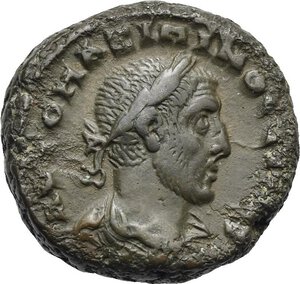
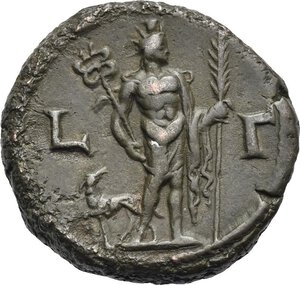
Egypt, Alexandria. Maximinus I, 235-238. Potin Tetradrachm (Billon, 22.55 mm, 11.40 g). Dated RY 3 = AD 236/7. AYT O MAΞIMINO C ЄYC CЄ Laureate and cuirassed bust right, seen from behind. Rev. Hermanubis standing facing, head right, radiate and wearing Kalathos, holding palm frond in his right hand and caduceus in his left; at his feet left, retroverted jackal standing left; L Γ (date) across field. Geissen –. Milne 3253. Dattari 4577. K&G 65.39. RPC VI Online 10704. Emmett 3283 (R3). Brown patina, slight corrosion on edge. Attractive details on both sides. Very rare, only six specimens recorded in RPC. Near Very Fine.
Ex Auctiones AG Basel, Auction 26, 16-19.09.1996, lot 461.
Another very rare tetradrachm of Maximinus I, featuring the same physiognomic characteristics as the previous specimen, while the reverse presents an unusually elegant and atypical image for the period: Hermanubis Pantheos, semi-nude, holding a caduceus in his left hand. This psychopomp deity, who guided the souls of the dead to the afterlife, is depicted with his faithful jackal at his feet.
Lot # 315
-
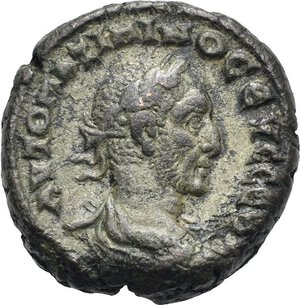
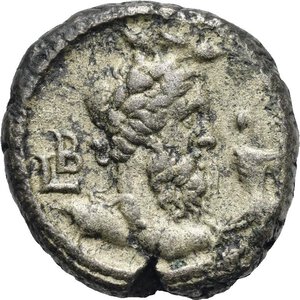
Egypt, Alexandria. Maximinus I, 235-238. Tetradrachm (Billon, 23.00 mm, 12.55 g). Dated RY 2 = AD 235/6. AYTO MAΞIMINOC ЄVC CЄB Laureate, draped and cuirassed bust to right. Rev. Draped bust of Nilus to right, wearing lotus wreath on head; LB (date) in left field and cornucopia in right field. RPC VI Online 10676 (temporary). K&G 65.18. Dattari-Savio 4586. Emmett 3292. BMC 1800. Geissen 2558. Rare. High silver content. Very Fine.
From the New Orleans Collection. Purchased from Fritz Rudolf Künker GmbH & Co. KG, March 2008, lot 2764. Ex CNG, Auction 111, 29.05.2019, lot 593 and Ex Roma Numismatics Ltd., E-Sale 95, 13.04.2022, lot 718.
This tetradrachm shows a starkly realistic portrait of the brutal emperor Maximinus I, of obscure Thracian origins, who devoted his entire life to military careers and campaigns, marked by ferocity and constant conflict with the Roman Senate. He was the first soldier-emperor of the third century and never set foot in Rome. Equally grim on the reverse is the figure of Nilus, who is usually depicted as a peaceful and empathetic river deity.
Lot # 314
-
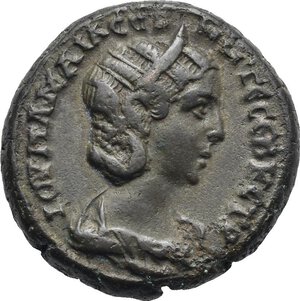
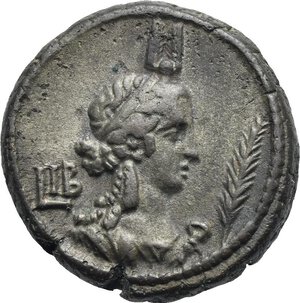
Egypt, Alexandria. Julia Mamaea, mother of Severus Alexander 222-235. Tetradrachm (Billon, 24.06 mm, 12.04 g). Dated RY 12 = AD 232/3. IOY MAMAIA CЄB MHTЄ CЄB K C TP Diademed and draped bust of Julia Mamea right. Rev. Isis bust right, wearing basileion and Isiac knot on chest; before, palm frond and behind L IB (date) in field. Dattari 4495 (this specimen). Emmett 3211 (4). Very rare. Attractive portraits. Good Very Fine.
Ex Giovanni Dattari Collection, Il Cairo. Ex Giuseppe Nascia, Milano. Ex Athos Moretti Collection, Bellinzona. Specimen purchased in May 1987.
Elegant and rare tetradrachm of the August Julia Mamea, mother of Severus Alexander, from the prestigious collection of Giovanni Dattari and of impeccable mintage with high relief and perfect centring as well as superb conservation. Noble and serene is the portrait of the empress mother and delicate the image of the placid Isis, the major Egyptian female divinity.
Lot # 313
-
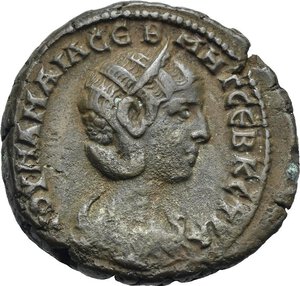
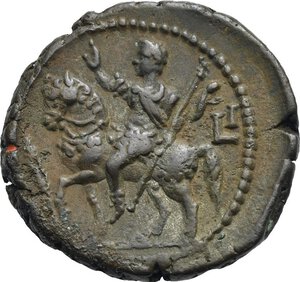
Egypt, Alexandria. Julia Mamaea, mother of Severus Alexander 222-235. Tetradrachm (Billon, 25.71 mm, 11.35 g). Dated RY 10 = AD 230/1. IOY MAMAIA CЄB MHT CЄB KC T PA Diademed (with Stephane) and draped bust of Julia Mamaea right. Rev. Cuirassed and draped Emperor on horseback advancing left, raising right hand and holding sceptre in his left; in front, palm branch; L Ι (date) in upper right field. Dattari 4453. Emmett 3204 (5). Very rare. Dark brown patina. Very Fine.
Ex Numismatica Aretusa SA, Lugano, (Franco Chiesa). Specimen purchased in October 1978.
Uncommon tetradrachm of Julia Mamaea, struck on a broad flan that comfortably accommodates both the engraved figures and the complex obverse legend in their entirety. On the reverse, a cuirassed Severus Alexander on horseback triumphantly celebrates the decennalia of his reign, as confirmed by the coin’s date, and responds to the imperial salutation with the grateful gesture of his raised right arm.
Lot # 312
-
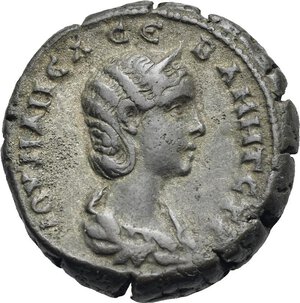
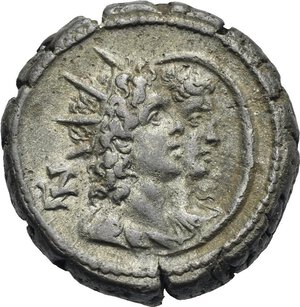
Egypt, Alexandria. Julia Mamaea, mother of Severus Alexander 222-235. Tetradrachm (Billon, 23.62 mm, 13.96 g). Dated RY 7 = AD 227/8. IOY MAMЄA CЄ BA MHT P Draped bust of Julia Mamaea, wearing Stephane, right. Rev. Conjoined draped busts of Helios, wearing radiate crown, and Selene; set within crescent, to right; L Z (date) in left field. Geissen 2510. Dattari-Savio 4486 (this specimen). K&G 64.22. Emmett 3206. (5). BMC 1727. Extremely rare type for this regnal year. Very Fine.
Ex Giovanni Dattari Collection, Il Cairo. Ex Giuseppe Nascia, Milano and ex Athos Moretti Collection, Bellinzona. Specimen purchased in May 1987.
Exceptionally rare tetradrachm of Julia Mamaea, notable for its pleasing style, both in the portrait of the Augusta on the obverse and in the harmonious depiction of the complementary youthful deities Helios and Selene. Its provenance from the Giovanni Dattari collection further guarantees the prestige of this coin.
Lot # 311
-
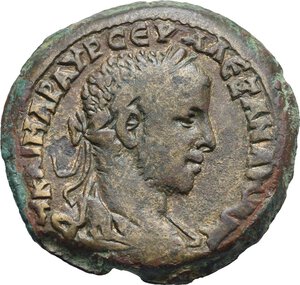
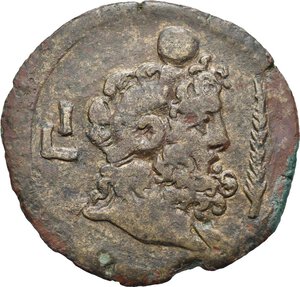
Egypt, Alexandria. Severus Alexander 222-235. Drachm (Bronze, 33.00 mm, 16.39 g). Dated RY 10 = AD 230/1. Α ΚΑΙ ΜAP ΑYΡ СЄY ΑΛЄΞΑΝΔPOC ЄY Laureate, draped and cuirassed bust right, seen from behind. Rev. Head of Zeus-Ammon right, wearing solar disk, palm frond to right; in left field, L I (date). Geissen -. Dattari-Savio 4443&10010. K&G 62.129. RPC IV online 10438. Emmett 3182.10 (R4). Extremely rare. Brown surfaces, some smoothing, details enhanced. Near Very Fine.
Ex CNG, E-Sale 512, 23.03.2022, lot 470.
A drachm of great charm, with an expertly engraved coinage, but of low thickness so as to render less effective the typing, which is nevertheless well done, with the complete legend and images centred. This drachm, like others of the same year by his mother Julia Mamaea, belongs to the vast and artistically valuable celebratory series of the ‘decennalia’ of the reign of Severus Alexander. This year the auspicious palm tree, which would accompany the imperial couple until its tragic end in AD 235, also began to appear permanently on the coin reverses.
Lot # 310
-
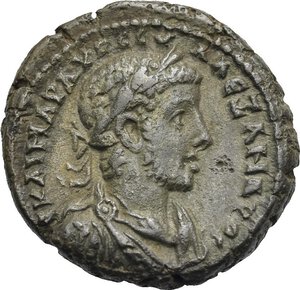
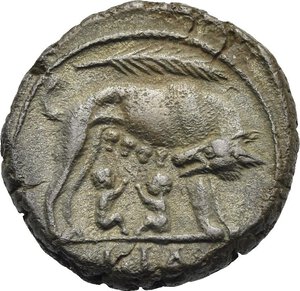
Egypt, Alexandria. Severus Alexander 222-235. Tetradrachm (Billon, 24.06 mm, 12.04 g). Dated RY 14 = AD 234/5. Α ΚΑΙ ΜAP ΑYΡ СЄY ΑΛЄΞΑΝΔPOC Laureate, draped and cuirassed bust right. Rev. Capitoline She-Wolf right, head turned left and the twins Romolus and Remus suckling; under the exergual line, L IΔ (date). Dattari 4418 (this specimen). Emmett 1142. Good Very Fine/Extremely Fine.
Ex Giovanni Dattari Collection, Il Cairo. Ex Giuseppe Nascia, Milano. Ex Athos Moretti Collection, Bellinzona, acquired in May 1987.
The end of the reign of Severus Alexander is approaching, who on the reverse of this rare tetradrachm reiterates, with the significant display of the Capitoline She-wolf suckling the brothers Romulus and Remus, the founders of Rome, the clearly Roman-centric character of his management of the empire, and it is worth remembering that he never undertook, as his dynastic predecessors Septimius Severus and Caracalla did, a journey to Egypt.
Lot # 309
-
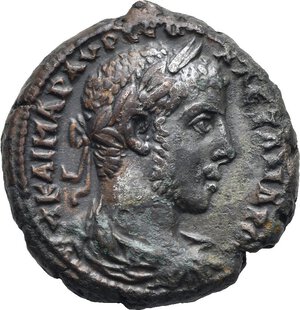
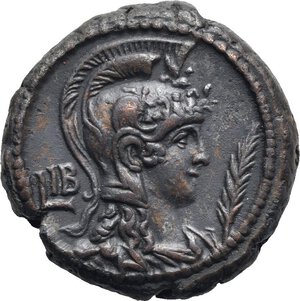
Egypt, Alexandria. Severus Alexander 222-235. Tetradrachm (Billon, 22.00 mm, 11.99 g). Dated RY 12 = AD 232/3. Α ΚΑΙ ΜAP ΑYΡ СЄY ΑΛЄΞΑΝΔPOC Laureate draped and cuirassed bust right. Rev. helmeted and draped bust of Athena Parthenos right; L IB (date) in field left; palm frond to right. Geissen 2476. Dattari-Savio 4275. K&G 62.176. BMC -. Milne 3096. Demetrio 2503. Curtis 1051/1052. RPC VI online 10558.10 (temp. this coin). Emmett 3093.12. Dark brown surfaces with some green and coppery highlights. Extremely Fine.
From the Dr. Thomas E. Beniak Collection. Ex Hermanubis Collection (CNG 105, 10 May 2017), lot 627 (since cleaned). Ex CNG E-Auction 556, 21.02. 2024, lot 391.
Another tetradrachm of Severus Alexander of exquisite style and exceptional preservation where the imperial portrait highlights the firm character of the sovereign aware of the dignity and authority of the function he held. And also sensitive to the protective presence exercised over him, in addition to his mother Julia Mamaea always at his side, the noble and powerful image of the divine Athena Parthenos who appears on the reverse helmeted and armoured in an engraving by a great master of the classical tradition. According CNG: “Despite the changes to the coin’s surfaces since the last auction appearance, this coin remains very attractive in hand”.
Lot # 308
-
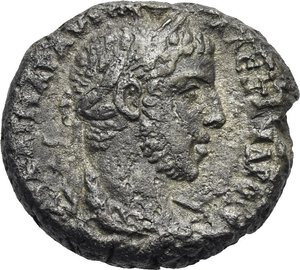
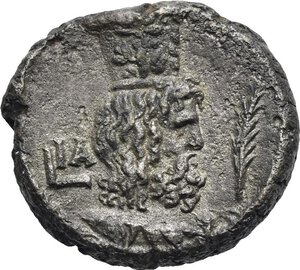
Egypt, Alexandria. Severus Alexander 222-235. Tetradrachm (Billon, 23.00 mm, 12.68 g). Dated RY 11 = AD 231/2. Α ΚΑΙ ΜAP ΑYΡ СЄY ΑΛЄΞΑΝΔPOC Laureate, draped and cuirassed bust right. Rev. Draped bust of Serapis right, wearing kalathos; in front, palm branch; in left field, LIA (date). Dattari-Savio Plate 234, 9949 (this coin). Emmett 3133. Toned, minor porosity on obverse. Very Fine/Good Very Fine.
From the Dattari Collection. Ex Naville Numismatics Ltd., Auction 69, 14.11.2021, lot 243.
From the collection of Giovanni Dattari too, comes this tetradrachm of Severus Alexander with an imperial bust on the obverse and a strong-willed physiognomic portrait of the young ruler, while on the reverse it recalls, with the bust of Zeus Serapis, the Hellenistic Greek tradition of Egyptian theology in which the divinities of pharaonic origin and those of the contemporary Roman world coexist.
Lot # 307
-
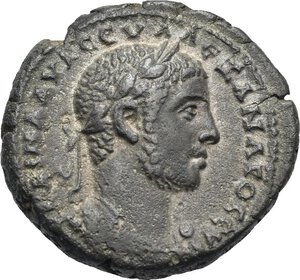
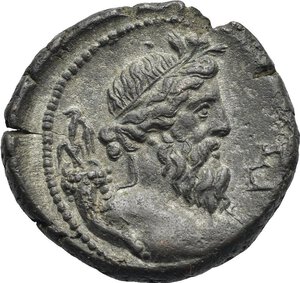
Egypt, Alexandria. Severus Alexander 222-235. Tetradrachm (Billon, 25.41 mm, 11.29 g). Dated RY 8 = AD 229/30. Α ΚΑΙ ΜA ΑYΡ СЄY ΑΛЄΞΑΝΔPOC ЄY Laureate and draped bust right. Rev. Nilus bust right, cornucopia at left, LH (date) in field right. Dattari 4329. Dattari-Savio 9827 (this specimen). Emmett 3122 (R5). Very rare. About Extremely Fine.
Ex Giovanni Dattari Collection, Il Cairo. Ex Kunst und Münzen, Auction XXII, 02-04.04.1981, lot 373.
A gorgeous tetradrachm of Severus Alexander in the prime of his youth with a statuesque portrait that seems to emerge from the flan in all its splendour given also the state of the coin, which does not appear to have been circulated. In the same situation is the powerful bust of the bearded Nilus on the reverse with an attitude more of a philosopher than a divinity. All perfectly centred within a large size coin and with old collection patina, such is in fact the coin's origin from the collection of Giovanni Dattari.
Results from 18101 to 18150 of 32905