Roman Imperial Coins
Results from 27451 to 27500 of 32902
Lot # 322
-
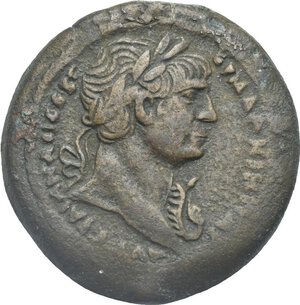
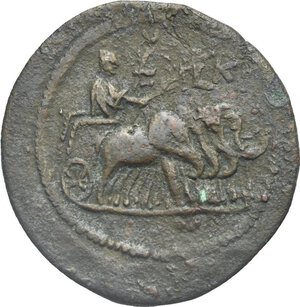
Egypt. Alexandria. Trajan, 98-117. Drachm (Bronze, 35.34 mm, 18.71 g). Dated RY 20 (= 116/7). ΑΥΤ ΤΡΑΙΑΝ ΑΡΙ ϹЄΒ ΓЄΡΜ ΔΑΚΙΚ ΠΑΡ Laureate head of Trajan to right, with aegis on his left shoulder. Rev. Trajan driving quadriga of elephants to right, holding eagle-tipped scepter in his left hand and branch in his right; L K (date) in upper right field. Dattari-Savio 774. RPC III 4938.1. Emmett 462. BMC 514. SNG France 1258. Minor roughness, otherwise, Good Very Fine. Rare year of reign.
Ex Hirsch 105, 1977, lot 3225. Ex Hirsch 317, 18.02.2016, lot 2088.
We encounter here a bronze drachm of exceptionally large form with centred and intact images and an original brown patina spread evenly over obverse and reverse, where the ‘invictus imperator’ is celebrated at the head of a quadriga of African elephants in his twentieth and final year of reign.
Lot # 321
-
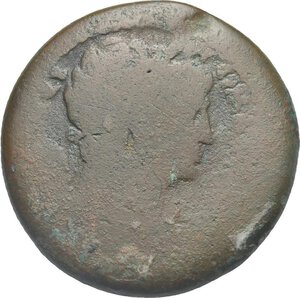
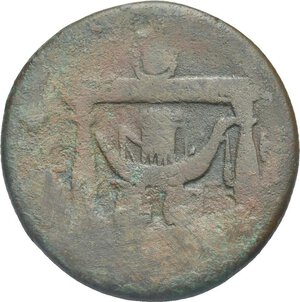
Egypt. Alexandria. Trajan, 98-117. Drachm (Bronze, 33.26 mm, 21.76 g). Dated RY 19 (= 115/6). [ΑΥΤ ΤΡΑΙΑΝ Ϲ]ΕΒ ΓΕΡΜ [ΔΑΚΙΚ] Laureate head to right, aegis over far shoulder. Rev. Distyle Greco-Egyptian temple enclosing a cart with a barge, upon which rests a square shrine, surmounted by hawks, enclosing uncertain objects; [L]-IΘ (date) across fields. RPC III, 4951 note (RY 20) var. (wreathed with corn ears) and 4632 (RY 15). cf. Dattari-Savio 1159 (date recorded by Dattari as [L]-IΘ but unclear) and 7278. Emmett 426. Fine. Extremely Rare.
Ex Giovanni Dattari Collection 1159. Ex Naville Numismatics Ltd. 47, 03.03.2019, lot 274.
For the discussion of the potential dating of this issue, cf. RPC III 4632 note.
G.M. Staffieri and M. Tosi, ‘La barca sacra di Osiri nella monetazione alessandrina’, in (eds.). D. Gerin and others, Aegyptiaca Serta in Soheir Bakhoum Memoriam (Edizioni Ennerre, Milan, 2008), pp. 229-35.
The following article outlines how the design recurs in years 19 and 20, but see below. The design recurs on rare coins of Marcus Aurelius, year 16 (see RPC IV online, citing NY 1944.100.611341 and Münzhandlung Basel 6 (1936) lot 970; see also D3357-8, A Dem 2084). The object in the shrine on the coins of Trajan does not look like a mummy of Osiris (as on the coins of Aurelius), and is perhaps a representation of its external decoration (see e.g. the barge depicted by Staffieri and Tosi on their p. 235). A specimen was also described by D for year 19 (D1159: ‘[L I]Θ’), but the date is not clear on the rubbing in DS (and the obv. illegible), and it is probably safer to regard it as probably another coin of year 15. O815 is the same design, of year 20 (or possibly 19?).
Lot # 320
-
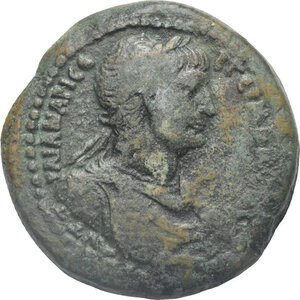
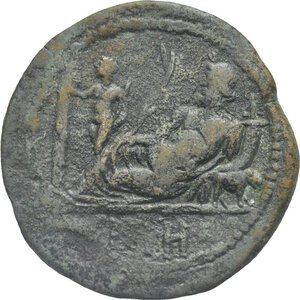
Egypt. Alexandria. Trajan, 98-117. Drachm (Bronze, 34.60 mm, 20.27 g). Dated RY 18 (= 114/5). ΑΥΤ ΤΡΑΙΑΝ ΑΡΙ ϹΕΒ ΓΕΡΜ Δ[ΑΚΙΚ] Half-length bust to right, wreathed with corn ears, drapery over far shoulder. Rev. Nilus reclining on hippopotamus to left, holding reed and cornucopia; before, genius and nilometer; L IH (date) in exergue. Dattari 993 (this specimen). RPC III, 4871.1. Cf. Geissen 652 (dated RY 17). BMC 2775. Emmett 551. Rough surface. Very Fine. Very Rare. Only three specimens reported in RPC.
Ex Giovanni Dattari Collection 993. Ex Naville Numismatics Ltd. 42, 12.07.2018, lot 312.
A rare drachm already in the celebrated Dattari collection showing on the reverse, in addition to the usual peaceful image of the Nilus lying on a bed resting on the back of a hippo, also the singular and uncommon figure, at left, of a genius keeper and manager of the Nilometer column.
Lot # 319
-
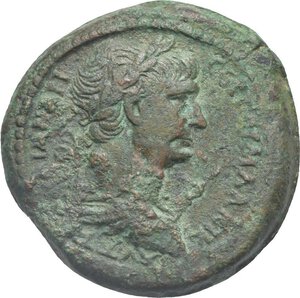
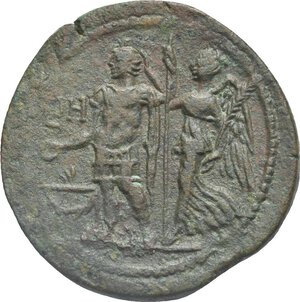
Egypt. Alexandria. Trajan, 98-117. Drachm (Bronze, 35.35 mm, 25.32 g). Dated RY 18 (= 114/5). ΑΥΤ ΤΡΑΙΑΝ ΑΡΙ ϹΕΒ ΓΕΡΜ ΔΑΚΙΚ Laureate, draped and cuirassed bust right. Rev. The Emperor, laureate-headed, in military dress standing left, holding patera and sceptre; to left altar, to right Nike advancing left, raising arm and holding wreath and palm-branch; L-IH (date) in left field. RPC 4862.1.6 (this coin). Dattari-Savio 6951 & Dattari 791. Emmett 478. Geissen 673. Rough brown and green patina. Very Fine.
Ex Heidelberger Münzhandlung 20, 22-24.05.1997, lot 235.
The drachm belongs to the last years of Trajan’s alexandrian issues. It impressively celebrates on reverse the glory of the victorious ruler who brought to the maximum the territorial extension of the Roman Empire.
Lot # 318
-
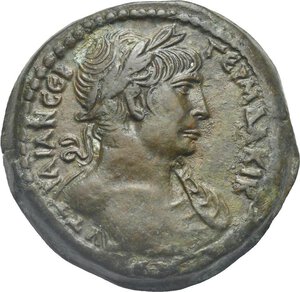
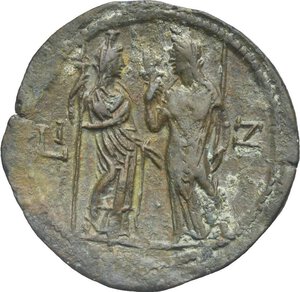
Egypt. Alexandria. Trajan, 98-117. Drachm (Bronze, 36.01 mm, 25.05 g). Dated RY 17 (= 113/4). ΑΥΤ ΤΡΑΙΑΝ CЄΒ ΓЄΡΜ ΔΑΚΙΚ Heroic nude bust of Trajan to right, with slight drapery on his left shoulder. Rev. Demeter on the left, standing right, holding torch in her right hand and grain ears in her left, facing Euthenia on the right, standing left, holding grain ears in her right hand and scepter in her left; L I-Z (date) across field. Dattari-Savio 6986. RPC III, 4784.2. Emmett 436. Lovely brown chocolate patina. Nearly Extremely Fine. Rare.
Ex Auctiones 15, 18-19. 09. 1985, lot 395.
In this drachm too, perfectly preserved, well centred and with splendid patina, it stans out on the reverse the “OMONOIA”, as in the previous coin Nr. 60 of the collection, i.e. the concord: the complementarity in promoting the fertility of the earth by the two deities in charge, Demeter at left with torch and ear of wheat and Eutheria facing at right also with bundle of ears of wheat and sceptre.
Lot # 317
-
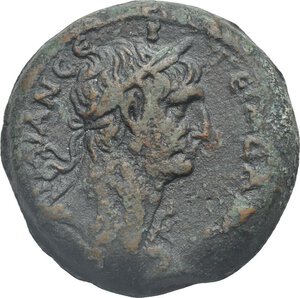
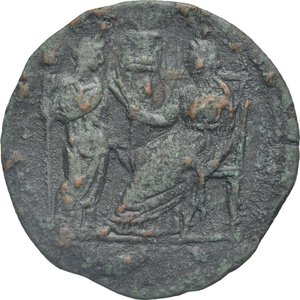
Egypt. Alexandria. Trajan, 98-117. Drachm (Bronze, 34.29 mm, 24.39 g). Dated RY 17 (= 113/4). ΑΥΤ ΤΡΑΙΑΝ ϹΕΒ ΓΕΡΜ ΔΑΚΙΚ Laureate half-length nude bust of Trajan right, with aegis on left shoulder. Rev. Demeter standing right, holding torch, Euthenia seated left, holding torch and ears of corn; between, (small figure of Harpocrates (?) and column surmounted by kalathos on serpents); [L ΙΖ] (date). Geissen -. Dattari-Savio 6991 (this coin). RPC III, 4786.3. Emmett 438. Brown patina, minor roughness, otherwise, Very Fine. Rare.
Ex Giovanni Dattari Collection 6991. Ex Naville Numismatics Ltd. 41, 24.06.2018, lot 319.
This drachm reverse of illustrious origin, recalls that of n. 61(of this collection) issued in the same year, though here Eutheria is sitting. Demeter, the goddess of nature and crop and Eutheria the goddess of prosperity, cooperate for the harvest success.
Lot # 316
-
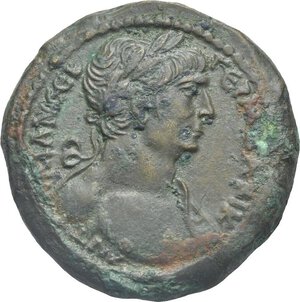
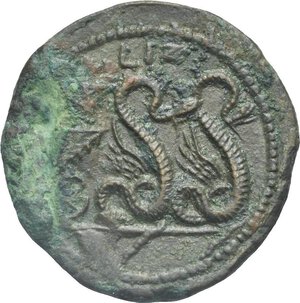
Egypt. Alexandria. Trajan, 98-117. Drachm (Bronze, 35.0 mm, 21.11 g). Dated RY 17 (= 113/4). ΑΥΤ ΤΡΑΙΑΝ ϹΕΒ ΓΕΡΜ ΔΑΚΙΚ Laureate bust right, slight drapery. Rev. Biga of winged serpents right, with tails falling into exergue, carrying kalathos with grain ears; L IZ (date) above. Dattari-Savio 1103. RPC III, 4803.4 (this coin illustrates the type). Geissen 648. Emmett 538. Attractive brown patina with some green, areas of roughness. Good Very Fine.
Ex Tom Buggey collection. Ex CNG 87, 18 May 2011, lot 905. Ex Agora Auctions, 74, 05.06.2018, lot 179.
The realistic bust of Trajan on the obverse is austere and imposing. The reverse scene is very similar to the auspicious image of that shown on nr. 56 of the collection. It has an original dark brown patina and an exceptional preservation despite some greenish porosity on reverse.
Lot # 315
-
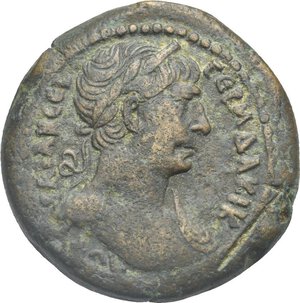
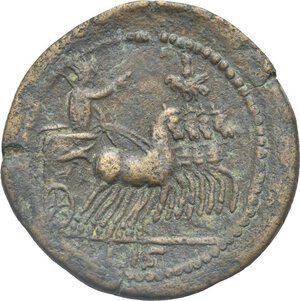
Egypt. Alexandria. Trajan, 98-117. Drachm (Bronze, 34.77 mm, 21.73 g). Dated RY 16 (= 111/2). ΑΥΤ ΤΡΑΙΑΝ ϹΕΒ ΓΕΡΜ ΔΑΚΙΚ Laureate half-length bust right, with drapery over far shoulder. Rev. Emperor standing in quadriga right, holding eagle-tipped sceptre and branch; above, half-length bust atop eagle(?) left; L IϚ (date) in exergue. Geissen -. Dattari-Savio -. RPC III, 4666.2 var. (bust type, reverse). Emmett 459. Minor porosity. Very Fine. Rare.
Ex Roma Numismatics, 66, 09.01.2020, lot 715.
Uncommon drachm especially as regards the small figure, above the horses heads, unknown to Emmett but perhaps representing the apotheosis of Zeus on the flying eagle greeting the triumphant emperor standing on the quadriga.
Lot # 314
-
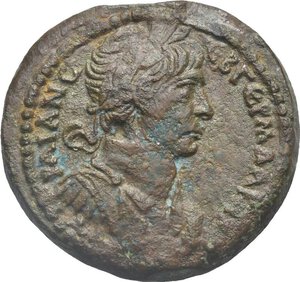
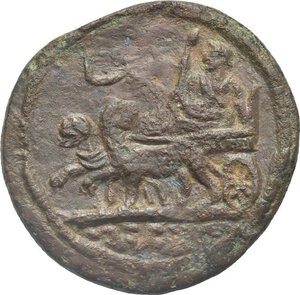
Egypt. Alexandria. Trajan, 98-117. Drachm (Bronze, 33.56 mm, 15.60 g). Dated RY 16 (= 111/2). [ΑΥΤ] ΤΡΑΙΑΝ Ϲ-ΕΒ ΓΕΡΜ ΔΑΚΙΚ Laureate half length bust right, wearing armor and paludament. Rev. Dionysus rides lying on a chariot drawn by two panthers; L ΙϚ (date) in upper field. Geissen 601. Dattari -. RPC -. BMC 419 var. Milne 678 var. Emmett - (Cfr. 442 but only fo year 20). Attractive dark red “desert” patina, minor roughness, otherwise, Good Very Fine. Very Rare.
Ex Gorny & Mosch 196, 07-09.03.2011, lot 2286.
This drachm is extremely rare not only for the representation on the reverse but especially for the year of issue (16th) unknown to Emmett. On the reverse we see Dionysus holding with the right hand a tyrsos while lying on a chariot driven by two panthers: it is a joyful and auspicious image: the panther is linked to the theology of the lively Dionysus. Cfr. Staffieri, “Claudio II (268-270 d. C.) e il mito di Dioniso nella monetazione di Seleucia Sidéra in Pisidia” in Quaderni Ticinesi di Numismatica e Antichità Classiche,IL, 2023, pp. 273-283. All embellished by a beautiful original dark red "desert" patina.
Lot # 313
-
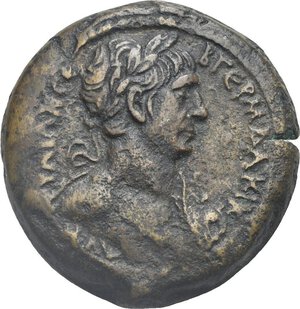
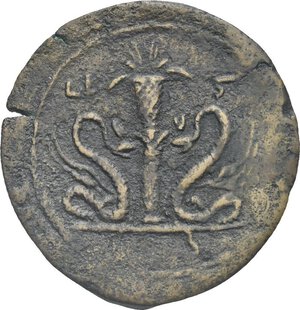
Egypt. Alexandria. Trajan, 98-117. Drachm (Bronze, 34.71 mm, 22.64 g). Dated RY 17 (= 112/3). ΑΥΤ ΤΡΑΙΑΝ ϹΕΒ ΓΕΡΜ ΔΑΚΙΚ Laureate half length bust right, wearing aegis. Rev. Column topped by modius and flanked by agathodaemon serpents with pshent crowns; LI-Ϛ (date) above across field. Cf. Dattari-Savio 7231 (date in exergue) & Dattari 1110. RPC III, 4741.2 (this coin). Cf. Emmett 396. Brown patina with some exposed surfaces due to cleaning showing porosity, otherwise, Very Fine. Rare.
Ex Tom Buggey Collection. Ex HLT Collection. Ex CNG Electronic Auction 87, lot 905. Ex Agora Auctions 75, 10.07.2018, lot 249.
This drachm reverse represents an auspicious scene for harvesting crops grown in fertilized land by flooding of the Nile: this is demonstrated by the abundance of crops that protrude from the modius on the column and by the two winged beneficial snakes which generally pull the air chariot, driven by Triptolemus while spreading seeds on the fields or the one carring kalathos. (see nr. 59 of the collection).
Lot # 312
-
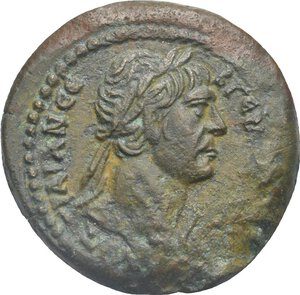
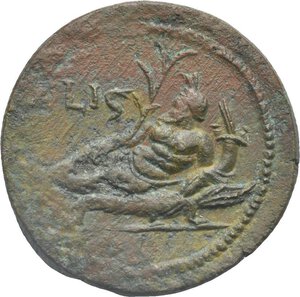
Egypt. Alexandria. Trajan, 98-117. Drachm (Bronze, 34.70 mm, 20.95 g). Dated RY 16 (= 112/3). ΑΥΤ ΤΡΑΙΑΝ CEΒΓEΡ[Μ ΔΑΚΙΚ] Laureate bust right, with aegis on far shoulder. Rev. Nilus reclining left on crocodile, holding reed in right hand and cornucopiae in left; L IϚ (date) in upper left field. Dattari Pl. 45, 968 (this coin). RPC III, 4686.1 (this coin illustrated). Geissen -. Milne -. Emmett 550. Attractive brown patina, light weakness area. Good Very Fine.
Ex Giovanni Dattari Collection 968. Ex Naville Numismatics 62, 13.12.2020, lot 234.
Overlooking a couple of slight weaknesses of die penetration, this rare and of illustrious origin drachm is almost not circulated. Its sculptural and sharp images in particular Trajan’s portrait as a stern and gritty leader are well rendered, in addition to the pleasant original brown-green patina.
Lot # 311
-
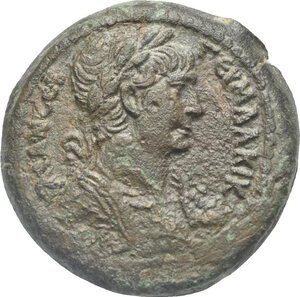
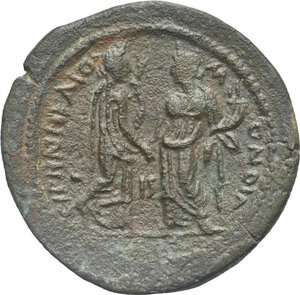
Egypt. Alexandria. Trajan, 98-117. Drachm (Bronze, 34.6 mm, 21.61 g). Dated RY 16 (= 112/3). [AYT] TPAIAN CEB ΓEPM ΔAKIK Laureate bust right, drapery over shoulder. Rev. EIPHNH KAI O-M-ONOIA Eirene, holding two grain ears, standing right, facing and joining hands with Omonoia, standing left, holding double cornucopiae; L-IϚ (date) between. Geissen 603 var. (date position and rev. legend). Dattari 866 var. (same). Emmett 450. SNG Copenaghen 257 var. (same). RPC III, 4715.4.4 (this coin). Attractive brown chocolate patina. Minor roughness, otherwise, Good Very Fine.
Ex Italo Vecchi, London, April 1991.
This drachm’s reverse celebrates the meeting of Peace (Eirene) with Concordia (Omonoia) in evocation and memory of the riots occurred in Alexandria in 108/109 A.D. and positively overcome thanks to the conciliatory and constructive policy of the emperor.
Lot # 310
-
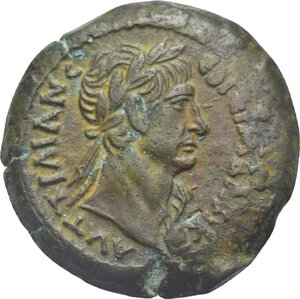
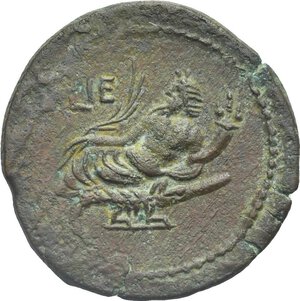
Egypt. Alexandria. Trajan, 98-117. Drachm (Bronze, 35.0 mm, 23.14 g). Dated RY 15 (= 111/2). ΑΥΤ ΤΡΑΙΑΝ CEΒ ΓEΡΜ ΔΑΚΙΚ Laureate bust right, with aegis on far shoulder. Rev. Nilus reclining left on crocodile, holding reed in right hand and cornucopiae in left, below lotus flowers; L IE (date) in upper left field. Dattari-Savio 7108, p. 45 (this coin). RPC III, 4622.3, 15 this specimen. Cf. Geissen 589. Cf. BMC 473. Emmett 550. Light brown patina, minor roughness on reverse. Good Very Fine. Rare.
Ex Giovanni Dattari Collection 7108. Ex Riccardo Sarti Collection, Milano, October 1984.
It is a drachm in the best conditions of conservation and celebrated provenance. The Nilus resting above the crocodile is reproduced with style in plastic form and with particular high relief.
Lot # 309
-
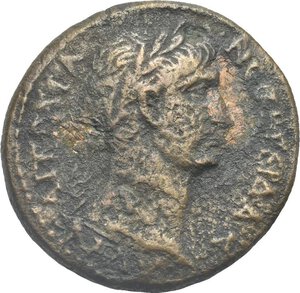
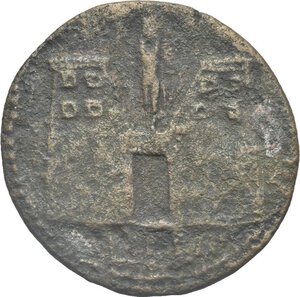
Egypt. Alexandria. Trajan, 98-117. Drachm (Bronze, 32.29 mm, 14.04 g). Dated RY 15 (= 111/2). AYT TPAIAN CEB ΓΕΡΜ ΔΑΚΙΚ Laureate bust right, aegis on far shoulder. Rev. Statue of Isis, holding scepter in right hand, enclosed within pylons of Egyptian temple; L IE (date) in exergue. Dattari -Savio 1166. RPC III, 4629. Geissen -. McClean 9858. Emmett 521. Brown patina with some exposed surfaces due to recent cleaning showing porosity, otherwise, nearly Very Fine. Rare.
Ex Roma Numismatics 66, 09.01.2020, lot 66.
The form and weight of this coin are closer to the hemidrachm than the drachm, but we maintain the classification of RPC III 4629 where the specimen shown is in worse condition than ours, where, still well centred, the egyptian hellenistic temple appearing on the reverse is much similar to that of Isis on Philae-Agilkia Island. Cfr. Staffieri G. M., “Il tempio di Isis a Philae nella monetazione alessandrina” in NAC L, 2021, pp. 231-239.
Lot # 308
-
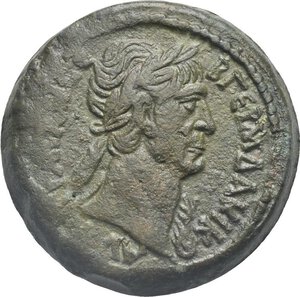
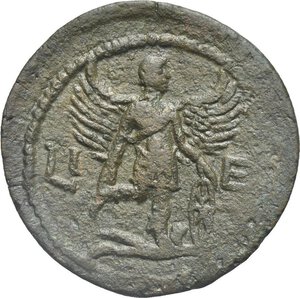
Egypt. Alexandria. Trajan, 98-117. Drachm (Bronze, 34.20 mm, 23.94 g) dated RY 15 (= 111-112) ΑΥΤ ΤΡΑΙΑΝ ϹЄΒ ΓЄΡΜ ΔΑΚΙΚ Laureate bust of Traianus right, wearing aegis on the left shoulder. Rev. Nemesis winged advancing right on a laying to right uncertain figure, raising and bending backwards the right leg with the right hand, holding wheel vertical at ground with the left hand, LI E (date) across fields. RPC III, 4620. Emmett 602. Dattari-Savio 1062 (this specimen). Milne - . Nice light-brown tone. Good Very Fine.
Ex Giovanni Dattari Collection 1062, Il Cairo. Ex Gilbert Steinberg Collection. Ex Numismatica Ars Classica. Ex Spink Taisei Numismatics Ltd. Auction, 16.11.1994, lot 819.
Splendid and very rare drachm from the renowned Dattari collection. The divine Nemesis-Demeter winged and clothed in the act of taking flight, holds with the left the wheel of destiny. It is perhaps an image of sowing, the second of the three seasons of the cycle of fertility of lands washed by the Nile, together with the hope of a particularly fruitful year. Excellent preservation and distribution of the original glossy brown patina.
Lot # 307
-
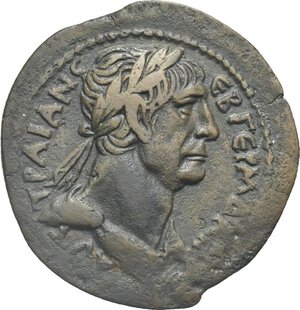
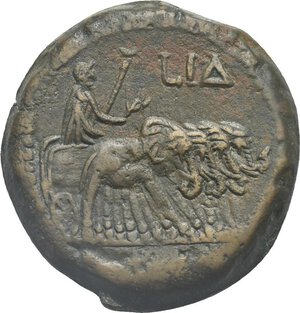
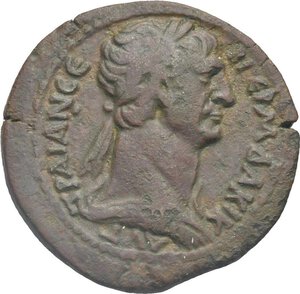
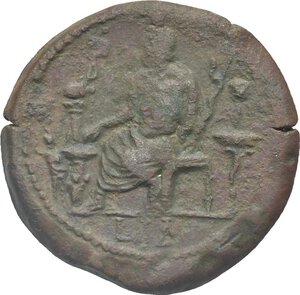
Egypt. Alexandria. Trajan, 98-117. Drachm (Bronze, 33.4 mm, 22.88 g). Dated RY 14 (= 110/11). ΑΥΤ ΤΡΑΙΑΝϹ-ΕΒ ΓΕΡΜ ΔΑΚΙΚ Laureate bust right, with slight drapery and aegis. Rev. Emperor, holding branch and scepter, driving quadriga of elephants right; L IΔ (date) above. Geissen 550. Dattari (Savio) 766-7. K&G 27.316. RPC III, 4510.3. Emmett 462. Milne 621. Brown patina. Good Very Fine.
Ex Kerry K. Wetterström Collection. Ex CNA Ltd. XIII, 04.12. 1990, lot 30.
The exceptional nature of this drachm, as anyone can see, derives from the strange inverting of the position of the two dies at the time of the beat, contrary to the practice. In fact, the planchet, normally cone-shaped, here presents the image of the obverse on the base of the cone instead of the vertex, with the impression of a wider than usual diameter, for the obverse of the coin, and narrower for the reverse. Beyond this unique variety the coin is well centered with an excellent brown patina, little circulated.
Lot # 306
-
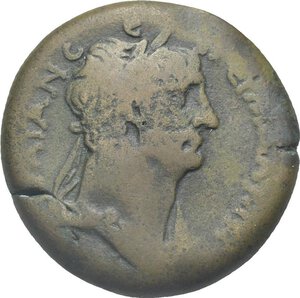
Egypt. Alexandria. Trajan, 98-117. Drachm (Bronze, 33.6 mm, 16.79 g). Dated RY 14 (= 110/11). ΑΥΤ ΤΡΑΙΑΝϹ-ΕΒ ΓΕΡΜ ΔΑΚΙΚ Laureate draped and cuirassed bust right. Rev. Sarapis seated left, between fountains (?); from the one to the left rises a small figure holding a vexillum; from the one to right, rises a flower; to left, small figure (Harpocrates); L ΙΔ (date) in exergue. Geissen -. Dattari -. Emmett -. RPC III, 4534 (only this coin cited and illustrated). Attractive brown patina. Minor roughness on reverse. Very Fine. Extremely Rare or unique? Apparently this is the only specimen known, there are no other published examples.
Ex Müller Sölingen 27 (1989) lot 2184. Ex Kölner Münzkabinett 67, 12-13.11.1997, lot 520.
As clearly noted by RPC III, 4534 who describes it in detail and illustrates it at table 209, this drachm is known only through this specimen. The unusual scene depicted on the reverse probably refers to a ritual and liturgical ceremony presided over by Sarapis, of which there are no other references so far. The chocolate brown patina regularly covers the entire coin and enhances the images.
Lot # 305
-
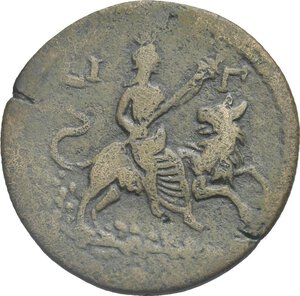
Egypt. Alexandria. Trajan, 98-117. Drachm (Bronze, 32.00 mm, 17.43 g). Dated L I Γ= year 13 (109 / 110 AD) ΑΥΤ KAI TPAIAN CEB ΓEP ΔAKIK Laureate and draped bust of Trajan right. Rev. Anepigraph. Isis-Demeter-Sothis, holding a torch in her right hand, is sitting on the right side on the back of a majestic dog that runs leaping towards the right, turning its head to the left; the goddess wears a chiton, peplos and basileion on her head; below and behind the dog you can see some clouds (?). In the field, at sides the date L I Γ. Vogt I, pp.116-120. Vogt II, p. 30. Dattari 929, this specimen illustrated at plate XXVII. RPC III 4408.2.3 this specimen. Emmett 533. Staffieri, G. M., Isis-Demetra-Sothis nella monetazione alessandrina, in “Annotazioni numismatiche” N. 30, pp. 693-697, Milano, 1998. Staffieri, G. M., Alexandria in Nummis, pp. 293-294, Muzzano 2017. Very Fine, the best possible for this coin's type.
Ex Giovanni Dattari Collection 929, il Cairo. Ex Naville Numismatics 40, 27.05.2018, lot 365.
It is the best preserved and legible drachm of the three known (see RPC III 4408.1.1/3) where on the rare reverse, it is shown the scene which interprets, in Egyptian theology, the astronomical-astrological association of Isis-Demeter in the star Sothis (the Roman Sirius), the brightest star in the Canis Major constellation, which justifies the depiction of the oversized dog on the coin, while the sidereal and non-earthly dimension of the scene is underlined by the unusual presence of the clouds behind and under the Canis Major. For further information on reverse meaning and iconography, please refer to above mentioned Giovanni Maria Staffieri texts.
Lot # 304
-
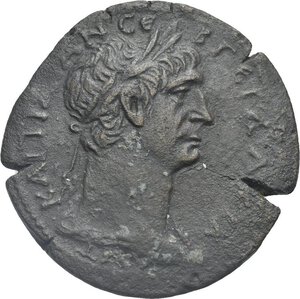
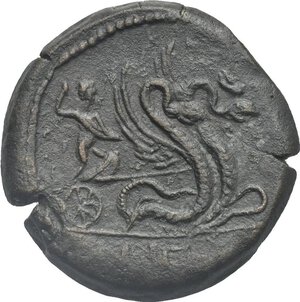
Egypt. Alexandria. Trajan, 98. Drachm (Bronze, 35.60 mm, 23.89 g). Dated L I Γ= year 13 (109 / 110 AD) ΑΥΤ KAI TPAIAN CEB ΓEP ΔAKIK Laureate and draped bust of Trajan right. Rev. Anepigraph; in n the centre on the exergual line, a half-naked Triptolemus driving a chariot right pulled by two beneficial winged and paired Agathodaemones snakes with "pshent" crowns. Triptolemus is wearing an elephant leather cap and a light chlamys covering his shoulders. He holds a flap containing seeds in his left hand which he spreads towards the ground with his right hand; under the exergual line, the date, L I Γ. Vogt I, pp.78-79. Vogt II, p. 31. Dattari 1042, this coin. Geissen 541. RPC III 4454.1.2 this coin. Emmett 601. STAFFIERI, G. M., Alexandria in Nummis, pp. 127-128, Muzzano 2017. Very fine, regular and intact brown patina.
Ex Giovanni Dattari Collection 1042, Il Cairo. Ex Naville Numismatics 45, 09.12.2018, lot 278.
Trajan’s portrait is superb and shows all the solemn and composed calmness of the sovereign, a great leader and at the same time, enlightened head of state. It is a very rare coin (grade 5 according to Emmett). The Greek Eleusinian myth of Triptolemus is connected to that of Demeter, who in Egypt transforms into Isis-Demeter who protects and promotes the fertility of the Nile together with Triptolemus-Osiris. He is the legendary sower who here, stimulated by Demeter, flows to spread the seeds flying over the fields from Upper to Lower Egypt on the chariot pulled by the Egyptian Agathodaemones who here replace the dragons of the analogous Greek theology.
Lot # 303
-
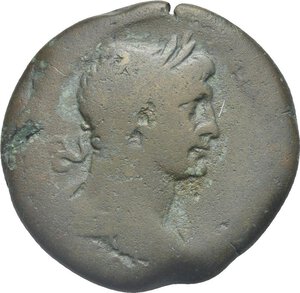
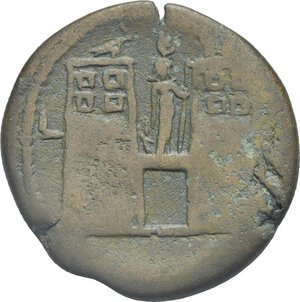
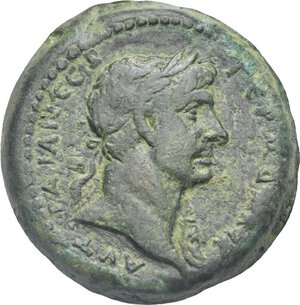
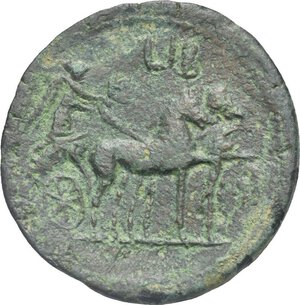
Egypt. Alexandria. Trajan, 98-117. Drachm (Bronze, 33.80 mm, 21.44 g). Dated L I (B) = year 12 (108 / 109 AD). [ΑΥΤ TPAIAN CEB ΓEPM ΔAKIK] Laureate and draped bust of Trajan right, partially seen from behind. Rev. Anepigraph; In the centre, temple facade in egyptian form with two lateral pylons each equipped with four windows and linked each other by the entrance portal upon which is standing, facing the pharaonic anthropomorphic deity Horus dressed with the ritual tunic and “pshent” crown on head. She has in her left hand the “unas” sceptre and right arm stretched out at her side; at her feet on the left, a small animated image facing (Harpokrates). In the field, at sides the date L I B. Vogt I, pp.70-78. Vogt II, p. 29. Dattari-Savio 7279, this coin, plate 59. RPC III 4330.1 (not 4330.3 as incorrectly indicated). Emmett 521. Staffieri G. M., “Il tempio di Horus a Edfu nella monetazione alessandrina” in “Quaderni ticinesi di Numismatica e Antichità Classiche” (NAC), XLVII, 2018, pp. 237-249. Very fine for the coin type.
Ex Giovanni Dattari Collection 7279, Il Cairo. Ex Naville Numismatics 47, 03.03.2019, lot 261.
Coin of fundamental iconographic interest and of absolute rarity attends its improper position described in RPC III 4530.3 as well as, despite the correct description, the incorrect attribution in RPC III 4330.1 of the items Dattari 1160-1161-1162. The importance of the drachm lies in the reverse where the Egyptian temple represented is impressively similar to that of specimen 1161 illustrated in my essay on NAC 2018 cited above and clearly identified in the Hellenistic temple of Horus in Edfu where the relative recognition, in comparing the coins with the existing original monument, it was facilitated not only by the series of four windows being on each tower of the pylon of the facade and the pair of Horus-falcons facing each other on the roofs of the towers (all elements also present here), but also by the anthropomorphic figure of the canonical Horus depicted above the portal between the two towers, flanked at his feet by the image of the falcon, his alter ego. In our case the figure is intentionally replaced by that of his mythical mother according to Egyptian theogony, i.e. Isis, flanked at the feet et pour cause, by Harpokrates, the child Horus. How can we not therefore deduce from these explicit and convincing clues that this too is a representation of the temple of Horus in Edfu, on whose walls Isis is repeatedly depicted? Finally, from the precise comparison of the reverses of the specimens with similar images known from the main published repertoires (Dattari-Savio and RPC III) but which do not show identity with ours, it is possible to hypothesize that this is the only one known that reproduces all the characteristics above described below.
Lot # 302
-
Egypt. Alexandria. Trajan, 98-117. Drachm (Bronze, 35.1 mm, 27.35 g). Dated RY 12 (=108/9). AYT TPAIAN CЄXBI ΓЄPM ΔAKIK Laureate head right. Rev. Winged Nike in slow biga right, wreath in right, reigns in left, L IB (date) above. Dattari 947 (this coin). RPC III, 4308.3. Milne 593. Emmett 544. Rough surface. Very Fine.
Ex Giovanni Dattari Collection, Il Cairo, 947. Ex Riccardo Sarti , Milano, Ottobre 1984.
Notable drachm belonging previously to the famous Dattari collection. It shows an even and original patina on brilliant black background with emerald green highlights. Well centred coin on both sides with on obverse a clear and titled “consular” portrait of Trajan and on reverse a flexible winged Nike driving a chariot that keeps pace: perhaps an invitation to the Emperor to visit with ostentation Alexandria, after having peacefully quelled a riot and generously administering the city where he had promoted the construction of important monuments.
Lot # 301
-
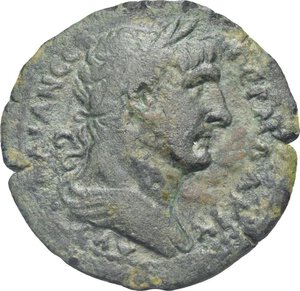
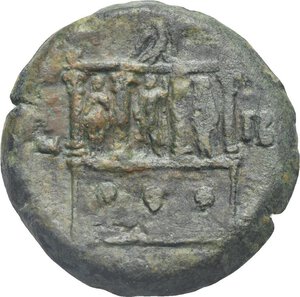
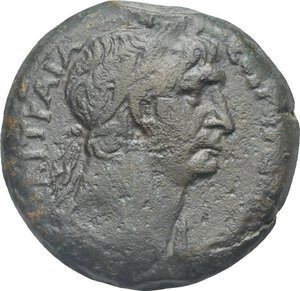
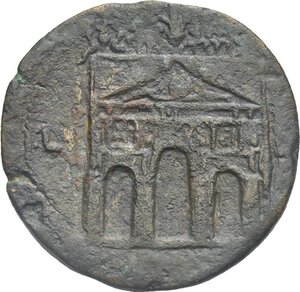
Egypt. Alexandria. Trajan, 98-117. Drachm (Bronze, 35.20 mm, 21.61 g). Dated L IB = year 12 (108 / 109 AD). ΑΥΤ TPAIAN CEB ΓEPM ΔAKIK Laureate and cuirassed bust of Trajan right wearing chlamys. Rev. Anepigraph; In the centre, a building (fountain, nymphaeum) consisting of a tall rectangular base used as a water basin, finished with two Ionic pilasters (?), on whose façade leonine proptomes are applied as fountain mouths. Above, a portico supported by four columns of the Corinthian order, with an Asiatic base; in the intercolumniums are three statues of deities: in the centre, a naked Zeus of the Roman type of Jupiter Stator holding a sceptre with his left arm and extending his right arm in whose hand he appears to hold a bundle of lightning; at his sides, two female figures facing and dressed in chiton. The columns support a rectilinear lintel, which serves as porch’s roof where an eagle is standing, with outstretched wings, and facing with head turned to left towards Jupiter, while at the lintel ends are two palmette acroteria. In the field, the date L IB. Vogt I, pp.76-77. Vogt II, p. 29. Dattari - Savio 7225, this coin shown. RPC III 4317.1, this coin shown. Emmett 4946 for rarety (5) and reverse tipology. Staffieri, G. M., “La fontana di Traiano nella monetazione alessandrina” in “Quaderni ticinesi di Numismatica e Antichità Classiche” (NAC), XLIII, 2014, pp. 255-263. Fine, especially if compared with the reverse of similar but not identic drachms.
Ex Giovanni Dattari Collection 7225, Il Cairo. Ex Kölner Münzkabinett, 17/18. 04.1998, lot 271.
First of all I refer to the study above mentioned, published by me in NAC 2014 referring to this coin, now updated following further examinations, comparisons and what suggested by RPC III 4317.1, plate 193 and RPC III 4317.2.1/4. This coin is absolutely rare: RPC knows only one item with such an obverse, shown at plate 193, while it records four coins with similar reverse, see RPC III 4217.2.1/4. Secondly, this specimen presents an absolutely anomalous and unusual technical characteristic compared to the normal system of Alexandrian coinage: in fact on the planchet the usual positions of the obverse and reverse are reversed, i.e. we note here on the obverse the portrait of Trajan struck with the respective minting in the position of an anvil (therefore more subject to deterioration) instead of the correct one of a hammer, a fact which takes on a further exceptional character, such as the demonstrated uniqueness of the obverse. But the greatest value of the coin is given by the reproduction on its reverse of a real Alexandrian monument, a fountain or nymphaeum otherwise unknown and no longer available today despite it being depicted here as real and complete as well as temporally circumstantiated at the issue of the drachm (108/109 AD) and confirmed by the contemporary documentary testimony of the historian Dione "Chrysostom" of Prusa in his "Oration to the Alexandrians" recited in the theater of the Egyptian capital.
Lot # 300
-
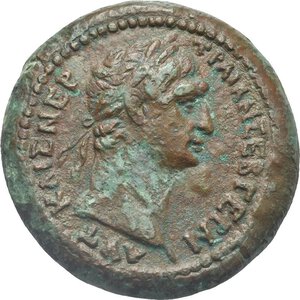
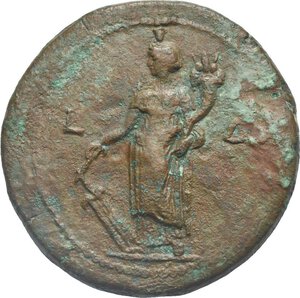
Egypt. Alexandria. Trajan, 98-117. Drachm (Bronze, 33.30 mm, 21.13 g). Dated L I (B) = year 12 (108 / 109 AD) ΑΥΤ TPAIAN CEB (ΓEPM ΔAKIK) Laureate head of Trajan right with chlamys flap on left shoulder. Rev. Anepigraph. Roman-style triumphal arch with three arches and two symmetrical quadrangular windows above the minor arches; large tympanum on the tiburium with the solar disk in the centre; on the roof in the middle and frontally, the emperor with sceptre on a ceremonial chariot drawn by six horses and, at the sides, trophies and prisoners. In the field, the date L I(B). Vogt I, pp.71-74. Vogt II, p. 29. Dattari 1083 var. Geissen 470 var. RPC III 4337. Emmett 602. Staffieri, AIN, pp.79-80, Muzzano 2017. BB, slightly off-centre reverse.
Ex Jean-Pierre Righetti Collection. Ex Münzen & Medaillen / Nomos AG, 12, 11.04.2003, lot 495.
The depiction of the triumphal arch on the reverse of Alexandrian drachmas, which began with Domitian, ended with Hadrian and it is still to be considered rare and of exclusively Roman stylistic character, with no connection to Greco-Alexandrian or Egyptian architecture. It should therefore be seen as an expression of the assertion of the primacy of the empire capital in the intentions of the respective ruler or possibly confirmation of his occasional victorious war enterprise.
I note for the benefit of scholars that RPC also does justice to the mistakes in the determination of this drachm expressed in previous repertories.
Lot # 299
-
Egypt. Alexandria. Trajan, 98-117. Drachm (Bronze, 36.63 mm, 27.67 g). Dated RY 4 (= 100/1). ΑΥΤ ΚΑΙΣ ΝΕΡ ΤΡΑΙΑΝ ΣΕΒ ΓΕΡΜ Laureate bust right, wearing aegis. Rev. Tyche standing facing, head left, holding a rudder with her right hand and a cornucopia with her left; L - Δ (date) across field. Geissen -. Dattari (Savio) 1044 (this coin). RPC III, 4135 (this coin illustrates the type, n° 7). Emmett 605. SNG France 1027. Well struck, splendid portrait with an attractive light brown patina with some green. Nearly Extremely Fine. Very rare.
Ex Giovanni Dattari Collection, 1044. Ex Numismatic Fine Arts, Fall mail bid sale XXV, 18.10.1990, lot 2373.
Lot # 298
-
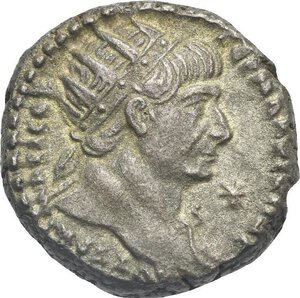
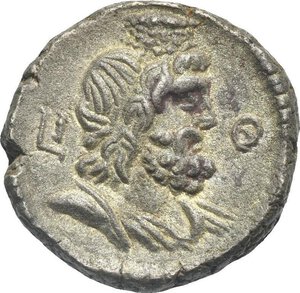
Egypt. Alexandria. Trajan, 98-117. AR Tetradrachm (Billon, 21.4 mm, 13.08 g). Dated RY 19 (= 115/6). ΑΥΤ ΤΡΑΙΑΝ ΑΡΙ ϹΕΒ ΓΕΡΜ ΔΑΚ[ΙΚ ΠΑΡ] Radiate head of Trajan with aegis right; star before. Rev. Diademed and draped bust of Serapis right, wearing kalathos; L I-Θ (date) across field. Geissen -. Dattari 685. RPC III, 4891.10 (this coin). Emmett 391.19. Cfr. Savio, "Tetradrammi alessandrini", pp. 73-76. Minor porosity. Very well struck with a nice and realistic portrait. Extremely Fine.
Ex Münzentrum XXIX, 27.04.1977, lot 120.
Tetradrachm of superb style both for the realistic portrait of Trajan on obverse and for the classical bust of Serapis on reverse, rendered with plastic relief highlighting the peaceful composure of divinity, a work of a master engraver. All capped off by a splendid preservation.
Lot # 297
-
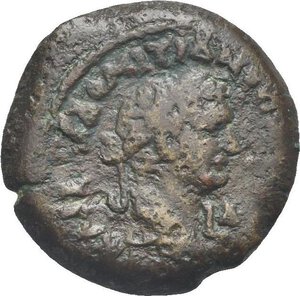
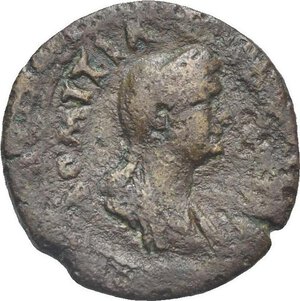
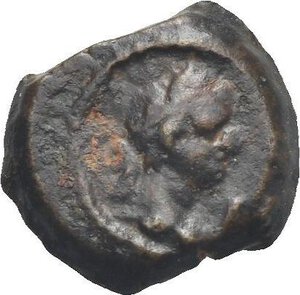
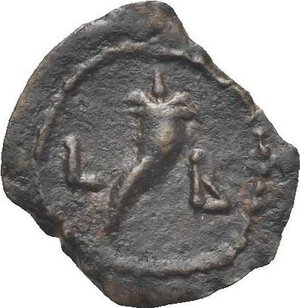
Egypt. Alexandria. Domitian, with his wife Domitia, 81-96. Obol (Bronze, 19.0 mm, 4.19 g). Dated RY 4 (= 84/5). [AVT] KAIΣAP ΔOMITIANOΣ [ΣEB ΓEPM] Laureate head right; L Δ (date) in right field. Rev. ΔOMITIA [ΣEBAΣTH] Draped bust of Domitia to right, with hair coiled on her head. RPC II, 2507. Dattari 430. Milne 478a. BMC 282. Emmett 309. Brown dark patina, rough surface. Near Very Fine. Very Rare.
Ex Rinaldi, Verona, August 1983. Ex Gerhard Hirsch Nachf., 317, 18.02.2016, lot 2051.
This bronze obol of great rarity was issued for dynastic propaganda of the Flavian family that came to the empire with Vespasian. It is in fact celebrated here on the reverse with the title of Augusta, Domitia Longina, wife of Domitian (ca. 53-128 AD), by whom she had a child who died. The two imperial portraits, especially that of Domitia, which appears here for the only time in the Alexandrian series, are valuable although a little worn. Domitia was a valued and respected person and survived almost 30 years of Domitian's bloody death.
Lot # 296
-
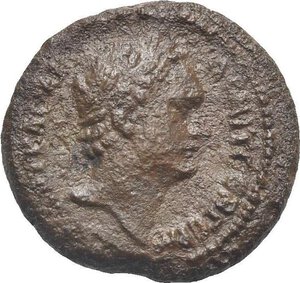
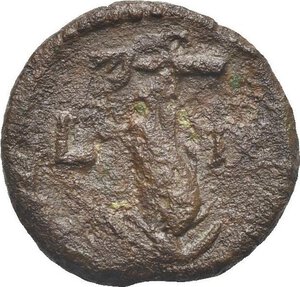
Egypt. Alexandria. Domitian, 81-96. Dichalkon (Bronze, 12.4 mm, 1.32 g). Dated RY 2 (= 82/3). Laureate head of Domitian right. Rev. Cornucopia; L-B (date) across field. Geissen -. Dattari -. RPC II, 2768. Emmett 332. BMC 344. Near Very Fine. Rare denomination.
Ex Fritz Rudolf Künker, 89, 08.03.2004, lot 1764.
This anepigraphic coin representing one of the smallest numerals of the Alexandrian mint, besides being of great rarity (Emmett 5), is in splendid condition: centred on obverse and reverse, brilliant and even patina, recognisable imperial portrait.
Lot # 295
-
Egypt. Alexandria. Domitian, 81-96. Obol (Bronze, 18.3 mm, 4.08 g). Dated RY 11 (= 91/2). ΑΥΤ ΚΑΙϹΑΡ ΔΟΜΙΤ ϹΕΒ ΓΕΡΜ Laureate head right. Rev. Dolphin entwined around anchor; L IA (date) to either side. Geissen 381. Dattari (Savio) 600. RPC II, 2649. Emmett 308. BMC 318. Brown surfaces, some porosity.
Ex Franco Chiesa, Numismatica Aretusa SA, May 1987.
A well centred obol with on obverse, a superb portrait of Domitian who paid particular attention to aesthetics on coins. The original brown patina evenly covering the entire coin is also excellent.
Lot # 294
-
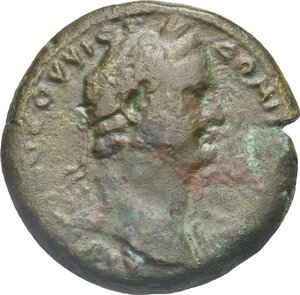
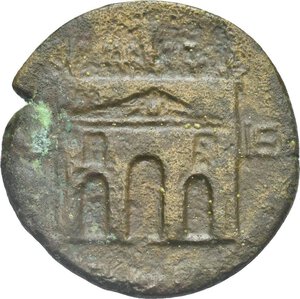
Egypt, Alexandria. Domitian, 81-96. Drachm (Bronze, 32.7 mm, 18.43 g). Dated RY 15 (95/6). ΑΥΤ [ΚΑΙϹ] ΘΕΟΥ ΥΙΟϹ ΔΟΜΙ[Τ ϹΕΒ ΓΕΡΜ] Laureate head right. Rev. Triumphal arch with three passageways; on top of the arch, Emperor in facing chariot drawn by six horses with a trophy to either side, each trophy flanked by two seated captives; pediment decorated with two inward-facing Nikes supporting a globe(?); on the sides of each passageway a statue; L - IE (date) across field. Dattari (Savio) 544. RPC II, 2728. Milne 532. Emmett 257.15. Geissen 416. BMC 342. Cfr. Staffieri G. M., AIN, Nr. 36, pp. 79-80. Attractive brown patina with some green. Minor roughness, otherwise, nearly Very Fine. Rare.
Ex Frank L. Kovacs, June 1993.
A relatively rare coin that is never found in perfect condition: ours is of above-average conservation and well centred on both sides. The triumphal arch, of Roman origin and style, is intact and legible in every detail.
Lot # 293
-
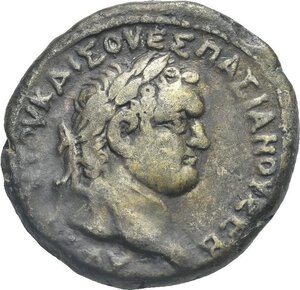
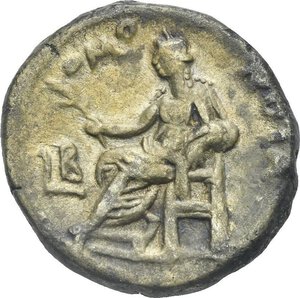
Egypt. Alexandria. Titus, 79-81. Tetradrachm (Billon, 25.0 mm, 12.71 g). Dated RY 2 (= 79/80). ΑΥ[ΤΟΚ ΤΙ]ΤΟΥ ΚΑΙΣ ΟΥΕΣΠΑΣΙΑΝΟΥ ΣΕΒ Laureate head of Titus to right. Rev. OMO-NOIA Homonoia seated left, holding branch in her right hand and leaning left on throne; L B (date) in left field. Dattari (Savio) 422. RPC II, 2463. Geissen 317. Milne 454. Cfr. SAVIO, "Tetradrammi alessandrini", pp. 67-68. Staffieri Giovanni Maria, AIN, n. 35, pp. 76-77. Nicely toned. Very Fine.
Ex Leu Numismatik AG 11, 22 February 2020, lot 1538.
Uncommon and well-centred coin. OMONOIA refers to the formalisation of the alleged and doubful harmony with his younger brother, Caesar Domitian, heir to the throne, who in fact followed him at the head of the Roman Empire.
Lot # 292
-
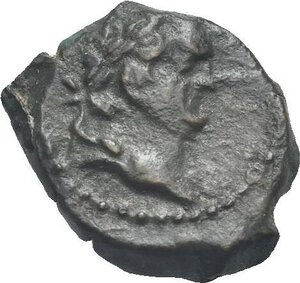
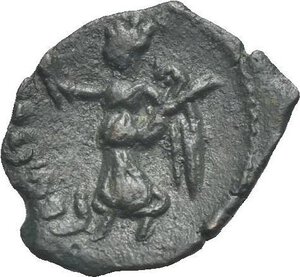
Egypt. Alexandria. Vespasian, 69-79. Dichalkon (Bronze, 14.1 mm, 1.40 g). Dated RY 9 (= 76/7). Laureate head right. Rev. L ENAT (date) Nike walking left, holding wreath and palm. Cfr. Geissen 312 (date as Q). Dattari 392. RPC II, 2761. BMC 251. Milne -. Emmett 230. Dark patina. Very Fine. Rare denomination.
Ex CNG 66, 19 May 2004, lot 1294.
Minimal bronze numeral of great rarity (Emmett 5). This specimen is intact in its depictions, well readable in all details.
Lot # 291
-
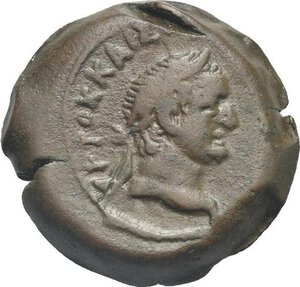
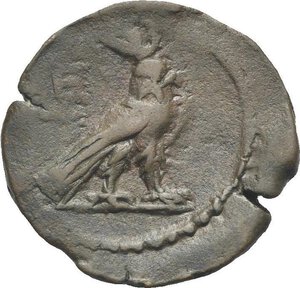
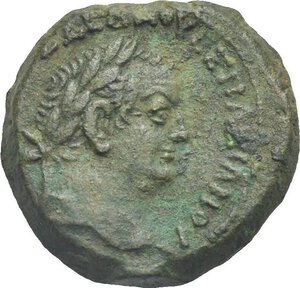
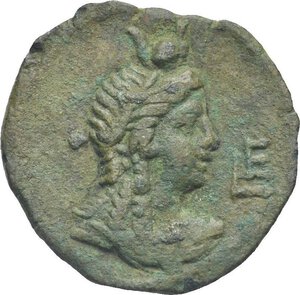
Egypt. Alexandria. Vespasian, 69-79. Obol. (Bronze 21.40 mm, 6.95 g). Dated E, year 5 = circa 72-73 AD. AYTOK KAI[ΣΣ] EBA OYE I[ΣΠAΣI]A IANOY Laureate head right. Rev. Hawk standing right facing front; in left field the date, E. RPC II, 2440.8. Dattari (Savio) 416, plate 15. Geissen -. Emmett 222. Very Fine, attractive brown tone.
Ex Busso Peus Nachf. 360, 29 April 1999, lot 677.
Bronze obol of exceptional conservation for the type of coin. The falcon is the pharaonic symbol of Horus, son of the mystical marriage of Isis with Osiris.
Lot # 290
-
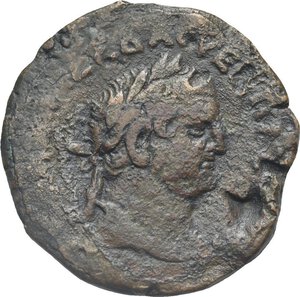
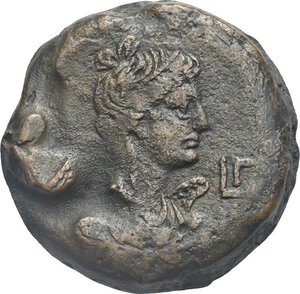
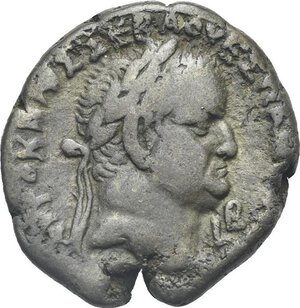
Egypt. Alexandria. Vespasian, 69-79. Diobol (Bronze, 24.1 mm, 6.82 g). Dated RY 5 (=72/3). [ΑΥΤΟΚ ΚΑΙΣ] ΣΕΒΑ ΟΥΕΣΠΑΣΙΑΝΟΥ Laureate head of Vespasian to right. Rev. Draped bust of Isis to right, wearing uraeus; L E (date) in lower right field. Dattari-Savio 384. RPC II, 2438. Geissen 296. Milne 427. BMC 2735. Emmett 217. Well-struck, with nice portraits and a green patina. Good Very Fine.
Ex Empire Coins, 8, 7 December 1987, lot 372.
Vespasian’s portrait is the realistic one of the military leader who started his principality with his imperial proclamation in Alexandria at the beginning of his victorious expedition to Judea.
Lot # 289
-
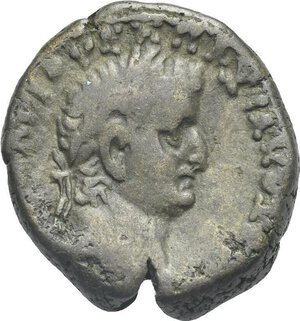
Egypt. Alexandria. Vespasian, 69-79. Drachm (Bronze, 36.5 mm, 32.58 g). Dated RY 3 (= 70/1). [ΑΥΤΟΚ ΚΑΙΣ] ΣΕΒΑ ΟΥΕΣΠΑΣ[ΙΑΝΟΥ] Laureate head of Vespasian to right. Rev. Draped bust of Nike to right; L Γ (date) in lower right field. Dattari-Savio 389. RPC II, 2427. Emmett 208. Geissen 288. BMC 249-250. SNG France 4770. Some flan faults and roughness, otherwise, nearly Very Fine.
Ex Empire Coins 8, 7 December 1987, lot 366.
This drachm representing the maximum bronze monetary module minted by Vespasian in Alexandria, is usually struck on a rather irregular roundel and has imperfections. However, this specimen is better than the average known ones and the portrait of the sovereign is well characterised, i.e. realistic and justifies the assumption that engravers transferred from Antioch with the late Hellenistic army were present in this mint.
Lot # 288
-
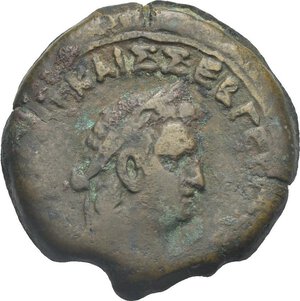
Egypt. Alexandria. Vespasian, with Titus as Caesar, 69-79. Tetradrachm (Billon, 23.40 mm, 12.49 g). Dated RY 2 (= 69/70). ΑΥΤΟΚ ΚΑΙΣ ΣΕΒΑ ΟΥΕΣΠΑΣ[ΙΑΝΟΥ] Laureate head of Vespasian right; L B (date) below chin. Rev. [Τ Φ]ΛΑΥΙ ΟΥΕΣΠΑΣΙΑΝΟΣ ΚΑΙΣ Laureate head of Titus right. Dattari (Savio) 345. RPC II, 2416. Geissen 279. BMC 223. Emmett 207. Cfr. Savio, "Tetradrammi alessandrini", pp. 64-66. Toned, edge nick. Very Fine.
Ex CNG XXII, 02. September 1992, lot 706.
We see in this tetradrachm of Vespasian's reign second year, the desire to affirm the presence of the new dynasty of the Flavi, through the presentation and proclamation of the Caesar on reverse, his predestined heir, namely his son Titus, while they both are active in the punitive expedition against the Jewish rebellion ended with the IVDEA CAPTA.
Lot # 287
-
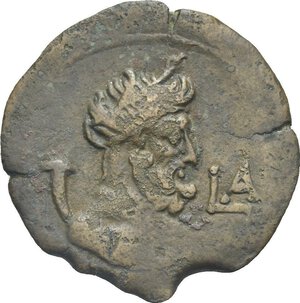
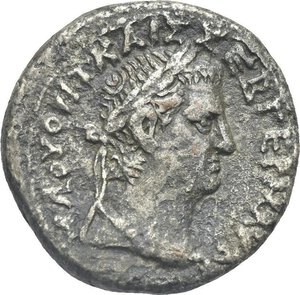
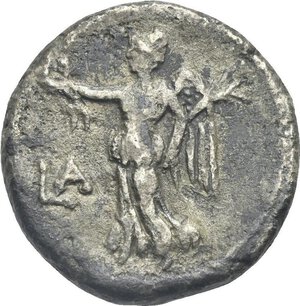
Egypt. Alexandria. Vitellius, 69. Diobol (Bronze, 28.1 mm, 11.68 g). Dated RY 1 (= 69). [ΩΛO]Y OYIT KAIΣ ΣEB ΓEP[M AYT] Laureate head right. Rev. Bust of Nilus right, crowned with taenia and lotus-buds, behind cornucopia; L A (date) in lower right field. Dattari (Savio) pl. 12, 6686 (this coin). RPC I, 5375. Emmett 198. Milne 376. Geissen -. STAFFIERI, Giovanni Maria, "Curiosità numismatiche alessandrine", in NAC XLVIII, 2019, pp. 150-152. Attractive brown patina. Very Fine. Extremely Rare.
Ex Giovanni Dattari Collection 6686, Il Cairo. Ex Naville Numismatics 43, 23.09.2018, lot 253.
During his fleeting appearance in Alexandrian numismatics, Vitellius barely has time to celebrate and wish, in this very rare diobol, the fertility of the earth thanks to the periodic flooding of the deified river Nile, here expressly reproduced with its symbols. The portrait of the ephemeral emperor appears odd and also relatively physiognomic.
Lot # 286
-
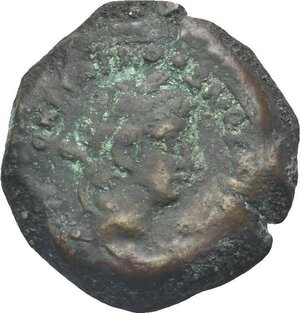
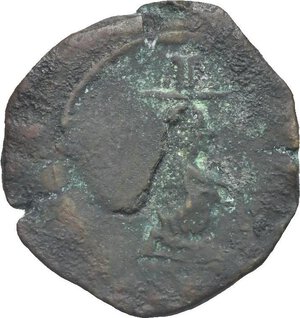
Egypt. Alexandria. Vitellius, 69. Tetradrachm (Billon, 25.05 mm, 11.72 g). Dated RY 1 (= 69). ΩΛOY OYIT KAIΣ ΣEB ΓEPM AYT Head laureate right. Rev. Victory advancing left holding wreath and palm; L A (date) in left field. Dattari 340 (this specimen). RPC I, 5372. Emmett 196. Geissen 260. BMC 218. Cfr. Savio, "Tetradrammi alessandrini", pp. 62-63. Toned, rough surface. Very Fine. Rare.
Ex Giovanni Dattari Collection 340 , il Cairo. Ex Naville Numismatics, 66, 27.06.2021, lot 185.
Vitellius' reign at Alexandria lasted only about two months, from circa May 69 when news of his victory over Otho on 16 April reached Egypt, until 1 July 69 when Vespasian was proclaimed Augustus at Alexandria.
Lot # 285
-
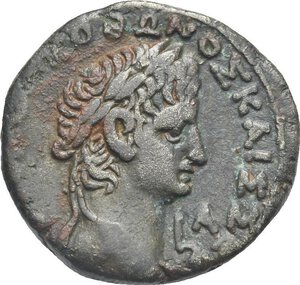
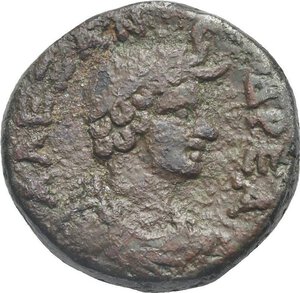
Egypt. Alexandria. Otho, 69. Obol (Bronze, 21.60 mm, 6.07 g). Dated RY 1 (= 69). [ΜΑΡΚ] ΟΘΩΝ [ΚΑΙΣ ΣΕΒ ΑΥΤ] Laureate head to right. Rev. Canopic jar of Osiris to right; [LA] (date) in right field. Berlin 28662. Milne 371. Dattari (Savio) 331. RPC I, 5371. BMC 216. Emmett 192. Very Fine/Fine.
Ex Jacquier 20, Autumn 1997, lot 415.
Extremely rare coin (RPC I knows of only one specimen) from the already small bronze coinage of Othon. The canopus of Osiris derives from the pharaonic theological tradition.
Lot # 284
-
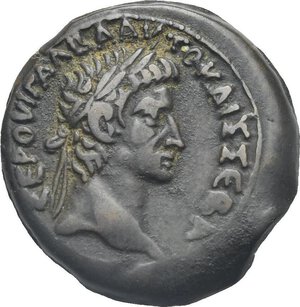
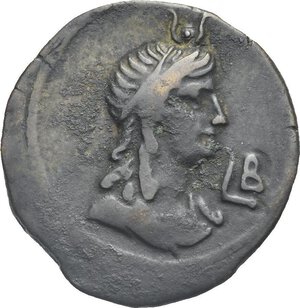
Egypt. Alexandria. Otho, 69. Tetradrachm (Billon, 24.10 mm, 12.41 g) Dated year 1 (= 15 January / 25 April 69) ΑΥΤΟΚ ΜΑΡΚ ΟΘΩΝΟΣ ΚΑΙΣ ΣΕΒ Laureate head of Otho right, LA (date) below chin. Rev. ΑΛΕΞΑΝ ΔΡΕΑ Draped bust of personified Alexandria right, wearing elephant headdress, simpulum to right below chin (not visible). RPC I, 5358. Dattari (Savio) 324. Emmett 182.1. Geissen 245. Cfr. SAVIO, "Tetradrammi alessandrini", pp.60-61. Toned. Nice portrait. Rough reverse. Very Fine.
Ex CNG 440, 20.03.2019, lot 372.
This is the rarest tetradrachm among the already very scarce ones minted by Othon in little more than three month’s reign. The portrait recalls that of Nero, who married Othon’s ex-wife Poppaea Sabina on his second marriage.
Lot # 283
-
Egypt. Alexandria. Galba, 68-69. Diobol (Bronze, 25.70 mm, 11.36 g). Dated RY 2 (= 68/9). ΣΕΡΟΥΙ ΓΑΛΒΑ ΑΥΤΟΚ ΚΑΙΣ ΣΕΒΑ Laureate head right. Rev. Draped bust of Isis right; LB (date) in right field. Geissen 241-242. Dattari 320. BMC 202-203. RPC I, 5351. Milne 356. Emmett 179. Cf. Staffieri, AIN, n. 21-25. Dark patina. Very Fine.
Ex Wetterström Collection, CNA XIII, 04.12.1990, lot 9. Ex CNG XXV, 24.03.1993, lot 917.
An excellent specimen with a quality physiognomic portrait of the rare bronze Galba’s coinage, issued only in the four months of his second Alexandrian year of reign. Uniform intact brown patina.
Lot # 282
-
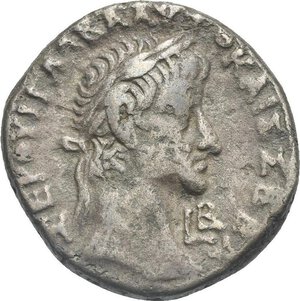
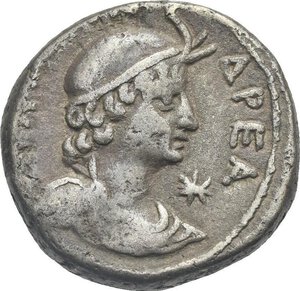
Egypt. Alexandria. Galba, 68-69. Tetradrachm (Billon, 25.25 mm, 12.68 g) Dated year 2 (= 68-69) ΣЄΡ OYI ΓΑΛΒΑ AYTO KAIΣ ΣЄΒΑ Laureate bust of Galba right, LB (date) below chin. Rev. [ΑΛΕΞΑΝ] ΔΡΕΑ Draped bust of personified Alexandria right, wearing elephant-skin headdress, star below chin to right. RPC I, 5336. BMC 2721. Dattari 300. Emmett 170. Geissen 225. Kampmann-Ganschow 17.9. Cfr. SAVIO, "Tetradrammi alessandrini", pp.57-59. Toned. Very Fine.
Ex Agora Auctions, 74, 05.06.2018, lot 162.
Galba's second Alexandrian year lasted little more than four months and produced tetradrachms in praise of peace (compare no. 23 in the collection) and freedom (idem no. 24) under the auspices of Alexandria and Rome. In short, a hope after the last and stormy Neronian period, a response in trust to the senatorial order from which Galba came.
Lot # 281
-
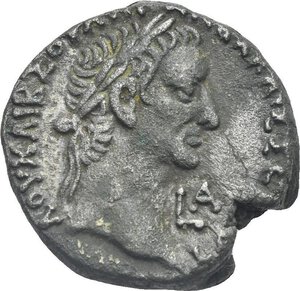
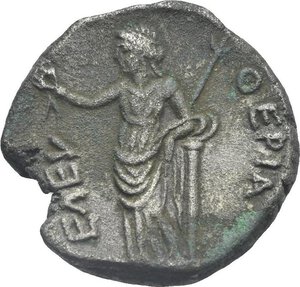
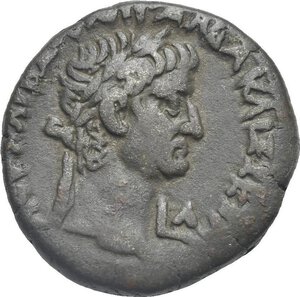
Egypt. Alexandria. Galba, 68-69. Tetradrachm (Billon, 24.55 mm, 11.63 g). Dated RY 1 (= 68). ΛΟΥΚ ΛΙΒ ΣΟ[ΥΛΠ ΓΑΛΒΑ ΚΑΙ]Σ ΣΕB [ΑΥT] Laureate head of Galba to right; L A (date) in right field below chin. Rev. ΕΛΕΥ-ΘTΕΡΙΑ Eleutheria standing front, head to left, holding wreath in her right hand and resting her right arm on column, scepter behind. Vogt I, pp. 37-41. Vogt II, p. 12. BMC 192. K&G 17.4. Dattari 306 (this coin). Geissen 220. RPC I, 5327. Emmett 172. Savio, Adriano, Tetradrammi Alessandrini, Milano 2007, pp. 57-59. Extremely Fine.
Ex Giovanni Dattari collection 306. Ex Naville Numismatics 43, 23 September 2018, lot 252.
Selected coin from the famous collection of Giovanni Dattari. Very rare for the limited period of issue and in particularly fine condition; notably the portrait of the emperor has begun to take on the real and characteristic physiognomy of Galba.
Lot # 280
-
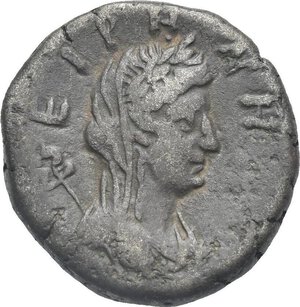
Egypt. Alexandria. Galba, 68-69. Tetradrachm (Billon, 24.85 mm, 12.59 g) Dated RY 1 (= 9 June / 28 August 68) ΛΟΥΚ ΛΙΒ ΣΟΥΛΠ ΓΑΛΒΑ ΚΑΙΣ ΣΕΒ ΑΥT Laureate head of Galba right, LA (date) below chin. Rev. ΕΙΡΗΝΗ Veiled and draped bust of Eirene right, wearing olive wreath, caduceus left. Vogt I, pp. 37-41. Vogt II, p. 12. BMC 190. Dattari 302. Geissen 219. RPC I 5328. Emmett 171. Savio, Adriano, Tetradrammi Alessandrini, Milano 2007, pp. 57-59. K&G 17.3. Very Fine.
Ex Kurpfälzische Münzhandlung 69, 13.12.2005, lot 136.
Galba's Alexandrian year 1 issues lasted less than three months, and here the image of the new ruler is still strongly influenced by the traits of his unfortunate predecessor Nero, pending the official one from Rome. But at least the reverse finally wishes for peace in the empire.
Lot # 279
-
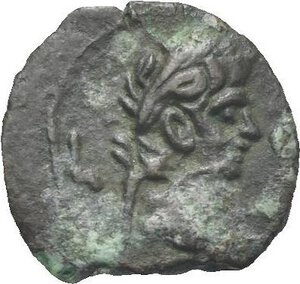
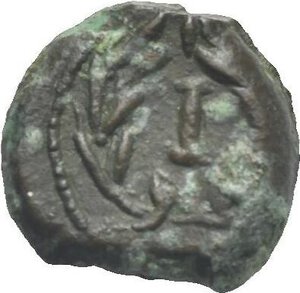
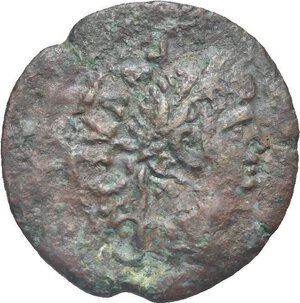
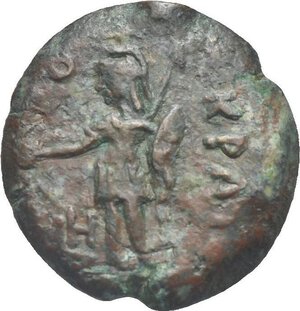
Egypt. Alexandria. Nero, 54-68. Dichalkon (Bronze, 11.60 mm, 1.42 g) Dated RY 6 (= 59-60) Laureate head of Nero right, L to left, ζ to right (date). Rev. Large I within wreath. Vogt I, pp. 28-30. Vogt II, - . BMC 189. Dattari 283 (+ plate XXVII). Geissen - . RPC I 5262. Emmett 169. Christiansen, Erik, The Roman Coins of Alexandria, Aarhus 1988, Vol. I, p. 80. K&G 14.64. Very Fine.
Ex Kerry K. Wetterström collection. Ex CNA, IV, 21.09.1988, lot 259. Ex CNA XII, 26.09.1990, lot 15.
A coin of great rarity and curiosity, first because of the date of issue, finally deciphered in year 6 of Nero's reign (59/60 AD), then because it still leaves open the enigma of the meaning of the symbol I on the reverse, which cannot be the year 10 of the sovereign; it probably indicates the value of an assarion, a monetary unit common in the eastern provinces of the empire.
Lot # 278
-
Egypt. Alexandria. Nero, 54-68. Obol (Bronze, 20.30 mm, 4.02 g). Dated RY 8 (= 61/2). ΝЄΡ ΚΛΑΥ Κ[ΑΙϹ ϹЄΒ ΓЄΡ] Laureate head of Nero to right. Rev. [Α]ΥΤΟΚΡΑΤ Roma standing front, head to left, holding patera in her right hand and spear and shield in her left; L H in left field. Vogt I, pp. 26-30. Vogt II, p. 9. BMC 186-187. Dattari 278-279 (+ plate XXI). Geissen - . RPC I, 5263. Emmett 154. K&G 14.67. Very Fine.
Ex Greenpoint collection. Ex Frank L. Kovacs. Ex CNG, 91, 19 September 2012, lot 707.
A very rare coin like all Alexandrian bronzes of Nero. I note that in year 8 of Nerobe's reign (AD 61/62) only divisional bronze coins were minted in Alexandria: obols, dichalkoi and chalkoi (see RPC I 5263-5266); from the images of the reverses (Rome, bust of Alexandria, trophy with or without prisoner) it seems that they refer to a military victory in Britain or Armenia.
Lot # 277
-
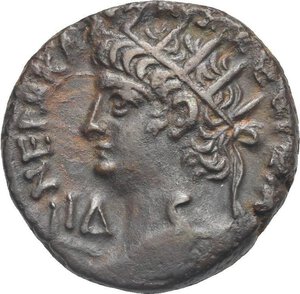
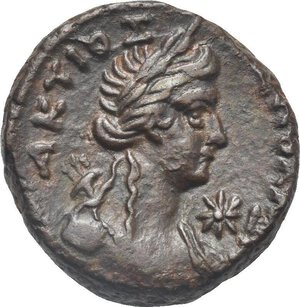
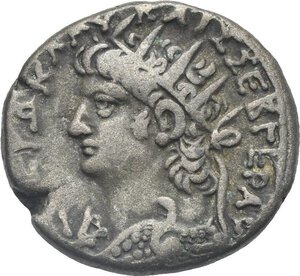
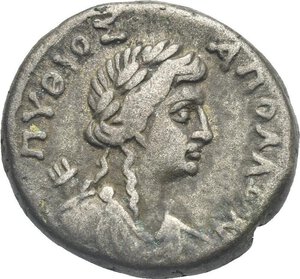
Egypt. Alexandria. Nero, 54-68. Tetradrachm (Billon, 23.55 mm, 12.30 g). Dated RY 14 (= 67/68). NEPΩ KΛ[AY KAIΣ] ΣEB ΓEP [AY] Radiate bust left, wearing aegis; L I∆ (date) below chin. Rev. ΑΚΤΙΟΣ ΑΠΟΛΛΩΝ Diademed, veiled, and draped bust of Hera right; star below chin. Vogt I, pp. 32-36. Vogt II, p. 11. BMC 144. Dattari 207. Geissen 195. RPC I, 5317. Emmett 111. Savio, Adriano, Tetradrammi Alessandrini, Milano 2007, pp. 52-56. K&G 14.106. Extremely Fine.
Ex Fritz Rudolf Künker Münzhandlung 89, 08/09.03.2004, lot 1749.
Another tetradrachm in honour of the Panhellenic Games, here those promoted by the city of Actium also subject to the protection of the cult of Apollo like Delphi mentioned in the previous coin No. 19. Note on the reverse the presence of the 8-pointed star lacking from other identical specimens.
Lot # 276
-
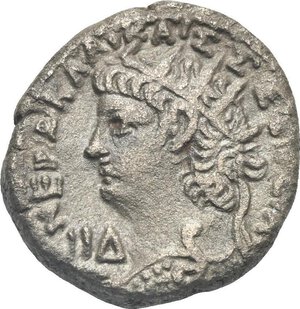
Egypt. Alexandria. Nero, 54-68. Tetradrachm (Billon, 24.80 mm, 13.03 g). Dated RY 14 (= 67/8). [ΝΕΡ]Ω ΚΛΑΥ ΚΑΙΣ ΣΕΒ ΓΕΡ ΑΥ Radiate bust of Nero to left, wearing aegis; L IΔ (date) in left field. Rev. ΠΥΘΕΙΟΣ ΑΠΟΛΛΩΝ Laureate bust of Pythian Apollo with quiver right. Vogt I, pp. 32-36. Vogt II, p. 11. BMC 143. Dattari 209. Geissen 198 var. RPC I, 5312. Emmett 112. Savio, Adriano, Tetradrammi Alessandrini, Milano 2007, pp. 52-56. K&G 14.115. Very Fine.
Ex Münzen und Medaillen. Ex Nomos AG. 14, 16.04.2004, lot 748.
A rare coin, belonging to the propaganda series for the Panhellenic Games mentioned in No. 18 above, here referred to the Delphic Games. Note on the obverse the detail of the imperial portrait facing left: an exception that appears only on tetradrachms minted during the last two years of Nero's reign.
Lot # 275
-
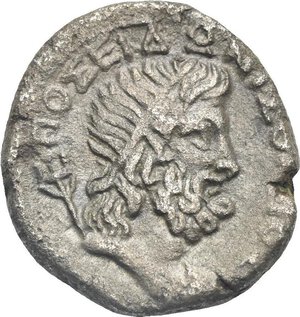
Egypt. Alexandria. Nero, 54-68. Tetradrachm (Billon, 25.20 mm, 11.71 g). Dated RY 14 (= 67/8). ΝΕΡΩ ΚΛΑY ΚΑΙΣ ΣΕB [Γ]ΕΡ A[Y] Radiate bust of Nero to left, wearing aegis; L IΔ (date) in left field. Rev. ΠΟΣΕΙΔΩΝ ΙΣΘ[ΜΙΟΣ] Bust of Poseidon Isthmios to right, wearing taenia, with slight drapery on his left shoulder and with trident over his shoulder. Vogt I, pp. 32-36. Vogt II, p. 11. BMC - . Dattari 243. Geissen 202. RPC I, 5310. Emmett 129. Savio, Adriano, Tetradrammi alessandrini, Milano 2007, pp. 52-56. K&G 14.113. Extremely Fine/Very Fine.
Ex Auctiones AG, 26, 16/19.09.1996, lot 366.
A rare coin that recalls the Neronian series from the 13th and 14th years of his reign (AD 66-68), dedicated to the propaganda for the Panhellenic Games promoted by the Emperor, defined by organising cities according to the deities of reference: the Isthmian ones (Corinth) through Poseidon, then the Olympian and Nemean ones with Zeus; the Argivian ones with Hera, the Attic and Pythian ones with Apollo. And the presence of the sovereign was planned for each of them, but very few could be realised because they were interrupted by Nero's bloody death in June 68 AD.
Lot # 274
-
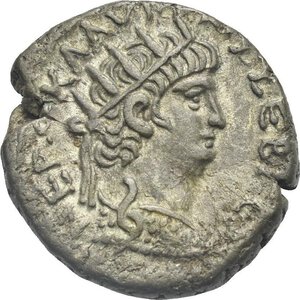
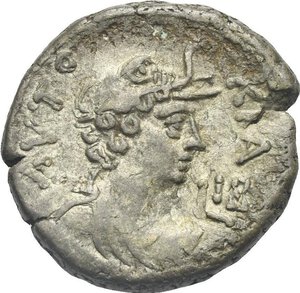
Egypt. Alexandria. Nero, 54-68. Tetradrachm (Billon, 25.70 mm, 13.43 g). Dated RY 12 (= 65/6). ΝΕΡΩ ΚΛΑΥ [ΚΑΙ]Σ ΣΕΒ ΓΕΡ Radiate bust right, wearing aegis. Rev. ΑΥΤΟ-ΚΡΑ Bust of Alexandria right, wearing elephant’s skin headdress; L ΙΒ (date) in right field. Vogt I, p. 32. Vogt II, p.10. BMC 163-164. Dattari 204. Geissen 172. RPC I, 5289. Emmett 109. Savio, Adriano, Tetradrammi Alessandrini, Milano 2007, pp. 52-56. K&G 14.88. Extremely Fine.
Ex Frank Sternberg, Zürich, May 1978.
Coin minted during Nero's peak Alexandrian period, with a pleasing physiognomic portrait of the ruler.
Lot # 273
-
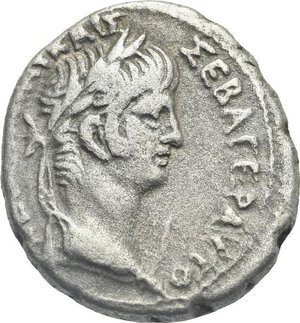
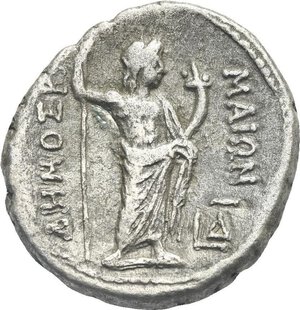
Egypt. Alexandria. Nero, 54-68. Tetradrachm (Billon, 24.55 mm, 12.07 g). Dated RY 4 (= 57/8). [ΝΕΡΩΝ ΚΛΑΥ] ΚΑΙΣ ΣΕΒΑ ΓΕΡ ΑΥΤΟ Laureate head of Nero right. Rev. ΔΗΜΟΣ ΡΩ vertical to left, ΜΑΙΩΝ vertical to right; Demos standing facing bare chest, head turned to right, holding scepter in the right hand and cornucopia on the left hand, L Δ (date) to right. Vogt I, p. 26 and following. Vogt II, p. 8. BMC -. Dattari-Savio 212. Geissen 130. RPC I, 5224. Emmett 116. Savio, Adriano, Tetradrammi alessandrini, Milano 2007 , pp. 51-56. K&G 14.16. Very Fine/Extremely Fine.
Ex Giovanni Dattari collection 212. Ex Naville Numismatics 55, 09.02.2020, lot 286.
The depiction on the reverse of the Genius Populi Romani is a clear indication of Nero's Roman-centric policy, despite his sympathies for classical culture, which ooze as much from the coinage of the eastern regions of the empire as from his promotion and patronage of the Panhellenic games referred to in NN. 18 - 20 of the collection.
Results from 27451 to 27500 of 32902